
The world, for countless individuals throughout history, was a perpetually hazy realm. Bad eyesight, a condition as old as humanity itself, presented a formidable barrier to the successful execution of a vast array of ancient tasks. While modern society benefits from advanced corrective lenses and surgical interventions, our ancestors faced a world where poor vision was not merely an inconvenience but a significant impediment, dictating what they could and could not achieve, shaping their lives, and influencing the very development of their societies. From the meticulous work of scribes and artisans to the crucial vigilance required of hunters and soldiers, limited visual acuity cast a long shadow over the ancient world.
The Weaver’s Dim and Dazzled Loom
The ability to discern fine details was paramount in numerous ancient crafts, and for those with compromised vision, these endeavors became arduous, if not impossible. Textile production, a cornerstone of ancient economies and daily life, relied heavily on the weaver’s ability to distinguish thread colors, count warp and weft, and identify subtle imperfections. For a person struggling with farsightedness, distinguishing between the delicate threads of silk and coarser wool might have been a constant challenge. Nearsighted individuals, on the other hand, might have found it difficult to accurately align threads or weave intricate patterns without laborious approximation. The precision required for the creation of complex tapestries, the subtle color blending in dyed fabrics, or even the simple mending of garments would have been significantly hampered by inadequate eyesight.
The Shadowed Shuttle and the Blurred Warp
Imagine a weaver attempting to thread a shuttle, the eye needing to guide the fine yarn through the closely spaced warp threads. For someone with astigmatism, the lines of the warp might have appeared distorted, making this fundamental step a frustrating trial. Poor depth perception, a common consequence of various visual impairments, would have made it difficult to judge the distance between the warp threads and the shuttle, leading to dropped stitches and uneven fabric. The act of counting threads to establish a pattern, a crucial skill for any skilled weaver, would have been a painstaking process. Was that a cluster of three threads or four? The ambiguity could lead to errors that were difficult to rectify, potentially ruining hours of work. The subtle variations in color that differentiated dyes, essential for creating aesthetically pleasing textiles or for signaling particular meanings within a design, could have been lost in a haze. Blues might have appeared as indistinct greys, and reds as muted oranges, rendering the weaver’s artistry significantly diminished.
The Artisan’s Fumbling Fingers
Beyond weaving, other crafts demanded acute visual perception. The creation of pottery, for example, involved shaping clay with precision. While tactile feedback was essential, the visual confirmation of form, symmetry, and the smooth finish of the surface played a vital role. A potter with poor vision might struggle to achieve the perfect curve of a vase or the evenness of a bowl’s rim. Small details, like the incising of decorative patterns or the application of glazes, would have been exceptionally challenging.
The metalworker, too, faced significant hurdles. Hammering metal to create tools, weapons, or decorative objects required not only strength but also the ability to see the metal’s response to the blows. Judging the heat of the metal by its color, a critical skill for blacksmiths, would have been impossible for someone with severe color blindness. The fine work of jewelers, shaping and setting precious stones, demanded extreme visual acuity. The minute details of filigree work, the careful placement of small gemstones, and the polishing of intricate designs would have been beyond the reach of those with significant visual impairments. Even the grinding and sharpening of tools, essential for all trades, would have been less effective, leading to the use of duller, less efficient implements.
In ancient times, the challenges posed by bad eyesight were often overlooked, yet they significantly impacted daily life and exploration. For instance, many explorers ventured into uncharted territories with limited vision, relying on their other senses and the guidance of their companions. This struggle is reminiscent of the experiences faced by early explorers of Antarctica, who navigated harsh conditions with minimal tools and often impaired vision. For a deeper understanding of how these early adventurers managed their limitations, you can read more in the article about the explorers of Antarctica before 1820 at this link.
The Hunter’s Elusive Prey and the Soldier’s Distant Threat

The ability to see clearly was not just about craft and creation; it was fundamental to survival. In hunting societies, the successful acquisition of food often depended on the hunter’s keen eyesight. Spotting game, tracking footprints, and judging distances for a precise shot or throw were all visually driven activities. For individuals with poor vision, these skills would have been severely compromised, potentially leading to hunger and increased danger from predators.
The Blurry Trail and the Unseen Predator
A hunter with limited peripheral vision might miss the subtle flick of a tail or the rustle of leaves that signaled the presence of prey. Nearsightedness would make it difficult to identify animals at a distance, turning potential game into indistinct shapes. Farsightedness could cause a hunter to overlook the faint tracks left in the dust or mud, making tracking a far more challenging and less successful endeavor. The ability to judge the trajectory of an arrow or the arc of a thrown spear relied heavily on visual estimation of distance and speed. Poor depth perception would make this estimation unreliable, leading to missed shots and wasted ammunition.
Furthermore, the hunter was not only the predator but also the potential prey. The ability to spot an approaching predator from a distance was a crucial survival mechanism. An individual who could not clearly see the approaching wolf or bear would be at a significant disadvantage, relying more on luck and the vigilance of others for their safety. This vulnerability could have led to a higher mortality rate among those with poor eyesight in communities where hunting was a primary means of subsistence.
The Fog of Warfare and the Unseen Enemy
Military effectiveness was also profoundly impacted by visual acuity. Recognizing an approaching enemy force, distinguishing friend from foe on a chaotic battlefield, and aiming weapons accurately all relied on good eyesight. In ancient warfare, where formations were less rigid and confusion could quickly spread, the ability to see and react to threats was paramount.
A soldier with poor eyesight might struggle to discern the glint of armor on a distant hill, mistaking it for a natural formation. On the battlefield, where dust, smoke, and the sheer chaos of combat obscured vision, those with impaired sight would be at a severe disadvantage. Identifying an enemy charging towards them through the melee, or discerning the direction of an incoming projectile like an arrow or a sling stone, would be incredibly difficult. The effectiveness of archers and slingers, who relied on precise aiming, would be drastically reduced if their own ranks were filled with individuals who could not clearly see their targets. The ability to maintain visual contact with fellow soldiers, crucial for coordinating movements and maintaining unit cohesion, would also be compromised. In sieges, the defenders’ ability to spot the enemy’s siege engines or their attempts to scale walls would be significantly diminished, increasing the likelihood of a successful assault.
The Scribe’s Squint and the Scholar’s Struggle

The transmission of knowledge and the recording of history were largely dependent on literacy and the meticulous work of scribes. For these individuals, bad eyesight presented a monumental challenge, impacting the very act of writing and the preservation of information. The delicate art of calligraphy, the careful copying of texts, and the precise rendering of intricate symbols all demanded visual clarity.
The Faded Scroll and the Blurred Inscription
Imagine a scribe hunched over a papyrus scroll, painstakingly forming letters with ink. A nearsighted scribe would need to be incredibly close to the surface, potentially straining their neck and back for extended periods. The fine lines of hieroglyphs or the delicate strokes of cursive script might blur together, leading to misinterpretations and errors in transcription. A farsighted scribe, conversely, would struggle to see the details of the characters unless they held the scroll at a considerable distance, making the fine work of copying very difficult. Astigmatism could distort the shapes of letters, leading to the confusion of similar-looking characters, such as ‘B’ and ‘8’ in later scripts or visually similar glyphs in more ancient writing systems.
The materials themselves could exacerbate the problem. Ancient inks were not always of uniform quality, and papyrus or parchment could have inherent imperfections, raised fibers, or uneven textures that would further obscure the text for someone with poor vision. The dim lighting conditions in many ancient dwellings, often lit by flickering oil lamps or candles, would have further compounded the issue, creating a perpetually challenging environment for detailed visual work. The creation of maps, architectural plans, or astronomical charts, all requiring precise lines and measurements, would have been immensely difficult for individuals with compromised eyesight. Such tasks were not merely academic; they had practical applications in navigation, construction, and understanding the cosmos.
The Fading Memory and the Unshared Wisdom
The consequences of a scribe’s poor vision extended beyond their personal struggles. Errors in copied texts could propagate, leading to the gradual corruption of knowledge over generations. A misinterpreted passage could lead to the flawed understanding of a historical event, a scientific principle, or a philosophical idea. This loss of fidelity in textual transmission could mean that valuable insights were gradually lost or distorted, hindering intellectual progress. The ability to read and interpret existing texts would also be affected. Scholars or students with poor eyesight might struggle to engage with the written word, limiting their access to the accumulated wisdom of their time. This could lead to a more insular intellectual landscape, where new ideas were slower to emerge and existing knowledge was less widely disseminated. The very act of learning and scholarship, so dependent on the visual absorption of information, would be fundamentally altered by the presence of widespread visual impairment.
The Navigator’s Perilous Journey and the Builder’s Precarious Foundation
The ability to perceive the world accurately was crucial for those who charted courses across land and sea, and for those who erected the structures that defined ancient civilizations. Bad eyesight could turn a simple journey into a dangerous ordeal and a monumental building project into a precarious undertaking.
The Unseen Horizon and the Crooked Wall
Ancient mariners relied on the stars, the sun, and the visible landmarks to guide their voyages. For a navigator with poor eyesight, identifying constellations, discerning the subtle shifts in the sun’s position, or spotting distant shorelines would be a daunting task. Nearsightedness would make it difficult to see the stars clearly, potentially leading to misidentification or the inability to find them at all. Farsightedness could impede the ability to see distant objects on the horizon, such as approaching storms or the faint outline of land. Poor depth perception would make judging distances to other vessels or to potential hazards like reefs incredibly difficult, increasing the risk of collisions and shipwrecks.
On land, builders and architects, even with the aid of tools, relied on visual assessment for the accuracy of their work. The construction of temples, aqueducts, and fortifications demanded precise measurements and the ability to ensure that walls were plumb and level. For a builder with poor vision, judging the verticality of a wall or the horizontality of a beam could be a challenge. Slight inaccuracies, when multiplied over large structures, could lead to instability and eventual collapse. The laying of stones, the placement of bricks, and the carving of decorative elements all required careful visual inspection. Missing a crack in a stone or misjudging the fit between two blocks could have significant structural consequences. Even the planning stages, involving the drawing of schematics and layouts, would have been difficult for those with visual impairments, potentially leading to fundamental flaws in the design.
The Misplaced Landmark and the Unstable Arch
The accuracy of maps and navigational charts, vital for trade and military campaigns, was also dependent on the visual acuity of those who created them. Misidentified landmarks or inaccurately plotted coastlines could lead travelers astray, resulting in lost goods, wasted time, and potential peril. Even the simple act of finding one’s way in a familiar landscape could be hindered by poor eyesight. The ability to distinguish between similar-looking trees, rocks, or paths could be crucial for avoiding getting lost, especially in unfamiliar or challenging terrain. The construction of arches and vaults, which rely on precise geometric principles and the exact placement of voussoirs, would have been significantly more challenging for those who could not accurately judge angles and curves. A misplaced stone in an arch could compromise its structural integrity, leading to its premature failure. The ability to see and correct errors during the construction process would be severely limited, making such complex architectural feats more prone to failure.
In ancient times, poor eyesight was often a significant challenge for many individuals, impacting their daily lives and tasks. The lack of advanced optical technology meant that people had to rely on natural remedies and rudimentary methods to cope with vision issues. Interestingly, this topic is explored in greater detail in a related article that discusses the planning and design of ancient cities, which often took into account the visual capabilities of their inhabitants. You can read more about this fascinating connection in the article here. Understanding how ancient societies adapted to such challenges provides valuable insights into their ingenuity and resilience.
The Social and Cultural Ramifications of Poor Vision
| Aspect | Description | Impact on Daily Life | Historical Solutions |
|---|---|---|---|
| Prevalence of Poor Eyesight | Common but undocumented; no formal studies | Difficulty in reading, crafting, hunting, and navigation | Use of magnifying glasses (from 1st century AD), reading stones |
| Understanding of Eye Conditions | Limited knowledge; attributed to supernatural causes or aging | Social stigma and limited treatment options | Herbal remedies, eye washes, and prayers |
| Corrective Measures | Primitive lenses made of glass or crystal | Improved reading ability for the literate elite | Early spectacles invented in 13th century Italy |
| Impact on Professions | Artisans, scribes, and scholars affected by poor vision | Reduced productivity and accuracy | Delegation of tasks, use of assistants |
| Social Perception | Poor eyesight sometimes seen as a sign of wisdom or age | Varied social treatment; some respected, others marginalized | Acceptance or isolation depending on culture |
The impact of bad eyesight in ancient societies extended beyond the individual’s ability to perform specific tasks. It had broader social and cultural ramifications, influencing societal roles, perceptions of disability, and even the development of technologies.
The Stigma and the Support Networks
Individuals with severe visual impairments would likely have faced social stigma and limitations. They might have been relegated to less demanding tasks or dependent on the support of their families and communities. This dependence could have influenced social hierarchies and the distribution of labor. In some cases, individuals with visual impairments might have been ostracized or feared, particularly in societies where explanations for such conditions were rooted in supernatural beliefs. Conversely, strong community bonds and established support networks would have been crucial for the survival and well-being of those with visual challenges. These networks would have ensured that essential tasks were still performed, albeit with the assistance of others.
The Slow Pace of Technological Advancement
The lack of readily available vision correction meant that the collective visual capacity of a society was inherently limited. This could have slowed the pace of technological advancement in areas that heavily relied on precise visual observation. While rudimentary aids like polished stones or crystals might have existed, their effectiveness and widespread availability are debated and likely limited. The development of more sophisticated optical instruments, such as telescopes and microscopes, would have been significantly delayed without the widespread recognition of the benefits of vision correction and the underlying optical principles. The absence of this broad visual acuity could have meant that many subtle phenomena in nature or intricate details in manufacturing remained unobserved or unappreciated for longer periods. This had a ripple effect, potentially delaying discoveries in fields like astronomy, biology, and engineering. The very fabric of daily life, from the simple act of reading a sign to the complex task of navigating a bustling marketplace, was shaped by the visual capabilities – or limitations – of the people within it. The ancient world, for many, was a world seen through a perpetual haze, where the potential for achievement was often curtailed by the limitations of sight.
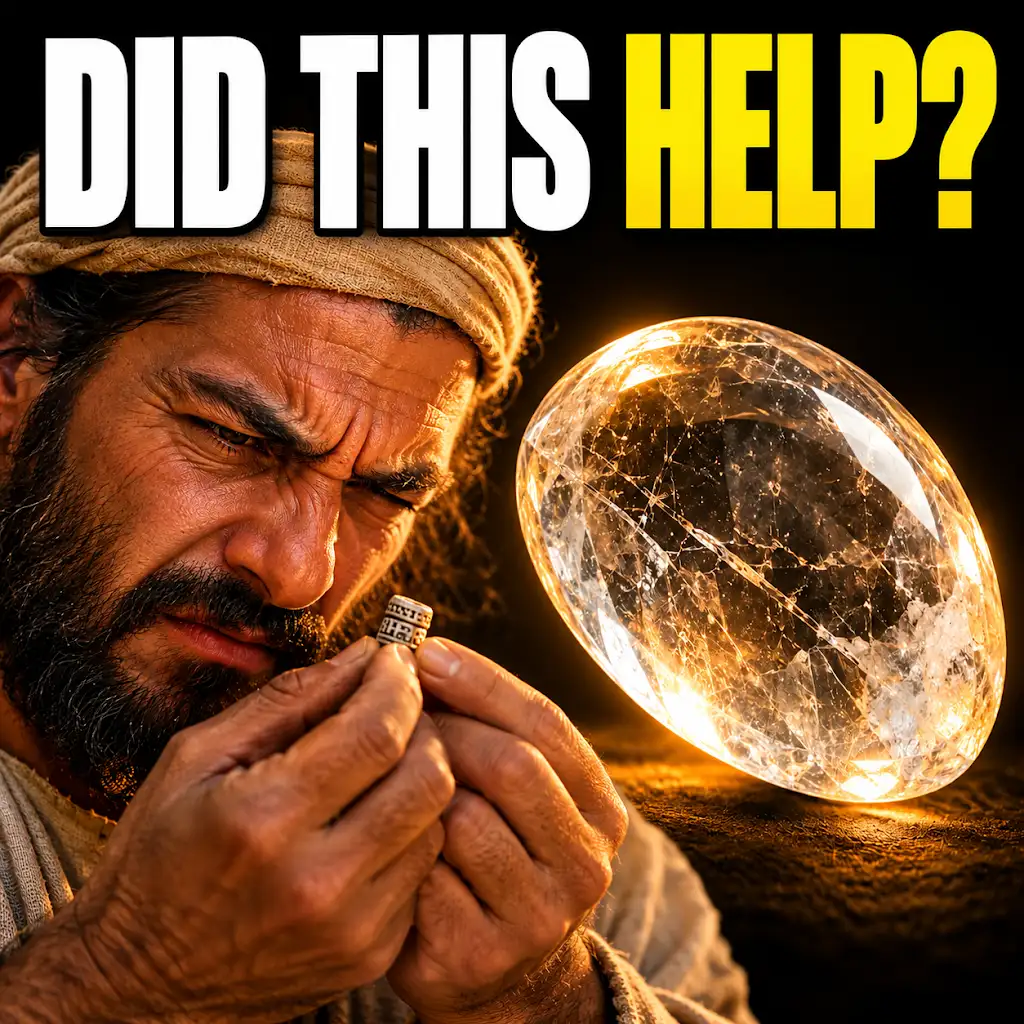
Did This Ancient Crystal Help People See?
FAQs
1. How did people in ancient times cope with bad eyesight?
In ancient times, people with bad eyesight often relied on simple tools like magnifying glasses or reading stones to help them see better.
2. Were there any treatments available for bad eyesight in ancient times?
Ancient civilizations used various remedies such as herbal treatments, eye exercises, and even wearing special amulets to try and improve eyesight.
3. Did ancient cultures have a concept of vision correction like glasses or contact lenses?
While glasses as we know them today were not invented until the Middle Ages, ancient Romans and Greeks were known to use glass or crystal lenses to aid in vision.
4. Were there any professions in ancient times that were specifically for people with bad eyesight?
In ancient times, individuals with bad eyesight often found work as scribes, translators, or artisans, as these professions did not require perfect vision.
5. How did ancient societies view people with bad eyesight?
In some ancient cultures, people with bad eyesight were seen as having a special connection to the spiritual world, while in others they were often marginalized or seen as having a physical defect.