The world for those with impaired vision in ancient times was a landscape of heightened senses and careful navigation. Unlike today, where corrective lenses, sophisticated surgical procedures, and technological aids can dramatically improve sight, ancient peoples with poor eyesight faced a constant, often perilous, struggle for survival. Their lives were shaped by the limitations of their vision, forcing them to adapt in ways that reveal the remarkable resilience and ingenuity of humanity. From the moment they awoke to the stark realities of their visual world, their days were a testament to their ability to compensate and thrive.
The Daily Grind: Navigating a Visually Demanding World
Life in antiquity was inherently tactile and auditory. For those whose eyes struggled to discern fine details or perceive distant objects, these other senses became paramount. The world was a tapestry woven with textures, scents, and sounds, and individuals with poor eyesight learned to read this tapestry with extraordinary acuity. Their survival depended on a deep understanding of their environment, honed through constant interaction and reliance on non-visual cues.
Identifying Resources Through Touch and Sound
The simple act of foraging for food, a fundamental human activity, became an intricate dance for the visually impaired. Distinguishing edible plants from poisonous ones required a meticulous touch, learning the subtle differences in leaf shape, stem texture, and the feel of ripe fruits or tubers. This was not an abstract knowledge but a deeply ingrained, sensory memory. They would run their fingers over countless leaves, memorizing the velvety underside of a safe berry bush or the rough bark of a tree that yielded edible nuts. Similarly, the sound of water trickling into a stream, the rustle of specific animals in the undergrowth, or the chirping of birds that indicated certain food sources were all vital navigational aids. A well-known hunter might rely on the distinct gait of prey animals or the scent they left on the wind, a skill developed through years of dedicated observation and listening.
The Importance of Auditory and Olfactory Cues
Beyond sustenance, everyday tasks like building shelter, making tools, or even traversing familiar paths were heavily reliant on non-visual information. The hollow sound of a properly placed stone for a wall, the subtle creak of wood that signaled weakness or strength, the familiar scent of their village hearth smoke – all served as essential markers. For those who could not see well, the world was a symphony of sounds and a library of smells. They learned to distinguish the approaching footsteps of a friend from an enemy, the distant rumble of an approaching storm, or the familiar aroma of a baker’s shop. This heightened sensory awareness was not merely an advantage; it was a necessity, a finely tuned instrument that allowed them to perceive and interact with their surroundings in ways that sighted individuals might overlook.
Building Trust and Dependence on Others
In many ancient societies, cooperation was the bedrock of survival. For those with poor eyesight, this often meant a greater degree of interdependence. Family members, friends, and community members played a crucial role in bridging the visual gaps. Children might be taught from a young age to guide their elders, and adults would readily offer assistance in tasks that required precise visual perception. This fostered strong social bonds and a deep sense of collective responsibility. The visually impaired were not ostracized but rather integrated into the fabric of society, their contributions valued in areas where their other senses or particular skills shone. This mutual reliance created a resilient social structure capable of supporting all its members, ensuring that even those with significant visual challenges could find their place and contribute meaningfully.
Ancient people with bad eyesight faced significant challenges in their daily lives, yet they developed various ingenious methods to adapt and survive. For instance, they may have relied on their other senses, such as touch and hearing, to navigate their environments and perform essential tasks. Additionally, the use of rudimentary tools and communal support likely played a crucial role in their ability to thrive despite visual impairments. To explore more about how ancient civilizations overcame various challenges, you can read the article on unlocking the mysteries of lost technology at Unlocking the Mysteries of Lost Tech.
Crafting and Creation: Skills Adapted to Limited Sight

The creation of tools, clothing, and other essential items was a cornerstone of ancient life. For those with poor eyesight, this meant developing unique approaches and relying on a tactile precision that often surpassed that of their sighted counterparts. Their hands became their eyes, conveying intricate details and guiding their skilled labor.
The Art of Tactile Mastery in Craftsmanship
Imagine a potter shaping clay with fingers that can feel every subtle imperfection, every ripple, every indentation, guiding the form into a functional and often beautiful vessel. Or a weaver, whose hands instinctively sense the tension of threads, the interlocking of warp and weft, creating durable and intricate fabrics without needing to see the precise pattern. The crafting of tools, whether stone or metal, demanded an exceptional feel for balance, sharpness, and form. A blacksmith, for instance, might rely on the precise heat felt through the hammer handle to gauge the temper of the metal, or the sound of the striking hammer to determine the progress of the work. These artisans developed a sophisticated haptic vocabulary, a language spoken through their fingertips that allowed them to execute complex tasks with remarkable accuracy and skill.
The Role of Texture and Form in Design
When visual cues were limited, texture and form became the primary drivers of aesthetic appeal and functionality. A sandal might be designed with a sole that offers superior grip based on its roughened surface. A piece of pottery might be decorated with raised patterns that can be identified by touch, providing both visual interest for others and tactile feedback for the owner. Even the construction of dwellings might incorporate subtle variations in surface texture for navigation, guiding inhabitants through their homes. The visually impaired craftsman was not simply replicating what they could see, but rather creating objects that were inherently understood and appreciated through a combination of touch, sound, and an intuitive understanding of form and function. Their creations often possessed a unique character, born from a sensory experience that transcended mere visual aesthetics.
Inherited Knowledge and Apprenticeship
The transmission of these specialized skills was vital. Apprenticeship played a critical role, with experienced craftsmen teaching younger generations through demonstration and, crucially, through guided touch. The apprentice would place their hands over the master’s, feeling the movements, the pressure, the subtle adjustments. This kinesthetic learning, combined with verbal instruction and constant feedback, allowed for the transfer of intricate knowledge. Stories and oral traditions also played a part, passing down the wisdom and techniques developed by generations of visually impaired artisans. This ensured that the accumulated knowledge and expertise were not lost, but rather preserved and adapted for future generations, a testament to the enduring legacy of these skilled individuals.
Navigating the Social and Spiritual Landscape

Beyond the practicalities of survival, individuals with poor eyesight also navigated complex social hierarchies and spiritual beliefs. Their experiences offered unique perspectives, shaping their roles and contributions within their communities.
The Wisdom of the Unseen: Seers and Storytellers
In many ancient cultures, a detachment from the purely visual was sometimes associated with a heightened connection to the spiritual or the insightful. Those who could not rely on sight might be perceived as having a greater capacity for inner vision, for understanding deeper truths, or for receiving divine messages. This could elevate their status within certain contexts, leading them to become revered seers, oracles, or storytellers. Their reliance on memory, auditory perception, and abstract thought could make them keepers of ancestral knowledge, weaving tales and sagas that preserved history and cultural identity. The vivid descriptions they crafted, born from a deep well of auditory and imaginative experience, could paint powerful pictures in the minds of their listeners.
The Importance of Community and Social Support Systems
While some may have found unique spiritual roles, the overwhelming reality for most was the necessity of strong community bonds. Family and kin networks provided essential support, not just for practical tasks but also for emotional well-being. The elderly, who often experienced declining vision, were typically cared for by younger generations, their wisdom and experience valued. The concept of shared resources and mutual aid was fundamental to ancient societies, and this extended to assisting those with visual impairments. Exclusion or marginalization based on disability would have been counterproductive to the collective survival of the group. Therefore, societal structures often evolved to accommodate and integrate individuals with varying abilities.
The Evolution of Spiritual Beliefs and Practices
The perception of blindness or poor eyesight could also influence religious beliefs and practices. Rituals that relied heavily on chanting, communal singing, or tactile elements might have held particular resonance for those with limited sight. Conversely, elaborate visual displays in worship might have been less accessible, leading to different forms of spiritual expression. The stories of gods and heroes could be recounted, their exploits and struggles made vivid through powerful oral narration, allowing all members of the community to engage with their shared mythology, regardless of their visual acuity. This adaptability in spiritual expression ensured that faith and connection to the divine remained accessible to everyone.
The Challenges of Mobility and Personal Safety
Movement was a fundamental aspect of life, whether for hunting, gathering, trading, or simply interacting within a community. For those with impaired vision, this posed significant and often dangerous challenges. Every step required a heightened awareness of the environment and a reliance on learned pathways and sensory landmarks.
Navigating Unfamiliar Terrain and Potential Dangers
The absence of clear visual pathways meant that traversing unknown territories was fraught with peril. Open fields could become disorienting labyrinths, and uneven ground could lead to stumbles and falls. The risk of encountering wild animals, falling into pits or ravines, or simply losing one’s bearings was a constant concern. This necessitated the development of strategies for safe travel, often involving the use of a walking stick or staff, which served not only as a support but also as a probe to detect obstacles and changes in the terrain. These aids were extensions of their bodies, providing crucial sensory information about the world ahead.
The Role of Familiarity and Established Routes
The importance of familiar environments cannot be overstated. People with poor eyesight would have developed an intimate knowledge of their immediate surroundings – the layout of their homes, the paths to common resource areas, the routes within their village. These familiar routes became ingrained in their muscle memory and their sensory maps. Venturing beyond these established paths required the assistance of others or a significant investment of time and caution. The concept of “home” was not just a dwelling but a deeply understood and navigable space, a sanctuary from the disorientation that unfamiliar environments could induce.
Reliance on Sound and Social Navigation
Sound played a critical role in personal safety and navigation. The distant sound of a river, the consistent hum of insects in a particular area, or the predictable sounds of human activity could all serve as navigational beacons. When traveling with others, they would rely on verbal cues – “step left,” “watch the root,” “water ahead” – and the subtle shifts in the rhythm of footsteps to maintain their position. This constant stream of auditory information was vital for avoiding unseen hazards and for staying connected to their companions, ensuring their safe passage through a world that was, for them, largely invisible.
Ancient people with poor eyesight developed various strategies to adapt to their environments, ensuring their survival despite visual challenges. They relied heavily on their other senses, such as hearing and touch, to navigate their surroundings and identify potential dangers. Additionally, they often created tools and communal practices that allowed them to work together effectively, compensating for individual limitations. For a deeper understanding of how societies adapt and thrive despite challenges, you can explore this insightful article on economic resilience in modern contexts at Mexico’s potential as a new economic superpower.
The Enduring Legacy: Resilience and Adaptation
| Aspect | Details | Impact on Survival |
|---|---|---|
| Use of Other Senses | Heightened hearing, smell, and touch compensated for poor vision | Improved ability to detect predators and find food |
| Community Support | Group living and cooperation helped individuals with poor eyesight | Shared knowledge and protection increased survival chances |
| Environmental Adaptation | Settling in familiar, less visually demanding environments | Reduced risk of accidents and easier navigation |
| Tool Use | Development of tactile tools and weapons | Enhanced hunting and gathering efficiency despite poor vision |
| Genetic Factors | Possible genetic tolerance or adaptation to visual impairments | Maintained population diversity and survival |
The lives of individuals with poor eyesight in ancient times, while undoubtedly challenging, were also a testament to human resilience, adaptability, and the profound interconnectedness of human communities. Their struggles and triumphs offer invaluable insights into the resourcefulness of our ancestors and the fundamental human drive to survive and thrive against all odds.
A Broader Understanding of Human Capability
The experiences of these individuals challenge our modern, often visually biased, perceptions of ability. They demonstrate that limitations in one sense can lead to a remarkable enhancement of others, and that ingenuity can overcome seemingly insurmountable obstacles. Their lives remind us that “disability” is often a product of societal design and expectations, rather than an inherent inability. The ancient world, in its own way, often found ways to integrate and value the contributions of all its members, fostering a more holistic understanding of human capability.
The Importance of Sensory Diversity in Human Societies
The reliance on a wider range of sensory input by individuals with poor eyesight enriched the collective human experience. Their heightened awareness of sound, texture, and scent offered a different perspective on the world, contributing to a more nuanced understanding of environments and social dynamics. This diversity of perception, even if born out of necessity, ultimately strengthened the adaptive capacity of human societies. It fostered a greater appreciation for the richness and complexity of the world around us, beyond the confines of purely visual interpretation.
A Legacy of Ingenuity and Mutual Support
The stories of those who navigated ancient worlds with impaired vision are a powerful reminder of the enduring human spirit. They highlight the ingenuity born of necessity, the deep bonds of community support, and the remarkable capacity for adaptation. Their survival was not a solitary feat but a collective triumph, built on shared knowledge, empathy, and a profound understanding of interdependence. Their legacy is etched not in stone monuments, but in the enduring lessons of resilience, resourcefulness, and the essential human connection that has always been our greatest strength.
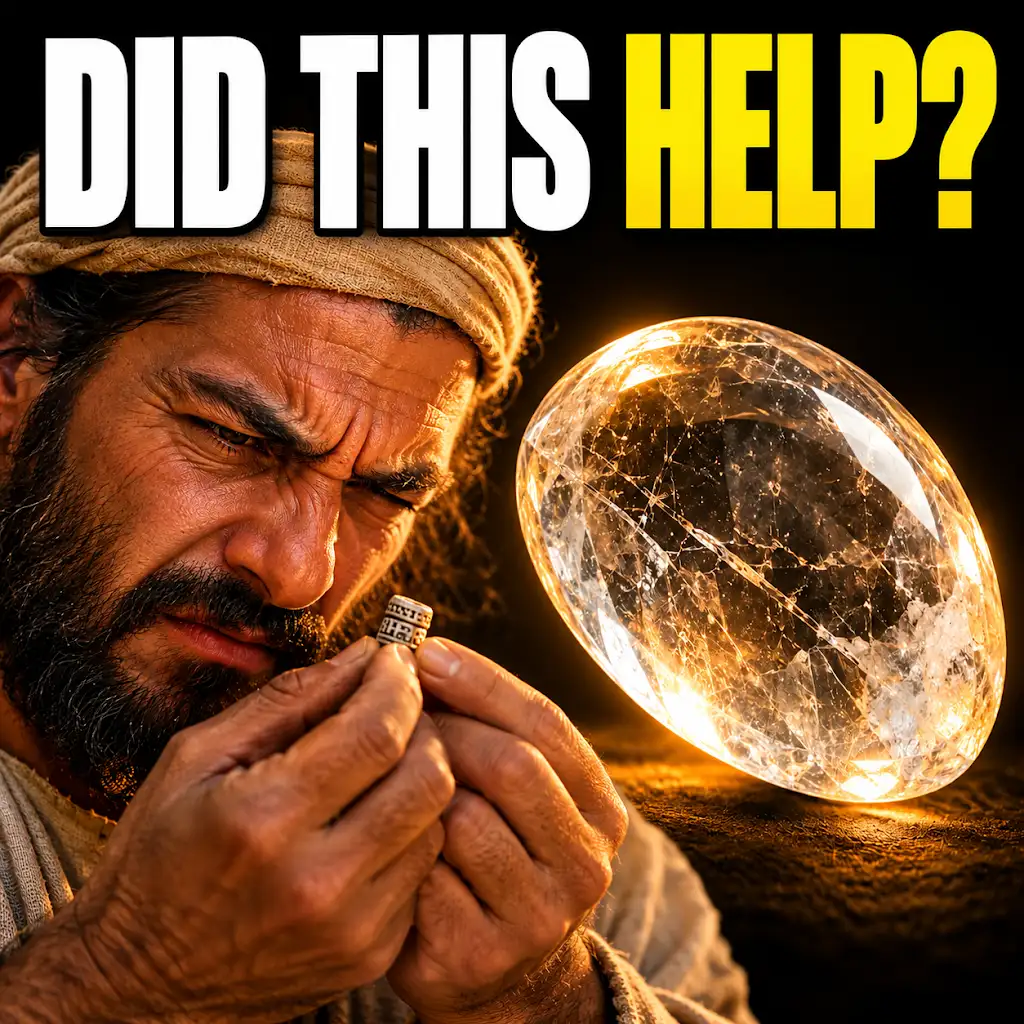
Did This Ancient Crystal Help People See?
FAQs
1. How did ancient people with bad eyesight cope with their condition?
Ancient people with bad eyesight often relied on the help of others in their community to navigate their surroundings and perform daily tasks.
2. Did ancient civilizations have any tools or aids to assist individuals with poor eyesight?
Some ancient civilizations, such as the Egyptians and Greeks, used rudimentary magnifying glasses made from glass or crystal to help individuals with bad eyesight see more clearly.
3. Were there any professions or roles in ancient societies that accommodated individuals with poor eyesight?
In some ancient societies, individuals with bad eyesight were often given roles that did not require sharp vision, such as storytellers, musicians, or healers.
4. How did ancient people with bad eyesight navigate outdoor environments?
Ancient people with bad eyesight often relied on familiar landmarks, sounds, and other senses to navigate outdoor environments. They may have also used walking sticks or assistance from others.
5. Were there any cultural beliefs or superstitions surrounding bad eyesight in ancient times?
In some ancient cultures, bad eyesight was sometimes associated with spiritual or supernatural causes, leading to various rituals or treatments to try to improve vision.