The allure of natural gemstones has captivated humanity for millennia, woven into tales of magic, healing, and extraordinary properties. Among these, rock crystal, also known as clear quartz, stands out for its remarkable clarity and widespread presence. Often perceived as a humble mineral, its transparent nature has led to a persistent question that echoes through both ancient lore and modern curiosity: can rock crystal truly magnify? This exploration delves into the scientific principles, historical beliefs, and practical applications that surround this seemingly simple, yet profoundly complex, gemstone.
The Optical Properties of Rock Crystal
At its core, the ability of any transparent material to magnify lies in its interaction with light. Rock crystal, a silicon dioxide (SiO2) mineral, possesses inherent optical characteristics that make it a candidate for magnifying properties. Its crystalline structure, composed of tightly bonded silicon and oxygen atoms, allows light to pass through it with minimal scattering or absorption. This transparency is crucial, as it enables light rays to enter and exit the crystal with relative ease.
Refraction: The Bending of Light
The primary mechanism by which any lens, natural or man-made, magnifies is through refraction. Refraction is the bending of light as it passes from one medium to another with a different optical density. When light encounters the surface of rock crystal, it slows down and changes direction. The degree to which light bends depends on the refractive index of the material. Rock crystal has a refractive index of approximately 1.544 to 1.553, which is a measure of how much light is slowed down and bent within the crystal compared to its speed in a vacuum.
Lens Formation: Shaping the Crystal
For magnification to occur, the rock crystal must be shaped into a convex lens. A convex lens is thicker in the middle than at the edges. When parallel rays of light pass through a convex lens, they converge at a focal point. This convergence is what creates a magnified image. Historically, artisans and gem cutters would painstakingly shape rough rock crystal into spherical or faceted forms. The curvature of these surfaces dictates the focal length of the resulting “lens.” A more pronounced curvature, especially on both sides of the crystal, leads to a shorter focal length and greater magnification. Conversely, a flatter surface will result in less magnification. Therefore, it’s not merely the material itself, but its sculpted form that determines its magnifying capabilities.
Dispersion: The Rainbow Effect
While rock crystal is known for its clarity, it also exhibits a phenomenon called dispersion. Dispersion is the phenomenon where the refractive index of a material varies slightly for different wavelengths (colors) of light. This causes white light, which is composed of all colors of the spectrum, to split into its constituent colors when passing through a prism or a lens. In rock crystal, dispersion is relatively low compared to materials like diamond or glass used in high-quality optical instruments. This means that while some chromatic aberration (color fringing) might occur, it is generally less pronounced in rock crystal lenses, contributing to a clearer, though perhaps less intensely magnified, image.
Rock crystal, known for its clarity and brilliance, has long fascinated both scientists and enthusiasts alike, particularly regarding its optical properties. Many wonder if rock crystal can magnify objects, similar to lenses made from glass. For a deeper exploration of the historical significance and scientific properties of various crystals, you might find the article “Uncovering Ancient Secrets: The Documentary” insightful. It delves into the uses of crystals throughout history, including their potential for magnification. You can read more about it here: Uncovering Ancient Secrets: The Documentary.
Historical Accounts of Rock Crystal’s Magnifying Abilities

The belief in rock crystal’s power to magnify extends far beyond its optical properties; it is deeply embedded in historical texts and folklore. Ancient civilizations recognized the potential of carefully shaped clear quartz for various purposes, often bordering on the mystical.
Early Lenses and Reading Aids
The earliest evidence of using transparent materials for magnification comes from the Roman era. Pliny the Elder, a Roman author and naturalist, described how eyeglasses could be made from emeralds and other green stones. While he didn’t specifically mention rock crystal for eyeglasses, it’s highly probable that naturally occurring or polished pieces of clear quartz were experimented with as primitive magnifying devices. These would have been crude, likely not ground and polished to precise optical standards, but even a roughly shaped piece of transparent quartz could offer a slight magnification. The primary use would have been to assist those with failing eyesight, particularly for reading.
The Legend of Nero’s Emerald
A famous, though largely anecdotal, account involves the Roman Emperor Nero. It is said that Nero used a polished emerald to watch gladiatorial combats, possibly to protect his eyes from the sun’s glare or, as some suggest, to gain a closer view of the action. While the emerald’s green hue is often cited as a reason for its supposed sun-filtering properties, it’s also true that emeralds, like rock crystal, are transparent and can be shaped into lenses. This story, whether entirely factual or embellished, highlights the ancient understanding that transparent gemstones could be manipulated to alter perception and enhance vision.
Medieval and Renaissance Speculation
During the Middle Ages and the Renaissance, the study of optics and natural philosophy saw a resurgence. Alchemists and scholars, intrigued by the properties of minerals, continued to explore the potential of rock crystal. While widespread adoption of spectacles wasn’t common until later centuries, the understanding of lenses and their ability to magnify grew. It’s conceivable that individuals with access to finely crafted rock crystal pieces, perhaps in the form of carved amulets or decorative objects, discovered their magnifying properties through accidental observation. The lack of widespread scientific documentation from these periods makes it difficult to pinpoint specific documented uses, but the continued fascination with crystal points to a persistent awareness of its potential.
Scientific Scrutiny and Modern Applications
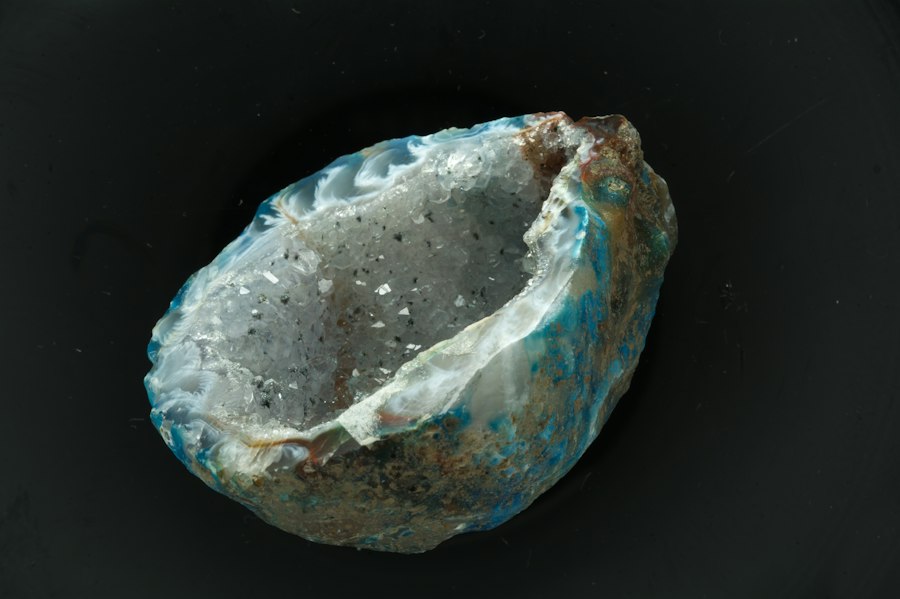
Modern science has provided a clear framework for understanding how rock crystal can magnify, moving beyond speculative lore to empirical evidence. The principles of optics are well-established, and when applied to a material like rock crystal, they reveal its potential as a lens.
The Physics of Magnification
As discussed, magnification is achieved by shaping the rock crystal into a convex lens. The degree of magnification is quantified by the lens’s focal length and the observer’s distance from the object. A shorter focal length, achieved by a more curved lens, results in greater magnification. The formula for angular magnification (M) for a simple magnifier is often expressed as M = 250/f, where ‘f’ is the focal length in millimeters, and 250 mm is the standard near point of distinct vision for a young person. Therefore, a rock crystal lens with a focal length of, say, 100 mm, would provide a magnification of 2.5x.
Rock Crystal in Scientific Instruments
While not as commonly used as precision-ground glass in high-end scientific instruments today, rock crystal has historically played a role and continues to be considered for specialized applications. Its hardness, clarity, and resistance to certain chemicals make it an attractive material. Early microscopes and telescopes, before the advent of advanced glass manufacturing, might have utilized polished quartz lenses, particularly in regions where high-quality glass was not readily available. Today, rock crystal might be employed in niche scientific applications where its specific properties are advantageous, such as in certain types of optical filters or detectors, although often in very pure, synthetic forms rather than naturally occurring crystals.
Gemstone Cutting and Jewelry
The most common way rock crystal is shaped today is for jewelry and decorative purposes. Gem cutters skillfully facet and polish rock crystal to enhance its brilliance and play of light. While the primary intention is aesthetic, many of these faceted pieces, particularly those with rounded or domed surfaces, can exhibit a degree of magnification. A cabochon cut (a smooth, rounded dome) rock crystal, for instance, can act as a rudimentary magnifying lens. Collectors and enthusiasts sometimes discover this property incidentally when examining intricate details of gemstones or heirlooms.
Misconceptions and Distinctions: Beyond Magnification
The fascination with rock crystal’s magnifying potential sometimes blurs the lines with other, more metaphysical beliefs associated with the stone. It’s important to distinguish between physical magnification, a demonstrable optical phenomenon, and the symbolic or perceived energies often attributed to crystals.
The “Energy” of Rock Crystal
Rock crystal is widely believed by practitioners of crystal healing and alternative therapies to possess powerful energetic properties. These are often described as amplification, clarity, healing, and spiritual connection. While these beliefs are deeply held by many, they are not scientifically demonstrable in the same way as optical magnification. The “energy” is typically understood as a subtle, non-physical force that interacts with the human body’s own energetic field. This contrasts sharply with the physical interaction of light rays with a shaped crystal.
Distinguishing Optical Amplification from Energetic Amplification
When people speak of rock crystal “amplifying energy,” they are generally referring to this metaphysical concept. This is distinct from the optical amplification seen in a lens. An optical lens amplifies the visual information of an object by making it appear larger. An energetic amplification, in the crystal healing context, refers to the stone’s perceived ability to enhance or intensify existing energies, whether they be emotional, spiritual, or even the supposed energetic properties of other crystals. It’s crucial to separate these two distinct concepts to avoid confusion.
The Role of Intention and Belief
The power of belief and intention plays a significant role in how people experience rock crystal. For those who believe in its energetic properties, the stone may indeed feel like it is amplifying their intentions or healing abilities. This psychological effect, often referred to as the placebo effect, can be very powerful and contributes to the perceived efficacy of crystal healing. While this is a valid human experience, it is not a scientifically measurable property of the rock crystal itself in terms of physical amplification of non-physical energies.
Rock crystal has fascinated many with its unique properties, including the potential to magnify objects when shaped correctly. This intriguing aspect of rock crystal is explored in various contexts, including its historical significance and applications in ancient navigation. For those interested in the broader implications of ancient artifacts, a related article delves into the mysteries of the Piri Reis map and its connections to historical exploration. You can read more about it in this insightful piece on decoding the Piri Reis map.
The Future of Rock Crystal: Science and Symbolism Intertwined
| Property | Value | Relevance to Magnification |
|---|---|---|
| Material | Rock Crystal (Quartz) | Transparent mineral used in lenses |
| Refractive Index | Approximately 1.54 – 1.55 | Determines light bending, affects magnification power |
| Transparency | High (Clear and colorless) | Allows light to pass through for image magnification |
| Magnification Capability | Up to 2x – 3x (depending on shape and curvature) | Can be shaped into lenses to magnify objects |
| Typical Lens Shapes | Convex, plano-convex | Shapes used to focus light and magnify images |
| Durability | Hardness 7 (Mohs scale) | Resistant to scratching, suitable for repeated use |
| Historical Use | Used in ancient magnifying glasses and lenses | Proven effectiveness in magnification applications |
The enduring appeal of rock crystal lies in its duality: a scientifically verifiable optical tool and a symbol steeped in ancient mystique. As scientific understanding progresses, so too does our appreciation for the intricate beauty and fundamental properties of this mineral.
Advancements in Material Science
While natural rock crystal has its limitations for precise optical applications due to natural imperfections and the difficulty of achieving perfect uniformity, synthetic quartz is extensively used in modern technology. High-purity synthetic quartz is crucial for creating lenses, prisms, and windows in scientific instruments, lasers, and telecommunications equipment where extreme clarity and specific optical properties are required. These advancements underscore the ongoing importance of quartz as a material, driven by scientific innovation rather than ancient belief.
The Continued Resonance of Symbolism
Despite technological advancements, the symbolic significance of rock crystal is unlikely to diminish. Its association with clarity, purity, and amplification resonates across cultures and personal beliefs. In jewelry, it remains a popular choice for its beauty and the perceived positive qualities it bestows. The act of holding or wearing a piece of rock crystal can evoke feelings of calm, focus, and connection, irrespective of its physical magnifying capabilities.
A Holistic Perspective
Ultimately, the “power” of rock crystal can be viewed through a holistic lens, acknowledging both its physical properties and its symbolic meaning. A well-shaped piece of rock crystal can indeed magnify our vision, bringing clarity to the unseen. In a more metaphorical sense, it can also magnify our intentions, focus our thoughts, and amplify our sense of well-being. The scientific explanation of light refraction and the age-old belief in its energetic properties are not mutually exclusive but rather different facets of humanity’s enduring relationship with this remarkable gemstone. The question of whether rock crystal “can magnify” is answered with a resounding yes, both physically, through its optical characteristics when shaped correctly, and symbolically, through its deep-seated presence in human culture and belief systems.
Did This Ancient Crystal Help People See?
FAQs
What is rock crystal?
Rock crystal is a colorless and transparent variety of quartz, often used in jewelry and decorative items due to its clarity and brilliance.
How does rock crystal magnify objects?
Rock crystal has the ability to refract and amplify light, which can make objects viewed through it appear larger and more detailed.
Is rock crystal used in magnifying glasses?
Yes, rock crystal has been historically used in the making of magnifying glasses due to its magnifying properties.
Can rock crystal be used for healing purposes?
Some believe that rock crystal has healing properties and can help with energy flow and balance, although scientific evidence is lacking in this area.
Where can rock crystal be found?
Rock crystal can be found in various locations around the world, including Brazil, Madagascar, and the United States.