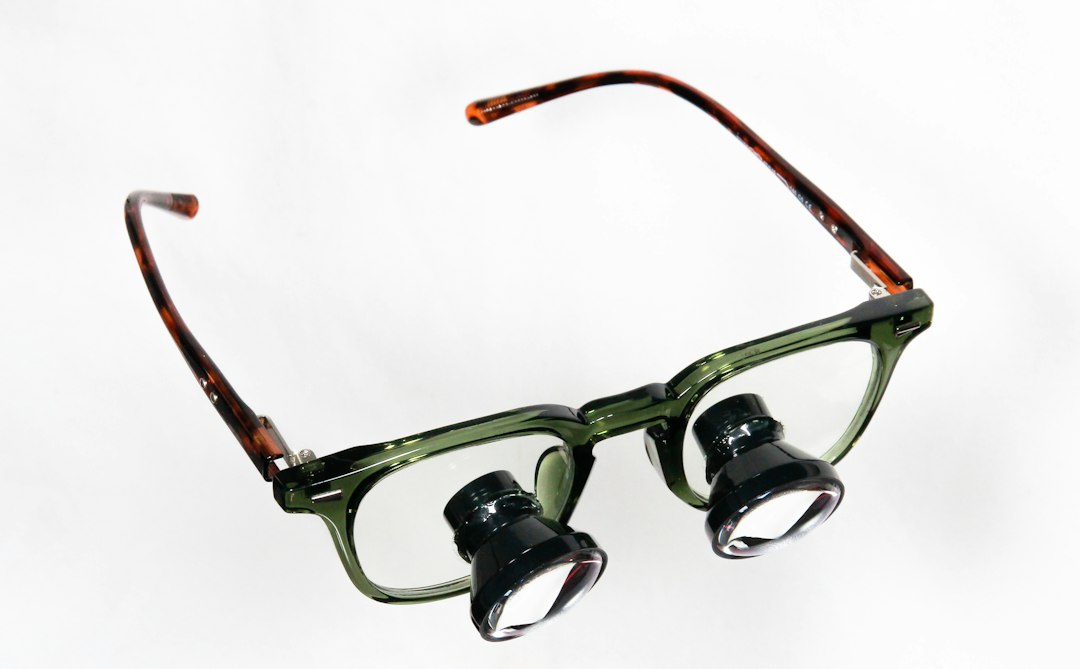
The allure of the infinitesimally small has captivated human curiosity for millennia. Long before the advent of sophisticated laboratory equipment, ancient civilizations possessed a remarkable ingenuity, devising methods to enlarge and scrutinize the world around them. These early endeavors, often born out of practical necessity rather than purely scientific pursuit, laid the groundwork for the development of modern magnification. Exploring these ancient magnifying tools offers a fascinating glimpse into the intellectual prowess and observational skills of our forebears, revealing a surprising depth of understanding and application of optical principles. From the humble polished gem to the meticulously crafted lenses, these artifacts speak of a persistent desire to see beyond the naked eye’s limitations, to uncover hidden details, and to imbue the seemingly mundane with a new level of significance. The journey through these ancient tools is not merely an archaeological exercise; it is an exploration of the very genesis of scientific inquiry, demonstrating how a fundamental human drive to observe and understand can manifest in surprisingly elegant and effective ways, even with the most rudimentary of technologies.
The Earliest Glimmers: Natural Magnifiers in Antiquity
The concept of magnification likely emerged organically, stemming from the accidental discovery of materials that possessed inherent light-bending properties. Before humans could intentionally grind and shape glass, natural objects offered the first hints of what lay beyond the unassisted human eye. These early forms of magnification, while not sophisticated by modern standards, were crucial in demonstrating the potential for visual enhancement. They represent the very genesis of optical perception beyond its natural limits, sparking a curiosity that would eventually lead to more deliberate technological advancements.
Polished Crystals and Water-Borne Illusions
Among the earliest documented examples of perceived magnification are those involving polished gemstones and the refractive properties of water. Ancient cultures, particularly in Mesopotamia and Egypt, possessed skilled lapidaries who could shape and polish various stones. It is theorized that some of these polished stones, particularly convex-shaped ones like quartz or beryl, could have acted as rudimentary magnifying lenses. When held close to an object, the curvature of the polished surface could refract light, creating a slightly enlarged image. While definitive proof of their widespread use as deliberate magnifying tools is scarce, the presence of such finely worked stones in archaeological contexts suggests a keen understanding of their aesthetic and possibly functional qualities.
Furthermore, the simple act of observing objects through a vessel filled with water could have provided rudimentary magnification. The difference in refractive index between air, water, and the object being viewed would cause light rays to bend, leading to a slightly enlarged appearance. Ancient peoples, with their close relationship to water bodies and their reliance on observation for survival, would undoubtedly have encountered these optical phenomena. Imagine a scribe examining a papyrus fragment or an artisan inspecting a finely crafted bead, and through an accidental placement of a water-filled jar, noticing a magnified detail that sparked an idea. While these instances might have been serendipitous rather than intentional applications of optical principles, they represent a foundational, albeit intuitive, understanding of how light behaves. The polished surfaces of precious or semi-precious stones, especially those with a naturally convex form, could have been observed to enlarge small details on seals, coins, or intricate carvings. The Egyptians, known for their mastery of gem cutting, likely produced many such polished stones. While the primary purpose was often decorative or symbolic, it is not unreasonable to assume that their reflective and refractive qualities were not entirely overlooked. The notion of looking through a polished crystal and seeing things appear larger, even if only slightly, would have been a significant perceptual shift.
The Role of the Sphere: Early Understanding of Convexity
The spherical shape is inherently capable of magnifying. The curvature of a sphere naturally bends light rays inward. Ancient artisans who worked with round objects, such as beads or polished spheres of glass or stone, might have noticed this magnifying effect. While large, perfectly spherical lenses were beyond their technological reach, smaller, naturally occurring or crafted spherical objects could have served as primitive magnifiers. The emphasis here is on the discovery of this property, even if it wasn’t fully understood in theoretical terms. The ability to hold a polished sphere between oneself and an object, and to perceive a larger image, would have been a profound observation. These spheres, whether made of polished obsidian, crystal, or even carefully shaped glass, would have offered a limited but noticeable magnification. The exact purpose of these objects is often debated, but their optical potential cannot be dismissed.
The prevalence of spherical objects in ancient societies, from decorative elements to tools, means that the accidental discovery of magnification through these forms was likely. The gradual refinement of polishing techniques would have improved the clarity of the enlarged image, making the effect more pronounced and thus more noticeable. The inherent simplicity of a sphere as a convex optical surface makes it a logical starting point for understanding magnification. This understanding, however rudimentary, paved the way for more complex optical instruments. The Romans, for instance, are believed to have used polished glass spheres filled with water as magnifiers. While direct evidence is limited, the artistic depictions and the known technological capabilities of the time make this plausible. The idea is that such a sphere, acting as a plano-convex lens, could have been used to read small inscriptions or inspect fine details. This early association with spheres highlights a fundamental geometric principle that underlies all lenses, even those of sophisticated modern design.
Ancient magnifying devices, such as the early lenses used by civilizations like the Greeks and Romans, played a crucial role in the development of optics and vision enhancement. These rudimentary tools laid the groundwork for modern optical instruments, influencing various fields from astronomy to medicine. For a deeper understanding of how historical advancements impact contemporary issues, you might find the article on environmental migration insightful, as it explores how communities adapt to changes over time. You can read it here: Environmental Migration: Understanding the Impact on Communities.
Roman Ingenuity: Glass and the Dawn of Practical Lenses

The Romans, renowned for their engineering prowess and practical applications of science, made significant strides in the development and use of magnifying tools. Their mastery of glassmaking provided them with a new medium, allowing for the creation of more precise and functional optical devices than were previously possible. This period marks a transition from accidental discoveries to more deliberate, though still limited, applications of optical principles.
The Emerald of Nero: A Legendary Magnifier?
One of the most famous, though perhaps apocryphal, accounts of ancient magnification involves Emperor Nero. Pliny the Elder, a Roman naturalist, described Nero using a large emerald, polished into a lens shape, to watch gladiatorial contests. The prevailing theory is that Nero, who suffered from poor eyesight, used this emerald to magnify the spectacles. While the veracity of this specific account is debated, and it is unlikely that the emerald was a perfect lens capable of significant magnification by modern standards, the story points to an awareness of the magnifying properties of polished gemstones. If true, it suggests a practical, albeit luxurious, application of optical enhancement. The emerald, with its naturally green hue, might also have served to reduce glare, further enhancing the viewing experience. The legend of Nero and his emerald underscores the desire among the elite to possess tools that could improve their perception of the world, even if those tools were rudimentary and their use primarily for entertainment or personal convenience.
The significance of this legend lies not in its absolute historical accuracy but in its reflection of a cultural understanding that certain polished stones could alter visual perception. The difficulty in creating large, perfectly polished gemstones capable of significant magnification means that the “emerald lens” may have offered only a subtle enhancement. However, even a slight improvement in clarity or size could have been considered remarkable in an era without spectacles. The fact that such a story was recorded by a respected naturalist indicates that the concept of using polished gems for visual aid was at least conceivable, if not regularly practiced. It hints at a precursor to the more refined optical devices that would follow. The emerald’s color could have also played a role, possibly acting as a tinted lens to reduce the harshness of sunlight during outdoor events, a concept that has modern parallels in sunglass technology.
Early Glass Lenses: The Birth of a New Optical Medium
The Roman development of glassmaking was a pivotal moment in the history of optics. They learned to produce clear, workable glass, which opened up possibilities for creating more refined optical devices. While they did not achieve the clarity or precision of modern manufactured lenses, there is evidence suggesting they experimented with shaping glass into convex forms for magnification. These early glass lenses, likely small and imperfect, would have been more effective than polished stones. The ability to control the curvature of the glass more precisely than a naturally occurring gemstone offered a pathway to greater magnification. These were not yet the spectacles we recognize today, but rather individual lenses that might have been used for specific tasks requiring close examination. The archaeological record provides some tantalizing hints, with fragments of glass objects found that could have served as rudimentary lenses. The craftsmanship involved in producing such clear glass itself was a remarkable achievement, and its application to optics was a natural progression.
The Roman focus on practical innovation meant that any discovered optical properties would likely have been explored for their utility. Whether used by scribes to read faded manuscripts, by artisans to inspect intricate metalwork, or even by physicians to examine wounds, these early glass lenses represented a significant leap forward. The challenge lay in achieving consistent quality and the ability to produce larger, more perfectly formed lenses. Despite these limitations, the Roman era signifies the crucial transition from natural materials to manufactured ones in the pursuit of visual enhancement. The potential of glass as an optical medium was recognized, setting the stage for future developments in lens technology. The inherent malleability of glass, when heated, allowed for more precise shaping than was possible with rigid stones, even if the resulting lenses were not perfectly spherical or free of imperfections. This was the crucial step towards creating optical tools that were not just decorative but genuinely functional.
Beyond the West: Eastern Optical Discoveries

While much attention is often paid to Western advancements in optics, ancient civilizations in the East also developed their own unique approaches to magnification. These discoveries, often intertwined with their philosophical and practical traditions, demonstrate a parallel yet distinct path in the exploration of visual enhancement.
Chinese Crystals and the Art of Vision Correction
In ancient China, evidence suggests the use of polished quartz crystals for what appears to be vision correction. Historical texts and archaeological finds indicate that certain officials wore spectacles fitted with these crystals. These were not sophisticated lenses but rather flat or slightly convex pieces of polished quartz, likely used to enhance the clarity of vision rather than to provide significant magnification. Their primary function may have been to reduce glare or to slightly sharpen focus, akin to very weak reading glasses. The practice of using such devices, particularly among the educated elite, highlights a societal value placed on clear vision for intellectual pursuits. The meticulous polishing of these quartz pieces speaks to a sophisticated understanding of material properties and their potential applications.
The notion of correcting vision with simple optical elements, even without a deep theoretical understanding of focal lengths, is a testament to empirical observation and practical problem-solving. These Chinese spectacles, while primitive by modern standards, represent an early form of visual aid. The specific purpose is still a subject of scholarly debate, with some suggesting they were primarily for reducing glare from bright sunlight, while others believe they offered a mild form of magnification for reading. Regardless, their existence points to an awareness of how certain materials could alter the way light interacts with the eye. The refinement of the polishing techniques required to achieve a smooth, clear surface on quartz demonstrates a high level of craftsmanship. This early Chinese approach to optical aids stands as a significant, though often overlooked, contribution to the history of magnification.
Magnifying Glasses in India: Evidence and Interpretation
Evidence from ancient India also points towards the use of magnifying tools. While direct textual references to specific magnifying lenses are less abundant than in some other cultures, archaeological discoveries and interpretations of artistic depictions suggest their use. Polished gemstones, similar to those found in Roman contexts, might have served as rudimentary magnifiers. Furthermore, some scholars interpret certain depictions in ancient Indian art as potentially illustrating the use of magnifying devices, though this remains a subject of ongoing research and interpretation. The emphasis on detailed craftsmanship in Indian art and architecture would have benefited from tools that allowed for the inspection of fine details.
The philosophical and scientific traditions of ancient India, with their emphasis on meticulous observation and understanding of the natural world, would have naturally led to an interest in tools that enhanced perception. While the focus might not have been on creating powerful optical instruments, the practical application of magnification for crafts, medicine, or personal use is plausible. The discovery of finely polished stones or glass fragments that exhibit optical properties in Indian archaeological sites would provide further support for this hypothesis. The inherent sophistication of ancient Indian metallurgy and gemology suggests that the creation of functional optical elements was within their technological capabilities. The interpretation of historical artifacts and artistic representations is crucial in piecing together this less documented aspect of optical history.
The Unseen World: Magnification for Practical Purposes
Beyond mere curiosity or the correction of vision, ancient magnifying tools likely served a range of practical purposes, impacting fields from craftsmanship and metallurgy to medicine and astronomy. The ability to see finer details would have opened up new possibilities for innovation and precision in various aspects of daily life and specialized trades.
Artisanal Precision: Crafting the Intricate
For artisans working with delicate materials, a magnifying tool would have been invaluable. Jewelers meticulously setting tiny gemstones, metalworkers engraving intricate patterns, or scribes illuminating manuscripts would all benefit from the ability to enlarge their work. A polished gemstone or a rudimentary glass lens could have allowed for greater precision, reducing errors and enabling the creation of ever more complex and beautiful objects. Imagine a goldsmith examining the delicate filigree of a necklace, or a calligrapher ensuring the perfect stroke of ink on a scroll. These tools, however simple, would have directly contributed to the quality and complexity of ancient crafts.
The development of such tools would have been driven by a feedback loop: the desire to create finer work led to the need for better tools, and the availability of those tools in turn enabled the creation of even more sophisticated artistry. The legacy of intricate ancient craftsmanship, from the detailed carvings on Egyptian sarcophagi to the delicate filigree of Roman jewelry, hints at the use of magnifying aids. Without some form of visual enhancement, achieving such levels of detail would have been exponentially more challenging. The subtle curvature of a polished beryl or a small glass sphere could have provided the crucial difference, allowing the artisan’s steady hand to execute designs that would otherwise be lost to the limitations of the naked eye. This practical application of magnification is a testament to its utility in advancing human endeavors.
Medical Examination: Peering into the Body’s Secrets
While definitive proof is scarce, it is conceivable that ancient physicians and healers utilized magnifying tools for medical purposes. Examining wounds, inspecting skin conditions, or even performing rudimentary surgical procedures might have benefited from a slightly enlarged view. A clear, polished gemstone or a small glass lens could have aided in identifying foreign objects, assessing the extent of injuries, or ensuring the precise removal of diseased tissue. The advanced understanding of anatomy and surgical techniques in some ancient cultures suggests the potential use of such aids.
The Hippocratic tradition, for instance, emphasized careful observation and diagnosis. While direct mention of magnifying lenses in medical texts is rare, the general understanding of optics and the practical needs of physicians make their use plausible. Consider the challenge of removing a splinter from deep within the skin or identifying the source of an infection. Even a modest magnification would have provided a clearer view, leading to more accurate diagnosis and treatment. The development of specialized tools often arises from specific needs, and the medical field, with its focus on detailed observation and intervention, would have been a prime candidate for adopting optical aids. The potential for such tools to improve patient outcomes, even in a limited capacity, would have been a significant incentive for their development and use.
Early Astronomy: Charting the Celestial Sphere
While the truly powerful telescopes that revealed the wonders of the cosmos are a much later invention, there are indications that ancient astronomers might have employed rudimentary magnifying devices to observe celestial bodies. While they lacked the ability to significantly magnify distant stars or planets, small lenses or polished crystals could have been used to enhance the clarity of star charts, observe the moon’s surface in greater detail, or perhaps even to study the paths of celestial objects with slightly improved visual acuity. The precise mapping of constellations and the tracking of planetary movements in ancient cultures suggest a level of observational detail that might have been aided by such tools.
The limitations of naked-eye astronomy are well-known. However, even a subtle enhancement in clarity could have been significant for ancient sky-watchers. Perhaps a polished crystal was used to get a clearer view of the phases of the moon or to better distinguish between the brightest stars. The development of more accurate calendars and astronomical predictions in many ancient civilizations, such as the Babylonians or Maya, implies a commitment to detailed observation. While the primary tools were likely the keen eye and patient observation, the possibility of rudimentary optical aids cannot be entirely dismissed. These early explorations, however limited, represent the nascent stages of humanity’s quest to understand the universe through magnified observation. The pursuit of knowledge about the heavens, even with simple tools, was a powerful motivator.
Ancient magnifying devices, such as the earliest lenses crafted from polished crystal, played a significant role in the development of optical science. These tools not only enhanced vision but also laid the groundwork for future innovations in magnification and observation. For those interested in exploring the broader implications of historical advancements, a fascinating article discusses the impact of environmental changes on human innovation throughout history. You can read more about this connection in the article on climate change and its historical context found here.
The Legacy and the Leap Forward: From Ancient Tools to Modern Science
| Device Name | Period | Material | Magnification Power | Region of Origin | Purpose |
|---|---|---|---|---|---|
| Reading Stone | Circa 1000 BCE | Quartz or Glass | 2x – 3x | Mesopotamia | Magnifying text for reading |
| Burning Glass | Ancient Greece, 5th Century BCE | Glass | Variable, up to 5x | Greece | Focusing sunlight to start fires |
| Alhazen’s Lens | 11th Century CE | Glass | Up to 10x | Islamic Golden Age (Iraq) | Optical experiments and magnification |
| Roman Glass Lenses | 1st Century CE | Glass | 1.5x – 2x | Roman Empire | Magnifying small objects and reading |
| Viking Crystal Lens | 9th – 10th Century CE | Rock Crystal | 2x – 3x | Scandinavia | Navigation and magnification |
The ancient magnifying tools, though primitive by today’s standards, represent a crucial evolutionary step in human understanding of optics and vision. These early innovations, born from observation, necessity, and ingenuity, laid the conceptual groundwork for the more sophisticated optical instruments that would follow. Their exploration is not merely an academic exercise in historical curiosity; it provides context and appreciation for the long and winding path that led to the powerful microscopes and telescopes that define modern scientific exploration.
The Unfulfilled Potential: Limitations of Ancient Optics
Despite their ingenuity, ancient magnifying tools faced significant limitations. The quality of materials, the precision of craftsmanship, and the theoretical understanding of optical principles were all constrained by the technological and scientific knowledge of the time. Imperfections in the polished surfaces of stones and early glass led to distorted images and limited magnification. The absence of a developed theory of light refraction and optics meant that the creation of lenses was largely empirical, relying on trial and error rather than precise calculation. This meant that magnification was often subtle, and the clarity of the enlarged image was compromised. The production of large, consistently shaped lenses was also a major hurdle. These limitations meant that while ancient tools could offer a glimpse beyond the naked eye, they could not reveal the truly microscopic world or the vastness of distant galaxies in the way that modern instruments can.
The inability to consistently produce high-quality lenses meant that the effective magnification achievable was often quite low. Furthermore, the inherent flaws in the materials, such as bubbles or impurities in glass, or striations in polished stones, would have introduced aberrations that degraded the quality of the magnified image. Without a quantitative understanding of how light bends and focuses, the design of lenses was limited to simple convex shapes, often derived from naturally occurring or easily worked forms. This constrained the ability to create powerful optical instruments that could overcome the diffraction limit of light or resolve fine details at high magnifications. The historical narrative of optics is one of overcoming these very limitations, a journey that began with the simple polished stone and the water-filled sphere.
The Conceptual Bridge: Inspiring Future Optical Inventions
The enduring legacy of ancient magnifying tools lies in their conceptual contribution. They demonstrated that the limitations of human vision could be overcome through technological means. The very act of seeking to enlarge the world, whether for practical tasks, intellectual curiosity, or artistic expression, planted the seed for future optical innovations. These early attempts, even with their imperfections, sparked an enduring fascination with the unseen and the distant. They established the fundamental principle that light could be manipulated to alter perception, a concept that would be refined and amplified over centuries.
The ancient discoveries, however rudimentary, served as a vital conceptual bridge. They provided the foundational idea that with the right materials and shapes, one could see more. This simple yet profound realization motivated subsequent generations of thinkers and craftspeople. The Roman advancements in glassmaking, for example, built upon earlier understandings of polished stones, paving the way for more precise lens grinding. The Chinese use of crystals for vision correction, while basic, contributed to the growing body of knowledge about optical aids. Each step, however small, was a testament to the persistent human drive to see further and to understand more. The legacy of these ancient tools is not just in the artifacts themselves, but in the enduring inspiration they provided for the pursuit of optical science. They remind us that even the most complex modern technologies have humble origins, rooted in the earliest attempts to push the boundaries of human perception.
The Dawn of the Microscope and Telescope: A Direct Lineage
The development of the microscope and telescope, transformative inventions that revolutionized science and our understanding of the universe, owes a direct lineage to the early experiments with magnification. The understanding of convex lenses, first intuited with polished stones and later refined with glass, formed the very basis of these revolutionary instruments. The ingenious combination of multiple lenses, a concept that emerged from centuries of refinement, allowed for the significant magnification required to observe the microbial world and the distant celestial bodies. The journey from a polished gemstone used by an ancient artisan to the powerful lenses of Galileo’s telescope or van Leeuwenhoek’s microscope is a testament to the continuous evolution of optical technology, with each advancement building upon the discoveries and insights of its predecessors. The ancient world, with its rudimentary magnifying tools, provided the crucial first steps on this remarkable journey of scientific discovery and technological innovation.

Did This Ancient Crystal Help People See?
FAQs
What are ancient magnifying devices?
Ancient magnifying devices are tools or instruments used in ancient times to magnify or enlarge objects for better visibility.
What were some common types of ancient magnifying devices?
Some common types of ancient magnifying devices include the reading stone, the water-filled sphere, and the simple glass lens.
How were ancient magnifying devices used?
Ancient magnifying devices were used by holding them up to the eye and focusing on the object to be magnified, allowing for clearer and more detailed viewing.
What materials were ancient magnifying devices made from?
Ancient magnifying devices were typically made from materials such as glass, crystal, or water-filled glass spheres.
What was the significance of ancient magnifying devices in history?
Ancient magnifying devices played a crucial role in various fields such as science, art, and literature by enabling people to observe and study objects more closely, leading to advancements in knowledge and understanding.