
The human fascination with light and vision is as old as humanity itself. From the earliest cave paintings illuminated by flickering torches to the sophisticated lasers of the modern age, our ancestors possessed an innate understanding of how light behaves and how it can be manipulated. While the scientific understanding of optics is often associated with the Enlightenment and the works of figures like Isaac Newton, evidence suggests that ancient civilizations possessed a remarkable, and often underestimated, grasp of optical principles. Uncovering these ancient optical technologies requires a blend of archaeological detective work, careful scientific analysis, and a willingness to challenge prevailing narratives about technological limitations in the distant past.
Mirrors of the Ancients: Reflecting Power and Precision
The most ubiquitous and perhaps the most intuitively understood form of optical technology is the mirror. Ancient civilizations across the globe developed sophisticated methods for creating reflective surfaces, far beyond mere polished stone or water. These mirrors were not just tools for personal grooming; they served as potent symbols of status, religious artifacts, and even instruments for practical purposes. The materials and techniques employed reveal a deep understanding of surface properties and their interaction with light.
The Art of Metal Polishing: From Shining to Seeing
The earliest and most common forms of ancient mirrors were fashioned from highly polished metal. Bronze and copper were favored materials for millennia, particularly in Mesopotamia, Egypt, and the Indus Valley. The process of creating a highly reflective bronze mirror was laborious and required significant skill. It involved repeated hammering, annealing (heating and cooling to soften the metal), and extensive polishing with abrasive materials such as sand, fine grit, and sometimes even plant-based compounds. The goal was to achieve an incredibly smooth surface, minimizing the scattering of light and thereby creating a clear reflection. Archaeological finds of these mirrors often exhibit a remarkable degree of polish, sometimes rivaling that of modern polished metals.
The metallurgists of these ancient societies understood, perhaps implicitly, the relationship between surface smoothness and reflectivity. A rough surface diffuses light in many directions, resulting in a hazy or no reflection at all. A smooth, polished surface, on the other hand, causes light rays to reflect at predictable angles, allowing for a coherent image to be formed. The precise composition of the bronze alloys used also played a role. Variations in the copper-to-tin ratio could affect the metal’s hardness and its susceptibility to oxidation, impacting both the initial polish and its long-term durability.
The Enigma of Silver and Gold: Precious Reflections
While bronze and copper mirrors were common, the use of precious metals like silver and gold for reflective surfaces suggests a more specialized and perhaps ceremonial purpose. Silver, with its naturally high reflectivity, could be polished to an even greater sheen than bronze. Gold, while less reflective than silver, possessed a unique luster and was highly resistant to corrosion, making it ideal for objects intended to last for eternity.
The methods for creating these precious metal mirrors likely involved similar polishing techniques to those used for bronze, but with even greater care and finer abrasives. In some cases, thin sheets of gold or silver might have been applied to a polished metal substrate, creating a bimetallic mirror. The creation of such composite mirrors would have demanded a sophisticated understanding of adhesion and the differential thermal expansion of metals. The preservation of these mirrors, often found in tombs and sacred sites, speaks to their immense value and the skill of the artisans who crafted them. Their reflective qualities, even after millennia, are a testament to the advanced metallurgical and polishing techniques of the ancient world.
Beyond Metal: Early Glass and Obsidian
While metal mirrors dominated for a long period, hints of other reflective materials emerge. Obsidian, a naturally occurring volcanic glass, possesses a naturally smooth and reflective surface when fractured. While not capable of being polished to the same degree as metal, obsidian mirrors were used in some cultures, particularly in Mesoamerica. These mirrors would have offered a somewhat distorted but still recognizable reflection, and their dark, glassy appearance lent them an almost mystical quality.
The true advent of glass mirrors, however, came much later. Early attempts at creating glass likely involved experiments with silica, soda ash, and lime. However, the creation of clear, transparent glass suitable for mirrors was a significant technological hurdle. Ancient Egyptians and Romans were skilled glassblowers, but their glass was often opaque or colored. The true development of glass mirrors, with a reflective coating applied to the back, is a later innovation, often attributed to the Islamic world and eventually Europe, building upon earlier, more rudimentary glass technologies. Nevertheless, the very exploration of glass as a material with potential reflective properties marks a crucial step in the evolution of optical technology.
Ancient optical technology played a crucial role in the development of early civilizations, influencing everything from navigation to architecture. For a deeper understanding of how power dynamics shaped societal responses to crises, including the use of such technologies, you can explore the article on elite control during ancient famines. This piece discusses the intersection of power and privilege in times of hardship, shedding light on how those in authority utilized available resources, including technological advancements, to maintain their status. For more insights, visit this article.
Lenses of Antiquity: Magnifying the World
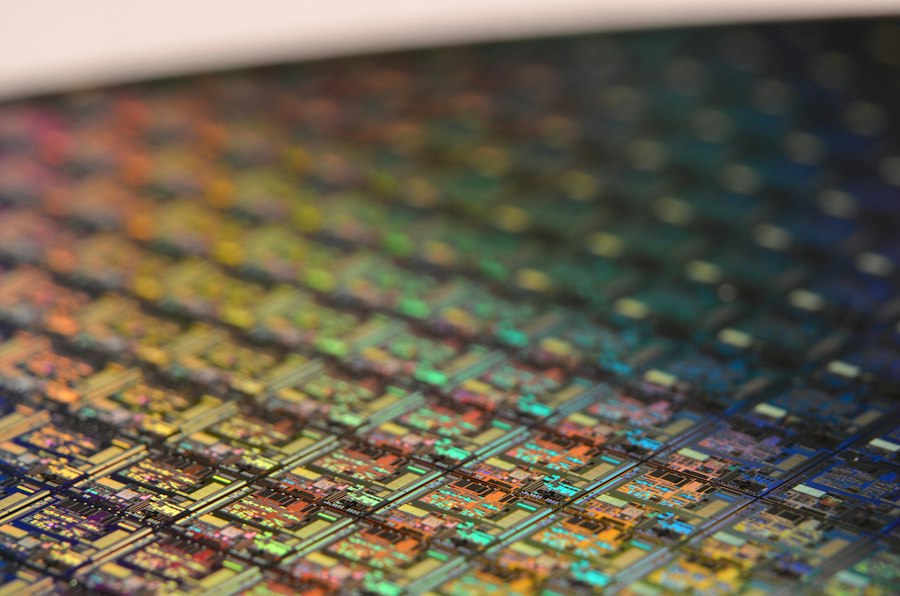
The concept of magnification, the ability to see small or distant objects with greater clarity, is perhaps one of the most profound optical insights. While the precise origins are debated, evidence suggests that ancient civilizations, particularly the Greeks and Romans, were aware of and experimented with the magnifying properties of curved transparent materials, laying the groundwork for the development of lenses.
The Curious Case of the “Burning Glass”
One of the earliest and most compelling pieces of evidence for ancient lens technology comes from the writings of Roman scholars. Pliny the Elder, for instance, describes how Emperor Nero allegedly watched gladiatorial contests through an emerald, suggesting its use as a form of rudimentary magnifying glass or perhaps even to mitigate glare. While the exact nature of this “emerald” is debated – it could have been a naturally occurring, imperfect crystal or a shaped gem – it points to an awareness of the visual enhancement offered by transparent, curved objects.
More directly, the concept of a “burning glass,” a lens used to concentrate sunlight and create fire, is mentioned by various ancient authors. Seneca, another Roman philosopher, described how balls of water or glass could be used to magnify letters, demonstrating an understanding that curved transparent substances could alter the path of light. These descriptions suggest that while standardized lenses for vision correction were not yet commonplace, the principle of using curved surfaces to focus or magnify light was understood and, to some extent, utilized.
The Discovery of Convexity and Concavity
The creation of a functional lens requires understanding the principles of refraction and the geometric shapes that facilitate it. A convex surface, curved outwards like the exterior of a sphere, has the ability to converge parallel rays of light to a focal point. Conversely, a concave surface, curved inwards, diverges light. Ancient craftspeople, working with materials like quartz, beryl (the mineral from which emeralds are derived), and early forms of glass, would have encountered these effects through trial and error.
The polishing of transparent materials into specific shapes was a testament to their developing skills in lapidary arts and glassmaking. While the theoretical understanding of focal lengths and image formation may have been limited, the practical application of creating curved surfaces that altered vision was clearly present. Imagine an artisan chipping away at a piece of quartz, gradually shaping it, and noticing that when held at a certain distance, it made objects appear larger. This empirical discovery, repeated across different cultures and over centuries, would have gradually built a practical knowledge base of lens-making.
Astronomical and Scientific Implications
The potential application of lenses in ancient astronomy is a tantalizing prospect. While definitive evidence of telescopic observation in antiquity is scarce, some scholars speculate that early forms of lenses might have been used for rudimentary astronomical observations. Imagine an astronomer in ancient Greece or Egypt, using a polished piece of quartz or a water-filled sphere to get a slightly closer look at celestial bodies. While this would not have yielded the detailed images we associate with modern telescopes, it could have allowed for the observation of features previously invisible to the naked eye.
Furthermore, the development of lenses, even in their simplest forms, would have been invaluable for scientific inquiry. Detailed examination of small objects, whether for botanical study, anatomical dissection, or the inspection of intricate artifacts, would have been greatly enhanced by even a modest magnification. The very act of seeking to see more clearly, to uncover hidden details, is a hallmark of scientific curiosity, and lenses represent a tangible manifestation of that desire.
Light Manipulation: Illuminating the World and Beyond
Beyond simple reflection and magnification, ancient cultures demonstrated a sophisticated understanding of how to control and direct light for various purposes. This ranged from practical applications of illumination to more esoteric uses that hinted at a deeper engagement with the properties of light.
The Ingenuity of Ancient Lighting
The challenge of illuminating dark spaces has been a constant throughout human history. Ancient civilizations developed a range of lighting technologies that, while seemingly simple by modern standards, represented significant technological achievements for their time. Oil lamps, made from clay, stone, or metal, were a staple. The design of these lamps often incorporated features to optimize burning efficiency and direct light. For example, the shape of the reservoir, the wick material, and the presence of baffles or reflectors could all influence the quality and direction of the light emitted.
Some advanced lamp designs included polished metal reflectors placed behind the flame. These reflectors, often made of bronze or silver and polished to a high sheen, would have significantly increased the effective illumination by redirecting light that would otherwise have been lost. This is a direct application of the principles of reflection, demonstrating an understanding of how to make the most of a limited light source. The careful placement and curvature of these reflectors suggest an intuitive grasp of optics, maximizing the utility of their lighting systems.
Signaling and Communication: Beacons of Light
The use of light for signaling over distances is another area where ancient optical technology played a crucial role. The most famous example is the “heliograph,” though the term itself is modern. Ancient armies and maritime traders would have used polished shields or metal plates to reflect sunlight towards a distant point, creating flashes of light that could be seen for miles. The ability to control the direction and duration of these flashes would have allowed for a rudimentary form of coded communication.
The ancient Greeks, for instance, were known to use polished bronze shields for signaling. Similarly, during naval battles, ships might have used reflective surfaces to communicate with each other or to signal to shore. The effectiveness of such signaling would have depended on the quality of the reflective surface and the skill of the operator in aiming and manipulating the light. This demonstrates a practical understanding of how to harness sunlight and direct its powerful beams for strategic purposes.
The Mystery of the Antikythera Mechanism
Perhaps the most enigmatic example of ancient optical technology, or at least a device that hints at a sophisticated understanding of mechanics and potentially optics, is the Antikythera Mechanism. Discovered in a shipwreck off the coast of Greece, this intricate bronze device, dating back to the 2nd century BCE, is essentially an ancient analog computer. While primarily mechanical, its complexity and its ability to track astronomical cycles have led some researchers to speculate about its potential use in conjunction with optical devices, or that its creation required an understanding of precision engineering that could have been applied to optics as well.
While the Antikythera Mechanism itself doesn’t directly display optical components in the way we understand them today (like lenses or mirrors for viewing), its existence suggests a level of scientific and engineering sophistication that could have supported the development and use of more advanced optical tools than previously assumed. The precise gearing and intricate construction imply a deep understanding of mathematical principles and mechanical artifice, capabilities that would undoubtedly have been transferable to the manipulation of light.
Precision Craftsmanship: The Art of Shaping Light-Interacting Materials
The creation of any optical technology, from a simple polished mirror to a rudimentary lens, requires a high degree of precision in material selection, shaping, and finishing. Ancient artisans and craftspeople demonstrated remarkable skill in working with a variety of materials, revealing an advanced understanding of their physical properties and how to manipulate them to achieve specific optical outcomes.
Lapidary Arts: Shaping Gems for Vision
The art of lapidary – cutting and polishing gemstones – was highly developed in many ancient civilizations. As mentioned earlier, certain gemstones, like beryl, possess inherent optical properties. The ability to cut and polish these stones into specific shapes, often with curved surfaces, was crucial for creating early forms of lenses and magnifying devices. The ancient Egyptians and later the Romans were particularly adept at this craft.
The process would have involved careful selection of the raw stone, followed by a painstaking process of grinding and polishing using progressively finer abrasives. Achieving a smooth, transparent surface on a hard gemstone required not only physical effort but also an understanding of the material’s cleavage planes and its susceptibility to different abrasive materials. The creation of a convex or concave surface with a consistent radius of curvature would have demanded considerable skill and patience, leading to the production of objects that could demonstrably alter the way light interacted with the eye.
Metallurgy and the Quest for Smoothness
The pursuit of smooth, reflective surfaces in metal mirrors was a driving force behind advancements in ancient metallurgy and polishing techniques. The creation of consistently high-quality bronze alloys and the development of effective polishing compounds were essential. The discovery and utilization of various abrasive materials, from fine sand and emery to organic powders, played a vital role.
The understanding of how different alloys would polish and how they would react to environmental factors like oxidation also developed over time. This knowledge allowed for the selection of materials that would not only achieve a high polish but also maintain it over time. The meticulous, multi-stage polishing process, often involving the use of leather buffs and natural oils, was critical in achieving the mirror-like finishes found on many ancient artifacts. This dedication to achieving an exceptionally smooth surface for reflective purposes underscores a deep, practical understanding of light behavior.
Glassmaking Innovations: From Opaque to Transparent
While the earliest forms of glass were often opaque and colored, the pursuit of clearer glass was a gradual, evolutionary process. The development of more refined raw materials, better control over furnace temperatures, and the introduction of new fluxing agents allowed for the creation of increasingly transparent glass. This transparency was a prerequisite for the development of functional lenses and eventually, mirrored glass.
The discovery of techniques for blowing glass also allowed for the creation of hollow spherical or curved shapes. While the optical quality of early blown glass might have been imperfect, the ability to form consistent curves was a significant step. The gradual improvement in glassmaking over centuries, from the ancient Egyptians and Romans to the Byzantine and Islamic empires, laid the foundation for the later development of true glass mirrors and sophisticated lenses, demonstrating a progressive mastery over material science and manufacturing processes.
Ancient civilizations made remarkable advancements in optical technology, utilizing lenses and mirrors to enhance their understanding of the world around them. A fascinating exploration of how these early innovations laid the groundwork for modern optical devices can be found in a related article that discusses the implications of ancient technologies on contemporary issues. For more insights, you can read about it here. This connection between past and present highlights the enduring impact of human ingenuity in the face of evolving challenges.
Enduring Legacy: The Unseen Foundation of Modern Optics
| Technology | Period | Region | Description | Significance |
|---|---|---|---|---|
| Burning Mirrors | Ancient Greece, 5th century BCE | Greece | Concave mirrors used to focus sunlight to ignite fires. | Early use of reflective optics for practical applications. |
| Magnifying Lenses | Ancient Egypt, circa 2600 BCE | Egypt | Quartz or glass lenses used to magnify small objects. | Foundation for later development of microscopes and telescopes. |
| Camera Obscura | 5th century BCE | China and Greece | Darkened room or box with a small hole projecting an inverted image. | Early understanding of light projection and image formation. |
| Glass Spectacles | 13th century CE | Italy | First wearable corrective lenses to aid vision. | Improved quality of life and productivity for visually impaired. |
| Optical Fibers (Natural) | Ancient Rome | Rome | Use of thin, transparent rods to transmit light over short distances. | Precursor concept to modern fiber optics technology. |
The achievements of ancient optical technology, though often overlooked in favor of later scientific breakthroughs, represent a crucial and indispensable foundation for the development of modern optical science and technology. These ancient discoveries and inventions were not isolated incidents but rather a testament to a long, continuous process of observation, experimentation, and innovation that spanned millennia and cultures.
From Empirical Observation to Scientific Theory
The optical technologies of the ancient world were largely the product of empirical observation and practical application rather than rigorous scientific theory. Ancient peoples discovered the properties of light and reflection through trial and error, through the painstaking work of artisans and craftspeople. They learned that by shaping materials in specific ways, they could alter vision, create focused light, and communicate over distances.
These practical discoveries, however, provided the empirical basis upon which later scientific theories would be built. The observation that curved surfaces could magnify or focus light, for instance, predated the mathematical formulations of Snell’s Law of refraction or Kepler’s laws of optics. The polished mirrors that served as status symbols and practical tools provided the physical examples that would later be analyzed and explained by mathematicians and physicists. In essence, the ancient world provided the raw material and the initial demonstrations that fueled the scientific revolution in optics.
Inspiring Future Generations of Innovators
The existence of sophisticated ancient optical artifacts and descriptions of their use continues to inspire awe and curiosity. Discoveries such as well-preserved bronze mirrors, surprisingly clear polished gemstones, and accounts of rudimentary magnifying devices challenge assumptions about the technological capabilities of the past. These findings encourage us to look beyond the most obvious technological advancements and to appreciate the ingenuity and deep understanding that ancient peoples possessed.
The ongoing study of ancient optical technology also serves as a reminder that innovation often builds upon previous knowledge, even if that knowledge is not fully codified or understood in theoretical terms. The practical mastery of materials and processes developed by ancient artisans laid the groundwork for future generations to explore the underlying scientific principles. This continuum of human ingenuity, from the earliest polished stones to the most advanced laser systems, highlights the enduring power of human curiosity and our relentless drive to understand and manipulate the world around us. The story of ancient optical technology is not just a chapter in the history of science; it is an ongoing testament to the fundamental human impulse to see, to understand, and to illuminate.

Did This Ancient Crystal Help People See?
FAQs
What is ancient optical technology?
Ancient optical technology refers to the use of optical devices and principles in ancient civilizations for various purposes such as magnification, reflection, and refraction.
What are some examples of ancient optical technology?
Examples of ancient optical technology include the use of lenses in ancient Egyptian hieroglyphics, the creation of glass mirrors by the Romans, and the development of the camera obscura by ancient Chinese and Greek scholars.
How did ancient civilizations use optical technology?
Ancient civilizations used optical technology for a variety of purposes, including astronomy, architecture, art, and navigation. For example, the Greeks used lenses to start fires, while the Chinese used lenses for magnification in reading and writing.
What impact did ancient optical technology have on modern science?
Ancient optical technology laid the foundation for modern science and technology by introducing concepts such as light, reflection, and refraction. The development of optical devices in ancient times paved the way for advancements in fields such as optics, astronomy, and photography.
What are some challenges in studying ancient optical technology?
Some challenges in studying ancient optical technology include the lack of written records detailing the construction and use of optical devices, as well as the deterioration of artifacts over time. Additionally, the interpretation of ancient texts and artifacts related to optical technology can be complex and require interdisciplinary collaboration.