
The Nazca Desert in southern Peru is a vast, arid expanse, a canvas etched by an ancient civilization with colossal geoglyphs that have captivated imaginations for decades. Among these enigmatic figures – giant hummingbirds, monkeys, spiders, and anthropomorphic beings – one stands out for its peculiar shape and the enduring mystery surrounding its purpose: the Nazca Glyph. Unlike the more recognizable animal and human forms, this abstract design, often described as a spiral or a series of concentric circles with radiating lines, offers fewer immediate clues to its creators’ intentions. For archaeologists, anthropologists, and enthusiasts alike, the Nazca Glyph remains a tantalizing puzzle, a silent testament to a lost world and its complex belief systems.
The sheer scale of the Nazca lines is, in itself, awe-inspiring. Created by removing the reddish-brown desert varnish from the surface stones to reveal the lighter soil beneath, these geoglyphs are so massive that they can only be fully appreciated from a significant height. This has led to speculation about their purpose, with theories ranging from astronomical calendars and religious offerings to pathways for processions and even landing strips for extraterrestrial visitors. While the scientific community largely dismisses the latter, the practical challenges of understanding how these colossal designs were conceived and executed without aerial perspective continues to fuel debate. The Nazca Glyph, with its less figurative nature, presents a unique challenge in this interpretive landscape.
The Dawn of Discovery and Early Interpretations
The first systematic studies of the Nazca lines began in the early 20th century, primarily through aerial photography. German archaeologist Maria Reiche dedicated much of her life to their preservation and study, meticulously documenting each figure and proposing astronomical alignments as a primary function. While her work laid the foundation for much of what we understand about the Nazca culture, the Nazca Glyph, with its abstract form, often proved more resistant to such direct correlations. Early observers, accustomed to identifying recognizable images, struggled to assign meaning to its swirling, linear composition.
Initial Observations and Descriptions
When viewed from above, the Nazca Glyph often appears as a central spiral, sometimes tightly wound, sometimes more open, from which various straight lines or ray-like elements extend outwards. The precise dimensions and variations in its form across different locations within the Nazca region have been a subject of ongoing survey. Unlike the sharp, defined edges of the animal figures, the Glyph can sometimes appear more fluid, suggesting a different method of construction or perhaps a more dynamic intended meaning. The consistency of its recurring elements, however, points towards a deliberate design rather than random scarring of the desert floor.
The Astronomical Hypothesis and its Limitations
Reiche’s astronomical theories, while compelling for many of the animal geoglyphs, faced a greater hurdle with the Nazca Glyph. While some researchers have attempted to link its radiating lines to celestial events or constellations, these connections are often less direct and more speculative than those proposed for the spider or hummingbird. The abstract nature of the Glyph allows for a wider range of potential alignments, making it difficult to pinpoint a singular, definitive celestial event that it might represent. This ambiguity has led some to explore alternative interpretations beyond purely astronomical functions.
The Nazca glyphs, with their intricate designs etched into the Peruvian desert, continue to baffle researchers and enthusiasts alike, as their true meaning remains shrouded in mystery. While many theories have been proposed, from astronomical alignments to religious rituals, none have been definitively proven. For those interested in exploring other ancient wonders and their significance, a fascinating read can be found in the article about the revival of the ancient Assyrian aqueduct of Jerwan, which highlights the ingenuity of ancient civilizations and their remarkable engineering feats. You can read more about it here: Reviving the Ancient Assyrian Aqueduct of Jerwan.
Unpacking the Symbols: A Deeper Dive into the Glyph’s Form
The distinct features of the Nazca Glyph, when examined closely, suggest a more complex symbolic language than initially perceived. The concentric nature of the spiral and the radiating lines are not arbitrary; they are visual elements that likely carried specific cultural weight for the Nazca people. Understanding these elements requires a contextual approach, drawing on broader knowledge of ancient Andean cosmology and symbolism.
The Spiral: A Universal Motif
The spiral is a recurring motif across many ancient cultures worldwide, often symbolizing cycles, movement, life, rebirth, and the journey of the soul. In the context of the Nazca people, who lived in a harsh desert environment where water and fertility were paramount concerns, the spiral could have represented the cyclical nature of rainfall, the growth of crops, or the passage of seasons. It might also have signified a spiritual journey, a descent into the underworld, or an ascent to the heavens. The specific tightness or openness of the spiral in different Nazca Glyphs could even indicate variations in the intensity or nature of the represented cycle.
Radiating Lines: Pathways and Energies
The lines emanating from the central spiral are equally significant. They can be interpreted as pathways, directing energy or movement, or as representations of cosmic forces. In many indigenous cosmologies, lines can signify connections between the earthly realm and the divine, or between different planes of existence. They might represent rays of the sun, conduits of spiritual power, or even the flow of underground water sources – a vital element for survival in the arid Nazca landscape. The number and arrangement of these radiating lines could also hold specific meanings, perhaps corresponding to cardinal directions or significant celestial bodies.
Theories of Purpose: Beyond the Observable
The ongoing quest to understand the Nazca Glyph has spawned a diverse array of theories, each attempting to shed light on its creation and function. While definitive answers remain elusive, these hypotheses offer valuable insights into the potential worldview and practices of the Nazca civilization. The abstract nature of the Glyph lends itself to more metaphorical and ritualistic interpretations, pushing the boundaries of what a geoglyph could represent.
Ritualistic and Ceremonial Functions
One prominent theory suggests that the Nazca Glyph served a ritualistic or ceremonial purpose. The spiral, as a focal point, could have been the site of important ceremonies, with the radiating lines acting as pathways for processions. Imagine a procession of Nazca priests or community members walking along these lines, perhaps performing rituals aimed at appeasing deities, ensuring agricultural success, or marking significant life events. The sheer scale of the geoglyphs, even the abstract ones, suggests a communal effort and a shared belief system that motivated their creation. The act of walking the lines themselves could have been a form of devotion or a meditative practice.
Astronomical Markers with a Twist
While the direct astronomical correlations are challenging, some scholars maintain that the Nazca Glyph could have served as a more complex astronomical marker, perhaps not for precise observation but for symbolic representation. It might have marked a period of the year associated with specific celestial phenomena, or it could have represented a cosmic event in a more stylized, symbolic manner. The radiating lines, in this context, might not point to a specific star but rather to a general direction of celestial movement or influence. This theory acknowledges the astronomical proclivities of the Nazca people while allowing for a more abstract visual language.
Water and Fertility Cults
Given the critical importance of water in the Nazca Desert, a strong argument can be made for a connection to water and fertility cults. The spiraling form can evoke the swirling motion of water, while the radiating lines could represent the life-giving properties of rain or the flow of underground aquifers. The Nazca people developed sophisticated irrigation systems, indicating a deep understanding of water management. It is plausible that the Nazca Glyph was part of a larger system of beliefs and rituals aimed at ensuring the continued availability of this precious resource, perhaps invoking deities associated with water and abundance.
Clan Symbols or Territorial Markers
Another avenue of exploration considers the possibility that the Nazca Glyph served as clan symbols or territorial markers. In societies with complex social structures, distinct symbols are often used to identify groups and delineate their territories. While the animal figures are more easily identifiable as representative symbols, an abstract glyph could have held significance within a particular lineage or community, representing their lineage, their patron deity, or their ancestral lands. The repetition of similar glyphs across different areas might suggest a shared cultural identity or interconnectedness between different Nazca settlements.
The Lingering Questions and Future Research
Despite centuries of study, the Nazca Glyph continues to hold its secrets close. The lack of written records from the Nazca civilization leaves researchers to piece together their beliefs and practices through material evidence and comparative analysis. This reliance on interpretation means that definitive answers are often elusive, and new discoveries or analytical approaches are constantly needed to refine our understanding.
The Challenge of Contextualization
A major challenge in deciphering the Nazca Glyph is the lack of direct textual or ethnographic evidence that can unequivocally explain its meaning. Unlike cultures with deciphered writing systems, we are left to infer meaning from the visual forms and their placement within the landscape. This requires a careful interdisciplinary approach, drawing on archaeology, anthropology, art history, and even psychology to understand the potential cognitive and cultural frameworks that might have informed the creation of these geoglyphs. Without a Rosetta Stone for Nazca symbolism, every interpretation remains a hypothesis to be tested and refined.
Emerging Technologies and New Perspectives
The advent of new technologies is providing archaeologists with innovative ways to study the Nazca lines. High-resolution satellite imagery, advanced remote sensing techniques, and sophisticated 3D modeling are allowing for more detailed mapping and analysis of the geoglyphs. These tools can help identify subtle variations, reveal previously unobserved details, and potentially uncover new glyphs or patterns. Furthermore, advances in computational archaeology and AI are enabling researchers to analyze large datasets of geoglyphic patterns and compare them with other ancient sites, potentially revealing broader cultural connections or functional similarities.
The Enduring Allure of the Unknown
Ultimately, the mystery surrounding the Nazca Glyph is part of its enduring allure. It serves as a potent reminder of the vastness of human history and the diversity of human expression. While we may never fully unravel its intended meaning, the process of investigation itself is invaluable. It pushes the boundaries of our knowledge, encourages critical thinking, and fosters a deeper appreciation for the ingenuity and spiritual depth of ancient civilizations. The Nazca Glyph, in its silent grandeur, continues to beckon us to explore, to question, and to ponder the profound mysteries of our past.
The Nazca glyphs, with their intricate designs etched into the Peruvian desert, continue to baffle researchers and enthusiasts alike, as their true meaning remains elusive. Despite numerous theories ranging from astronomical alignments to religious significance, no consensus has been reached. For those interested in exploring the broader implications of ancient civilizations and their connections to modern technology, a related article discusses the military implications of lunar exploration and its potential parallels to historical advancements. You can read more about this intriguing topic here.
The Legacy of the Nazca Builders
| Aspect | Details |
|---|---|
| Location | Nazca Desert, Southern Peru |
| Estimated Age | 500 BCE to 500 CE |
| Number of Glyphs | Over 800 individual figures |
| Common Themes | Animals, plants, geometric shapes |
| Size Range | From a few meters to over 200 meters in length |
| Purpose Theories | Religious rituals, astronomical calendar, water-related ceremonies |
| Current Understanding | Meaning remains unknown; interpretations are speculative |
| Preservation Status | Well-preserved due to dry climate; threatened by human activity |
The creation of the Nazca lines, including the enigmatic Glyph, represents an extraordinary feat of engineering, social organization, and artistic expression. The Nazca people, who flourished between 100 BCE and 800 CE, left behind a legacy that continues to inspire awe and wonder. Their ability to execute such massive designs with precision on a vast desert canvas speaks volumes about their understanding of geometry, measurement, and labor coordination.
Social and Political Structures
The sheer scale of the Nazca geoglyphs implies a significant level of social organization and a shared cultural vision. The creation of these lines likely required the mobilization of a large workforce, suggesting a hierarchical society with the capacity to direct and sustain such ambitious projects over extended periods. Whether this organization was driven by religious leaders, political elites, or a communal consensus remains a subject of ongoing debate. The Nazca Glyph, as a recurring motif, might have played a role in solidifying social cohesion or reinforcing communal identity across different settlements.
Technological Prowess and Astronomical Knowledge
While the tools available to the Nazca people were relatively rudimentary compared to modern standards, their achievements demonstrate a sophisticated understanding of their environment and a remarkable level of technological skill. The precision with which they laid out and executed these massive designs suggests a developed understanding of surveying and measurement. Furthermore, the persistent astronomical theories, even for the abstract Nazca Glyph, indicate a deep engagement with celestial observation and a desire to connect their earthly existence with the cosmic order. The Nazca people were not simply artists; they were also astute observers of the natural world and skilled practitioners of applied geometry.
The Nazca Glyph, in its abstract beauty and profound mystery, continues to be a focal point in the ongoing study of this ancient civilization. It challenges our assumptions, broadens our perspectives, and reminds us that some of the most profound questions about human history and belief systems may never have simple, singular answers. The desert sands hold their secrets, but in their silent testimony, they offer a glimpse into a world of profound meaning and enduring wonder.
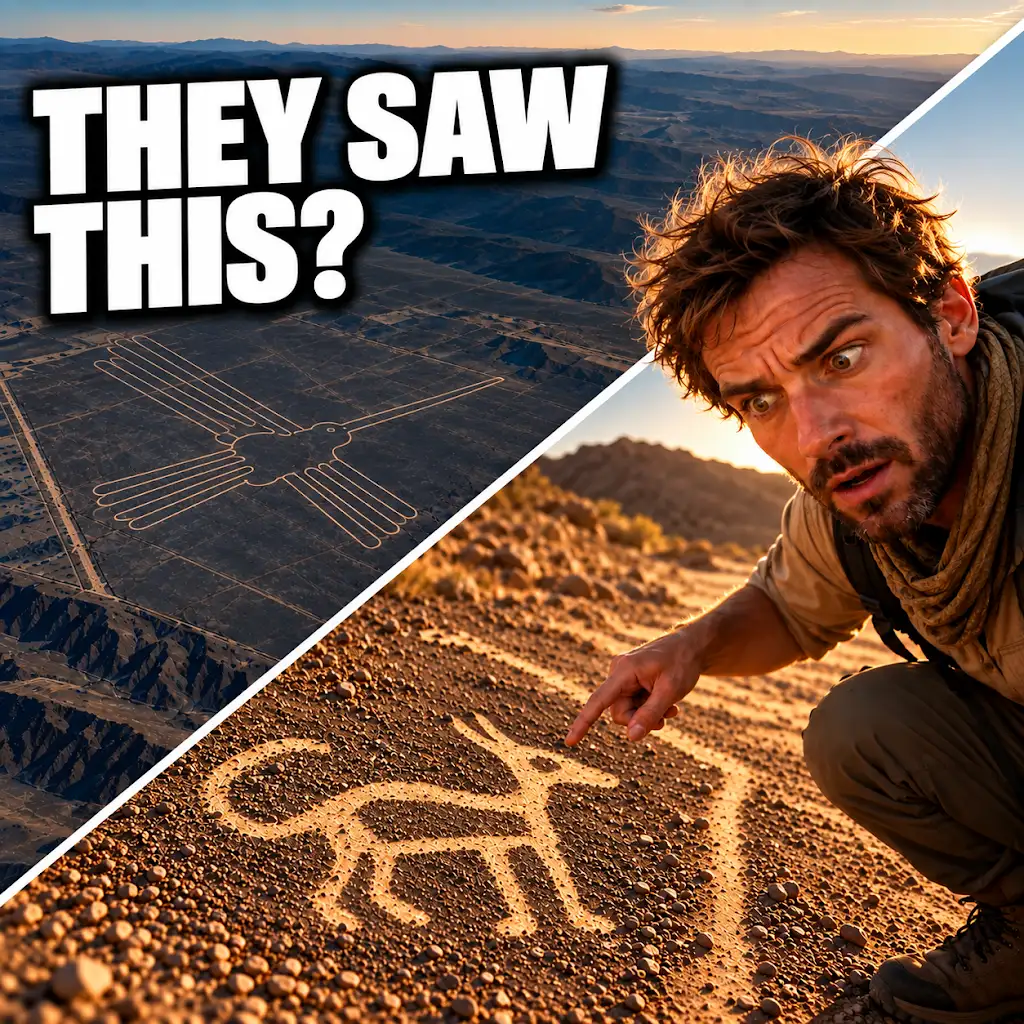
AI Found New Nazca Drawings—Could People See Them from the Ground?
FAQs
What are Nazca glyphs?
Nazca glyphs are large geoglyphs made by removing the top layer of reddish-brown iron oxide-coated pebbles to reveal the lighter-colored earth underneath. They are found in the Nazca Desert in southern Peru.
What is the significance of Nazca glyphs?
The Nazca glyphs are believed to have been created by the ancient Nazca culture between 500 BCE and 500 CE. They are thought to have had religious or ceremonial significance, possibly related to water and fertility rituals.
Why is the meaning of Nazca glyphs still unknown?
The meaning of Nazca glyphs is still unknown because the Nazca culture did not leave any written records explaining their purpose. Researchers have proposed various theories, but there is no consensus on their exact meaning.
How are Nazca glyphs studied by researchers?
Researchers study Nazca glyphs using aerial photography, satellite imagery, and ground surveys. They analyze the geometric shapes, animal figures, and other designs to try to decipher their meaning and purpose.
What are some theories about the purpose of Nazca glyphs?
Some theories about the purpose of Nazca glyphs include that they were used for astronomical observations, as markers for underground water sources, or as pathways for ceremonial processions. However, none of these theories have been definitively proven.