
The stark, arid plains of Peru’s Nazca Desert, a canvas etched with enigmatic geoglyphs that have captivated imaginations for generations, have yielded yet another astonishing secret. For decades, these colossal designs – figures of animals, plants, and geometric shapes visible only from the sky – have posed profound questions about the ancient Nazca civilization. Now, artificial intelligence has stepped into the role of the celestial observer, analyzing vast datasets with unprecedented speed and precision, and in doing so, has unearthed previously unknown geoglyphs, shedding new light on the artistry, beliefs, and astronomical knowledge of these ancient people. This breakthrough marks a significant advancement in our understanding of one of the world’s most enduring archaeological mysteries.
Unveiling the Hidden Tapestry
The Nazca Desert, a vast expanse of arid land in southwestern Peru, is renowned for its extraordinary collection of geoglyphs, attributed to the Nazca culture that flourished between approximately 100 BCE and 800 CE. These intricate designs, some stretching for hundreds of meters, are created by removing the reddish-brown pebbles that cover the surface, exposing the lighter soil beneath. Their sheer scale and the fact that they are best appreciated from high altitudes have fueled speculation for decades, ranging from astronomical calendars and ritual pathways to landing strips for extraterrestrial spacecraft. While aerial surveys and the dedicated work of archaeologists have identified hundreds of these figures, the vastness of the desert and the subtle nature of some designs meant that many remained hidden, obscured by time, natural erosion, or simply overlooked. The advent of sophisticated AI-powered image analysis has fundamentally altered this landscape of discovery. By processing satellite imagery, drone footage, and lidar data with algorithms trained to recognize patterns, anomalies, and specific topographical features, AI can identify subtle variations in the terrain that human eyes might miss, even with the aid of advanced technology. This computational power allows for the systematic scanning of millions of data points, revealing faint outlines and previously unseen formations hidden beneath the desert’s surface or within complex natural formations.
The Power of Algorithmic Eyes
The application of artificial intelligence in deciphering the Nazca geoglyphs represents a paradigm shift in archaeological methodology. Traditional methods, while invaluable, are inherently limited by human capacity for observation and analysis. Ground surveys are labor-intensive and can only cover specific areas, while aerial photography, though crucial, relies on human interpretation and can be hindered by lighting conditions, atmospheric interference, and the sheer volume of data. AI, on the other hand, can process terabytes of imagery with remarkable speed and consistency. Machine learning algorithms, specifically convolutional neural networks (CNNs), are particularly adept at image recognition. These networks are trained on datasets of known geoglyphs, learning to identify characteristic shapes, lines, and contextual features. Once trained, they can be deployed to scan vast expanses of new imagery, flagging potential geoglyphs for human verification. This process dramatically accelerates the discovery phase, enabling researchers to explore areas that were previously considered too vast or too difficult to survey comprehensively. Furthermore, AI can analyze data from multiple sources simultaneously. For instance, lidar (Light Detection and Ranging) technology can penetrate vegetation and reveal subtle topographical changes, while satellite imagery provides a broader overview. By integrating and analyzing these diverse data streams, AI can detect faint traces of human activity that might be invisible to the naked eye or in single-source data analysis. This multi-layered approach significantly increases the probability of identifying previously unknown or degraded geoglyphs.
Beyond Human Perception
The core advantage of AI in this context lies in its ability to perceive patterns and anomalies that fall outside the range of typical human visual detection. Our visual system is adept at recognizing familiar forms, but subtle variations in texture, shadow, or elevation can be easily missed, especially when dealing with designs that have been subjected to thousands of years of weathering. AI algorithms, however, can be programmed to be sensitive to minute differences in pixel values, gradients, and topographical elevations. For example, an AI might detect a faint depression in the ground that, when analyzed in conjunction with surrounding data, forms a discernible line or curve consistent with a geoglyph. Similarly, AI can identify subtle differences in soil composition or vegetation growth patterns that might indicate underlying archaeological features. This is particularly useful in the Nazca Desert, where erosion can significantly degrade the clarity of the geoglyphs. AI can sometimes reconstruct or enhance these faint outlines by comparing them to known patterns and identifying underlying structural elements that have survived the passage of time. The sheer computational power also allows for the analysis of vast areas that would be logistically impossible for human teams to cover thoroughly. This means that previously overlooked regions, perhaps those with more subtle geoglyphs or those located in more remote parts of the desert, can now be systematically investigated, revealing a more complete picture of the Nazca people’s landscape artistry.
Recent advancements in artificial intelligence have led to innovative applications, such as AI systems trained to identify the ancient Nazca figures in Peru. These massive geoglyphs, etched into the desert floor, have long fascinated researchers and historians. For those interested in exploring the broader implications of technology in archaeology, a related article discusses the complexities of modern logistics and shipping in the context of archaeological preservation. You can read more about these challenges in the article found here: The Challenges of US-Mexico Overland Shipping.
New Discoveries: Expanding the Nazca Gallery
The application of AI has already led to the identification of several new geoglyphs, adding to the already impressive collection found in the Nazca region. These discoveries are not merely additions to a catalogue; they are crucial pieces of a much larger puzzle, offering fresh perspectives on the Nazca civilization’s worldview, artistic repertoire, and potentially their understanding of the cosmos. The newly found figures exhibit a range of forms, some echoing familiar motifs like animals and birds, while others present entirely novel designs that challenge existing interpretations. The precision of AI analysis has also allowed for a more detailed understanding of the construction techniques and the original intent behind these ancient etchings. The careful examination of these new additions is an ongoing process, but the initial findings are already prompting a re-evaluation of some long-held theories about the purpose and meaning of the Nazca geoglyphs.
Novel Forms and Familiar Motifs
Among the newly unearthed geoglyphs are figures that deviate from the well-known iconic images. While the classic hummingbird, monkey, and spider remain central to the Nazca lexicon, AI has helped reveal designs that are more abstract, geometric, or depict creatures not previously associated with the known Nazca iconography. One notable discovery is a stylized feline figure, distinct from the jaguar motifs sometimes seen, suggesting a broader range of animal representations. Another exciting find involves a series of intricate linear patterns that appear to be more complex than simple pathways, possibly representing celestial alignments or calendrical systems that were previously unobserved. The AI’s ability to discern subtle shifts in elevation and subtle changes in the ground surface has been instrumental in identifying these fainter, more intricate designs. For instance, a geoglyph that might appear as a natural undulation in the terrain to a casual observer can be precisely delineated by AI as a deliberate, artificial line. This precision allows for the accurate mapping and study of these newly discovered figures, enabling archaeologists to integrate them into existing analyses of Nazca culture. The sheer variety of forms being unearthed underscores the creativity and diverse symbolic language of the Nazca people, indicating that their artistic output was even more extensive and varied than previously understood.
Refined Dating and Contextualization
The AI’s analytical capabilities extend beyond mere identification. By meticulously analyzing the line widths, depth of the trenches, and the characteristics of the removed material, researchers can infer details about the tools used and the techniques employed by the Nazca people. This level of detail can, in turn, inform more accurate dating of the geoglyphs. When combined with radiocarbon dating of any organic material found within or around the geoglyphs, AI-assisted analysis can help refine the chronological placement of these newly discovered figures, allowing for a more precise understanding of their development and evolution over time. Furthermore, the spatial distribution of the newly found geoglyphs within the Nazca landscape is providing critical contextual information. By mapping their locations relative to known settlements, water sources, and other archaeological features, researchers can begin to understand the functional and symbolic relationships between different geoglyphs and their environment. For example, if a newly discovered figure is located near a ceremonial site or a water management system, it might suggest a specific ritualistic or practical purpose associated with that location. This contextualization is crucial for moving beyond mere description and towards a deeper understanding of the Nazca people’s daily lives, their societal organization, and their connection to the land.
Deeper Insights into Nazca Beliefs and Practices

The unveiling of new geoglyphs through AI analysis is not merely an expansion of the Nazca art gallery; it is a profound deepening of our understanding of the Nazca civilization’s beliefs, cosmology, and societal practices. Each new figure, each subtle alteration in a known pattern, offers a potential clue to their spiritual world, their relationship with the natural forces they observed, and the ways in which they structured their communities. The ability of AI to identify and analyze these ancient etchings with such precision is unlocking avenues of inquiry that were previously inaccessible, allowing archaeologists to ask more nuanced questions and seek more detailed answers about this enigmatic culture.
Recent advancements in artificial intelligence have led to exciting developments, such as AI systems being trained to locate the enigmatic Nazca figures in Peru. These massive geoglyphs, etched into the desert floor, have puzzled researchers for decades. In a related article, the exploration of ancient climate control techniques reveals how civilizations adapted to their environments, showcasing the intricate relationship between technology and nature. For more insights on this fascinating topic, you can read the full article here: mastering ancient climate control.
Celestial Observations and Calendrical Systems
A significant area of interest is the potential for newly discovered geoglyphs to illuminate the Nazca people’s astronomical knowledge. Many theories have long suggested that the geoglyphs served as giant astronomical calendars or observatories, aligning with celestial events like solstices, equinoxes, and the rising of specific stars. AI’s ability to meticulously map the orientation and proportions of these figures, especially those with previously unrecognized linear elements, can provide a more robust dataset for testing these astronomical hypotheses. By analyzing the precise angles and alignments of newly found figures in relation to known astronomical phenomena, researchers can identify potential new calendrical markers or evidence of sophisticated celestial tracking. For instance, a series of faint lines recently detected by AI might, when plotted, align with the setting of a particular constellation during a specific season, suggesting a ritualistic marking of agricultural cycles or important cultural events. The integration of these new discoveries into existing models of Nazca astronomy promises to refine our understanding of their scientific acumen and their deep connection to the rhythms of the cosmos. The complexity and variety of the geoglyphs, now further revealed by AI, suggest that their astronomical system was likely intricate and multifaceted, serving practical purposes for agriculture as well as spiritual ones.
Ritual Pathways and Ceremonial Landscapes
Beyond astronomical interpretations, the newly discovered geoglyphs offer compelling evidence for the Nazca people’s ritualistic landscape and ceremonial practices. AI-driven analysis has helped identify geoglyphs that appear to be intentionally placed along specific pathways or within designated ceremonial areas. These newly found figures, often fainter or more eroded than the iconic ones, can now be systematically mapped and studied in relation to their proximity to known ritual sites, offering insights into the complex choreography of their ceremonies. For example, the discovery of a series of smaller, interconnected geoglyphs forming a distinct trail leading to a larger, more prominent figure suggests a deliberate movement or procession. The AI’s ability to distinguish between natural landforms and deliberate human constructions is crucial here, ensuring that these interpretations are based on solid archaeological evidence. This enhanced understanding of their ritual pathways allows us to visualize the movement and actions of the Nazca people within their sacred landscape, providing a glimpse into their spiritual beliefs and their engagement with the divine. The patterns revealed by AI can help reconstruct the flow of ceremonies, the significance of specific locations, and the symbolic meaning imbued in the journey across the desert.
The Future of Archaeological Discovery with AI
The success of artificial intelligence in unearthing new Nazca geoglyphs is a watershed moment, signaling a transformative era in archaeological exploration. This technology is not a replacement for human expertise, but rather a powerful amplifier, enabling archaeologists to push the boundaries of discovery and delve deeper into the past than ever before. The methodologies developed and refined in the Nazca Desert are already being adapted for use in other archaeological contexts around the world, promising a future where lost cities are rediscovered, ancient trade routes are traced, and the silent whispers of forgotten civilizations are finally heard. The ethical implications of using AI in archaeology, ensuring data integrity, transparency, and the responsible preservation of discovered sites, are also paramount as this field continues to evolve.
Global Applications and Expanding Horizons
The techniques employed in the Nazca Desert are highly transferable and are already being explored for application in other archaeological contexts worldwide. From the vast, unexplored deserts of the Middle East to the dense jungles of South America, AI-powered analysis of satellite imagery, lidar data, and drone footage holds the potential to reveal hidden archaeological sites and features that have eluded conventional detection for centuries. Imagine AI sifting through the dense canopy of the Amazon rainforest, identifying subtle geometric patterns indicative of ancient settlements or agricultural systems that have been completely reclaimed by nature. Or consider AI analyzing the vast, submerged landscapes off coastal regions, potentially uncovering lost cities or shipwrecks. The ability of AI to process massive datasets and identify faint, often degraded, patterns makes it an invaluable tool for researchers working in challenging environments where ground surveys are difficult or impossible. This global applicability means that the discoveries made in Nazca are not isolated incidents, but rather the harbinger of a new era of archaeological exploration, where our understanding of human history can be significantly expanded. The potential to uncover entirely new civilizations or to re-evaluate the extent and complexity of known ones is immense.
Ethical Considerations and Human-AI Collaboration
As the role of AI in archaeology expands, so too does the importance of addressing ethical considerations. Ensuring the integrity of the data analyzed by AI is paramount. This involves rigorous quality control of the input data, transparency in the algorithms used, and robust methods for verifying AI-generated discoveries. Furthermore, the preservation of archaeological sites identified through AI is a critical concern. The increased potential for discovering sensitive locations necessitates careful planning and collaboration with local communities and heritage organizations to ensure responsible exploration and protection. The future of archaeological discovery lies not in AI replacing human archaeologists, but in a powerful synergy between the two. AI can act as an tireless, objective scout, identifying potential leads and highlighting areas of interest with unparalleled efficiency. Human archaeologists, with their deep knowledge of history, culture, and context, then take over to interpret these findings, conduct on-the-ground verification, and draw meaningful conclusions. This collaborative approach ensures that technological advancements are used to enhance, rather than undermine, the nuanced and sensitive work of understanding our shared human past. The ethical framework for this human-AI partnership will be crucial in guiding this exciting new chapter of discovery.
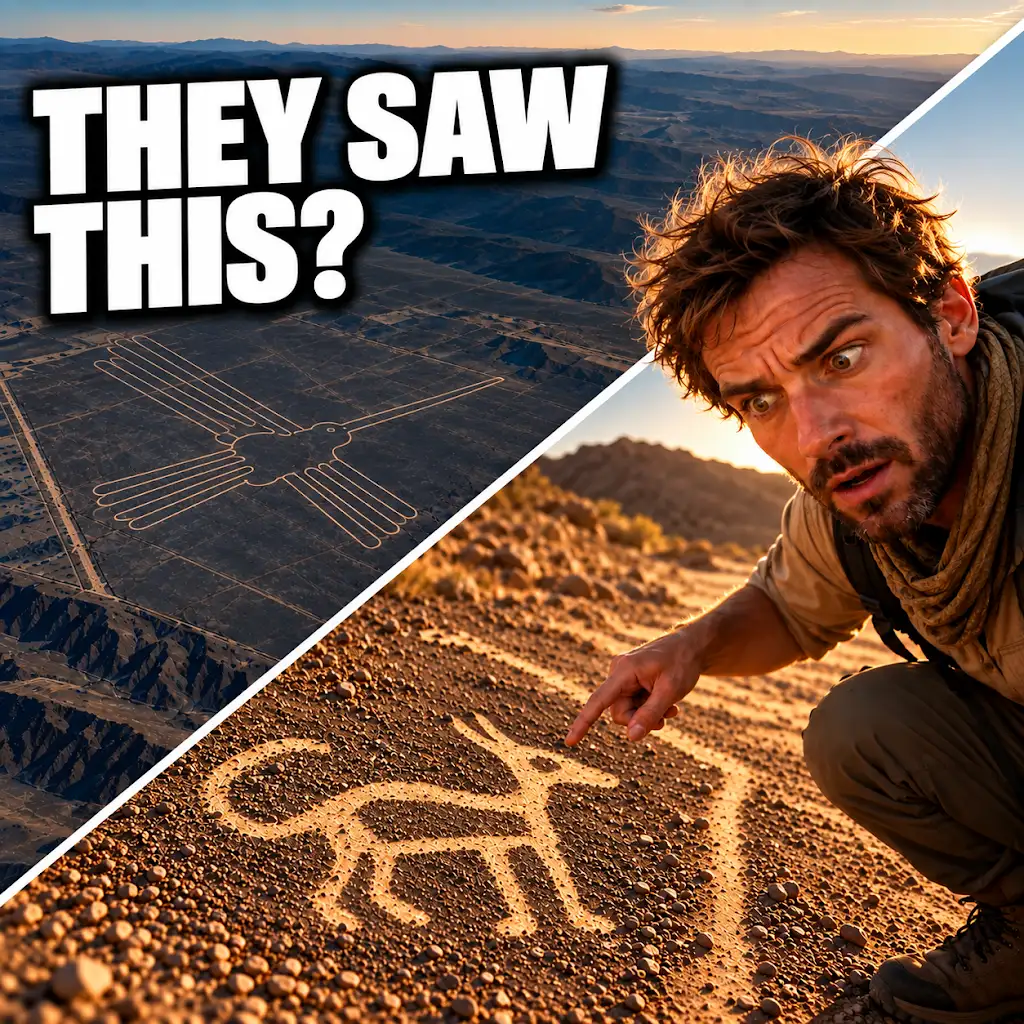
AI Found New Nazca Drawings—Could People See Them from the Ground?
FAQs
What are Nazca figures?
Nazca figures are large geoglyphs created in the Nazca Desert in southern Peru. They are ancient designs etched into the ground, typically depicting animals, plants, and geometric shapes.
How were the Nazca figures created?
The Nazca figures were created by removing the reddish-brown iron oxide-coated pebbles that cover the surface of the Nazca Desert. This reveals the lighter-colored earth underneath, creating the designs.
What is the significance of the Nazca figures?
The Nazca figures are believed to have been created by the Nazca people between 500 BC and 500 AD for religious or ceremonial purposes. Some theories suggest they may have served as astronomical calendars or markers for underground water sources.
How was AI trained to find Nazca figures?
AI was trained to find Nazca figures by analyzing high-resolution drone and satellite images of the Nazca Desert. The AI algorithm was programmed to identify patterns and shapes that resemble the Nazca figures, helping researchers locate new geoglyphs.
What is the benefit of using AI to find Nazca figures?
Using AI to find Nazca figures allows researchers to discover new geoglyphs more efficiently and accurately. This technology can help expand our understanding of the Nazca culture and uncover previously unknown designs in the desert.