The Nazca Desert, a vast and arid plateau in southern Peru, has long held a mystique for archaeologists and the public alike. For centuries, the enigmatic geoglyphs etched into its sandy surface – colossal figures of animals, plants, and geometric shapes stretching for hundreds of meters – have defied easy explanation. These ancient artworks, best appreciated from the sky, are a testament to the ingenuity and artistic prowess of the Nazca culture, which flourished between 200 BCE and 600 CE. While aerial surveys and meticulous ground expeditions have revealed many of these marvels, the sheer scale of the desert and the subtle nature of some of the designs have meant that a significant number likely remain undiscovered, hidden in plain sight by the relentless winds and the muted palette of the landscape.
However, a new era of discovery is dawning in the Nazca Desert, one powered by the transformative capabilities of artificial intelligence. AI is no longer confined to the realm of science fiction; it is emerging as a potent tool for scientific research, offering novel approaches to analyzing vast datasets and identifying patterns that elude human perception. In the context of the Nazca lines, AI is proving to be a game-changer, unlocking the potential to uncover previously unseen geoglyphs and deepen our understanding of this ancient civilization. This article will explore the exciting intersection of AI and archaeology, focusing on how these digital intelligences are helping us to peer beneath the surface of the Nazca Desert and reveal its most elusive secrets.
The Enduring Enigma of the Nazca Lines
The Nazca lines are perhaps the most iconic archaeological feature in Peru, drawing millions of tourists and researchers to the region annually. Their purpose, origin, and the precise methods used for their creation have been subjects of intense debate and speculation for decades.
Theories of Purpose and Creation
Theories surrounding the Nazca lines range from the practical to the astronomical, and even the extraterrestrial, though the latter is largely dismissed by mainstream archaeology. Early hypotheses suggested they served as astronomical calendars, aligning with celestial events. Others propose they were ritualistic pathways, used in ceremonies and processions by the Nazca people. The association with water, crucial for survival in the arid environment, is another prominent theory, with some lines potentially leading to water sources or functioning as conduits for agricultural rituals. The sheer effort and precision involved in their creation, involving the removal of the dark, oxidized desert varnish to expose the lighter soil beneath, point to a society with a sophisticated understanding of engineering and planning. The scale of the figures, many only discernible from significant altitudes, has fueled much of the mystery.
Challenges of Traditional Exploration
Traditional methods of exploring and documenting the Nazca lines have faced significant hurdles. The vastness of the Nazca Desert, spanning over 450 square kilometers, makes comprehensive manual surveying a daunting task. Ground expeditions, while essential for detailed analysis of known geoglyphs, are inherently limited in their ability to detect faint or partially eroded figures that might not be immediately obvious from ground level. Aerial photography and satellite imagery have been invaluable, allowing for a broader overview and the identification of many previously unknown designs. However, even these powerful tools rely on human interpretation to sift through the immense amount of visual data. Subtle variations in color, erosion patterns, and the overlap of older and newer lines can easily obscure new discoveries, requiring experienced eyes to spot them. The cost and logistical complexity of frequent aerial surveys also present a barrier to comprehensive and continuous exploration.
The Dawn of Algorithmic Discovery
The limitations of traditional methods have created fertile ground for technological innovation. As computational power has increased and machine learning algorithms have become more sophisticated, researchers have begun to explore the application of AI to archaeological challenges. The Nazca Desert, with its wealth of visual data and enduring mysteries, presented a compelling case study for this new approach. The ability of AI to process and analyze massive datasets, identify subtle patterns, and learn from existing information promised a revolutionary way to accelerate and enhance the discovery of the Nazca lines. This marks a significant shift from purely human-driven exploration to a collaborative effort between human expertise and artificial intelligence.
The Nazca Desert is renowned for its mysterious geoglyphs, often referred to as the Nazca Lines, which have intrigued researchers and adventurers alike for decades. These massive drawings, etched into the desert floor, depict various animals and shapes, leading many to speculate about their purpose and origin. For those interested in exploring hidden treasures and secret locations, a related article titled “Secret Stash Spots: Prepping for SHTF” offers insights into the art of discovery and preparedness in the face of uncertainty. You can read more about it here: Secret Stash Spots: Prepping for SHTF.
Artificial Intelligence as an Archaeological Lens
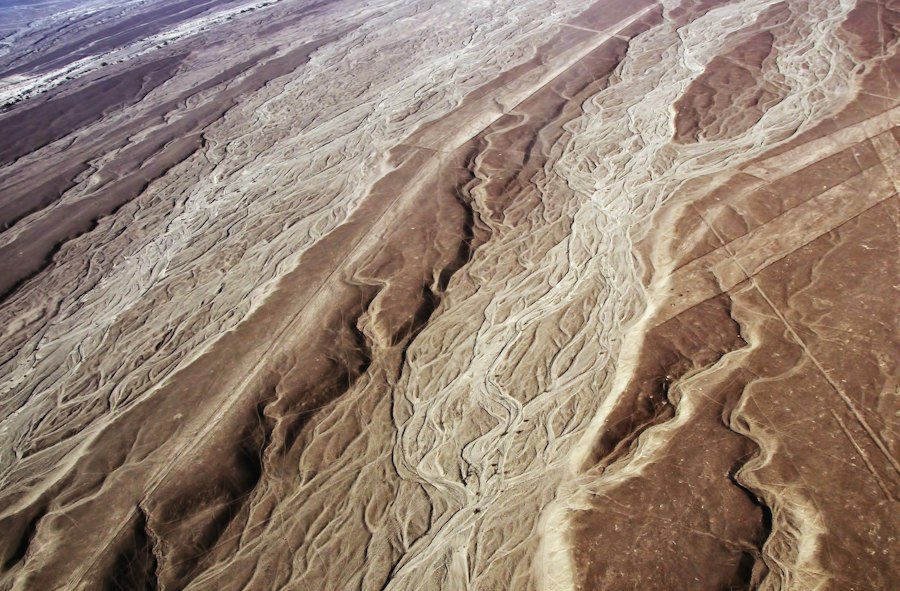
The application of artificial intelligence in archaeology, particularly in the context of remote sensing and image analysis, is a rapidly evolving field. AI’s capacity to process and interpret complex visual information offers a powerful new lens through which to examine sites like Nazca.
Machine Learning and Pattern Recognition
At the core of AI’s utility in Nazca is machine learning, a subset of AI that enables systems to learn from data without being explicitly programmed. For geoglyph detection, this involves training algorithms on vast datasets of existing Nazca lines, along with images of the desert landscape that do not contain geoglyphs. The algorithms learn to identify the characteristic shapes, textures, and subtle tonal variations that distinguish human-made designs from natural geological formations. This process involves several key stages. Initially, researchers gather a comprehensive library of aerial and satellite imagery of the Nazca region. This imagery is then meticulously annotated, with known geoglyphs clearly marked. This annotated data serves as the “training set” for the AI model.
The machine learning process then begins. Algorithms, such as convolutional neural networks (CNNs), are particularly well-suited for image recognition tasks. CNNs are designed to automatically and adaptively learn spatial hierarchies of features from images. They can process images through a series of layers, each learning to detect increasingly complex features. For example, early layers might detect edges and corners, while deeper layers can recognize more intricate shapes like curves, circles, and eventually, the complex forms of the Nazca figures. The algorithm is fed the annotated images and adjusts its internal parameters to minimize errors in classifying geoglyphs. Through this iterative process, the AI learns to distinguish the subtle signs of human intervention in the desert landscape.
Deep Learning for Feature Extraction
Deep learning, a more advanced form of machine learning utilizing artificial neural networks with multiple layers (hence “deep”), is especially powerful for feature extraction. In the context of Nazca, deep learning models can automatically identify and delineate the precise boundaries of geoglyphs, even those that are faint, partially obscured, or incomplete. These networks can learn to recognize features that might be too subtle for the human eye to consistently detect, such as minute changes in soil reflectivity, faint topographical disturbances, or patterns of erosion that are indicative of an artificial origin. The “depth” of these networks allows them to build a hierarchical understanding of visual data, moving from low-level features like lines and textures to high-level concepts like the recognizable shapes of animals or geometric patterns.
This deep learning approach is crucial for uncovering new geoglyphs. It can scan vast tracts of land, flagging areas that exhibit characteristics consistent with known geoglyphs. This significantly reduces the amount of data that human researchers need to manually scrutinize, allowing them to focus their efforts on the most promising candidates identified by the AI. The ability of deep learning to generalize from known examples to detect similar, yet undiscovered, patterns is a key advantage. It can identify variations in the style or preservation of geoglyphs that might not be immediately apparent to a human observer, leading to the discovery of previously unknown motifs or variations on existing ones.
AI-Powered Image Enhancement and Analysis
Beyond simple detection, AI can also be employed to enhance the visibility of existing geoglyphs and analyze their characteristics in unprecedented detail. Techniques like super-resolution can sharpen blurry images, revealing finer details of the designs. Algorithms can also perform spectral analysis, identifying subtle differences in the mineral composition or moisture content of the soil that might indicate an ancient disturbance. Furthermore, AI can be used to analyze the context of the geoglyphs, looking for patterns in their distribution, alignment, or relationship to other archaeological features in the landscape. This analytical capability extends to understanding the historical degradation of the lines, helping researchers to reconstruct their original forms and potentially identify figures that have been significantly eroded over time.
AI-powered image enhancement can bring out faint lines that have been smoothed by wind erosion or partially covered by sand. It can also help to differentiate between natural patterns in the desert varnish and the deliberate marks made by the Nazca people. By analyzing the spectral signatures of the soil, AI can potentially identify areas where the underlying soil composition differs from the surrounding desert, a strong indicator of excavation. This multi-faceted approach allows for a more comprehensive understanding of the geoglyphs, moving beyond simple identification to detailed analysis of their form, construction, and historical integrity.
The Hunt for Hidden Geoglyphs
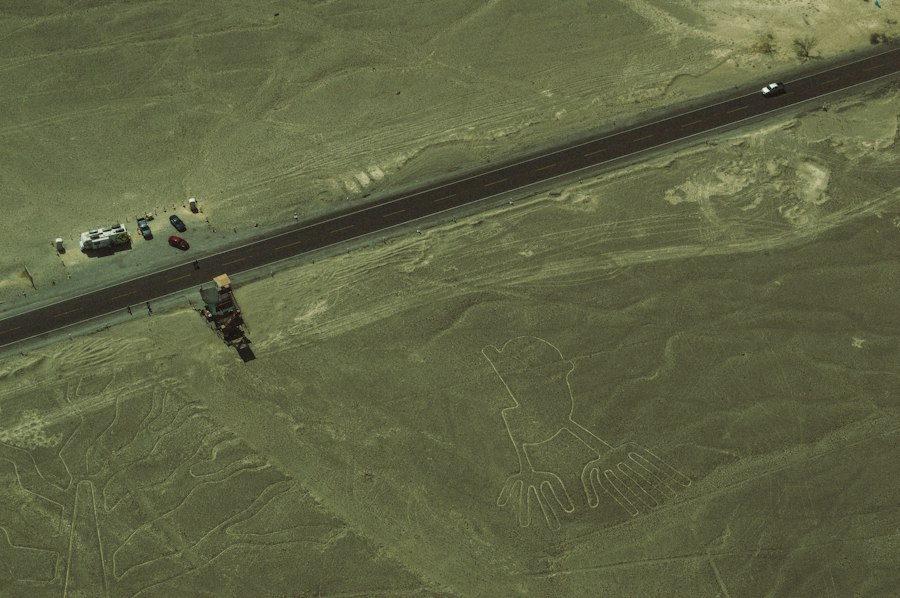
The primary objective of employing AI in the Nazca Desert is to locate geoglyphs that have eluded human discovery for centuries. This involves a systematic, data-driven approach that leverages the strengths of artificial intelligence.
Training the Models for Nazca’s Palette
The effectiveness of any AI system hinges on the quality and relevance of its training data. For the Nazca Desert, this means providing the AI with a diverse and representative set of imagery and annotations. Researchers must carefully select aerial and satellite photographs that capture the varying conditions of the desert – different times of day, different lighting conditions, and different levels of atmospheric haze. Crucially, the training data needs to include examples of both clearly visible geoglyphs and areas where potential geoglyphs are faint or partially degraded. This ensures that the AI learns to recognize the subtle clues that indicate an artificial origin, not just the obvious ones.
The annotation process is equally vital. Human experts meticulously mark the boundaries and identify the types of known geoglyphs within the training images. This annotated data acts as the ground truth for the AI, teaching it what to look for. The quality of these annotations directly impacts the AI’s accuracy. Mistakes or inconsistencies in the annotations can lead the AI to misinterpret data and generate false positives or miss genuine discoveries. Therefore, a collaborative effort between archaeologists and AI specialists is essential, ensuring that the AI is trained on a robust and accurate representation of the Nazca geoglyphs. The AI learns to associate specific visual features – patterns of light and shadow, subtle color gradients, linear arrangements of removed desert varnish – with the presence of a geoglyph. It essentially develops a sophisticated understanding of the “visual language” of the Nazca people as expressed in the desert floor.
Scanning the Uncharted Territories
Once trained, the AI models are deployed to scan vast swathes of the Nazca Desert, including areas that have been less thoroughly explored or are known to be challenging for visual inspection. This process is essentially an automated, high-throughput survey. The AI algorithms meticulously analyze millions of pixels, comparing them against the patterns and features they have learned to recognize. Areas that exhibit a high probability of containing geoglyphs are flagged as potential discoveries. This systematic scanning dramatically increases the efficiency of the exploration process, allowing researchers to cover more ground in a shorter amount of time than would be possible with purely manual methods.
The AI’s ability to work tirelessly and without fatigue is a significant advantage in this extensive scanning process. It can analyze imagery from high-resolution satellite feeds or drone surveys with remarkable speed. The output of this scanning phase is a prioritized list of potential geoglyph locations. These flagged areas are then handed over to human archaeologists for on-the-ground verification. This iterative process, where AI identifies potential candidates and humans confirm them, is the most effective strategy for uncovering new discoveries. The AI acts as an intelligent filter, sifting through the immense amount of data to present the most compelling evidence for further investigation. This approach is particularly effective in identifying geoglyphs that might be obscured by natural debris, subtle erosional features, or are simply too faint to be readily apparent from standard aerial views.
Verification and Ground Truthing
The identification of potential geoglyphs by AI is only the first step. The crucial stage of verification and ground truthing is where the archaeological expertise of human researchers comes into play. Teams are dispatched to the flagged locations to conduct on-site investigations. This involves detailed photographic surveys, measurements, and often, careful excavation to confirm the presence and nature of the geoglyph. The goal is to confirm that the flagged feature is indeed an ancient human-made design and not a natural geological formation or a more recent, unrelated disturbance.
This ground-truthing process is vital for building confidence in the AI’s findings and for refining the AI models. If a flagged area turns out to be a false positive, the reasons why the AI made that mistake are analyzed, and the AI’s algorithms can be retrained with this new information to improve its accuracy. Conversely, if a flagged area leads to the discovery of a genuine new geoglyph, this discovery provides valuable new data for further training and validation of the AI system. This collaborative loop between AI-driven detection and human verification is what drives successful discoveries in complex environments like the Nazca Desert. The process is not simply about the AI finding things; it’s about a partnership that enhances our ability to understand the past.
Unforeseen Discoveries and New Interpretations
The application of AI in the Nazca Desert is not just about finding more of the same; it has the potential to reveal entirely new types of geoglyphs and to challenge existing interpretations of the Nazca culture.
Beyond the Familiar Figures
While the iconic hummingbird, monkey, and spider are the most famous Nazca geoglyphs, AI’s advanced pattern recognition capabilities are opening the door to the discovery of less common or entirely novel figures. The algorithms are not limited by preconceived notions of what a geoglyph “should” look like. They are trained to identify any consistent pattern of disturbance in the desert surface that deviates from the norm. This could lead to the identification of smaller, more intricate designs that are easily overlooked by human observers. It might also reveal geometric patterns or abstract forms that have not been previously documented or recognized as intentional creations.
The sheer computational power of AI allows it to analyze subtle variations in erosion, soil disturbance, and surface texture that might be indicative of ancient human activity. For example, an AI might identify a series of interconnected lines or subtle depressions that, when analyzed in their entirety, form a recognizable, albeit abstract, shape. This has the potential to expand our catalog of Nazca art and to reveal a greater diversity of artistic expression than previously understood. The AI’s ability to process data at a granular level means it can detect these subtle signatures of human work even when they are faint or partially obscured by natural processes. This could also lead to the discovery of geoglyphs that are significantly different in style or scale from the well-known examples, prompting a reevaluation of the Nazca people’s artistic repertoire.
Reconstructing Degraded Designs
Many of the Nazca geoglyphs have suffered significant erosion over the centuries due to wind, sandstorms, and natural decay. AI’s capabilities in image restoration and pattern completion are proving invaluable in reconstructing these degraded designs. By analyzing the remaining fragments of a geoglyph and comparing them to known patterns and stylistic conventions, AI can generate educated guesses about what the original design might have looked like. This is akin to a highly sophisticated form of digital archaeology, where AI helps to piece together the faded remnants of the past.
For instance, if an AI identifies a portion of a curved line that strongly resembles the leg of a known animal figure, and then finds another faint, matching curvature nearby, it can infer the presence of the complete limb. By applying this logic across the entire area of a degraded geoglyph, the AI can reconstruct the most probable original form. This not only allows for a more accurate depiction of the geoglyph for study and presentation but also provides crucial insights into the original artistic intent and the techniques used by the Nazca people. This reconstruction can help fill in gaps in our knowledge, allowing us to appreciate the full scope and artistry of these ancient creators.
Challenging Existing Hypotheses
The discovery of new geoglyphs or the more accurate reconstruction of degraded ones can have profound implications for our understanding of the Nazca culture. New discoveries might challenge existing hypotheses about the purpose of the lines, their astronomical significance, or their association with water. For example, the discovery of a series of interconnected geoglyphs that form a previously unknown pattern might suggest a new ritualistic practice or a different understanding of the cosmos. If AI uncovers a concentration of new geoglyphs in a previously overlooked area, it could prompt a re-evaluation of settlement patterns or ceremonial centers.
The ability to analyze the spatial distribution and interrelationships of geoglyphs with AI can reveal previously unseen connections. If the AI identifies a new class of geoglyphs that are consistently found in proximity to specific natural features or other known archaeological sites, this could lead to new theories about their function. Ultimately, AI acts as a powerful catalyst for scientific inquiry, providing new data that stimulates fresh questions and encourages the refinement or even abandonment of long-held theories. It allows for a more data-driven approach to archaeological interpretation, moving beyond speculation to evidence-based conclusions.
The Nazca Desert is renowned for its mysterious geoglyphs, which have intrigued researchers and enthusiasts alike for decades. Recently, advancements in artificial intelligence have shed new light on these hidden drawings, revealing patterns and insights that were previously overlooked. For those interested in the broader implications of ancient civilizations and their technologies, a fascinating article discusses the potential connections between these enigmatic markings and advanced ancient tech. You can explore this intriguing topic further in the article found here.
The Future of AI in Archaeological Exploration
| Metric | Value | Description |
|---|---|---|
| Number of Known Nazca Lines | 300+ | Total geoglyphs identified in the Nazca Desert |
| AI Detection Accuracy | 92% | Percentage accuracy of AI models in identifying hidden drawings |
| New Geoglyphs Discovered by AI | 15 | Number of previously unknown drawings detected using AI analysis |
| Average Size of Geoglyphs | 50-300 meters | Typical length range of Nazca desert drawings |
| AI Model Used | Convolutional Neural Networks (CNN) | Type of AI technology applied for image recognition |
| Data Sources | Satellite Imagery, Drone Footage | Primary data inputs for AI analysis |
| Processing Time per Image | Approximately 5 minutes | Time taken by AI to analyze one high-resolution image |
The success of AI in the Nazca Desert is just the beginning of its transformative potential in archaeology. As AI technology continues to advance, its applications in uncovering and understanding ancient sites will only become more sophisticated and widespread.
Expanding to Other Desert Sites
The methodologies developed and refined in the Nazca Desert are highly transferable to other arid and semi-arid regions around the world that harbor similar ancient earthworks or obscured archaeological features. Sites like the ancient geoglyphs of the Atacama Desert in Chile, the mysterious patterns found in the deserts of the Middle East, or even the less understood earthworks of North America could all benefit from AI-powered exploration. The core principles of training AI on regional imagery, identifying subtle disturbances in the landscape, and verifying findings on the ground are universal.
The ability of AI to process vast amounts of satellite and aerial data means that previously inaccessible or poorly documented regions can now be systematically surveyed. This has the potential to revolutionize our understanding of ancient human activity in vast, remote landscapes. The techniques are not limited to geoglyphs; AI can be applied to detect subtle features like ancient irrigation systems, hidden pathways, or even faint outlines of ancient settlements that are only visible from above or through specialized imaging. The cost-effectiveness of AI-driven surveys compared to traditional methods will likely make archaeological exploration more accessible to researchers globally.
Collaboration Between Humans and AI
The future of archaeological exploration is not one where AI replaces human archaeologists but rather one of close collaboration. AI will serve as an indispensable tool, augmenting human capabilities and allowing for more efficient and comprehensive research. Human intuition, contextual knowledge, and critical thinking will remain paramount in interpreting AI-generated data and formulating research questions. The synergy between human expertise and AI’s analytical power will unlock discoveries that would be impossible for either alone.
This collaborative model will involve archaeologists working closely with AI developers to create specialized tools and algorithms tailored to specific archaeological challenges. The process of data annotation, model training, and result verification will be a continuous feedback loop, ensuring that the AI systems are constantly learning and improving. The ethical considerations of using AI in archaeology, such as data ownership and the responsible dissemination of findings, will also be an important aspect of this evolving relationship. The goal is to harness the power of AI to accelerate discovery and deepen our understanding of human history, while always maintaining the critical oversight and interpretive expertise of human researchers.
Ethical Considerations and Future Directions
As AI becomes more integrated into archaeological research, it is crucial to address ethical considerations. This includes ensuring transparency in AI methodologies, preventing algorithmic bias that could overlook certain types of discoveries, and establishing clear guidelines for data ownership and access. The potential for AI to democratize archaeological research is significant, but it also raises questions about intellectual property and the equitable distribution of research findings.
Furthermore, future directions for AI in archaeology could involve its application in predictive modeling for new site discovery, analyzing the environmental impact of ancient civilizations, or even in virtual reconstructions of ancient sites. The ongoing development of AI technologies, such as advanced natural language processing and geospatial AI, will undoubtedly lead to even more innovative applications in the years to come. The journey to uncover the secrets of the Nazca Desert with AI is a testament to humanity’s enduring curiosity and our ability to harness technology to explore the furthest reaches of our past, promising a future where the earth itself will yield its long-held secrets with the aid of intelligent machines.
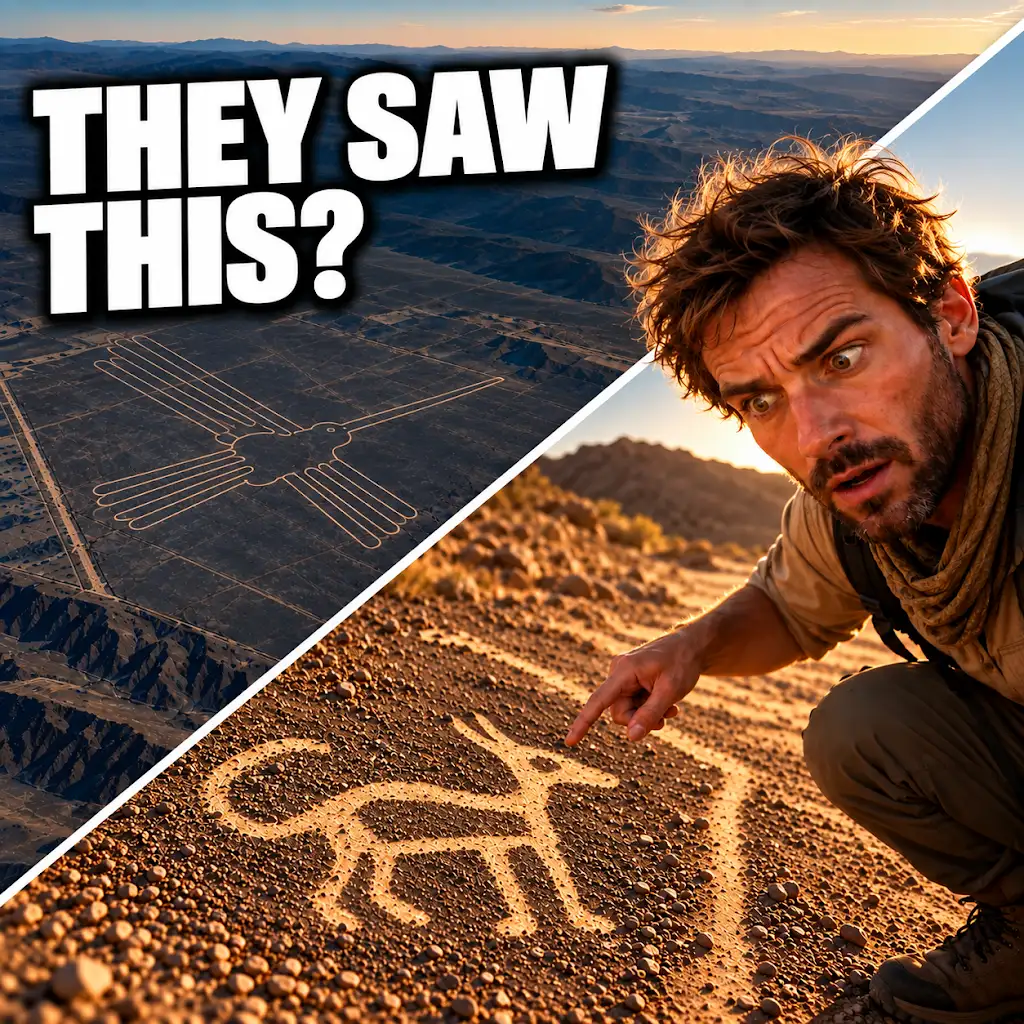
AI Found New Nazca Drawings—Could People See Them from the Ground?
FAQs
What are the Nazca desert hidden drawings?
The Nazca desert hidden drawings are a series of ancient geoglyphs located in the Nazca Desert in southern Peru. These large-scale designs were created by removing rocks and earth to reveal the lighter-colored ground beneath, forming shapes that can only be fully appreciated from above.
How were the Nazca desert hidden drawings created?
The Nazca desert hidden drawings were created by the Nazca people between 500 BC and 500 AD. It is believed that the Nazca people used simple tools such as sticks and stones to remove the top layer of rocks and soil, revealing the lighter-colored ground beneath. The designs were carefully planned and executed, resulting in intricate and precise geometric shapes, animals, and plants.
What is the significance of the Nazca desert hidden drawings?
The Nazca desert hidden drawings are significant because of their size, complexity, and mystery surrounding their purpose. Some theories suggest that the drawings served as astronomical calendars, while others believe they were used in religious ceremonies or as markers for underground water sources. The exact purpose of the drawings remains a topic of debate among archaeologists and historians.
How has AI technology been used to study the Nazca desert hidden drawings?
AI technology has been used to study the Nazca desert hidden drawings by analyzing high-resolution satellite images of the geoglyphs. Machine learning algorithms can help researchers identify and classify different types of geoglyphs, detect patterns in the designs, and even predict the locations of potential new drawings. This technology has enabled researchers to gain new insights into the purpose and meaning of the Nazca desert drawings.
Are the Nazca desert hidden drawings at risk of damage or destruction?
The Nazca desert hidden drawings are at risk of damage or destruction from various factors, including natural erosion, climate change, and human activities such as illegal mining and land development. Efforts are being made to protect and preserve the geoglyphs, including UNESCO’s designation of the Nazca Lines as a World Heritage Site. Conservation measures are in place to monitor and mitigate threats to the drawings and ensure their long-term survival.