The desert plains of Nazca, Peru, have long held a profound mystery, etched into their arid surface by an ancient civilization. The Nazca Lines, colossal geoglyphs depicting animals, plants, and geometric shapes, have captivated archaeologists, scientists, and tourists for decades. While the iconic aerial perspective is the most celebrated way to witness these enigmatic artworks, an equally compelling and often overlooked experience awaits those who venture onto the land itself: exploring the Nazca Drawings via the trails that crisscross the desert, offering spectacular, ground-level views and a tangible connection to the past. These trails, often subtle pathways worn by time and the feet of those who came before, provide a unique opportunity to appreciate the scale, artistry, and context of these ancient wonders.
The Allure of the Ground-Level Perspective
The typical image of the Nazca Lines is one of a distant bird’s-eye view, painstakingly captured from an airplane or a high-rise observation tower. This perspective is undeniably breathtaking, revealing the intricate designs in their entirety, a sprawling canvas stretching across the desert floor. However, reducing the Nazca Lines solely to an aerial spectacle diminishes their inherent materiality and the human effort involved in their creation. Exploring the trails offers a profound shift in understanding, grounding the viewer in the same environment where the ancient Nazca people lived and worked.
Walking in the Footsteps of Creators
When one walks along the designated trails, they are not merely observing a drawing; they are treading on the very earth that the Nazca artisans shaped. The experience becomes an intimate encounter. The vastness of the desert, which can feel overwhelming from the air, transforms into a tangible space. The scale of the lines becomes more comprehensible when one stands beside a single, perfectly straight line stretching for hundreds of meters, or when they can trace the curve of a hummingbird’s wing with their hand (figuratively, of course, to preserve the delicate environment). This grounded perspective allows for a more visceral appreciation of the sheer labor and dedication required to create these monumental etchings, without the aid of modern machinery. The texture of the desert floor, the muted colors of the stones, the whisper of the wind – these sensory details contribute to a richer, more immersive understanding of the geoglyphs.
Understanding the Craftsmanship
From the ground, the techniques employed by the Nazca people become more apparent. The geoglyphs were created by removing the reddish-brown, iron-oxide coated pebbles that cover the desert surface, exposing the lighter-colored soil beneath. Walking the trails allows one to see the depth of these incisions, the consistent width of the lines, and the precision with which they were executed. It’s possible to observe where the lines converge or diverge, and how the artists managed to maintain such remarkable straightness and curvature over such vast distances. This direct engagement with the physical manifestation of the art fosters a deeper respect for the ingenuity and skill of the Nazca civilization. The trails often lead to points where one can see multiple lines converging or diverging, offering insights into the planning and execution of complex designs.
The Nazca drawings, also known as the Nazca Lines, are a fascinating subject, especially when considering how they can be viewed from various trails in the region. These ancient geoglyphs, etched into the desert floor, have sparked numerous theories about their purpose and significance. For those interested in exploring more about ancient innovations and their potential connections to these mysterious designs, a related article can be found at Unbelievable Ancient Inventions: From Flying Machines to Time Travel Devices. This piece delves into the intriguing possibilities of ancient technologies and their implications for understanding civilizations like the Nazca.
Navigating the Desert Trails

Accessing the Nazca Drawings through their ground-level trails requires careful planning and an understanding of the terrain and the preservation efforts in place. Unlike paved walkways, these are often unpaved paths, demanding respect for the fragile desert ecosystem and the archeological significance of the site. Responsible tourism is paramount to ensure these ancient wonders endure for future generations.
Designated Paths and Preservation Zones
The Nazca region is a protected UNESCO World Heritage site, and access to certain areas is strictly controlled to prevent damage. Visitors will find that official trails are clearly marked, and it is crucial to stay within these designated routes. These pathways have been carefully chosen to allow viewing of key geoglyphs without disturbing the surrounding desert or the lines themselves. In many areas, the trails are simply the paths naturally formed by generations of visitors adhering to similar routes, creating a visible, albeit unpaved, passage. Signs are often present, reminding visitors to tread lightly and avoid stepping on the lines. Understanding these boundaries is not just about following rules; it’s about actively participating in the preservation of this invaluable cultural heritage.
Guided Tours and Expert Insights
While it is possible to explore some areas independently, opting for a guided tour offers significant advantages. Local guides, often possessing generations of knowledge about the region and its history, can point out specific geoglyphs, explain their potential meanings, and share fascinating anecdotes. They can also navigate the trails safely, ensuring visitors don’t stray into restricted areas or encounter any hazards. These guides are invaluable for understanding the nuances of the Nazca culture and the context in which these drawings were created. Their expertise transforms a simple walk into an educational expedition, enriching the experience with historical and anthropological insights. They can also highlight lesser-known geoglyphs that might be easily missed by an untrained eye.
Essential Gear and Preparedness
Exploring the Nazca desert requires proper preparation. The climate is arid and can be extremely hot, especially during the midday sun. Essential gear includes sturdy walking shoes with good grip, a wide-brimmed hat for sun protection, high SPF sunscreen, and plenty of water. Lightweight, breathable clothing is advisable. Insect repellent may also be useful, though the desert is generally not known for large insect populations. It is also wise to carry a basic first-aid kit for any minor scrapes or blisters that might occur. Being well-prepared ensures a comfortable and safe exploration, allowing visitors to focus on the marvels of the Nazca Drawings.
Iconic Figures Revealed from the Ground
While many of the most famous figures, like the hummingbird and the monkey, are best appreciated from above, the trails offer unique perspectives on these and other geoglyphs, revealing details and nuances often missed in aerial photographs. The sheer scale of these figures becomes more tangible, and their placement within the landscape gains new significance.
The Spider and its Intricate Web
The Nazca Spider, a remarkably detailed arachnid figure, is a popular subject for ground-level exploration. Walking along the designated paths, one can get surprisingly close to this iconic creature. From the ground, the precision of its legs and the intricate patterns within its body become more apparent. The trail might lead visitors to a vantage point where they can trace the eight legs extending outwards, each meticulously formed. The context of its placement, seemingly on a slightly elevated plateau, might also become clearer, suggesting intentional design and consideration of its surroundings. The experience of standing near this enormous spider, understanding that it was created by human hands with simple tools, is a humbling one.
The Hummingbird and its Elegant Flight
The Nazca Hummingbird, another celebrated geoglyph, is a testament to the Nazca artists’ ability to capture the essence of movement and form. While the full sweep of its wings is best seen from above, the trails allow for a more intimate appreciation of its delicate features. Visitors can walk alongside the body, marveling at the proportion of its beak to its body, and the graceful curve of its neck. The trails might allow one to stand at the “head” of the hummingbird, looking out across the desert, or walk along the length of its body, comprehending its immense size. This ground-level view emphasizes the artistry involved in depicting such a small, dynamic creature with such grandeur.
Geometric Precision and Abstract Designs
Beyond the animal figures, the Nazca Drawings also include a vast array of geometric shapes, from perfect triangles and trapezoids to complex spirals and straight lines stretching for miles. The trails offer a unique opportunity to appreciate the mathematical precision and the sheer engineering feat these represent. Standing at one end of a perfectly straight line, stretching seemingly into infinity, is a profoundly disorienting and awe-inspiring experience. The trails often lead to points where these geometric figures intersect or abut animal geoglyphs, suggesting a deliberate relationship between the abstract and the representational, a connection that is more readily understood when walking the land.
Beyond the Famous Figures: Uncovering Hidden Gems
The Nazca Drawings are not limited to the few universally recognized figures. The desert is dotted with countless other geoglyphs, many of which are less celebrated but equally fascinating. Exploring the trails allows for the discovery of these hidden gems, offering a more comprehensive understanding of the Nazca people’s artistic repertoire and their relationship with their environment.
Lesser-Known Creatures and Enigmatic Forms
Among the less frequently depicted figures are lizards, dogs, condors, and various plant motifs. The trails can lead visitors to these more elusive designs, revealing the breadth of the Nazca artists’ imagination. One might stumble upon a series of parallel lines that form a pattern with no immediately obvious representation, or a series of dots that suggest a celestial alignment. These discoveries spark further curiosity and fuel the ongoing debate about the purpose and meaning of the Nazca Drawings. The sheer diversity of forms, from the familiar to the abstract, highlights the complexity of Nazca culture.
The Context of the Landscape
The placement of the geoglyphs within the landscape is a crucial aspect that ground-level exploration helps to illuminate. Certain lines might align with natural features of the desert, such as dry riverbeds or distant mountain peaks. Others might be situated in relation to astronomical events, suggesting calendrical or navigational purposes. Walking the trails allows one to observe these spatial relationships firsthand, fostering a deeper understanding of how the Nazca people interacted with and interpreted their environment. The trails may lead to elevated points offering a broader perspective, allowing visitors to see how a specific geoglyph relates to its surrounding topography.
The Evidence of Daily Life
While the geoglyphs are the most striking remnants, the trails might also reveal other traces of Nazca life. Stone tools, pottery shards, and the faint outlines of ancient settlements can sometimes be found, offering glimpses into the daily routines and the social fabric of this lost civilization. These discoveries, however small, add another layer of richness to the exploration, connecting the monumental art to the lives of the people who created it. The trails are not just pathways to geoglyphs, but pathways through history.
The Nazca drawings, also known as geoglyphs, are fascinating ancient artworks that can be best appreciated from the air, but there are trails nearby that offer unique vantage points for viewing these incredible designs. Exploring these trails not only provides a closer look at the intricate patterns etched into the desert floor but also connects visitors to the rich history of the region. For those interested in the intersection of exploration and technology, a related article discusses the implications of commercial lunar payload services, which can be found here. This piece highlights how advancements in space exploration may echo the human desire to leave marks on unexplored landscapes, much like the creators of the Nazca lines did thousands of years ago.
The Enduring Mystery and Future of Exploration
| Drawing Name | Location | Approximate Size (meters) | Visibility from Trails | Estimated Age (years) |
|---|---|---|---|---|
| The Hummingbird | Near Nazca town, southern Peru | 93 | Visible from main viewing tower and nearby trails | 1500 |
| The Spider | Near Nazca town, southern Peru | 46 | Visible from designated trail viewpoints | 1500 |
| The Monkey | Near Nazca town, southern Peru | 56 | Visible from elevated trail sections | 1500 |
| The Condor | Near Nazca town, southern Peru | 135 | Visible from specific trail lookout points | 1500 |
| The Tree | Near Nazca town, southern Peru | 23 | Visible from nearby trails and observation towers | 1500 |
Despite extensive research, the ultimate purpose and meaning of the Nazca Drawings remain a subject of ongoing debate and fascination. The ground-level exploration, while offering tangible connections, also deepens the sense of mystery, prompting more questions than answers. The future of exploring these ancient wonders lies in balancing preservation with accessibility, ensuring that the experience remains both awe-inspiring and responsible.
Theories of Purpose: Astronomy, Ritual, and More
Theories abound regarding the purpose of the Nazca Drawings. Some suggest they were celestial calendars, aligning with astronomical events. Others propose they served as ritual pathways for ceremonies, or as offerings to deities. The possibility of them being related to water sources or agricultural cycles is also actively explored. Walking the trails, with the vast desert stretching out in all directions, can evoke a sense of the spiritual or ceremonial, making these theories feel more plausible. The sheer scale and effort involved suggest a purpose far beyond mere decoration.
Challenges in Preservation and Research
The arid climate of Nazca is what has preserved the drawings for millennia, but it also presents challenges. Wind erosion, rare but intense rainfall, and human activity all pose threats. Ongoing research involves sophisticated techniques like LIDAR scanning and remote sensing, but traditional archaeological methods, including careful on-the-ground excavation and survey along the trails, remain crucial for understanding the context and finer details. The challenge is to continue these efforts while minimizing disturbance to the fragile environment.
The Traveler’s Role in Stewardship
For the modern traveler, the experience of exploring the Nazca Drawings via the trails is not just about sightseeing; it is about becoming a steward of this invaluable heritage. By staying on designated paths, respecting the environment, and supporting responsible tourism operators, visitors play a vital role in ensuring the survival of these ancient marvels. The trails offer a profound connection to the past, and with that connection comes a responsibility to protect it for the future. The ground-level view, while spectacular, is a privilege that demands respect and care, ensuring that the whispers of the Nazca people continue to resonate across the desert plains for generations to come.
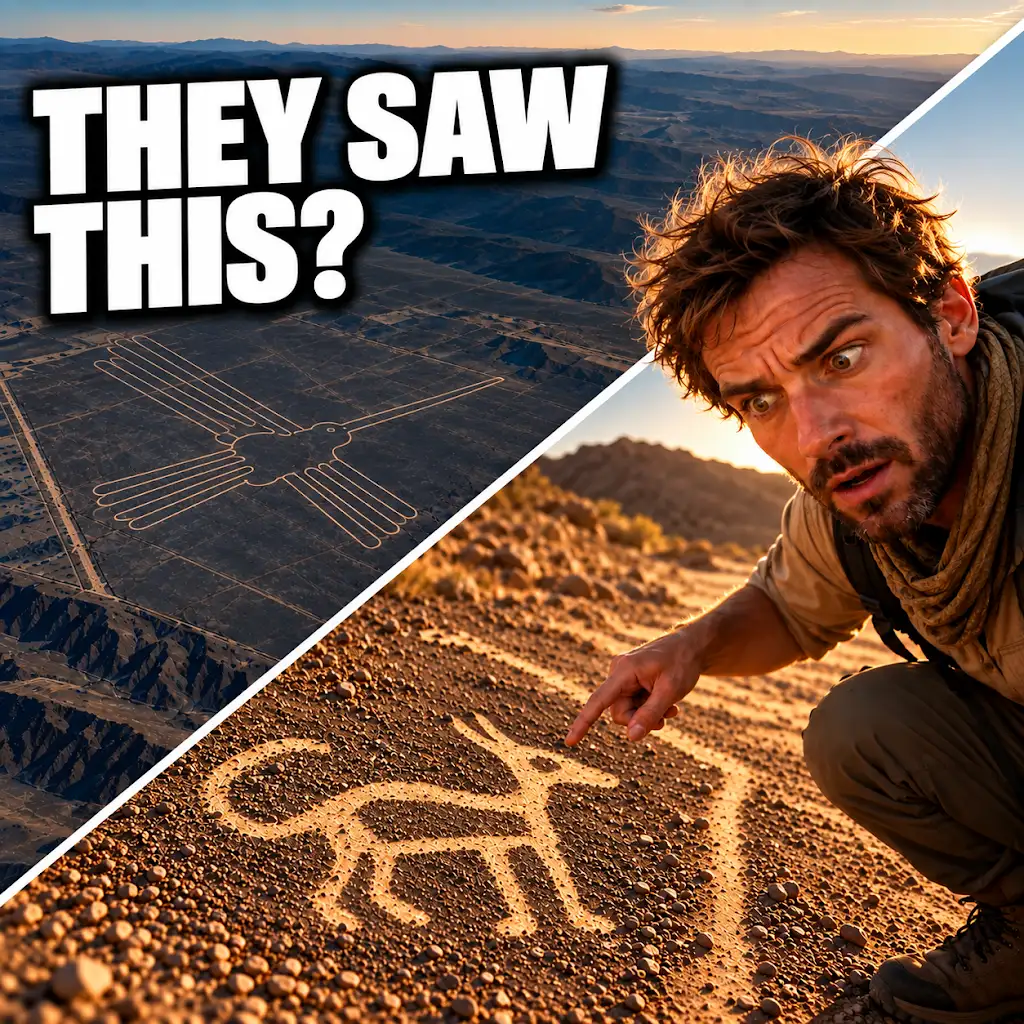
AI Found New Nazca Drawings—Could People See Them from the Ground?
FAQs
What are Nazca drawings?
Nazca drawings are ancient geoglyphs created by the Nazca people in the Nazca Desert in southern Peru. These large designs are made by removing the reddish-brown iron oxide-coated pebbles that cover the surface of the Nazca Desert, revealing the lighter-colored earth underneath.
How were the Nazca drawings created?
The Nazca drawings were created by removing the surface stones to reveal the lighter-colored earth beneath, creating lines and shapes that form various designs such as animals, plants, and geometric patterns. The Nazca people likely used simple tools such as sticks and stones to create these intricate designs.
Are the Nazca drawings visible from trails?
Yes, some of the Nazca drawings are visible from trails that have been created for tourists to view these ancient geoglyphs. These trails provide visitors with the opportunity to see the Nazca drawings up close and appreciate the intricate designs that have puzzled researchers for centuries.
What is the significance of the Nazca drawings?
The Nazca drawings are significant because they represent the artistic and cultural achievements of the ancient Nazca people. These geoglyphs are believed to have had ritualistic and astronomical purposes, serving as a way for the Nazca people to communicate with their gods or mark important celestial events.
How can visitors view the Nazca drawings responsibly?
Visitors can view the Nazca drawings responsibly by sticking to designated trails and viewing platforms that have been set up to protect the fragile desert environment. It is important to respect the Nazca drawings and avoid walking on or touching the geoglyphs to preserve them for future generations.