
The Silent Canvas of the Desert
For centuries, the vast, arid plains of the Nazca Desert in southern Peru have held their secrets close. Etched into the earth by an ancient civilization, the Nazca Lines are a testament to a lost culture’s artistic and astronomical prowess. These geoglyphs, some stretching for hundreds of meters, depict an astonishing array of creatures, plants, and geometric shapes, visible in their entirety only from high above. For generations, archaeologists and explorers have meticulously mapped and studied these enigmatic designs, painstakingly uncovering them one by one. Yet, the sheer scale of the Nazca landscape, coupled with the subtle nature of some of these earthworks, has always suggested that not all of the desert’s artistic treasures have been revealed. The advent of artificial intelligence, however, has begun to change this narrative, offering a powerful new lens through which to explore this ancient canvas. AI’s ability to process vast datasets, identify subtle patterns, and analyze complex imagery is proving to be a game-changer in the ongoing quest to understand the Nazca people and their extraordinary legacy.
The recent discovery of the Nazca drawings through advanced AI technology has opened up new avenues for understanding ancient civilizations and their artistic expressions. This fascinating intersection of technology and archaeology is reminiscent of other historical mysteries, such as the enigmatic Piri Reis map, which has puzzled historians for centuries. For more insights into this intriguing topic, you can read about it in the article Uncharted Territories: Piri Reis and the Mystery of Lost Maps.
AI’s Algorithmic Eye on Ancient Art
The application of artificial intelligence to the study of the Nazca Lines represents a significant leap forward in archaeological methodology. Traditional methods of discovery relied heavily on human observation, extensive fieldwork, and the laborious analysis of aerial photography. While these approaches have yielded remarkable results, they are inherently limited by human perceptual capabilities and the sheer logistical challenge of surveying such a vast and remote area. AI, with its capacity for tireless and objective analysis, can overcome many of these limitations. Machine learning algorithms, in particular, are trained on existing data – photographic evidence of known Nazca geoglyphs, satellite imagery, and topographical maps – to learn the distinctive characteristics of these ancient creations. This training allows the AI to then sift through new, unexamined areas of the desert, searching for anomalies and patterns that might indicate the presence of undiscovered geoglyphs. The process is akin to teaching a highly sophisticated digital art critic to recognize the unique brushstrokes and stylistic nuances of a particular ancient artist, but applied to the earth itself.
Training the Digital Discoverer
The initial phase of deploying AI for Nazca Line discovery involves rigorous training of the algorithms. This training data comprises a diverse range of inputs. High-resolution satellite imagery, collected over many years and from various altitudes, forms the bedrock of this dataset. Archaeological records detailing the dimensions, shapes, and locations of previously identified Nazca geoglyphs are crucial for teaching the AI what to look for. Furthermore, topographical data helps the AI understand the natural contours of the land, enabling it to distinguish between deliberate earthworks and natural formations. Advanced algorithms, such as convolutional neural networks (CNNs), are particularly adept at image recognition and feature extraction. They can be trained to identify subtle changes in soil color, texture, and elevation that might signify a carved line or a raised mound. The effectiveness of the AI is directly proportional to the quality and breadth of the training data; the more examples it is exposed to, the more adept it becomes at discerning the faintest traces of human intervention in the desert landscape.
Identifying Subtle Signatures
Once trained, the AI is unleashed upon vast swathes of unanalyzed satellite imagery. Its task is not merely to find large, obvious shapes. The real power of AI lies in its ability to detect incredibly subtle signatures of human activity. This can include faint depressions in the soil, slight variations in vegetation growth patterns that correlate with buried lines, or even the almost imperceptible patterns of eroded earth. The AI can analyze pixel clusters, identify linear arrangements of differing soil composition, and cross-reference these findings with elevation data to build a three-dimensional model of potential geoglyphs. Unlike the human eye, which might overlook a faint discoloration or a barely discernible ridge, the AI can analyze millions of pixels with consistent precision, flagging even the most elusive signs of the Nazca artists’ presence. This ability to perceive the almost invisible is what has led to the recent wave of discoveries.
Unveiling the Hidden Gallery
The results of AI-powered analysis have been nothing short of remarkable, leading to the identification of numerous previously unknown Nazca geoglyphs. These discoveries are not just adding to the existing catalog; they are providing new insights into the variety and complexity of Nazca art and potentially their purpose. The AI’s persistent scrutiny of the desert has begun to fill in the gaps, revealing figures that were either too eroded to be easily seen or located in areas less frequently surveyed by human eyes. Each new geoglyph offers a fresh puzzle piece, contributing to a more comprehensive understanding of this ancient civilization.
New Figures Emerge from the Sand
Recent AI-driven surveys have brought to light a significant number of new geoglyphs, expanding the known repertoire of Nazca figures. These newly discovered designs often share stylistic similarities with known motifs, featuring animals like hummingbirds, monkeys, and lizards, as well as abstract geometric forms. However, some of these new finds exhibit unique characteristics, suggesting a greater diversity in Nazca artistic expression than previously understood. Researchers are meticulously documenting these new figures, comparing their styles, sizes, and orientations to existing ones to glean further information about the artisans and their societal practices. The sheer volume of these new discoveries underscores the fact that the Nazca Desert has far more to reveal.
Beyond the Famous Fauna
While the iconic zoomorphic figures often capture the public imagination, AI analysis is also uncovering a wealth of less celebrated, yet equally significant, geoglyphs. These include intricate geometric patterns, long linear figures, and even what appear to be representations of human-like figures. The AI’s ability to identify these less obvious designs is crucial for developing a more nuanced understanding of the Nazca people’s symbolic language and their worldview. The prevalence of geometric shapes, for instance, might point towards sophisticated astronomical or calendrical systems, while the human-like figures could offer clues about their social structures or belief systems. The AI is not just finding more animals; it is revealing a more complex and multifaceted artistic and symbolic landscape.
Implications for Archaeological Understanding
The impact of AI on Nazca archaeology extends far beyond simply identifying new geoglyphs. It is fundamentally changing how researchers approach the study of this ancient culture, offering new avenues for interpretation and raising fresh questions. The ability to analyze vast datasets and identify subtle correlations is allowing for a more data-driven and systematic approach to archaeological inquiry. This is leading to a re-evaluation of existing theories and the development of new hypotheses about the Nazca people’s society, beliefs, and their relationship with their environment.
Reinterpreting Sacred Landscapes
The continuous discovery of new geoglyphs through AI is prompting archaeologists to reconsider the overall sacred landscape of the Nazca culture. It is becoming increasingly clear that these lines were not randomly placed but were intricately woven into the fabric of their environment and their belief systems. The AI’s ability to identify clusters of geoglyphs, their proximity to water sources, or their alignment with celestial bodies is providing unprecedented insights into how the Nazca people interacted with and perceived their world. The desert itself, once viewed as a passive canvas, is now understood as a dynamic and deliberately sculpted sacred space, imbued with meaning and purpose. AI helps in mapping these connections with a precision previously unimaginable.
Advancing Chronological and Cultural Theories
The systematic identification of new geoglyphs, when combined with existing dating techniques, can help refine the chronological framework of Nazca art. AI can assist in identifying stylistic shifts or the introduction of new motifs over time, providing a more granular understanding of cultural evolution. Furthermore, by analyzing the distribution and characteristics of newly discovered geoglyphs, researchers can begin to identify regional variations or cultural influences that might have been missed in previous, less comprehensive surveys. This data-driven approach allows for a more robust testing of theories regarding Nazca migrations, interactions with neighboring cultures, and the development of their unique artistic traditions. The AI acts as a powerful tool for historical reconstruction, enabling a more accurate narrative of Nazca civilization.
Recent advancements in artificial intelligence have led to remarkable discoveries, such as the identification of the ancient Nazca drawings in Peru. This innovative technology has not only enhanced our understanding of historical artifacts but also opened new avenues for archaeological research. For those interested in exploring how technology intersects with history, a fascinating read can be found in the article about the Civil War, which delves into the complexities of historical analysis and the role of modern tools in uncovering the past. You can check it out here.
The Future of AI in Archaeology
| Metric | Value | Description |
|---|---|---|
| Number of Nazca Drawings Identified | 50+ | New geoglyphs discovered using AI analysis of satellite images |
| AI Model Type | Convolutional Neural Network (CNN) | Used for image recognition and pattern detection in aerial photos |
| Accuracy Rate | 85% | Percentage of AI-identified drawings confirmed by archaeologists |
| Data Source | Satellite Imagery | High-resolution images of Nazca desert used for AI training and detection |
| Processing Time | 2 weeks | Time taken by AI to analyze thousands of square kilometers of terrain |
| False Positives | 10% | Percentage of AI detections later found to be natural formations or errors |
| Collaboration | AI Researchers & Archaeologists | Interdisciplinary team validating AI findings on the ground |
The success of AI in unearthing Nazca drawings is just the beginning. This technology holds immense potential to revolutionize archaeological research across the globe. As AI continues to evolve and its applications become more sophisticated, it will undoubtedly unlock further secrets of past civilizations, pushing the boundaries of our understanding of human history. The synergy between human expertise and artificial intelligence promises a new era of discovery, where the earth’s hidden narratives can be brought to light with unprecedented clarity and scope.
Expanding AI’s Reach to Other Sites
The methodologies employed in the Nazca Desert are not limited to this specific region. The principles of AI-driven image analysis, pattern recognition, and data processing can be applied to countless other archaeological sites worldwide. From the ancient cities of Mesopotamia to the hidden temples of Southeast Asia, AI can be trained to identify subtle signs of human habitation, architectural remnants, and artistic expressions that might lie buried or obscured by time and nature. Imagine AI analyzing LiDAR data to reveal hidden structures in dense rainforests or sifting through terabytes of photographic archives to pinpoint forgotten artifacts. The potential for AI to accelerate the pace of archaeological discovery on a global scale is truly immense.
Ethical Considerations and Collaborative Futures
As AI becomes more integrated into archaeological practice, it is crucial to address the ethical considerations that arise. Issues of data ownership, the role of human expertise in AI-driven discoveries, and the potential for AI to misinterpret data must be carefully considered. The future of AI in archaeology lies in a collaborative partnership between human researchers and intelligent machines. AI should be viewed as a powerful tool that augments human capabilities, not as a replacement for human intuition, critical thinking, and ethical judgment. By fostering interdisciplinary collaboration and open dialogue, the archaeological community can ensure that AI is utilized responsibly and effectively, leading to a richer and more accurate understanding of our shared past for generations to come.
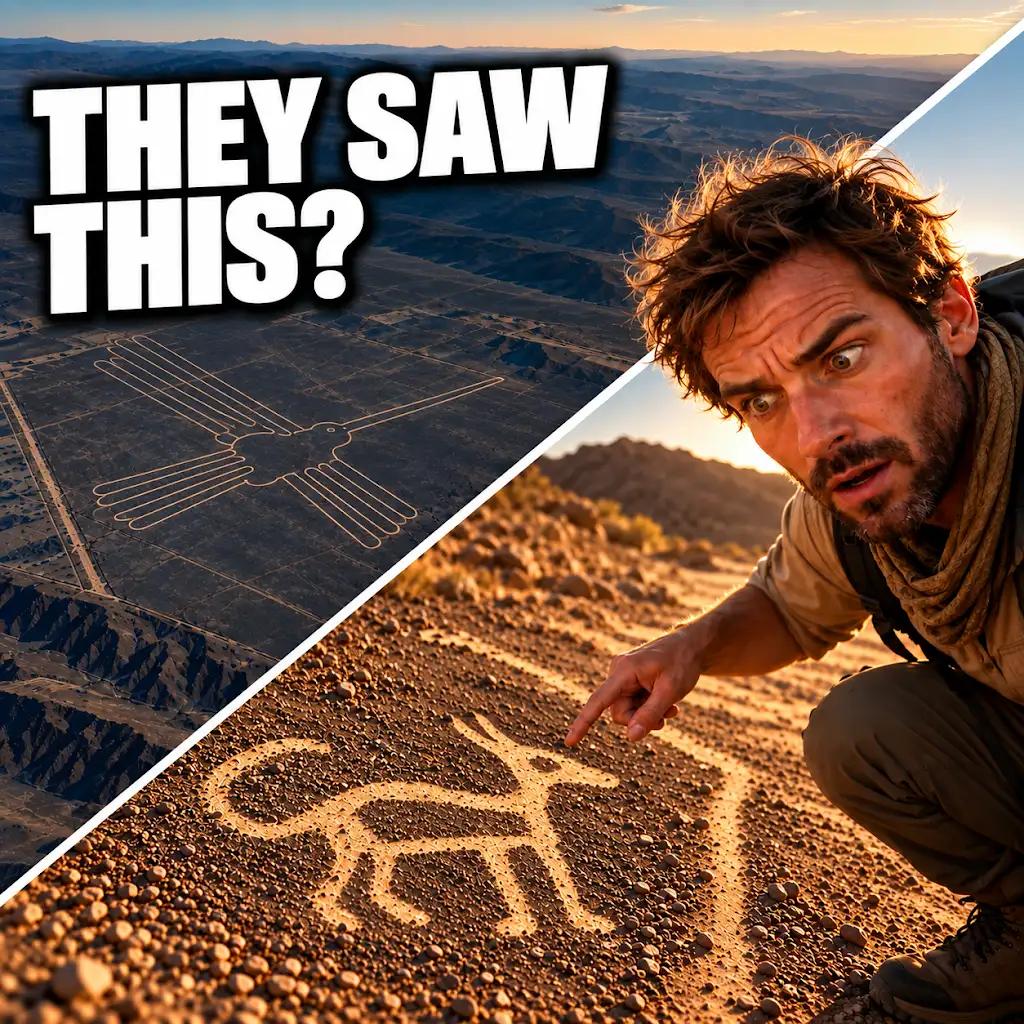
AI Found New Nazca Drawings—Could People See Them from the Ground?
FAQs
What are the Nazca drawings?
The Nazca drawings are a series of ancient geoglyphs located in the Nazca Desert in southern Peru. These large designs are made by removing rocks and earth to create shapes on the ground.
How did AI help in finding Nazca drawings?
AI technology was used to analyze satellite images of the Nazca Desert to identify new geoglyphs that were previously undiscovered. The AI algorithms were able to detect subtle variations in the landscape that indicated the presence of hidden drawings.
Why are the Nazca drawings significant?
The Nazca drawings are significant because they provide insights into the culture and beliefs of the ancient Nazca people. The designs include various animals, plants, and geometric shapes, which are believed to have had religious or ceremonial significance.
Who created the Nazca drawings?
The Nazca drawings were created by the ancient Nazca people, who inhabited the region between 200 BCE and 600 CE. The exact purpose of the drawings is still debated among archaeologists, but they are thought to have been used for religious rituals or astronomical observations.
How many Nazca drawings have been discovered so far?
Over 1,000 Nazca drawings have been discovered in the Nazca Desert so far. These geoglyphs vary in size and complexity, with some measuring up to 1,200 feet in length. The recent AI technology has helped uncover even more of these ancient designs.