The arid plains of the Nazca Desert in southern Peru have long been a canvas for enigmatic geoglyphs, etched into the earth by an ancient civilization. For decades, archaeologists and researchers have meticulously studied these colossal figures, deciphering their possible meanings and methods of creation. While the most famous Nazca Lines, such as the hummingbird, monkey, and astronaut, are well-documented, the relentless Peruvian sun and the vastness of the desert still hold secrets. In the year 2024, these secrets have begun to unfurl, with the discovery of several previously unknown geoglyphs, adding new dimensions to our understanding of the Nazca culture and their monumental artistry. This ongoing exploration, utilizing advanced technologies and a renewed focus on previously unexamined areas, has brought to light a collection of new figures, each with its own unique characteristics and potential interpretations. The implications of these discoveries are far-reaching, prompting a re-evaluation of established theories and opening new avenues for research into the purpose and context of these ancient marvels.
Unveiling the Desert’s Hidden Treasures
The discovery of new Nazca Lines is a testament to the persistent efforts of dedicated researchers and the evolving capabilities of archaeological investigation. For years, teams have systematically scanned the landscape, often returning to areas that were previously surveyed, armed with improved aerial imaging techniques and a deeper understanding of the geological and environmental factors that influence the preservation of these delicate etchings. The year 2024 has been particularly fruitful, with several significant finds emerging from different sectors of the Nazca cultural region. These new geoglyphs are not merely variations on existing themes; they represent distinct artistic expressions and potentially different thematic concerns of the Nazca people.
The Persistent Gaze of Innovation in Archaeology
The modern era of archaeological exploration in Nazca has been dramatically reshaped by technological advancements. Drones equipped with high-resolution cameras, LiDAR (Light Detection and Ranging) technology capable of penetrating vegetation and mapping terrain with millimeter precision, and sophisticated satellite imagery have revolutionized the process of discovery. These tools allow researchers to cover vast areas much more efficiently and to identify subtle variations in the landscape that might indicate the presence of a geoglyph. In 2024, a joint Peruvian-international research initiative, leveraging a combination of drone surveys and AI-powered image analysis, led to the identification of several new figures. These digital tools can analyze vast datasets of aerial imagery, flagging anomalies that human eyes might miss, and subsequently guiding ground teams to verify the findings. The ability to conduct these surveys remotely also minimizes the physical impact on the fragile desert environment.
From Pixels to Peruvian Soil: The Ground Truthing Process
The digital identification of potential geoglyphs is only the first step. The true work of confirmation and analysis begins on the ground. Teams of archaeologists and local guides, possessing an intimate knowledge of the terrain, embark on expeditions to verify the existence and nature of the newly identified figures. This involves meticulous surveying, measuring the dimensions of the etchings, documenting their form, and assessing their condition. The process of “ground truthing” is crucial, as digital data can sometimes misinterpret natural geological formations as man-made patterns. In the case of the 2024 discoveries, several new geoglyphs were initially flagged by AI algorithms analyzing drone footage. Subsequent ground expeditions confirmed the presence of at least three significant new figures, pushing the boundaries of what was previously known. This hands-on work is not just about confirmation; it’s about gathering invaluable contextual data that might have been missed in remote sensing.
In light of the recent discoveries of new Nazca Lines in 2024, researchers are excited about the potential insights these geoglyphs may provide into ancient cultures and their connection to the environment. As we explore the implications of these findings, it is also essential to consider how modern practices, such as nearshoring, can benefit from lessons learned from historical societies. For a deeper understanding of how businesses can optimize their operations in today’s global landscape, you can read more in this article on maximizing benefits through nearshoring for US companies: Maximizing Benefits of Nearshoring for US Companies.
A Gallery of the Unseen: The Nature of New Discoveries
The geoglyphs uncovered in 2024 offer a fascinating glimpse into the diverse artistic repertoire of the Nazca civilization. While some echo the familiar styles of known figures, others present entirely new forms and motifs, challenging existing interpretations and raising new questions. The sheer scale and complexity of these newly found designs underscore the remarkable engineering and artistic capabilities of the ancient Nazca people.
The Serpent’s Coil and the Avian Herald
Among the most striking discoveries of 2024 is a serpentine figure of considerable length, winding across a relatively flat expanse of desert. Unlike the more stylized serpents found previously, this new iteration exhibits a greater degree of anatomical detail, with a clearly defined head and segmented body. Its immense scale suggests a significant cultural or religious importance. Equally compelling is the discovery of a new avian geoglyph, this one depicting a bird with outstretched wings and a distinct crest. While Nazca iconography is rich with bird imagery, this particular representation is unique in its posture and the intricate patterns etched within its wingspan. Researchers are particularly intrigued by the potential symbolism of these new animal figures, considering their placement within the wider Nazca landscape.
Abstract Forms and Potential Narrative Elements
Beyond the zoomorphic representations, 2024 has also yielded discoveries that lean towards more abstract or geometric patterns. These include a series of interconnected lines and circles that do not readily conform to known animal or human forms. The purpose of these abstract designs remains a subject of intense speculation. Could they represent astronomical alignments, territorial markers, or perhaps even elements of a lost Nazca script or symbolic language? The complexity of some of these abstract geoglyphs suggests that they were not created for mere aesthetic purposes, hinting at a deeper, perhaps ritualistic, significance. The placement of these abstract forms in relation to other known geoglyphs is also a critical area of investigation, as it may reveal intended sequences or relationships.
In 2024, researchers made headlines with the discovery of new Nazca Lines, which have sparked renewed interest in ancient civilizations and their remarkable achievements. This fascinating development has led many to explore the connection between these geoglyphs and the advanced technologies that may have been used by their creators. For those intrigued by the potential of ancient innovations, an insightful article discusses the intriguing concept of lost technologies in the context of ancient societies. You can read more about it in this article on the lost power of ancient technology.
The Phantom of the Plains: New Anthropomorphic Figures
While less common than the animal figures, anthropomorphic geoglyphs are among the most enigmatic of the Nazca Lines. The 2024 discoveries include preliminary evidence of a new human-like figure, currently dubbed the “Phantom of the Plains” due to its partially eroded state and the ethereal quality of its outline. Initial analysis suggests it might represent a seated figure with elaborate headdress or regalia, but its precise form and meaning are still being meticulously reconstructed. The discovery of new anthropomorphic figures is particularly significant, as they are often interpreted as representations of deities, shamans, or important cultural figures, offering direct insights into the beliefs and social structures of the Nazca people.
Rethinking Nazca: New Interpretations and Scholarly Debates

The emergence of new geoglyphs invariably sparks renewed debate and forces a re-evaluation of existing theories regarding their purpose and creation. The discoveries of 2024 are no exception, offering fresh perspectives that challenge long-held assumptions and push the boundaries of archaeological interpretation.
Challenging the Astronomical Hypothesis
For decades, a prominent theory posited that many Nazca Lines served as astronomical calendars or observatories, aligning with celestial events. While this hypothesis remains plausible for some figures, the new discoveries are prompting a more nuanced view. The abstract designs and the specific contextual placement of some of the new geoglyphs suggest that a singular, overarching astronomical purpose might be too simplistic. Researchers are now exploring the possibility of multiple functions, including ritualistic pathways, water-harvesting systems, or even markers for ancient trade routes. The sheer diversity of forms and their potential clustering in specific areas might point to a more complex societal organization with varied needs and beliefs.
The Ritualistic Landscape: Pathways to the Gods?
A growing body of scholarship emphasizes the ritualistic aspect of the Nazca Lines. The idea that these geoglyphs served as ceremonial pathways, walked by priests or supplicants during religious ceremonies, has gained considerable traction. The newly discovered serpent and avian figures, with their sinuous and majestic forms, lend themselves well to this interpretation. Could these figures have been part of larger ritualistic circuits, guiding participants through sacred landscapes? The intricate patterns within the wings of the new bird geoglyph might represent the stages of a ritual or the journey of a spiritual entity. Further analysis of the soil composition and any associated artifacts found near these new lines will be crucial in testing these ritualistic hypotheses.
The Environmental Connection: Water, Fertility, and the Desert’s Bounty
The Nazca culture flourished in an extremely arid environment, making water a paramount concern. Some researchers have proposed that the geoglyphs are directly linked to water management, ritualistic pleas for rain, or symbolic representations of water sources. The serpentine forms, with their flowing lines, could be interpreted as representations of water channels or underground aquifers. The newly discovered figures are being examined for any potential correlation with known ancient water management systems or topographical features associated with water. The possibility that these colossal etchings were a vital component of their agricultural and survival strategies cannot be overlooked.
Preservation and the Future of Nazca Research
The ongoing discoveries in Nazca are inherently linked to the critical need for preservation. The very act of discovery, while exciting, also brings the potential for increased human traffic and environmental impact. The continued protection of these ancient wonders is paramount for future generations of researchers and for the cultural heritage of Peru.
The Fragile Equilibrium: Balancing Discovery and Conservation
The Nazca Lines are incredibly vulnerable to erosion from wind and rain, as well as human foot traffic. The influx of tourists and the logistical demands of archaeological expeditions necessitate careful management. In 2024, there is a heightened awareness of the need to balance the drive for new discoveries with robust conservation efforts. Strict regulations are being implemented for site access, and researchers are employing non-invasive techniques whenever possible. The use of protective barriers in newly excavated areas and the careful planning of ground surveys are essential to minimize damage. The role of local communities in guarding these ancestral sites is also increasingly recognized as vital for their long-term protection.
Technological Frontiers: AI, Machine Learning, and Predictive Modeling
The future of Nazca research is inextricably tied to the continued evolution of technology. In addition to improving discovery methods, AI and machine learning are also being employed to predict areas that might contain undiscovered geoglyphs and to model the environmental factors that contribute to their preservation or degradation. Predictive modeling can help archaeologists prioritize survey areas and focus their efforts on regions most likely to yield significant findings. Furthermore, these technologies can aid in the detailed reconstruction of eroded figures and in understanding the original techniques used by the Nazca people. The ongoing integration of digital archaeology promises to unlock even more of the Nazca desert’s secrets in the years to come.
A Living Legacy: Engaging the World with the Nazca Mystery
The discoveries of 2024 serve as a powerful reminder that the Nazca Lines are not static relics of the past but a living legacy that continues to intrigue and inspire. Efforts are underway to better engage the global public with these ongoing discoveries through virtual tours, interactive online exhibits, and educational outreach programs. Sharing the excitement of new findings not only fosters broader appreciation for this unique cultural heritage but also can inspire future generations of archaeologists and researchers to continue the quest for knowledge. The ongoing unraveling of the Nazca mystery, spurred by the remarkable discoveries of 2024, ensures that these ancient enigmas will continue to captivate the human imagination for years to come. The desert, it seems, is still eager to reveal its stories.
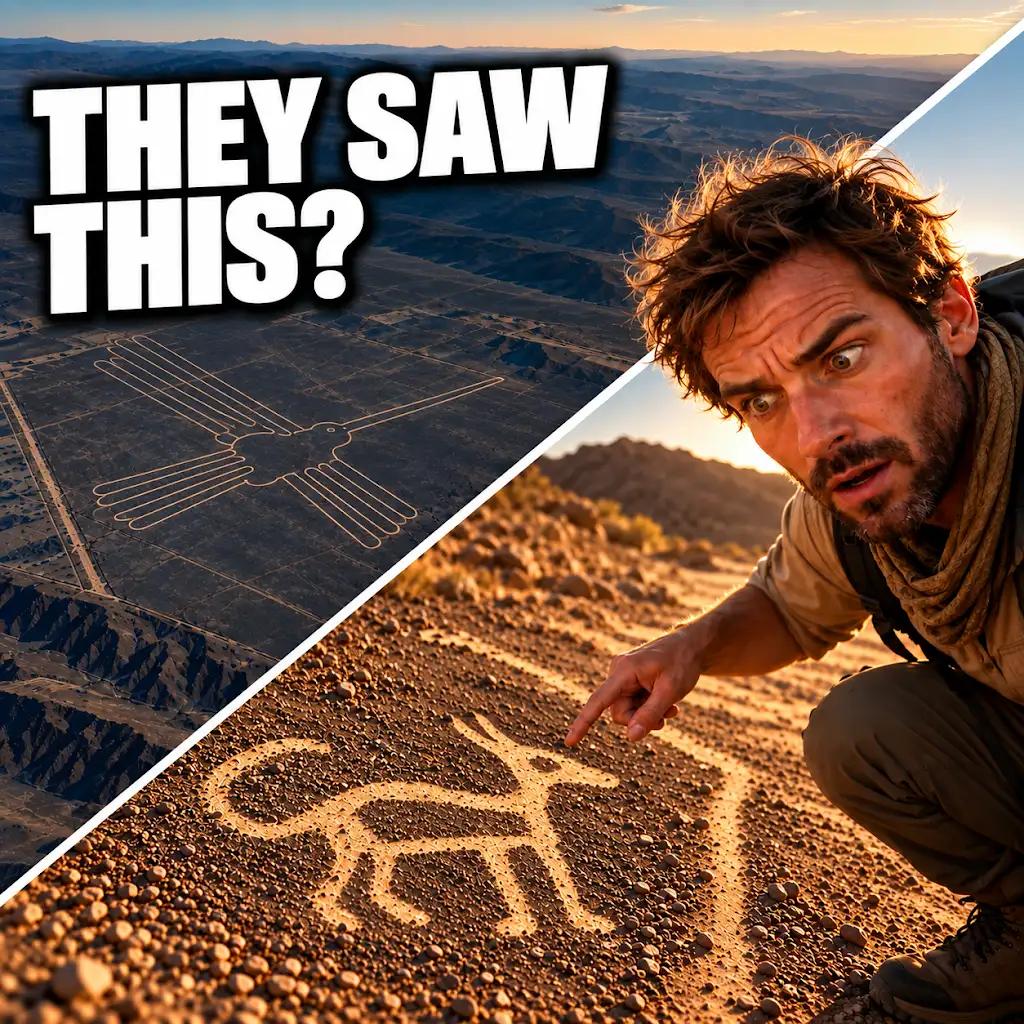
AI Found New Nazca Drawings—Could People See Them from the Ground?
FAQs
What are the Nazca Lines?
The Nazca Lines are a series of ancient geoglyphs located in the Nazca Desert in southern Peru. They were created by removing the reddish-brown iron oxide-coated pebbles that cover the surface of the desert, revealing the lighter-colored earth underneath.
When were the new Nazca Lines discovered in 2024?
The new Nazca Lines were discovered in 2024 during an aerial survey conducted by archaeologists and researchers in the Nazca Desert.
How were the new Nazca Lines discovered?
The new Nazca Lines were discovered using drone technology and satellite imagery, which allowed researchers to identify previously unknown geoglyphs that were not visible from the ground.
What do the new Nazca Lines depict?
The new Nazca Lines depict a variety of shapes and figures, including animals, plants, and geometric patterns. These newly discovered geoglyphs provide further insight into the ancient Nazca culture and their beliefs.
Why are the Nazca Lines significant?
The Nazca Lines are significant because they are a UNESCO World Heritage Site and are considered one of the most important archaeological mysteries in the world. The purpose and meaning behind the Nazca Lines continue to intrigue researchers and historians, shedding light on the ancient Nazca civilization.