
The story of Pocahontas and the early days of Jamestown is one that has captivated imaginations for centuries. While popular culture often presents a romanticized and simplified narrative, a closer examination of historical records reveals a far more complex and nuanced reality. Understanding Pocahontas and the Jamestown settlement requires sifting through often biased accounts, acknowledging the cultural chasm between the English colonists and the Powhatan Confederacy, and tracing the enduring legacy of their interaction.
The English Arrive: Seeds of Conflict and Cooperation
The establishment of Jamestown in 1607 marked a pivotal moment in the history of North America. Funded by the Virginia Company of London, the expedition’s primary goals were economic – to find gold and other valuable resources, and to establish a strategic foothold against Spanish rivals. The colonists, a mix of gentlemen, craftsmen, and laborers, arrived with little practical knowledge of survival in the unfamiliar environment of the Chesapeake Bay. Their initial interactions with the indigenous inhabitants, the Powhatan people, were a delicate dance between apprehension and necessity.
Early Encounters and the Powhatan Confederacy
The Powhatan Confederacy was a sophisticated political and social structure, encompassing numerous tribes under the leadership of Chief Powhatan (also known as Wahunsenacaw). Powhatan’s domain was vast and his authority considerable. The English, however, viewed him and his people through a lens of European superiority, often referring to them as “savages” and failing to grasp the intricate social hierarchies and political alliances that governed the region. The initial encounters were marked by a mixture of curiosity and suspicion on both sides. The English were dependent on the Powhatan for survival, particularly during the brutal early years when disease, starvation, and conflict decimated their ranks. The Powhatan, in turn, likely saw the English as a potential source of trade goods and perhaps even as an unwelcome disruption to their established order.
The Myth of Pocahontas’s Rescue
The most enduring image of Pocahontas in popular consciousness is that of the young princess saving Captain John Smith from execution. This dramatic scene, as recounted by Smith himself in his later writings, depicts him being captured by Powhatan warriors and brought before the chief. Just as his head was about to be crushed by a stone, Pocahontas, described as a child of “ten or eleven years,” is said to have rushed forward, placed her head upon his, and pleaded for his life. While Smith’s account is the sole source for this event, many historians question its veracity. They suggest that it may have been a ritualistic reenactment designed to signify Smith’s adoption into the Powhatan tribe, a common practice among indigenous peoples. Alternatively, some scholars believe Smith may have embellished or even fabricated the story to enhance his own reputation and dramatize his adventures. Regardless of its historical accuracy, the “rescue” narrative has deeply shaped how Pocahontas is perceived, often casting her as a romantic figure who bridged the divide between two cultures.
The historical records of Pocahontas and her connection to Jamestown provide a fascinating glimpse into early American history, particularly regarding the interactions between Native Americans and English settlers. For those interested in exploring the broader implications of historical events on modern economic systems, a related article discusses the shifting dynamics of wealth and the potential consequences of moving away from the US dollar. You can read more about this topic in the article found here: Shifting Wealth: Moving Out of the US Dollar.
Pocahontas: A Powhatan Woman in Colonial Virginia
The historical figure of Pocahontas is far more complex than the idealized princess of legend. Her life intersected with the English settlement at a critical juncture, and her actions, or the actions attributed to her, played a role in shaping the early relationship between the colonists and the Powhatan. Understanding her requires moving beyond the romanticized versions and focusing on what historical records, however limited, can tell us.
Matoka’s Life and Identity
Pocahontas was the daughter of Chief Powhatan. Her given name was likely Matoka, though she was also known by other names, including Amonate. “Pocahontas” might have been a nickname meaning something like “playful one” or “spoiled child.” She was not a princess in the European sense of the word, but rather a young woman of significant standing within her society. Her mother’s identity is not definitively known, and her upbringing would have been within the traditional Powhatan cultural framework, which emphasized close ties to the land, spiritual beliefs deeply connected to nature, and a communal way of life. Her early interactions with the English, particularly with John Smith, occurred when she was still a child or adolescent, a period of significant cultural difference and mutual misunderstanding.
Key Interactions and Captivity
Pocahontas’s interactions with the English were not limited to the purported rescue of John Smith. She is known to have visited the Jamestown settlement on several occasions, sometimes bringing food and supplies, which suggests a degree of curiosity and perhaps even a diplomatic role assigned to her by her father. However, the relationship between the English and the Powhatan deteriorated over time due to escalating tensions, land disputes, and violent skirmishes. In 1613, during a period of renewed conflict, Pocahontas was captured by the English captain Samuel Argall. She was held in Jamestown as a hostage, intended to pressure Chief Powhatan into returning English captives and stolen weapons.
Transformation and Marriage: A Strategic Alliance
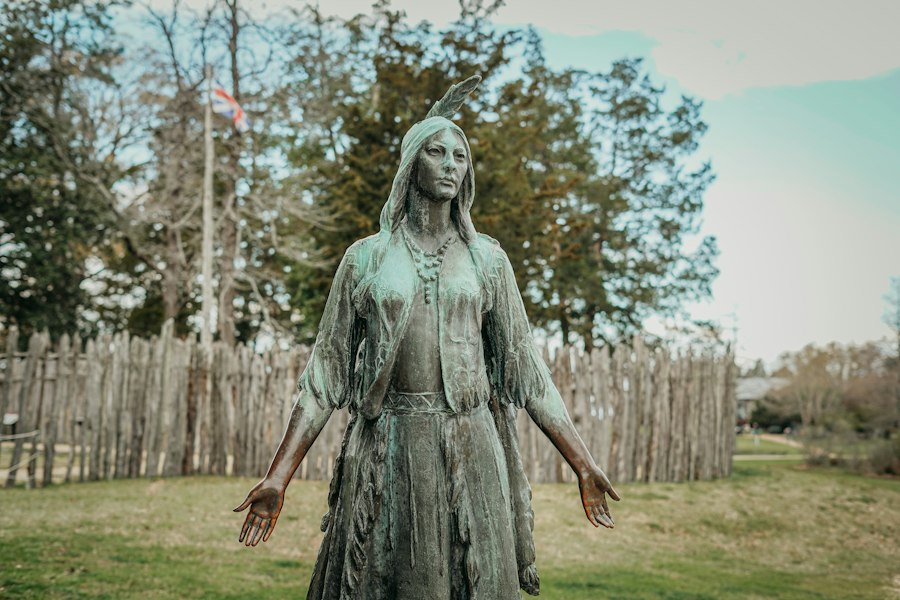
Pocahontas’s captivity marked a significant turning point in her life and in the relationship between the English and the Powhatan. During her time in Jamestown, she was exposed to English culture, language, and religion. This period of acculturation, whether voluntary or coerced, ultimately led to her baptism and marriage, events that had profound political and social implications.
The historical records of Pocahontas and her connection to Jamestown provide a fascinating glimpse into early American history. For those interested in exploring the broader implications of historical events on modern society, a related article discusses various economic scenarios that could arise from current trends. You can read more about these potential outcomes in this insightful piece. To learn more, visit this article.
Conversion and Renaming
While in captivity, Pocahontas was tutored by the Reverend Alexander Whitaker, who sought to convert her to Christianity. She was baptized into the Anglican Church and given the Christian name Rebecca. This conversion was a crucial step for the English, as it legitimized her in their eyes and paved the way for a marriage that they believed would solidify peace and strengthen their position in the colony. The adoption of a Christian name and the embracing of English customs were significant acts of cultural assimilation, though the extent to which these were freely chosen or compelled remains a subject of debate among historians.
The Marriage to John Rolfe
In 1614, Pocahontas, now known as Rebecca, married John Rolfe, a planter who had lost his first wife and child in the shipwreck that brought him to Virginia. This marriage was a pivotal event. For the English, it was seen as a triumph of diplomacy and a sign of their growing influence. They believed it would lead to lasting peace with the Powhatan Confederacy, ease tensions, and encourage further English settlement. For Chief Powhatan, the marriage likely represented a complex diplomatic maneuver, a way to potentially regain leverage or to appease the increasingly powerful English presence. The union produced a son, Thomas Rolfe, who would become an important figure in the colonial lineage. The marriage itself was a significant departure from Powhatan customs, and it is debated whether Chief Powhatan fully sanctioned it.
Visit to England
In 1616, John Rolfe, Rebecca, and their young son Thomas traveled to England. The journey was intended to showcase Pocahontas as a symbol of successful English evangelization and colonization, and to garner support and investment for the Virginia Company. She was presented to King James I and Queen Anne, and was a celebrated figure in London society, albeit often viewed with a mix of fascination and exoticism. Her appearance in England further cemented the image of the “civilized savage” in the English imagination. However, the experience was reportedly overwhelming for Pocahontas, and she fell ill during her stay.
The Legacy of Pocahontas and Jamestown: Enduring Myths and Historical Realities
The story of Pocahontas and Jamestown has left an indelible mark on American history and popular culture. However, the narrative has been shaped by layers of myth, romanticism, and the passage of time, often obscuring the complex historical realities of the period. Understanding this legacy requires distinguishing between the historical figures and the enduring myths they have inspired.
A Symbol of Intercultural Relations
Pocahontas has, for centuries, served as a powerful symbol of intercultural relations in early America. The romanticized narrative of the noble savage who aided the struggling colonists has been particularly potent. This image, however, often overlooks the exploitative nature of the colonial enterprise and the ultimate dispossession of indigenous lands. While Pocahontas’s actions may have, at times, facilitated a fragile peace, they did not prevent the broader conflict and subjugation that indigenous peoples faced. Her story has been invoked to represent a lost era of potential harmony, a stark contrast to the often violent realities of colonization.
The Powhatan Perspective and Historical Silences
Crucially, the historical record is overwhelmingly dominated by English accounts. The voices and perspectives of the Powhatan people are largely absent, filtered through the interpretations of their colonizers. This imbalance makes it challenging to fully reconstruct the motivations, experiences, and impacts of events from their viewpoint. The legacy of Jamestown and Pocahontas, therefore, is incomplete without acknowledging these historical silences and the limitations they impose on our understanding. The Powhatan Confederacy endured significant upheaval and eventual decline as English colonization intensified, and their story is one of resistance, adaptation, and profound loss.
Modern Reinterpretations and the Power of Storytelling
In recent decades, there has been a concerted effort to re-examine and reinterpret the story of Pocahontas and Jamestown, moving away from the simplistic romanticism towards a more historically accurate and nuanced understanding. This re-evaluation is driven by a desire to acknowledge the indigenous perspective, to critique the colonial narrative, and to understand the complex dynamics of power, cultural exchange, and conflict. Modern storytelling, including historical fiction, films, and academic scholarship, continues to grapple with these complexities, seeking to honor the historical figures while critically examining the myths that have grown around them. The enduring appeal of the story lies not just in its dramatic elements, but in its ongoing ability to provoke reflection on themes of cultural encounter, misunderstanding, and the enduring consequences of historical events.
The story of Pocahontas and Jamestown, therefore, is not a closed chapter of history. It remains a subject of ongoing exploration, debate, and reinterpretation, reminding us of the importance of critically examining historical records and acknowledging the multifaceted nature of human interaction, especially in the crucible of colonization. The legacy is one of both genuine connection and profound division, a testament to the complex tapestry of early American history.
DNA Challenged This Family’s Pocahontas Ancestry Claim
FAQs
1. Who was Pocahontas?
Pocahontas was a Native American woman belonging to the Powhatan tribe, known for her association with the English settlers at Jamestown in the early 17th century.
2. What historical records exist about Pocahontas in Jamestown?
Historical records about Pocahontas in Jamestown include accounts from English colonists, such as John Smith and William Strachey, as well as archaeological findings and official documents from the Virginia Company.
3. How did Pocahontas interact with the English settlers in Jamestown?
Pocahontas is known to have interacted with the English settlers in Jamestown by serving as a mediator between the Powhatan tribe and the colonists, forging alliances, and assisting in negotiations during periods of conflict.
4. What is the significance of Pocahontas in American history?
Pocahontas holds significance in American history as a symbol of early Native American and English colonial interactions, as well as for her role in fostering understanding and peace between the Powhatan tribe and the Jamestown settlers.
5. How did Pocahontas’ life in Jamestown come to an end?
Pocahontas’ life in Jamestown came to an end when she was taken captive by the English during a period of conflict, later converting to Christianity and marrying John Rolfe. She eventually traveled to England, where she passed away in 1617.