The Enduring Echo: Tracing Pocahontas’ Legacy Through the Female Line
The name Pocahontas conjures images of a heroic Native American princess, a bridge between two worlds, and a pivotal figure in early American history. While her story has been embellished and romanticized over centuries, her genuine historical impact, particularly through her lineage, continues to resonate. This exploration delves into the fascinating, often complex, path of Pocahontas’ descendants, focusing specifically on the critical role of the female line in preserving her legacy. The descendants, often overlooked in favor of the more prominent male lines, offer a unique perspective on how her influence, identity, and even a sliver of her genes have been carried forward through generations of women. Understanding this female lineage is not merely an exercise in genealogical curiosity; it illuminates the persistent thread of connection to a foundational moment in American history and the individuals who navigated its tumultuous beginnings.
The popular narrative often centers on Pocahontas’ relationship with Captain John Smith and her eventual marriage to John Rolfe. While these events are historically documented, the subsequent chapters of her life and the lives of her children, particularly her son Thomas Rolfe, have garnered more attention than her daughters or other female relatives. This historical imbalance has led to a narrative where the paternal lines, often tied to prominent colonial families, have historically been easier to trace and more widely recognized. However, a closer examination of the female branches of Pocahontas’ family reveals a rich tapestry of women who, often in quieter ways, ensured the continuation of her bloodline and carried forward aspects of her heritage. Their stories, though less publicized, are integral to fully appreciating the enduring legacy of Pocahontas.
In exploring the rich tapestry of American history, the lineage of Pocahontas through the female line has garnered significant interest, shedding light on the cultural and ancestral connections that persist today. For those intrigued by historical narratives and their implications, a related article can be found at Exploring the Forbidden Room: Ancient City Ruins, which delves into the broader context of indigenous heritage and the importance of preserving these stories for future generations.
Unraveling the Threads: Pocahontas’ Immediate Family and the First Generations
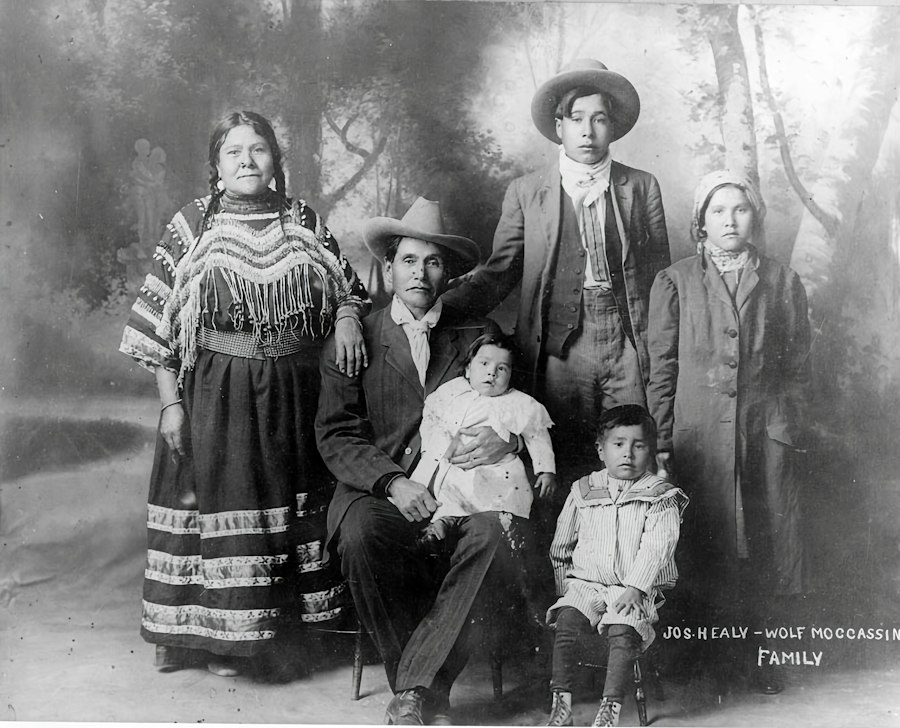
Pocahontas, born Matoaka, was a daughter of Chief Powhatan, the powerful leader of the Powhatan Confederacy. Her early life was deeply embedded in the culture and traditions of the Algonquian-speaking peoples of the Chesapeake Bay region. Her interactions with the English settlers, beginning in 1607, marked a turning point not only in her life but in the trajectory of colonial America. The commonly told story of her saving John Smith’s life, though debated by historians, cemented her image as a figure of significance. However, the more tangible and traceable impact on her legacy comes from her later life and her descendants.
The Marriage and the Son: A Foundation for Legacy
Pocahontas was captured by the English in 1613 and, under the tutelage of Rev. Alexander Whitaker, was baptized Rebecca and married John Rolfe, an English tobacco planter, in 1614. This union, a strategic alliance as much as a personal one, produced a son, Thomas Rolfe. Thomas Rolfe is the most direct and well-documented link between Pocahontas and the European colonial society. His survival and subsequent life in England and later back in Virginia form the bedrock of many of Pocahontas’ European-descended lineage. However, the narrative often stops with Thomas, leaving a considerable gap in understanding the continuation of her line, particularly through her daughters or any potential female relatives who might have accompanied her or remained in Virginia.
The Mystery of Daughters and Other Female Connections
While Thomas Rolfe is a clear historical figure, the existence and descendants of any daughters Pocahontas may have had are less certain and more contentious. Some historical accounts and family traditions suggest that Pocahontas may have had other children, including daughters, who either did not survive infancy or whose maternal lineage was not as rigorously recorded within the patriarchal structures of the time. The absence of definitive documentation for female offspring from Pocahontas to John Rolfe has led some scholars to focus solely on Thomas Rolfe as the primary conduit of her lineage into colonial society. However, oral traditions and certain genealogical studies hint at the possibility of other connections, perhaps through different unions or relationships, which would be more challenging to trace through standard historical records. This ambiguity underscores the difficulty in tracing any lineage, especially when historical records are incomplete or biased towards male lines. The emphasis on male succession in colonial society meant that female lines were often less formally acknowledged and meticulously documented, making their reconstruction a more intricate genealogical puzzle.
The Rolfe Lineage: Tracing Descendants Through Male and Female Branches

The direct descendants of Pocahontas through her son Thomas Rolfe form a significant part of her lineage that has been historically documented and recognized. While Thomas Rolfe himself is the key figure, tracing his descendants reveals how Pocahontas’ bloodline, though diluted over generations, continued to intersect with prominent colonial families.
Thomas Rolfe’s Descendants and Intermarriages
Thomas Rolfe, after being educated in England, returned to Virginia. He married Jane Poythress and had at least one daughter, Jane Rolfe. It is through Jane Rolfe that the maternal line of Pocahontas’ descendants becomes particularly important. Jane Rolfe married Colonel Robert Lewis, a prominent figure in colonial Virginia. Their union produced numerous children, embedding Pocahontas’ lineage into several influential families of the period, including the Byrds, the Carters, and the Lees, among others. While these connections are often cited through the male descendants of the Lewises, it is crucial to remember that each generation’s female members of these families are the direct carriers of Pocahontas’ genetic heritage. Their marriages brought this lineage into new family networks, spreading the influence, albeit subtly, through the colonial gentry.
The Significance of the Lewis Family and Subsequent Generations
The Lewis family, through Jane Rolfe and Robert Lewis, became a significant nexus for Pocahontas’ descendants. Their children married into other well-established Virginia families, further diversifying and disseminating the lineage. For instance, their daughter, Elizabeth Lewis, married Charles Carter. Their daughter, Anne Carter, married Benjamin Harrison. These women, through their marriages, became integral to the social and political fabric of colonial Virginia. Each generation of women in these families, from Elizabeth Lewis to Anne Carter and beyond, carried Pocahontas’ ancestral thread. While the historical records often highlight the prominent men in these families, the continuity of Pocahontas’ legacy rests as heavily, if not more so, on these women, whose lives and marriages shaped the ongoing presence of her bloodline within American society. Their stories are often embedded within the larger narratives of their husbands’ families, making it a task of careful genealogical reconstruction to highlight their role as inheritors and transmitters of this remarkable legacy.
Beyond the Colonial Elite: The Broader Reach of Pocahontas’ Legacy
While the lineage of Pocahontas through John Rolfe and Thomas Rolfe is the most frequently documented, it is essential to consider the possibility of other descendants, particularly those who remained within Native American communities or whose connections were less formally recorded by colonial authorities. The narrative of Pocahontas has often been Eurocentric, focusing on her assimilation into colonial society. However, a more inclusive understanding acknowledges the potential for a broader and perhaps more enduring connection to her Native heritage through other descendants.
The Indigenous Connection: Oral Traditions and Unwritten Histories
Oral traditions within various Native American tribes, particularly those with historical ties to the Powhatan Confederacy, may hold accounts of individuals who are believed to be descendants of Pocahontas or her close relatives. These histories, passed down through generations, offer a counterpoint to the written records of colonial society. While these traditions are often difficult to verify through conventional genealogical methods, they are invaluable for understanding the lived experience of descendants and the cultural memory associated with Pocahontas. It is plausible that Pocahontas, prior to her capture or even during her interactions with the English, may have had other children or relatives who continued her lineage within her own community. These women would have preserved their heritage in ways that were not subject to the scrutiny or documentation of colonial powers. Their descendants would have carried forward not just a genetic link but also cultural knowledge and identity.
The Intertwined Fate: Pocahontas’ Descendants in Native American Communities
The history of the Powhatan Confederacy and its relationship with colonial America is a complex narrative of displacement, resistance, and cultural resilience. It is within this context that the possibility of Pocahontas’ descendants continuing their lives within Native American communities, perhaps blending into various tribes over time, becomes a compelling avenue of inquiry. These individuals would have navigated the challenges of colonial expansion, their identities shaped by their ancestral ties to both the Powhatan and, in some cases, the colonial world. Tracing these lines requires a deep understanding of Native American history, kinship structures, and the fluidity of tribal affiliations. The women in these lines would have been instrumental in maintaining cultural practices, languages, and traditions, acting as living repositories of their heritage. Their descendants, therefore, represent a vital, though often less visible, continuation of Pocahontas’ legacy, one deeply rooted in the land and the enduring spirit of her people. This perspective challenges the notion of Pocahontas solely as a bridge to European society, recognizing her as a significant figure within her own culture whose influence extended beyond colonial records.
Recent discussions about ancestry have brought attention to the fascinating lineage of Pocahontas, particularly through the female line. This exploration of heritage highlights the significance of maternal connections in tracing family histories. For those interested in delving deeper into this topic, a related article can be found here, which provides insights into how such ancestral ties can shape our understanding of identity and culture.
The Legacy of Resilience: Women as Keepers of Identity and Heritage
| Generation | Ancestor | Relation to Pocahontas | Female Line Name | Notable Information |
|---|---|---|---|---|
| 1 | Pocahontas (Matoaka) | Progenitor | Pocahontas | Native American princess of the Powhatan tribe |
| 2 | Jane Rolfe | Daughter | Jane Rolfe | Married to Robert Bolling, linking Native American and English descent |
| 3 | Jane Bolling | Granddaughter | Jane Bolling | Married to Colonel Richard Randolph |
| 4 | Mary Randolph | Great-granddaughter | Mary Randolph | Ancestor in the Randolph family of Virginia |
| 5 | Further female descendants | Continuing line | Various | Lineage continues through female descendants in American families |
The persistent thread of Pocahontas’ lineage, particularly through the female line, speaks volumes about the resilience of individuals and families in the face of immense societal change and historical upheaval. The women who carried this legacy forward, whether within colonial society or within Native American communities, played crucial roles in preserving identity, cultural practices, and a connection to their ancestral past.
Preserving Identity Through Generations of Women
In societies where patriarchal structures often dictated the recording of lineage and inheritance, women served as vital conduits for maintaining family history and identity. For Pocahontas’ descendants, particularly those who married into established colonial families, the women in those families would have been the ones to pass down stories, heirlooms, and a sense of their unique heritage. They would have been the quiet preservers of a lineage that distinguished them, even if this distinction was not always overtly advertised. Their children, especially their daughters, would have inherited this awareness, ensuring that the echo of Pocahontas continued through subsequent generations. This act of preservation was not merely about recognizing a historical figure; it was about maintaining a sense of belonging and a connection to a rich and complex past.
The Enduring Influence: Beyond Bloodlines
While tracing the direct genetic descendants of Pocahontas is a primary focus, her legacy extends beyond mere bloodlines. Her story, as interpreted and reinterpreted, has influenced how Native American women are perceived in American popular culture and historical narratives. The women who descended from her, in their own ways, contributed to this enduring influence. Whether through acts of quiet perseverance, cultural preservation, or their integration into the fabric of American society, they embody the spirit of resilience that Pocahontas herself represents. Their lives, though often unwritten in the grand histories, are testament to the enduring power of connection to one’s roots and the vital role women have played in keeping those connections alive. The continued interest in Pocahontas, and by extension, her descendants, underscores a broader societal reckoning with the complexities of early American history and the often-silenced voices of indigenous peoples. The female descendants, in their very existence and the continuation of their families, serve as living reminders of this multifaceted heritage.
Recent discussions about Pocahontas and her descendants have highlighted the significance of tracing lineage through the female line, which can reveal fascinating insights into cultural heritage. For those interested in exploring this topic further, you can read an insightful article that delves into the complexities of ancestry and its implications for understanding historical figures. The article can be found here, providing a deeper look into how such connections shape our identity today.
The Contemporary Echo: Pocahontas’ Descendants Today
The lineage of Pocahontas continues to be a subject of interest and pride for many individuals today. While tracing direct ancestry can be challenging, especially through the female lines, genealogical research and DNA testing have provided new avenues for understanding these connections. The descendants, whether they are aware of their specific lineage or not, are part of a living history that stretches back to the early days of colonial America.
Genealogies and DNA: Modern Tools for Ancient Connections
Modern genealogical research, utilizing historical documents, family records, and increasingly, DNA analysis, has offered new insights into the tracing of Pocahontas’ descendants. While the initial focus was often on the male lines stemming from Thomas Rolfe, advanced genetic genealogy has allowed for the exploration of more complex kinship patterns. DNA testing, in particular, can reveal ancient ethnic origins and trace ancestral lines that may have been lost or obscured by historical record-keeping. For individuals who suspect they might be descendants, these tools offer a tangible way to explore their heritage. The female lines, which often left less formal documentation, can now be more effectively investigated through these technological advancements, potentially uncovering connections that were previously unknown or unprovable. This has allowed for a broader understanding of who might carry Pocahontas’ genetic legacy, extending beyond the traditionally recognized families.
The Living Legacy: Pride and Connection in the Modern World
For those who have confirmed their descent from Pocahontas, it often represents a source of pride and a deep connection to a significant historical figure and a foundational period of American history. This connection can manifest in various ways, from an academic interest in genealogy and history to a more personal sense of identity. The women in these modern descendants’ families, much like their ancestors, continue to be the keepers of this legacy, sharing stories, traditions, and a sense of pride in their unique heritage. The enduring fascination with Pocahontas ensures that her descendants, in their diverse lives and backgrounds, remain a living testament to a history that continues to shape the American narrative. Their existence challenges simplistic interpretations of the past and reminds us of the intricate and often personal ways in which history continues to resonate through generations. The female lines, in particular, offer a powerful lens through which to view this continuity, highlighting the often-unsung role of women in transmitting heritage and identity across time.
DNA Challenged This Family’s Pocahontas Ancestry Claim
FAQs
1. Can Pocahontas’ descent be traced through the female line?
Yes, Pocahontas’ descent can be traced through the female line. This means that her lineage is passed down through her female descendants, making it possible to track her ancestry through her daughters and their female descendants.
2. Who are some of Pocahontas’ famous female descendants?
Some of Pocahontas’ famous female descendants include Edith Wilson, the second wife of President Woodrow Wilson, and First Lady Nancy Reagan. These women are part of Pocahontas’ lineage through the female line.
3. How is Pocahontas’ female lineage significant in American history?
Pocahontas’ female lineage is significant in American history because it connects her to prominent figures and families in the country’s past. By tracing her descent through the female line, historians can better understand the impact of her legacy on American society.
4. What is the importance of tracing descent through the female line in Native American culture?
In Native American culture, tracing descent through the female line is often emphasized because it highlights the role of women in preserving and passing down tribal heritage. It also helps maintain connections to ancestral lands and traditions.
5. How does tracing descent through the female line differ from tracing through the male line?
Tracing descent through the female line differs from tracing through the male line in that it follows the lineage of women in a family, rather than men. This can provide a unique perspective on family history and genealogy, showcasing the contributions and influence of female ancestors.