The Enduring Echo: Pocahontas’s Legacy Through Generations
The name Pocahontas, a Powhatan princess of the early 17th century, resonates through American history, often shrouded in myth and romanticized tales. While the popular narrative focuses on her interactions with Captain John Smith, a far more profound and enduring legacy lies in her lineage. Through her marriage to John Rolfe, a prominent Jamestown colonist, Pocahontas became the matriarch of a lineage that would weave itself into the fabric of American society, a testament to a life that transcended the colonial frontier and echoed through centuries of American development. Tracing this maternal line offers a unique perspective on the complex interplay of cultures, the evolution of American aristocracy, and the often-overlooked contributions of indigenous peoples to the nation’s story.
The story of Pocahontas’s descendants is not a single, unbroken thread, but rather a branching tapestry, each strand representing a family, a life, and a unique contribution to the ever-evolving American narrative. From the colonial era’s burgeoning aristocracy to the prominent figures of more recent times, the bloodline, though diluted by intermarriage over generations, has left its mark. Understanding this lineage requires delving into the historical records, genealogical research, and the social contexts of each era. It is a journey that underscores the interconnectedness of American history, revealing how the actions and relationships of individuals centuries ago continue to resonate today.
In exploring the fascinating lineage of Pocahontas and her descendants, one can find intriguing connections to various historical narratives and cultural discussions. For instance, an article discussing the implications of Chinese electric vehicles on the U.S. market highlights the intersection of heritage and modern industry. This piece can be found at this link, where it delves into how historical figures like Pocahontas continue to influence contemporary discussions about identity and innovation.
The Colonial Crucible: Marriage and Matrilineal Foundations
Pocahontas, whose birth name was Matoaka, played a pivotal role in fostering peace between her people, the Powhatan Confederacy, and the English settlers at Jamestown. Her relationship with John Rolfe, beginning in 1614, marked a significant turning point. This union, though undoubtedly complex and influenced by political considerations on both sides, was instrumental in establishing a period of relative peace and facilitated Pocahontas’s journey to England. It was this marriage that fundamentally established the maternal line that would extend through colonial America.
A Diplomatic Union and its Offspring
The marriage of Pocahontas and John Rolfe was not merely a personal union; it carried significant diplomatic weight. For the English, it symbolized a potential for lasting peace and integration. For Pocahontas and her people, it was a strategic alliance, though the long-term implications were likely not fully understood. From this union, a son was born, Thomas Rolfe. His existence was the crucial link, the singular point through which the maternal lineage of Pocahontas would propagate into the colonial population. Thomas Rolfe, though he spent his formative years in England, eventually returned to Virginia. His life and subsequent descendants formed the bedrock of Pocahontas’s legacy in the New World.
Early American Society and the Rolfe Name
Thomas Rolfe’s children and grandchildren became integral to the developing social and political landscape of colonial Virginia. The Rolfe name, already established through John Rolfe’s own prominence, gained an added layer of distinction and, for some, a sense of historical significance due to their connection to Pocahontas. As Virginia evolved into a major English colony, families with established roots and influential connections often rose to positions of power and prominence. The Rolfes, through their land ownership, participation in local governance, and marriage into other established colonial families, became part of this emerging gentry. This period laid the groundwork for a lineage that would increasingly intermingle with other prominent families of the colonial South.
Branching Out: The Eighteenth and Nineteenth Centuries
As generations passed, Pocahontas’s descendants, now bearing a variety of surnames, continued to spread throughout Virginia and beyond. The eighteenth century saw the American colonies mature, leading to the American Revolution, and the nineteenth century witnessed westward expansion and significant societal shifts. Throughout these tumultuous periods, the lineage continued to evolve, with individuals participating in various aspects of American life, from the revolutionary cause to the cotton plantations of the antebellum South.
Patriots, Planters, and the Westward Push
Individuals descended from Pocahontas were among those who fought in the American Revolution. Their participation in this pivotal conflict placed them within the ranks of the nation’s founding generation. As the United States expanded, so too did these families, seeking new opportunities and land. The fertile lands of the South, particularly after the invention of the cotton gin, attracted many families, and descendants of Pocahontas were no exception. They became part of the planter class, owning land and, tragically, enslaved people, a stark contrast to the indigenous heritage of their ancestor. This period highlights the complex and often contradictory nature of American history, where lineage could intertwine with practices that were diametrically opposed to the values of many indigenous cultures.
The Shadow of the Confederacy and Reconstruction
The nineteenth century culminated in the devastating American Civil War. Many of Pocahontas’s descendants, deeply entrenched in Southern society, fought for the Confederacy. The war and its aftermath, including the era of Reconstruction, profoundly impacted families across the South. Those who had been part of the planter aristocracy faced significant economic and social upheaval. The legacy of slavery and the war continued to shape their lives and the broader American landscape. Despite these challenges, the lineage persisted, adapting to the changing social and economic realities of the post-war South and, for some, migrating further west.
Modern Echoes: Notable Figures and Continuing Legacy
The twentieth and twenty-first centuries have seen individuals with documented ties to Pocahontas emerge in various prominent fields. While the direct lineage becomes increasingly distant with each passing generation, genealogical research and historical records have identified figures in politics, arts, and other spheres who can trace their ancestry back to the Powhatan princess. These modern connections, though often not widely publicized, are a tangible reminder of her enduring impact.
Political and Social Influence
Several prominent political figures in American history have been identified as descendants of Pocahontas. This connection, when revealed, has often sparked public interest, bridging the gap between the historical figure and contemporary society. These individuals, through their careers in public service, have contributed to the ongoing narrative of American governance and its evolving understanding of its diverse origins. Their presence in public life serves as a subtle reminder that the historical tapestry of the United States is woven with threads from many different backgrounds, including indigenous peoples.
Artistic and Cultural Contributions
Beyond politics, descendants of Pocahontas have also made their mark in the realms of arts and culture. From writers and artists to performers, their creative endeavors reflect a diverse range of talents and perspectives. These contributions, while perhaps not always explicitly linked to their ancestry in public discourse, add another layer to the multifaceted legacy of Pocahontas. They demonstrate how the echoes of her life can be found in the cultural expressions of the nation.
The Ongoing Quest for Ancestry
In recent decades, there has been a growing interest in genealogy and personal ancestry. This renewed focus has led to a greater understanding and appreciation of the complex family histories of many Americans. For those who can trace their lineage back to Pocahontas, it represents a connection to a significant historical figure and a deeper understanding of their own heritage. This ongoing exploration of ancestry continues to uncover and celebrate the contributions of individuals and families who have shaped the American narrative.
The fascinating history of Pocahontas and her descendants continues to intrigue many, shedding light on the maternal line that connects them to modern times. For those interested in exploring the broader context of ancestral navigation and the ways in which ancient mariners found their way across vast oceans, a related article can provide valuable insights. You can read more about this topic in the article on ancient wayfinding techniques by following this link.
Challenges and Controversies in Tracing the Lineage
| Metric | Value | Notes |
|---|---|---|
| Estimated Number of Descendants | Over 1 million | Includes both direct and collateral lines |
| Known Maternal Line Descendants | Several hundred documented | Verified through genealogical records |
| Time Span | ~400 years | From early 1600s to present |
| Notable Descendants | Thomas Jefferson, Edith Wilson | Includes U.S. presidents and first ladies |
| Genetic Studies | Limited mtDNA analysis | Ongoing research to confirm maternal lineage |
| Geographic Distribution | Primarily United States | Concentrated in Virginia and surrounding states |
Tracing any historical lineage, particularly one as complex and geographically dispersed as Pocahontas’s, is fraught with challenges. Issues of documentation, differing historical interpretations, and the inherent difficulty in definitively proving ancestry over many generations can lead to controversies and debates. The narrative surrounding Pocahontas herself is often debated, with scholars continually re-examining primary sources and challenging long-held assumptions.
The Reliability of Historical Records
Genealogical research relies heavily on primary source documents such as birth, marriage, and death records, wills, land deeds, and census data. For the colonial period, such records can be sparse, incomplete, or damaged. Furthermore, the inconsistent spelling of names, the fluidity of surnames through marriage, and the presence of individuals with similar names can create significant hurdles for researchers. Proving a direct, unbroken line of descent requires meticulous cross-referencing of multiple sources and careful analysis to avoid assumptions or leaps of faith.
Debunking Myths and Addressing Misconceptions
The popular image of Pocahontas has been heavily influenced by romanticized portrayals in literature, art, and film. These narratives often deviate significantly from historical reality, creating a distorted understanding of her life and the lives of her descendants. It is crucial for historical accuracy to distinguish between myth and verifiable fact. This includes addressing misconceptions about her age, her relationships, and the extent of her agency. When discussing her lineage, it is important to rely on evidence-based genealogical research rather than relying on popular folklore.
The Impact of Intermarriage and Cultural Assimilation
Over centuries, Pocahontas’s descendants have increasingly intermarried with individuals from various ethnic and cultural backgrounds. This process of assimilation, while a natural part of societal evolution, makes tracing a purely indigenous maternal line increasingly complex. While the genetic material may be present, the cultural identity and historical narrative associated with that lineage can become diluted or blended with other traditions. Understanding this phenomenon is crucial to appreciating the multifaceted nature of American identity and the ways in which ancestry is expressed and understood across generations.
The fascinating story of Pocahontas and her descendants continues to capture the interest of many, particularly in the context of understanding how maternal lineages can shape cultural identity. For those looking to explore the broader implications of historical figures on contemporary issues, a related article discusses the lessons we can learn from history regarding climate change. You can read more about this intriguing connection in the article found here.
The Enduring Significance of Pocahontas’s Descendants
Despite the complexities and challenges, the lineage of Pocahontas offers a compelling lens through which to examine American history. It provides a tangible connection to the colonial past, highlighting the initial encounters between European settlers and indigenous peoples, and the subsequent intertwining of their destinies. The story of her descendants is a testament to the resilience of family lines and the enduring impact of individuals, even across vast stretches of time.
A Bridge Between Cultures and Eras
The existence of Pocahontas’s descendants serves as a living link between the indigenous peoples of North America and the modern United States. While the circumstances of her life and the subsequent historical trajectory of Native Americans are often marked by tragedy and injustice, this lineage offers a unique perspective on the ways in which indigenous heritage has been preserved and integrated into the broader American narrative. It reminds us that the history of America is not solely a European or Anglo-Saxon story, but one that is enriched by the contributions of its original inhabitants.
Rethinking American Identity and Heritage
The study of Pocahontas’s descendants encourages a more nuanced and inclusive understanding of American identity. It challenges the notion of a monolithic American culture and underscores the importance of recognizing the diverse ancestral roots that have shaped the nation. By tracing these lines, we gain a deeper appreciation for the complex tapestry of American heritage, where different cultural threads have been woven together, sometimes through conflict and coercion, but also through unions and shared experiences.
The Continuing Relevance of the Powhatan Story
The legacy of Pocahontas, and by extension her descendants, continues to hold relevance in contemporary discussions about indigenous rights, cultural preservation, and historical reconciliation. Her story, when viewed through the lens of her lineage, moves beyond a simple colonial encounter to encompass centuries of adaptation, survival, and the enduring presence of her people. It prompts ongoing reflection on how history is remembered, how it is taught, and how the past continues to inform the present and shape the future. The enduring echo of Pocahontas’s life, carried through her descendants, is a powerful reminder of the deep and intricate connections that define the American story.
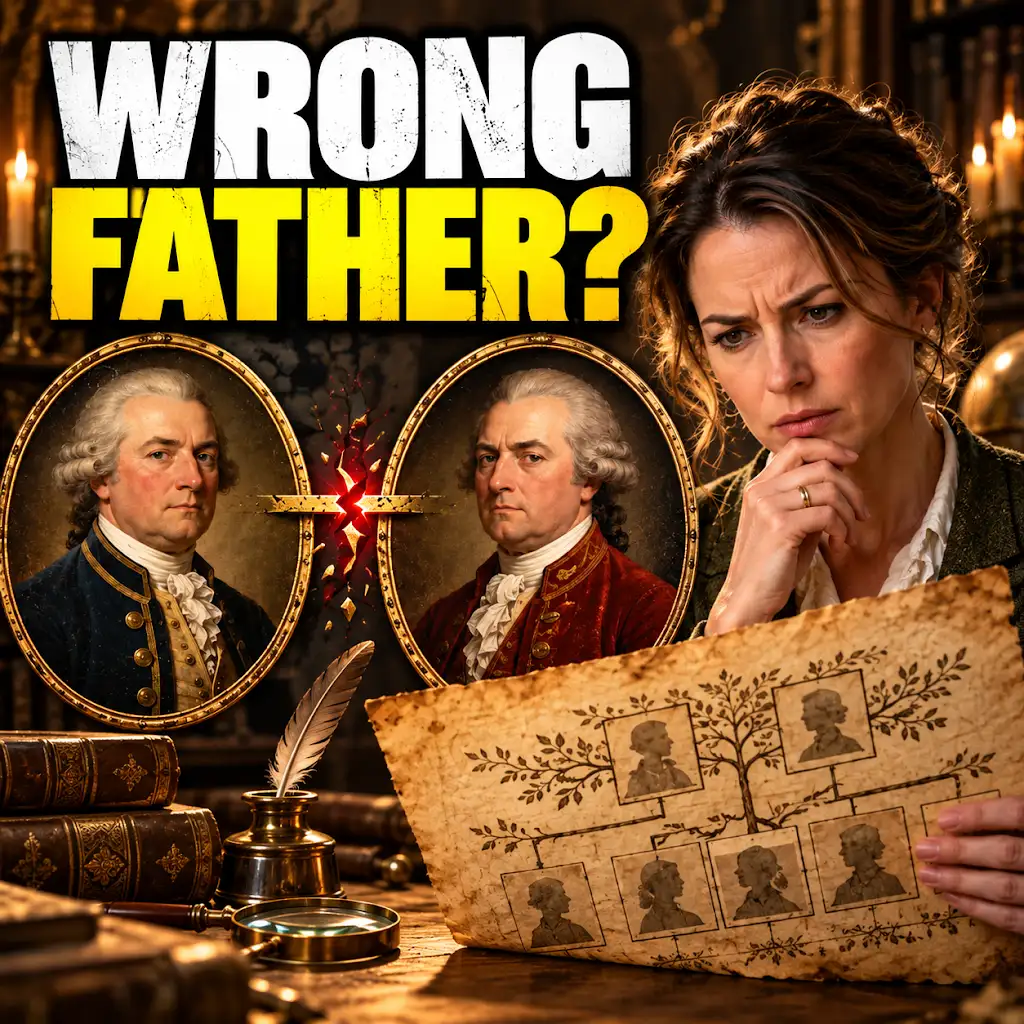
DNA Challenged This Family’s Pocahontas Ancestry Claim
FAQs
1. Who was Pocahontas and what is her significance?
Pocahontas was a Native American woman known for her association with the colonial settlement at Jamestown, Virginia. She is significant for her role in fostering peace between the Powhatan Indians and English settlers, as well as for her cultural legacy as a symbol of early Native American and European interactions.
2. What does it mean to be a maternal line descendant of Pocahontas?
Being a maternal line descendant of Pocahontas means that an individual can trace their ancestry directly through the female line back to Pocahontas herself. This lineage is typically passed down from mother to daughter through successive generations.
3. How can one determine if they are a maternal line descendant of Pocahontas?
To determine if one is a maternal line descendant of Pocahontas, genealogical research is usually required. This involves tracing one’s family tree back through the maternal line, looking for documented connections to Pocahontas or her known descendants.
4. What are some common surnames associated with maternal line descendants of Pocahontas?
Common surnames associated with maternal line descendants of Pocahontas include Bolling, Rolfe, and Custis, among others. These surnames are linked to the families of Pocahontas’s descendants who have continued her maternal line through the generations.
5. Are there any organizations or groups specifically for maternal line descendants of Pocahontas?
Yes, there are organizations such as the Pocahontas Descendants Society that cater to individuals who can prove their maternal lineage to Pocahontas. These groups often provide resources for genealogical research, historical information, and opportunities for descendants to connect with one another.