The arid sands of ancient Arabia hold secrets, whispered through time by wind and rock. For centuries, these tales remained largely unread, etched in stone by hands long turned to dust. However, the emergence of a remarkable collection of ancient camel carvings has begun to unlock a wealth of information, providing unparalleled insights into the early trade routes, cultural practices, and the profound relationship between humans and these magnificent desert navigators. These petroglyphs, discovered across vast swathes of the Arabian Peninsula, are more than just art; they are a visual chronicle of a bygone era, offering a unique window into the lives of early nomadic and settled communities.
Whispers from the Stone: Unearthing the Camel Carvings
The discovery and ongoing study of these camel carvings represent a significant archaeological endeavor. Found in remote and often challenging desert terrains, these ancient etchings were created by a variety of early peoples, predating written records in many instances. The sheer volume and geographical spread of these findings underscore the importance of the camel in the region’s history. Archaeologists and art historians are meticulously documenting, analyzing, and interpreting these etchings, piecing together a narrative that was once lost to the sands of time.
The Canvas of the Desert: Where the Carvings Reside
The majority of these camel carvings are found on exposed rock faces, cliff sides, and prominent boulders scattered across regions like Saudi Arabia, Oman, Yemen, and the United Arab Emirates. These locations were often strategically situated along ancient pathways, suggesting that the act of carving might have served not only an artistic or commemorative purpose but also as a form of communication or landmark. The chosen rock surfaces, often with a contrasting patina, provided an ideal medium for the skilled artisans to etch their designs. The ephemeral nature of desert life meant that the creation of such lasting artworks was a deliberate and significant act, imbuing the carvings with a sense of permanence. The sheer effort involved in creating these detailed depictions on often difficult-to-access surfaces speaks volumes about the cultural significance attributed to the camel.
The Artisans of Antiquity: Who Created These Masterpieces?
The identities of the artists who created these etchings remain largely unknown, lost to the mists of prehistory. However, the styles and techniques employed vary, suggesting the presence of different cultural groups and evolving artistic traditions over millennia. Some carvings are remarkably detailed, capturing the musculature, tack, and even the expressions of the camels with surprising realism. Others are more stylized and abstract. The tools used were likely simple but effective – hard stone tools were used to peck, scratch, and abrade the rock surface. The presence of recurring motifs and stylistic similarities across different sites suggests a degree of cultural exchange and shared artistic vocabulary amongst these ancient peoples. It is plausible that these carvings were created by herders, traders, or members of communities who relied heavily on camels for their survival and prosperity.
The intricate camel carvings found in various archaeological sites provide fascinating insights into the cultural and economic exchanges that took place along ancient trade routes. These carvings not only highlight the significance of camels as vital means of transportation in arid regions but also reflect the artistic expressions of the societies that created them. For a deeper understanding of how historical trade practices can inform modern economic strategies, you may find the article on financial preparedness particularly relevant. It discusses essential planning for unexpected financial emergencies, which can be likened to the adaptive strategies of ancient traders. To read more, visit this article.
The Camel as a Symbol: More Than Just a Beast of Burden

The ubiquitous presence of the camel in these ancient carvings is a testament to its central role in the lives of early Arabian societies. It was not merely an animal; it was a symbol of wealth, power, resilience, and the very foundation of their mobility and economic well-being. The carvings often depict camels in various states of activity, from laden caravans to individual animals in elaborate adornments, painting a vivid picture of their multifaceted importance.
Illustrating the Undulating Landscape: The Camel in Motion
Many carvings capture the dynamic essence of camels, portraying them walking, running, or laden with goods. These depictions are invaluable for understanding the practical aspects of camel use. The etchings meticulously detail the types of loads carried, providing clues about the nature of trade goods. Saddles, packs, and even the harnesses used are often rendered with a remarkable degree of accuracy, allowing researchers to reconstruct the equipment of ancient caravans. The depiction of multiple camels in a line, a common motif, clearly illustrates the concept of the caravan, a vital mode of transport and commerce in the arid environment. The sheer number of such depictions emphasizes the economic and logistical importance of these journeys.
Adornment and Status: The Camel as a Canvas of Culture
Beyond their utilitarian roles, the carvings also reveal the cultural significance attached to camels through their adornment. Many etched camels are shown with elaborate decorations, including intricate patterns on their bodies, decorative harnesses, and sometimes even symbolic markings. These embellishments suggest that camels were not only valued for their practical contributions but also as objects of pride and status. The act of adorning a camel could have been a way to signify ownership, tribal affiliation, or even to invoke divine protection. The artistic rendering of these decorations offers a glimpse into the aesthetic sensibilities and cultural practices of these ancient peoples, highlighting the deep bond they shared with these animals.
Tracing the Arteries of Antiquity: Clues to Ancient Trade Routes

The geographical distribution and contextual placement of the camel carvings offer compelling evidence of ancient trade networks that crisscrossed the Arabian Peninsula. By analyzing the types of camels depicted, the loads they carry, and their alignment with known geographical features, archaeologists are able to map out the ebb and flow of commerce in antiquity.
Caravans of Commerce: Unraveling Trade Networks
The recurring depiction of camels in caravan formations, often moving in discernible directions, is a powerful indicator of established trade routes. These carvings act as ancient signposts, pointing towards pathways that facilitated the movement of goods across vast distances. The types of goods suggested by the carvings, such as pottery, textiles, and perhaps even more exotic items, provide insights into the economic activities that sustained these communities. The presence of similar carving styles or motifs at different locations along potential routes suggests the existence of cultural exchange and interconnectedness facilitated by trade. The careful placement of these carvings near water sources or natural passes further reinforces their role as markers on these ancient arteries of commerce.
Goods and Exchange: What Moved Across the Sands?
While the carvings are not literal inventories, they offer significant clues about the commodities that were exchanged. The depictions of loaded camels often reveal the types of containers and the bulk of the goods. For instance, images of camels carrying large, amphora-like vessels might suggest the transport of liquids such as water, oils, or wine. Other carvings might show bundles that could represent textiles, agricultural produce, or other raw materials. The context of the carvings, such as their proximity to settlements or known resource areas, can further inform these interpretations. The ability to infer the types of goods traded allows researchers to understand the economic specializations of different regions and the broader patterns of consumption and demand in the ancient world.
Destinations and Connections: Mapping the Ancient World
By studying the spatial relationships between groups of camel carvings, archaeologists can begin to infer the destinations and connections of these ancient trade routes. Clusters of carvings in specific areas might indicate hubs of commercial activity or important stopping points along longer journeys. The presence of similar iconography in geographically distant locations suggests that these routes extended far beyond the immediate vicinity of the carvings. This allows for the reconstruction of a wider network of interaction, potentially connecting inland settlements with coastal ports or linking different oases and agricultural regions. These petroglyphs, therefore, serve as a form of ancient map, charting the arteries of an interconnected ancient Arabian world.
Cultural Narratives Etched in Stone: Beliefs, Rituals, and Daily Life
The camel carvings are not solely economic documents; they are also rich repositories of cultural information. The way the animals are depicted, the accompanying symbols, and the context of their creation offer invaluable insights into the beliefs, rituals, and the daily lives of the people who created them.
Sacred Beasts and Spiritual Connections: Deities and Devotion
Some carvings suggest a spiritual or religious significance attached to camels. Certain depictions might include symbolic elements that are associated with deities or cosmological beliefs. For example, the presence of celestial motifs or anthropomorphic figures alongside camels could indicate their role in religious ceremonies or their association with specific gods. The elaborate adornments observed on some camels might have been part of ritualistic practices, intended to appease spirits or to invoke blessings. The reverence shown for these animals, as evidenced by the effort and skill invested in their depiction, points to a deep spiritual connection that transcended their practical utility.
Stories in Silhouette: Narratives and Folklore
While not explicitly narrative in the way written stories are, the carvings can be interpreted as visual representations of myths, legends, or important historical events. A sequence of carvings might depict a journey, a hunt, or a significant encounter. The recurring motifs and compositions can be seen as visual folklore, passed down through generations. The emphasis on certain types of camels or specific actions could reflect cultural heroes or important communal narratives. Interpreting these visual stories requires a deep understanding of the broader cultural context of the region, drawing parallels with oral traditions and archaeological findings. The etchings act as a form of visual storytelling, preserving fragments of the collective memory of ancient peoples.
A Glimpse into Daily Existence: Beyond the Caravan
Beyond the grand narratives of trade and spirituality, the carvings also offer intimate glimpses into the everyday lives of ancient Arabian peoples. Depictions of camels being tended, or in scenes that suggest domesticity, provide context for their integration into family and community life. The variations in camel types, from those suited for speed to those adapted for carrying heavy loads, reflect the diverse demands placed upon these animals and, by extension, upon the people who managed them. The presence of human figures, sometimes depicted alongside camels, allows for speculation about social structures, activities, and the human-animal partnership that defined so much of their existence. These seemingly simple etchings offer a tangible connection to the rhythm of daily life in a harsh yet captivating environment.
The intricate camel carvings found in various archaeological sites provide fascinating insights into the trade routes of ancient civilizations, highlighting the significance of these animals as vital transporters of goods across vast deserts. These carvings not only reflect the cultural importance of camels but also shed light on the economic exchanges that shaped societies. For a deeper understanding of how modern trade dynamics, such as nearshoring, are influencing global commerce, you can explore this related article on the impact of nearshoring on global trade frameworks here.
Preserving a Legacy: The Future of Camel Carving Research
| Aspect | Details | Significance |
|---|---|---|
| Age of Carvings | Approximately 2,000 to 4,000 years old | Indicates early human interaction with camels |
| Location | Desert regions of the Arabian Peninsula and North Africa | Shows the geographical spread of camel domestication |
| Depicted Camel Types | Dromedary (one-humped) and Bactrian (two-humped) camels | Reflects knowledge of different camel species used by ancient peoples |
| Purpose of Carvings | Religious, cultural, and practical (hunting or herding scenes) | Provides insight into the role of camels in ancient societies |
| Artistic Style | Simple line carvings to detailed reliefs | Shows evolution of artistic techniques and cultural expression |
| Information on Camel Use | Transport, trade, and warfare | Highlights the economic and strategic importance of camels |
The ongoing discovery and study of these ancient camel carvings present both opportunities and challenges. Protecting these fragile sites and ensuring their continued accessibility for research and heritage preservation are paramount. The advancements in technology and interdisciplinary approaches promise to unlock even deeper understanding of these remarkable artifacts.
Safeguarding the Past: Challenges and Conservation Efforts
The remote and exposed nature of many carving sites makes them vulnerable to environmental degradation, vandalism, and the impact of modern development. Effective conservation strategies are crucial to protect these invaluable cultural assets. This involves mapping and documenting existing sites, implementing protective measures where necessary, and educating local communities about the importance of heritage preservation. The long-term survival of these etchings depends on a concerted effort to balance accessibility for research and tourism with the need for strict conservation.
Technological Innovations: New Tools for Ancient Stories
Modern archaeological techniques are revolutionizing the study of camel carvings. High-resolution aerial photography, drone surveys, and 3D laser scanning allow for detailed mapping and documentation of sites, even in inaccessible areas. Digital analysis of the carvings can reveal subtle details and patterns that might be missed by the naked eye. Furthermore, the integration of GIS (Geographic Information Systems) allows for sophisticated spatial analysis, helping to reconstruct trade routes and understand the broader landscape of ancient human activity. These technological advancements are opening up new avenues for interpretation and are helping to bring these ancient stories to life with unprecedented clarity.
The Interdisciplinary Nexus: Collaboration and Continued Discovery
The study of ancient camel carvings benefits immensely from an interdisciplinary approach. Archaeologists, art historians, epigraphers, linguists, and geologists all bring unique perspectives and expertise to the table. Collaboration between these fields allows for a more comprehensive understanding of the carvings, from their stylistic evolution and potential linguistic connections to their environmental context and the materials used in their creation. Continued fieldwork and ongoing discoveries in the field of ancient Arabian archaeology promise to further enrich our understanding of these fascinating petroglyphs and the vibrant cultures that produced them. Each new carving unearthed is another piece of the puzzle, adding depth and detail to our knowledge of early trade, culture, and the enduring legacy of the camel.
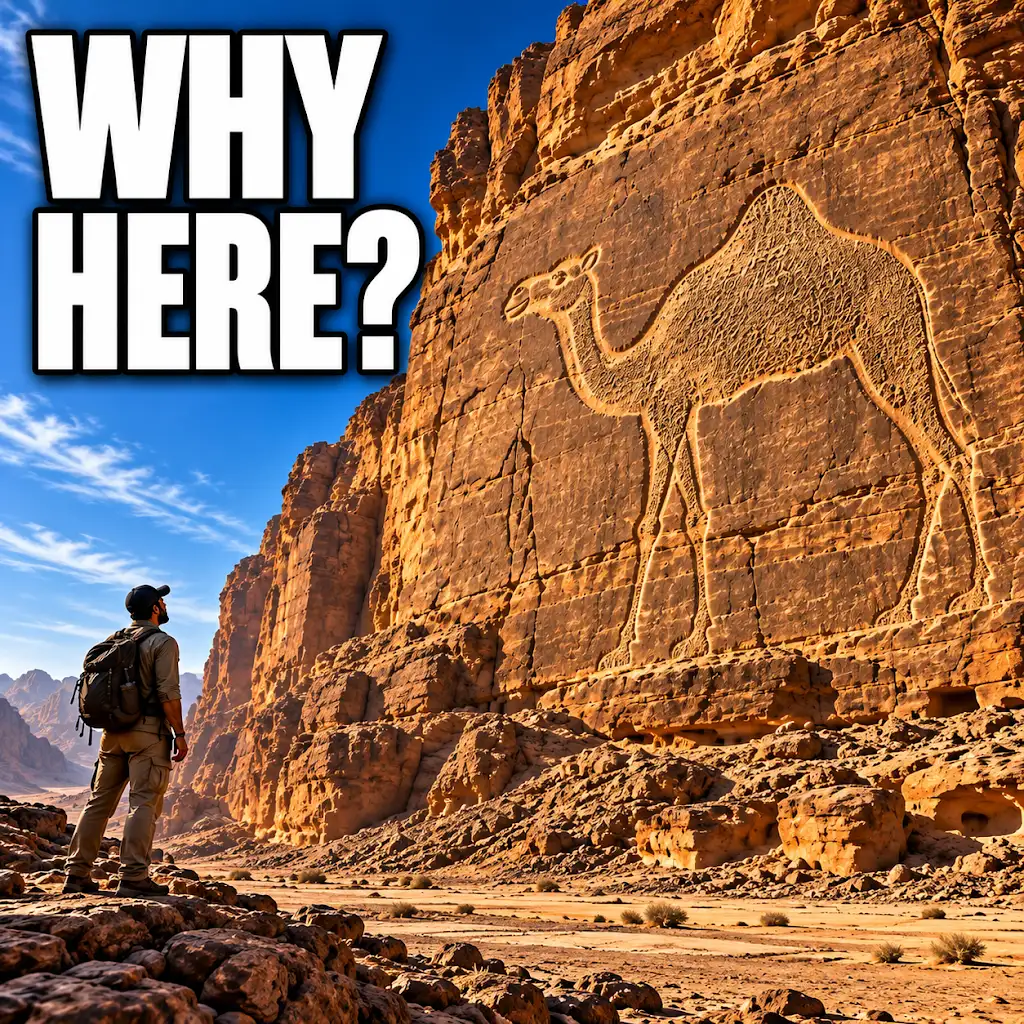
Why Were Giant Camels Carved Above the Desert?
FAQs
What do the camel carvings depict?
The camel carvings depict various scenes of camel herding, trading, and domestication, providing insights into the importance of camels in ancient societies.
Where were the camel carvings discovered?
The camel carvings were discovered in the Arabian Peninsula, particularly in regions such as Saudi Arabia, Oman, and the United Arab Emirates.
What do the camel carvings tell us about ancient cultures?
The camel carvings tell us about the close relationship between humans and camels in ancient cultures, showcasing the significance of camels in transportation, trade, and daily life.
How old are the camel carvings?
The camel carvings are estimated to be thousands of years old, dating back to ancient civilizations that relied heavily on camels for survival and prosperity.
Why are the camel carvings important for archaeologists and historians?
The camel carvings are important for archaeologists and historians as they provide valuable insights into the cultural practices, beliefs, and daily activities of ancient societies that depended on camels for various purposes.