The wind, a constant sculptor of sand and stone, has whispered secrets across the desolate expanse for millennia. Yet, some of these secrets are not etched in the shifting dunes but carved into the unyielding rock faces. Among the most enduring and beguiling of these ancient imprints are the camel carvings, a silent testament to civilizations long vanished. These enigmatic etchings, found in scattered locations across arid and semi-arid regions, particularly in the Arabian Peninsula and parts of North Africa, pose a captivating mystery that has intrigued archaeologists, historians, and art enthusiasts for decades. Their sheer artistry, the profound symbolism they often exude, and the sheer scale of their preservation speak of a deep connection between ancient peoples and the resilient camel, an animal that was, and in many ways still is, the lifeblood of these harsh landscapes.
The Silent Sentinels: Locating and Describing the Camel Carvings
The presence of these ancient camel carvings is not confined to a single, easily identifiable site. Instead, they are dispersed across a vast geographical canvas, often in remote and challenging terrains that have, paradoxically, aided their preservation. From the rugged mountains of Saudi Arabia to the sun-baked plateaus of Jordan and the remote wadis of Oman, these stone canvases bear witness to a forgotten artistic tradition. Their discovery is often accidental, a fortunate stumble by explorers or geologists traversing these desolate lands. The sheer effort involved in their creation, often high on cliff faces or on substantial boulders, suggests a deliberate and significant undertaking.
Geographic Distribution and Notable Sites
The Arabian Peninsula stands out as a particularly rich repository of these petroglyphs. The Najran region of Saudi Arabia has yielded some of the most impressive examples, with vast panels depicting not only individual camels but also entire herds in motion. In Jordan, sites like Wadi Rum, famed for its dramatic desert landscapes, also bear these ancient markings. Oman, with its diverse topography, presents a scattering of carvings, often found near ancient trade routes and water sources, hinting at the vital role camels played in connecting communities. North Africa, too, has its share, though perhaps less studied or publicized than their Middle Eastern counterparts, contributing to the global tapestry of this ancient art form. The sheer geographical spread underscores the widespread importance of the camel across ancient Afro-Eurasian cultures.
Artistic Styles and Techniques
The artists who created these carvings employed a range of techniques, predominantly percussion and abrasion. Using harder stones, they would systematically peck or chisel away at the rock surface, revealing the lighter-colored rock beneath. The depth and detail of these carvings vary significantly, from shallow, almost ephemeral outlines to deeply incised, almost three-dimensional representations. Some carvings are remarkably naturalistic, capturing the characteristic hump, long legs, and flowing mane of the camel with astonishing accuracy. Others, however, lean towards more stylized or abstract depictions, reducing the animal to its essential form. The presence of multiple stylistic variations within a single region, and even on the same rock face, suggests a continuous evolution of artistic conventions over time, or perhaps the work of different groups or generations of artists. The scale of these carvings also varies, from relatively small, intimate depictions to monumental figures that can dominate an entire rock face.
The unsolved mystery of the camel carvings has intrigued historians and archaeologists alike, as these enigmatic engravings continue to baffle experts regarding their origins and significance. For those interested in exploring more about ancient mysteries, a related article titled “The Curse of the Mummy’s Tomb: The Dig That Should Have Stayed Buried” delves into the eerie tales surrounding archaeological discoveries and the secrets they hold. You can read it [here](https://www.realloreandorder.com/the-curse-of-the-mummys-tomb-the-dig-that-should-have-stayed-buried/).
Decoding the Depictions: Understanding the Purpose and Meaning
The most compelling aspect of the camel carvings lies in their potential to unlock the mindset and worldview of the ancient peoples who created them. While direct textual explanations are absent, the context of their creation, their stylistic elements, and their recurring motifs offer tantalizing clues to their purpose and meaning. These are not merely decorative pieces; they appear to be imbued with deeper significance, reflecting the central role of the camel in the lives of its creators.
Symbolism of the Camel
The camel, particularly the dromedary, was far more than just a mode of transport. It was a symbol of endurance, resilience, and survival in the face of extreme environmental challenges. Its ability to traverse vast distances with minimal water made it indispensable for trade, warfare, and nomadic lifestyles. Consequently, the camel carvings likely represent more than just the animal itself; they could embody concepts of strength, prosperity, spiritual power, and the very sustenance of life in the arid wastelands. Their placement in prominent locations might suggest they served as markers, warnings, or even as objects of veneration. The depiction of camels with elaborate tack, such as harnesses and decorative elements, further emphasizes their importance and the care with which they were treated, reflecting a deep respect and even affection for these animals.
Possible Functions and Interpretations
Theories regarding the purpose of these carvings abound, each offering a plausible facet of their complex meaning. Some scholars suggest they served as practical navigational aids, marking important routes or water sources for travelers and herders. Others propose they were part of elaborate shamanistic or religious rituals, perhaps intended to invoke good fortune for journeys, successful hunts, or the well-being of herds. The presence of human figures interacting with camels in some carvings could indicate their use in storytelling or the depiction of historical events, perhaps even myths and legends. The sheer effort and artistry involved suggest a significant social or cultural investment, pointing towards a purpose that resonated deeply within their communities, likely encompassing aspects of spiritual belief, social cohesion, and the transmission of knowledge across generations.
The Hands That Carved: Identifying the Creators and Their Societies

Unraveling the identity of the individuals and societies responsible for these enduring artworks is a monumental task, as their stories are largely lost to the sands of time. However, by examining the context of the carvings, their stylistic affinities with other archaeological evidence, and the known movements of ancient peoples, scholars are slowly piecing together a picture of their creators. The nomadic pastoralists and traders who traversed these ancient landscapes are the most likely candidates, their lives inextricably linked to the fate of the camel.
Nomadic Pastoralism and Trade Networks
The arid environments where these carvings are found were, and in some cases still are, home to nomadic pastoralist communities. These groups relied heavily on their herds, with camels forming the backbone of their mobile existence. Their seasonal movements in search of pasture and water would have necessitated a deep understanding of the land and its resources. The camel carvings could have served as a way to mark territories, communicate with other groups, or simply express their profound connection to the animals that sustained them. Furthermore, these regions were often traversed by ancient trade routes, facilitating the exchange of goods and ideas across vast distances. The camel was the primary vehicle for this long-distance commerce, and the carvings might have been created by those who actively participated in these lucrative networks, perhaps as a form of cultural expression or as a way to solidify their presence and influence in these strategic corridors.
Chronological Placement and Cultural Affiliations
Determining the precise age of the camel carvings is a significant challenge. Direct dating is often impossible, as the carvings themselves do not contain organic material suitable for radiocarbon dating. However, archaeological context, such as the association with known settlements or artifacts, can provide relative dating. Many scholars believe the majority of these carvings date to the pre-Islamic and early Islamic periods, with some potentially extending much further back into antiquity. Stylistic comparisons with other rock art traditions and known archaeological finds are crucial for establishing chronological frameworks and potential cultural affiliations. Researchers look for similarities in depicted animals, human figures, and abstract motifs to connect these carvings to specific archaeological cultures or periods. For instance, the presence of certain types of weaponry or adornments in human figures can offer clues to the era of their creation.
The Challenges of Preservation and the Future of Study
The very factors that have preserved the camel carvings for centuries also pose significant threats to their continued existence. The delicate balance of arid environments, coupled with the increasing pressures of human activity, necessitates a concerted effort to protect these invaluable remnants of our past. The ongoing study and interpretation of these enigmatic artworks are crucial for understanding the rich history and cultural heritage they represent.
Environmental Threats and Human Impact
The harsh desert environment, while a shield against decay, can also be a destructive force. Extreme temperature fluctuations, sandstorms, and erosion can gradually wear away the delicate etchings. More insidious are the threats posed by human activity. Modern development, including infrastructure projects and tourism, can lead to accidental damage or the disturbance of the delicate ecological balance. Graffiti and vandalism, though less common in remote areas, also represent a serious threat. Furthermore, the increasing accessibility of some sites, while facilitating research, also increases the risk of careless handling and damage by visitors. The sheer remoteness of many sites, which has historically protected them, now poses a logistical challenge for comprehensive surveys and monitoring efforts.
Modern Research and Conservation Efforts
The study of camel carvings is an ongoing and evolving field. Archaeologists, epigraphers, and art historians continue to employ a range of modern techniques to analyze and interpret these ancient artworks. Satellite imagery and Geographical Information Systems (GIS) are being used to map the distribution of carvings and identify potential new sites. Advanced imaging techniques, such as photogrammetry and 3D scanning, are employed to create detailed digital records of the carvings, allowing for meticulous analysis without direct physical contact and providing valuable data for future research and conservation. Conservation efforts are crucial and often involve careful monitoring of the sites, the establishment of protective zones, and public awareness campaigns to educate visitors about the importance of respecting these ancient treasures. International collaborations and the sharing of knowledge are vital for developing effective strategies to safeguard these irreplaceable cultural assets for future generations.
The unsolved mystery of the camel carvings continues to intrigue historians and archaeologists alike, as these enigmatic figures raise questions about their origin and purpose. For those interested in exploring how historical events can shape cultural artifacts, a related article discusses the impact of Executive Order 6102 on gold confiscation and its broader implications on American society. You can read more about this fascinating topic here.
The Enduring Allure: Why the Camel Carvings Continue to Captivate
| Aspect | Details |
|---|---|
| Location | Al-Jawf, Saudi Arabia |
| Estimated Age | Approximately 2,000 years old |
| Number of Carvings | Over 1,000 individual camel figures |
| Carving Technique | Petroglyphs etched into sandstone cliffs |
| Purpose | Unknown; theories include religious, territorial markers, or artistic expression |
| Discovery Date | First documented in the 20th century |
| Current Condition | Weathered but largely intact |
| Research Status | Ongoing archaeological studies with no definitive conclusions |
Despite the passage of millennia, the camel carvings retain a profound and enduring allure. They are more than just ancient art; they are windows into a lost world, offering glimpses into the lives, beliefs, and ingenuity of peoples who navigated and shaped some of the planet’s most challenging landscapes. Their mystery is not a void to be filled but a catalyst for wonder, inviting us to connect with our shared human past and to appreciate the timeless relationship between humanity and the natural world.
A Legacy of Resilience and Ingenuity
The very act of carving these images into stone speaks volumes about the resilience and ingenuity of their creators. Faced with unforgiving environments, they found ways to leave their mark, to communicate, and to express their worldview. The camel, a creature embodying the same spirit of endurance, became their muse and their symbol. These carvings serve as a powerful reminder that even in the harshest conditions, human creativity and the drive to leave a legacy can flourish. They stand as a testament to the enduring power of art as a form of cultural expression and as a means of transmitting knowledge and stories across vast stretches of time. The ability of these seemingly simple etchings to evoke such a profound sense of connection and wonder speaks to a universal human experience.
The Unfinished Narrative and Future Discoveries
The enigmatic nature of the camel carvings ensures that their story is far from complete. Each new discovery, each refined interpretation, adds another layer to our understanding, yet the full picture remains elusive. The vastness of the regions where these carvings are found, coupled with the logistical challenges of exploration, suggests that many more such sites undoubtedly await discovery. The ongoing research promises to unearth new insights into the social structures, belief systems, and daily lives of the people who created these remarkable artworks. The camel carvings continue to beckon, inviting us to ponder their secrets, to marvel at their artistry, and to continue the quest for understanding, ensuring that their silent whispers are heard by generations to come. The allure lies not only in what has been found but also in the vastness of what remains to be uncovered, a promise of further revelations from the ancient past.
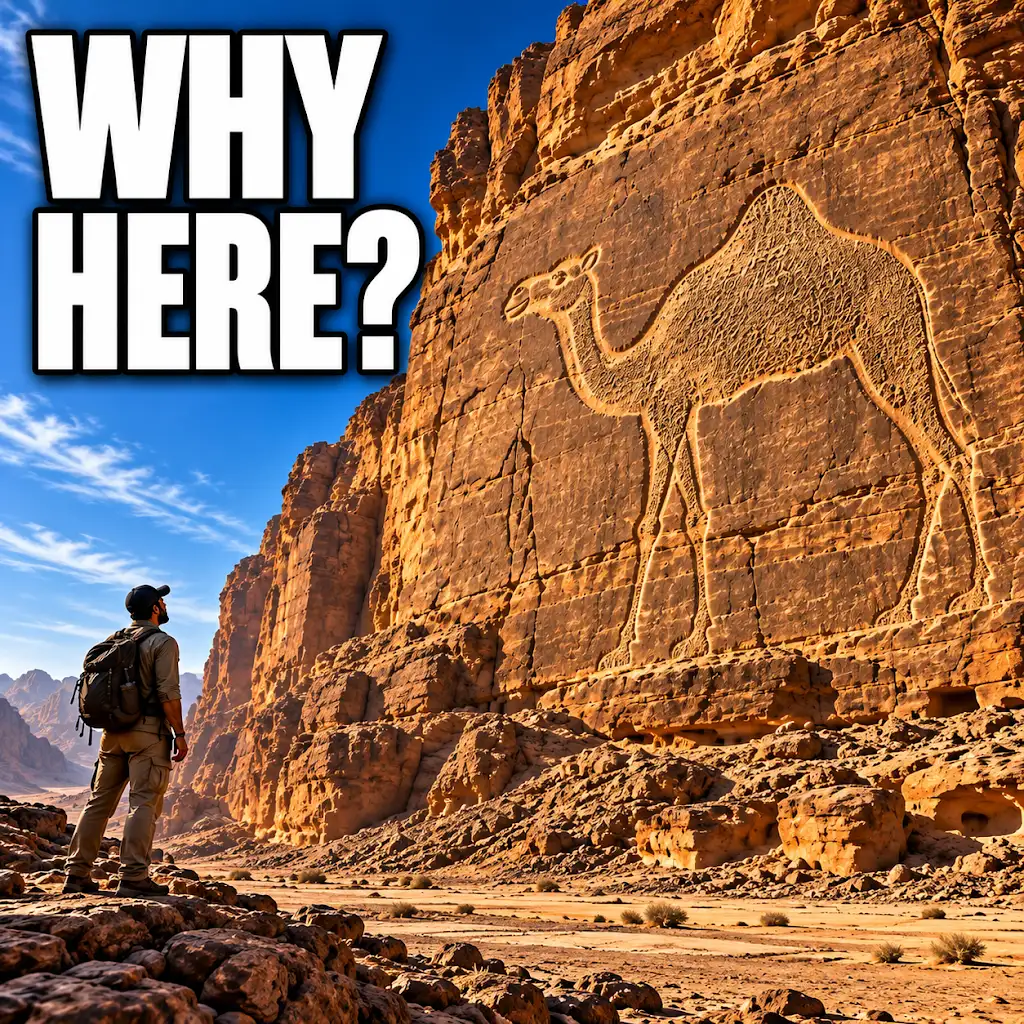
Why Were Giant Camels Carved Above the Desert?
FAQs
What are the camel carvings?
The camel carvings are a series of ancient rock engravings found in various locations around the world, depicting images of camels in various poses and styles.
Where are the camel carvings located?
The camel carvings can be found in different regions such as Saudi Arabia, Jordan, Oman, and other parts of the Middle East. They are often located in remote desert areas.
How old are the camel carvings?
The exact age of the camel carvings is unknown, but they are believed to date back thousands of years to ancient civilizations that inhabited the regions where the carvings are found.
What is the significance of the camel carvings?
The significance of the camel carvings is still a mystery to archaeologists and historians. Some theories suggest they may have served as markers for trade routes, religious symbols, or even artistic expressions.
Why are the camel carvings considered an unsolved mystery?
The camel carvings remain an unsolved mystery because their purpose, origin, and the people who created them are still unknown. Despite various theories, there is no definitive explanation for the existence of these ancient rock engravings.