
Unearthing the Whispers of the Past: The Jebel Arnaan Engravings
Deep within the vast, ochre expanse of Saudi Arabia’s northwestern desert lies Jebel Arnaan, a geological formation that has long held a silent, profound secret. For centuries, the wind-scoured rock faces of this arid mountain have been adorned with an extraordinary collection of ancient camel engravings, a silent testament to a bygone era. These petroglyphs, painstakingly etched by the hands of early desert dwellers, offer an unparalleled window into the lives, beliefs, and societal structures of people who navigated these harsh landscapes thousands of years ago. Unlike written records, which are scarce for many ancient desert cultures, these rock carvings serve as a direct visual narrative, speaking volumes about their creators’ relationship with their environment and the animals that were central to their existence. The sheer volume and detail of the Jebel Arnaan engravings make them a treasure trove for archaeologists, historians, and anyone fascinated by the ingenuity and resilience of human civilization in extreme conditions.
The discovery and subsequent study of these engravings have revolutionized our understanding of early Arabian history. For a long time, the prevailing narrative of the region’s ancient past was largely based on fragmented archaeological finds and the interpretations of later written accounts. Jebel Arnaan, however, provides an authentic, unmediated glimpse into a period when the camel was not merely a mode of transport but the very lifeblood of communities. The artistry and labor involved in creating these depictions suggest a deep reverence for these animals, elevating them beyond utilitarian importance to a level of cultural and perhaps even spiritual significance. The ongoing efforts to decipher the nuances of these carvings continue to unlock new layers of information, painting an ever-more vivid picture of the people who called this desolate beauty home.
Echoes of a Nomadic Existence
The most striking aspect of the Jebel Arnaan engravings is their overwhelming focus on camels. These animals are depicted in various forms, from lone individuals to sprawling herds, capturing their grace, power, and adaptability to the desert environment. The engravings showcase different breeds and ages of camels, suggesting an intimate knowledge of their characteristics and an understanding of their breeding patterns. Some depictions show pregnant females, others appear to be young calves, and many illustrate the mature strength of adult animals. This attention to detail points to a society that was not only dependent on camels for survival but also deeply attuned to their life cycles and biological nuances.
The sheer scale of the camel depictions is also noteworthy. Some engravings are monumental in size, dominating the rock faces and drawing the eye from a distance. These larger carvings may have served specific purposes, perhaps as territorial markers, important religious symbols, or even as historical records of significant events involving large camel migrations or battles. The precision with which the artists rendered the animals, capturing the distinctive hump, long legs, and elegant necks, speaks to a mastery of observation and a profound connection with their subjects. It is clear that these were not casual doodles but deliberate, skilled acts of artistry, imbued with meaning and purpose.
Life on the Move: Depicting the Desert Environment
Beyond the camel itself, the Jebel Arnaan engravings offer glimpses into the broader context of desert life. While the depictions of camels are paramount, they are often situated within subtly rendered landscapes. We can infer the presence of arid plains, rocky outcrops, and possibly even scarce water sources from the surrounding rock formations and the implied movement of the animals. These contextual clues, though often understated, are vital for reconstructing the environmental conditions in which these ancient peoples lived. The artists, through their observations of animal behavior and habitat, inadvertently created a natural history record.
The engravings also allude to the challenges and triumphs of nomadic existence. The dynamic poses of the camels, some appearing to be in motion, others resting, suggest the constant movement and adaptation required to survive in a resource-scarce environment. The presence of human figures, though less common than camel depictions, often interacts with the animals, hinting at the complex relationship between humans and camels – one of partnership, reliance, and control. These interactions, whether depicted as herding, hunting, or simply coexisting, provide crucial insights into the social organization and daily routines of these ancient desert dwellers.
The Jebel Arnaan camel engravings are a fascinating glimpse into the ancient cultures of the Arabian Peninsula, showcasing the significance of camels in the region’s history and daily life. For those interested in exploring more about ancient civilizations and their understanding of the cosmos, a related article titled “Uncovering Ancient Astronomy Secrets” offers intriguing insights into how early societies interpreted celestial phenomena. You can read it here: Uncovering Ancient Astronomy Secrets.
The Artistry and Symbolism of the Rock Faces
The Jebel Arnaan engravings are not merely representations of animals; they are works of art, imbued with a rich tapestry of symbolism that continues to be explored by researchers. The techniques employed by the ancient artists varied, suggesting a developed understanding of stone carving. Some engravings are deep and incised, while others are shallow and pecked, each method likely chosen for its aesthetic effect or durability. The use of natural rock formations to enhance the imagery, such as utilizing a bulge in the rock to accentuate a camel’s musculature, demonstrates a sophisticated artistic sensibility.
The selection of the rock faces themselves is also significant. Many of the engravings are found on prominent, easily accessible surfaces, suggesting they were intended to be seen and appreciated by others. The careful selection of locations may have had ritualistic or communal importance, turning these natural outcrops into open-air galleries that communicated messages across generations. The sheer persistence of these carvings, enduring the ravages of time and weather, speaks to the enduring power of their artistic and symbolic message.
Unraveling the Meaning: Iconography and Interpretation
The interpretation of the symbolism embedded within the Jebel Arnaan engravings is a complex and ongoing endeavor. Researchers meticulously analyze the composition, scale, and details of each carving to infer their potential meanings. Are certain poses indicative of specific events, such as migration, fertility, or conflict? Do recurring motifs represent deities, ancestral spirits, or important social hierarchies? The presence of what appear to be riders on some camels suggests a long history of camel domestication and the development of specialized skills in managing these animals for transportation and other purposes.
The juxtaposition of different animals, or the inclusion of abstract symbols alongside animal figures, further complicates the interpretive landscape. Some scholars propose that certain engravings might represent astronomical observations or calendrical systems, reflecting a sophisticated understanding of the celestial sphere that guided their movements and rituals. Others suggest that the more stylized or abstract elements could be linked to shamanistic practices or mythological narratives, offering glimpses into the spiritual beliefs of these ancient people. The absence of a direct Rosetta Stone for these petroglyphs means that interpretation relies heavily on comparative analysis with other archaeological findings, ethnographical studies of contemporary nomadic cultures, and a deep understanding of the desert environment.
A Legacy in Stone: The Craftsmanship of the Engravers
The skill and dedication required to create these engravings are undeniable. Working with stone tools, the ancient artists meticulously pecked, scraped, and incised the rock faces, transforming the raw material into vivid depictions. The precision required to capture the anatomical details of the camels, particularly the musculature and skeletal structure, suggests a profound understanding of the animals’ forms. This level of craftsmanship indicates that these were not casual artisans but individuals who likely held respected positions within their communities, perhaps as artists, storytellers, or spiritual leaders.
The sheer effort involved in creating such extensive and detailed rock art also speaks to the importance of these carvings. The creation of these engravings would have been a time-consuming and labor-intensive process, requiring significant dedication and skill. This investment of time and energy underscores the profound significance that these depictions held for the people who created them, suggesting they served vital social, religious, or mnemonic functions. The enduring nature of the carvings, surviving for millennia, is a testament to the quality of their craftsmanship and the resilience of the materials and techniques employed.
Contextualizing the Discoveries: Chronology and Cultural Links
Dating the Jebel Arnaan engravings is crucial for understanding their place in the broader historical narrative of the Arabian Peninsula. While direct radiocarbon dating of petroglyphs is often challenging, archaeologists employ various methods to estimate their age. These include stylistic analysis, comparison with chronologically datable artifacts found in nearby archaeological sites, and the observation of the degree of weathering and erosion on the carvings. Through these methods, researchers have been able to assign the Jebel Arnaan engravings to broad chronological periods, placing them within the context of early human occupation and development in the region.
The early periods of camel domestication in Arabia are estimated to have begun several thousand years BCE. The sophistication and sheer volume of the Jebel Arnaan engravings suggest they were created by cultures that had already established a deep and complex relationship with these animals. This places them potentially within the Bronze Age or even earlier, a period when nomadic pastoralism was becoming increasingly important for human survival and expansion across the Arabian desert. The engravings therefore represent a crucial stage in the human adaptation to desert environments and the integral role of the camel in this adaptation.
The Jebel Arnaan camel engravings offer a fascinating glimpse into the ancient cultures of the Arabian Peninsula, showcasing the significance of camels in the region’s history. These engravings not only highlight the artistry of early civilizations but also provide valuable insights into their interactions with the environment. For those interested in understanding how climate change has influenced human history, a related article discusses the broader implications of environmental shifts in a documentary format. You can explore this topic further in the article titled The Climate Change Chronicles, which delves into Earth’s environmental history and its impact on various cultures.
Dating the Desert’s Stories: Estimating the Age of the Carvings
The precise dating of the Jebel Arnaan engravings remains an active area of research. Initial assessments, based on stylistic similarities with other known rock art sites and the geological context, suggest a wide chronological span. Some scholars believe the earliest engravings could date back to the Neolithic period, around the 6th to 4th millennia BCE, when early forms of animal domestication were beginning to emerge. Others place the bulk of the significant camel depictions within the Early Bronze Age, roughly from the 3rd to the 2nd millennia BCE, a period known for its pastoral nomadic cultures and the extensive use of camels for trade and transportation.
The methodology for dating involves careful observation of the patina that forms on the engravings, as well as the erosion patterns that indicate their exposure to the elements over long periods. Additionally, the discovery of associated artifacts, such as lithic tools or pottery shards, in the vicinity of the engraved sites can provide valuable chronological anchors. The ongoing meticulous work of archaeologists and geologists in analyzing these factors is gradually refining our understanding of when these ancient artists were actively creating their masterpieces on the rocks of Jebel Arnaan.
Connecting the Dots: Cultural Affiliations and Influences
The Jebel Arnaan engravings do not exist in isolation. They are part of a broader tradition of rock art found across the Arabian Peninsula and extending into neighboring regions. By comparing the style, motifs, and techniques of the Jebel Arnaan carvings with those found at sites in Saudi Arabia, Jordan, Yemen, and even further afield, researchers can identify potential cultural connections and spheres of influence. These comparisons help to establish the extent of trade networks, migration routes, and shared cultural practices among ancient desert communities.
The presence of similar camel depictions and symbolic elements at different sites suggests the transmission of ideas and artistic traditions across vast distances. This interconnectedness highlights the dynamic nature of ancient societies, even in seemingly isolated desert environments. Understanding these cultural links allows us to move beyond viewing Jebel Arnaan as an isolated phenomenon and instead place it within a larger, vibrant tapestry of human history in the ancient Near East, where the camel played a unifying and transformative role.
The Significance of Jebel Arnaan for Modern Understanding
The Jebel Arnaan camel engravings are far more than just ancient art; they are vital historical documents that continue to inform our understanding of early human civilization in arid regions. They offer tangible evidence of a way of life that was intimately connected to the natural world and the animals that sustained it. The depth of knowledge displayed by the engravers regarding camel behavior, anatomy, and their role in society is a testament to the sophisticated observational skills and deep understanding that these early peoples possessed.
Furthermore, the Jebel Arnaan site contributes significantly to the broader field of archaeoastronomy and ethnoarchaeology. By studying the placement of the engravings, their alignment with celestial bodies, and their potential connection to seasonal changes, researchers can infer more about the cosmological beliefs and practical knowledge of these ancient cultures. The engravings serve as a unique Rosetta Stone, allowing us to decipher the visual language of a people who left no written records, but whose stories are etched indelibly into the very fabric of the desert landscape.
Preserving a Heritage: The Importance of Conservation Efforts
The continued preservation of the Jebel Arnaan engravings is of paramount importance. These ancient artworks are fragile and vulnerable to the natural forces of erosion, as well as the potential impact of human activity. Modern conservation efforts focus on protecting the site from damage, monitoring its condition, and developing strategies to mitigate environmental threats. This includes limiting access to sensitive areas, educating visitors about responsible tourism, and employing scientific techniques to document and stabilize the engravings.
The ongoing research and documentation of the Jebel Arnaan site also play a crucial role in its preservation. By creating detailed records of the engravings, including high-resolution photographs, 3D scans, and accurate mapping, researchers ensure that this invaluable cultural heritage is preserved for future generations, even if the physical site faces degradation over time. This meticulous documentation serves as a vital archive, allowing continued study and appreciation of these ancient stories.
Jebel Arnaan’s Place in the Narrative of Human History
The Jebel Arnaan engravings hold a significant place in the grand narrative of human history. They represent a critical period in the development of human-animal relationships, specifically the domestication and integral use of the camel, which fundamentally altered human mobility, trade, and settlement patterns across vast desert regions. These carvings provide irrefutable visual proof of the deep bond between humans and camels, a bond that shaped economies, facilitated cultural exchange, and allowed for the successful expansion of human populations into challenging environments.
The study of Jebel Arnaan also enriches our understanding of the ingenuity and resilience of ancient peoples. Their ability to not only survive but to thrive in the harsh desert environment, to develop sophisticated artistic traditions, and to create enduring cultural expressions speaks volumes about their adaptability and resourcefulness. Jebel Arnaan stands as a powerful reminder that even in the most desolate landscapes, human creativity and cultural expression have flourished, leaving behind a legacy that continues to inspire and educate us today. The silent whispers of these camel engravings echo across millennia, offering profound insights into the lives and minds of our ancient ancestors.
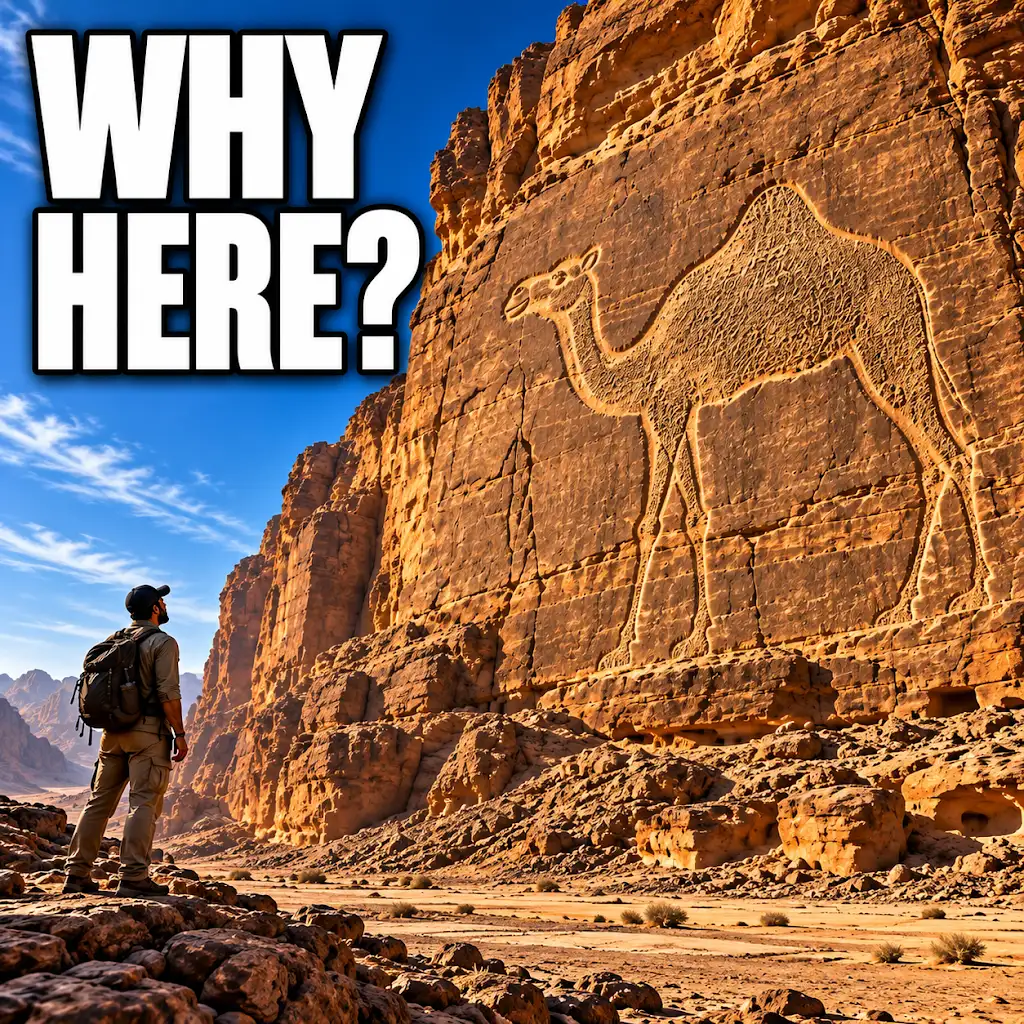
Why Were Giant Camels Carved Above the Desert?
FAQs
What are the Jebel Arnaan camel engravings?
The Jebel Arnaan camel engravings are a collection of ancient rock art depicting camels, located in the Jebel Arnaan area of Saudi Arabia.
When were the Jebel Arnaan camel engravings created?
The camel engravings at Jebel Arnaan are estimated to date back to around 2,000 to 2,500 years ago, during the Iron Age.
Who created the Jebel Arnaan camel engravings?
It is believed that the camel engravings at Jebel Arnaan were created by ancient nomadic tribes or travelers passing through the region, as camels were a vital mode of transportation in the desert.
How were the Jebel Arnaan camel engravings made?
The camel engravings at Jebel Arnaan were made by carving or pecking the rock surface using sharp tools or stones, creating detailed depictions of camels in various poses.
Why are the Jebel Arnaan camel engravings significant?
The Jebel Arnaan camel engravings provide valuable insights into the cultural and historical significance of camels in the region, as well as the artistic skills and practices of ancient civilizations in Saudi Arabia.