
The Nefud Desert, a vast and formidable expanse of sand and rock in northern Saudi Arabia, guards secrets far older than any recorded history. Among its most profound enigmas are the petroglyphs, ancient rock carvings etched into the landscape by hands long turned to dust. These enigmatic images, scattered across hundreds of sites, offer tantalizing glimpses into the lives, beliefs, and artistic expressions of prehistoric peoples who once thrived in what is now an arid wasteland. Their discovery and ongoing study present a captivating mystery, one that archaeologists and historians are still actively working to unravel.
Whispers from a Greener Past
The very existence of sophisticated rock art in the Nefud Desert speaks volumes about a dramatic environmental shift. Today, the Nefud is characterized by towering sand dunes and extreme temperatures, a seemingly inhospitable environment. However, geological and archaeological evidence points to a drastically different past. During wetter climatic periods, often referred to as “Green Sahara” phases, this region was a verdant landscape supporting a rich ecosystem of flora and fauna. Rivers flowed, lakes dotted the terrain, and large mammals like giraffes, elephants, antelopes, and ostriches roamed freely. It was in this more hospitable environment that early human populations found sustenance and a place to call home. The petroglyphs, therefore, are not just artistic renderings but direct testaments to this forgotten epoch, a time when the Nefud was a vibrant cradle of life.
Tracing Human Footprints Through Time
The earliest inhabitants of the Nefud likely arrived during these wetter periods, drawn by the abundant resources. These early hunter-gatherer societies, living in tune with their environment, left behind their indelible marks on the rock faces. The petroglyphs serve as a chronological marker, allowing researchers to piece together the long narrative of human presence in the region. Radiocarbon dating of associated archaeological layers, where available, helps to place these carvings within a broad timeline, stretching back potentially tens of thousands of years. Understanding the chronology is crucial, as it allows for the identification of different cultural phases and potential influences on artistic styles.
Ecological Echoes in Stone
The subject matter of the Nefud petroglyphs provides invaluable insights into the diet, hunting practices, and the natural world as perceived by these ancient peoples. The most frequently depicted subjects are animals. Graceful gazelles, powerful ibexes, herds of cattle, and sometimes even predators like lions, are rendered with remarkable detail and dynamism. The presence of domesticated animals, particularly cattle, suggests a transition from pure hunting to pastoralism, a significant development in human societal organization. The accuracy with which these animals are portrayed indicates a deep understanding of their anatomy and behavior, honed through generations of observation and interaction. Beyond the fauna, abstract symbols and geometric patterns also feature prominently, their meanings lost to time but hinting at complex spiritual or ritualistic practices.
The Nefud Desert petroglyphs are a fascinating glimpse into the ancient cultures that once thrived in the Arabian Peninsula, showcasing intricate carvings that tell stories of early human life. For those interested in exploring how historical artifacts can shed light on contemporary issues, a related article discusses the implications of modern exploitation of resources and cultural heritage. You can read more about this topic in the article titled “Chinese Companies Exploiting Mexico Loophole” found at this link.
The Artistic Language of the Ancients
The sheer artistry and technical skill displayed in the Nefud petroglyphs are astonishing. These are not crude scratchings; they are deliberate, often intricate, engravings executed with tools that have long since crumbled. The techniques employed varied, from pecking and grinding to incising and abrading. The surfaces chosen for these artworks were often natural rock faces, carefully selected for their texture and visibility. The creators understood how to manipulate light and shadow to enhance their creations, a sophisticated aesthetic sensibility. The diversity in style across different sites and time periods suggests a rich artistic tradition that evolved and adapted over millennia.
Mastering the Medium: Tools and Techniques
The creation of petroglyphs required specific tools and a considerable amount of effort. Archaeologists hypothesize that early artists used harder stones, such as chert or basalt, to carve into the softer sandstone or basalt rock. The specific method would depend on the desired effect. Pecking, where a pointed tool is repeatedly struck against the rock surface, could create textured areas or outlines. Grinding, using a larger stone, might have been used for smoothing or creating larger shapes. Incising involved scratching lines into the rock, while abrading would involve rubbing the surface to remove the outer layer and expose a lighter subsurface. The sheer scale of some of the larger carvings suggests collective effort and a well-established understanding of their craft.
Aesthetic Choices and Stylistic Evolution
The Nefud petroglyphs exhibit a remarkable range of styles, reflecting the diverse cultural groups that inhabited the region and the passage of time. Some carvings are highly stylized and abstract, focusing on outline and form. Others are more naturalistic, capturing the essence of the animal with impressive accuracy. There are instances of superimposed figures, suggesting that rock faces were reused or modified over time, creating a palimpsest of ancient artistic expression. The evolution of these styles can be observed, with later carvings sometimes showing a greater degree of sophistication in composition and detail, or conversely, a move towards more simplified forms. This stylistic variation is a key element in deciphering the mystery of who created these works and when.
Unraveling the Purpose: More Than Just Decoration
The motivations behind the creation of these enduring artworks remain a subject of intense debate. While it is tempting to view them purely as decorative elements, the context and subject matter suggest a deeper significance. They likely served a variety of purposes, ranging from communication and storytelling to ritualistic practices and the marking of territory or significant events. The sheer effort involved implies a strong impetus, beyond mere aesthetic enjoyment.
Communication and Narrative in Stone
The petroglyphs may have functioned as a form of visual communication, a way for ancient communities to record and transmit knowledge. Depictions of hunts, migratory patterns of animals, or important social gatherings could have served as educational tools or historical accounts. The repeated motifs and specific arrangements of figures might have conveyed specific meanings or narratives understood by those within the cultural group. While the exact “language” of these carvings is lost to us, the visual clues offer potential avenues for interpretation.
Ritual, Religion, and the Sacred Landscape
A compelling theory posits that many of the petroglyphs held deep religious or spiritual significance. The prominence of certain animals, particularly those associated with power or fertility, could indicate their totemic or sacred status. The creation of these artworks might have been part of shamanistic rituals, ceremonies to appease deities, or rites of passage. The act of carving itself could have been a sacred one, imbuing the rock face with spiritual power. The placement of these sites, often in prominent or geographically significant locations, further supports the idea that they were part of a sacred landscape.
Territorial Markers and Social Boundaries
In a nomadic or semi-nomadic society, marking territory would have been crucial. The petroglyphs, particularly those found on prominent rock outcrops or near water sources, could have served as territorial markers, signaling ownership or the presence of a particular group. They might have also played a role in establishing social boundaries, defining the communal lands or routes of travel for a specific clan or tribe. The repetition of certain symbols across different sites could indicate shared cultural identity or alliances between dispersed groups.
The Challenges of Interpretation and Preservation
Deciphering the full meaning of the Nefud petroglyphs is a monumental task, fraught with challenges. The absence of written records from these ancient cultures means that interpretation must rely heavily on visual analysis, contextual clues from archaeological findings, and comparisons with other known rock art traditions. Furthermore, the very act of preserving these fragile artworks in a harsh desert environment presents a constant struggle.
Bridging the Gap: Understanding Lost Meanings
The greatest hurdle in understanding the Nefud petroglyphs is the vast gulf of time and culture that separates us from their creators. We lack the shared knowledge, the linguistic context, and the social frameworks that would have informed their meaning. Anthropological analogies, while useful, can only go so far. Archaeologists employ rigorous methodologies, meticulously documenting each carving, its context, and any associated artifacts. They analyze patterns, recurring motifs, and stylistic variations, hoping to build a probabilistic understanding of the intent behind the art. Comparative studies with other ancient art forms, particularly those from nearby regions or periods, can also offer potential insights.
The Arid Threat: Protecting Ancient Masterpieces
The Nefud Desert, while remote, is not immune to the ravages of time and the elements. Extreme temperature fluctuations, sandstorms, erosion, and the gradual weathering of rock surfaces pose constant threats to the petroglyphs. Human activity, both intentional and unintentional, can also cause damage. The discovery of these sites also brings the risk of vandalism or uncontrolled tourism, which can lead to degradation. Conservation efforts are crucial, involving meticulous documentation, protective measures where feasible without altering the natural state, and careful management of access to sensitive areas. International collaboration and the establishment of protected zones are vital for ensuring the long-term survival of this invaluable cultural heritage.
The Nefud Desert petroglyphs offer a fascinating glimpse into the ancient cultures that once thrived in this arid landscape, showcasing intricate carvings that tell stories of the past. These rock engravings not only highlight the artistic expression of early humans but also raise questions about the preservation of cultural heritage in the face of environmental changes. For those interested in the broader implications of vulnerability, a related article explores the potential threats to lunar habitats, emphasizing the importance of safeguarding our historical and cultural legacies, whether on Earth or beyond. You can read more about this topic in the article on the vulnerability of lunar habitats.
The Enduring Legacy of the Nefud’s Rock Art
| Metric | Details |
|---|---|
| Location | Nefud Desert, Northern Saudi Arabia |
| Estimated Age | Approximately 8,000 to 10,000 years old |
| Number of Petroglyph Sites | Over 1,000 documented sites |
| Common Motifs | Animals (camels, ibex, ostriches), human figures, geometric shapes |
| Material | Sandstone and volcanic rocks |
| Significance | Provides insight into prehistoric human life and environment in the Arabian Peninsula |
| Preservation Status | Vulnerable due to natural erosion and human activity |
| Research Initiatives | Ongoing archaeological surveys and documentation projects |
Despite the challenges, the ongoing exploration and study of the Nefud Desert petroglyphs continue to yield profound discoveries. They offer an unparalleled window into the lives of early humans in Arabia, their adaptation to changing environments, their artistic sensibilities, and their complex belief systems. These ancient artworks are not merely relics of the past; they are vibrant testaments to the enduring human drive to create, to communicate, and to leave a mark on the world. As researchers continue to delve into the mysteries of these stony whispers, they bring us closer to understanding our shared human story, etched for eternity into the heart of the desert. The Nefud’s petroglyphs serve as a powerful reminder that even in the most seemingly desolate landscapes, human creativity and cultural depth have always flourished. Their continued study promises to unlock further secrets, enriching our understanding of our ancient ancestors and their profound connection to the land they inhabited.
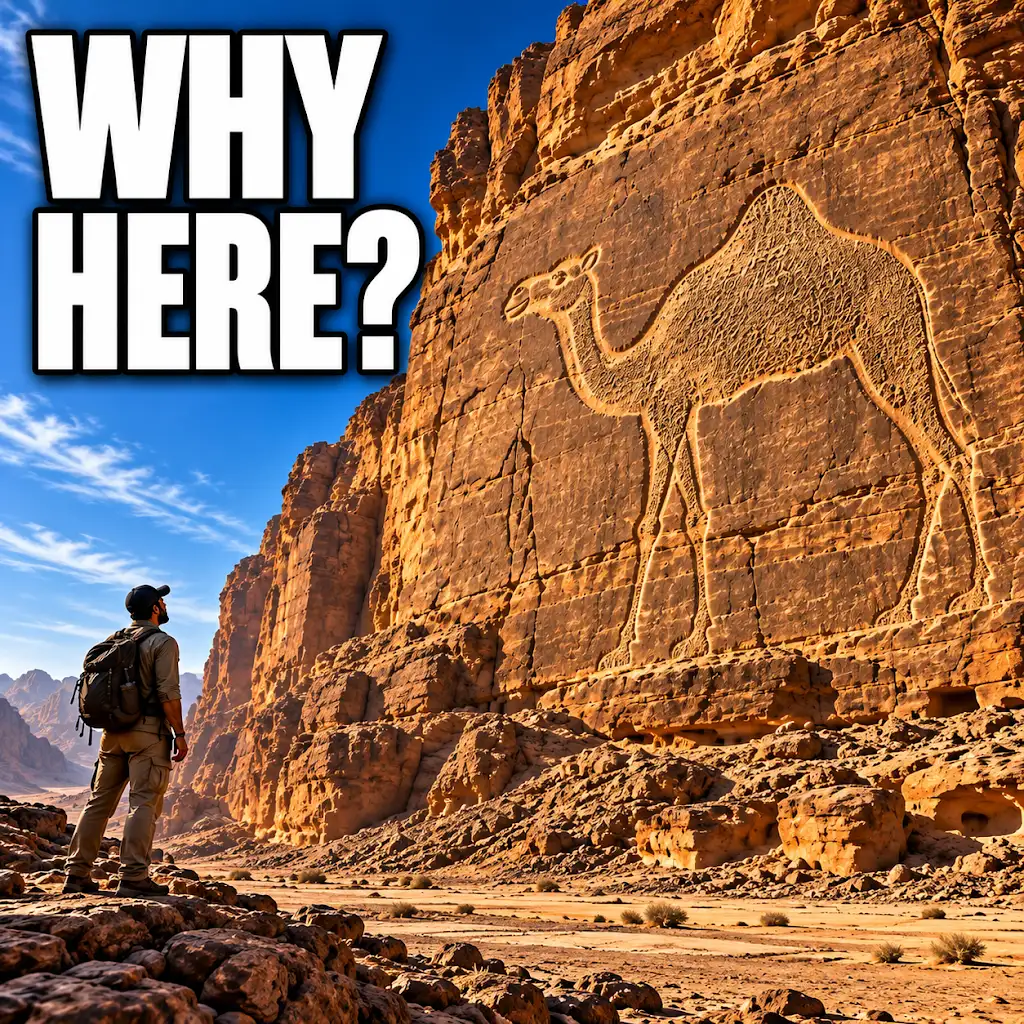
Why Were Giant Camels Carved Above the Desert?
FAQs
What are petroglyphs?
Petroglyphs are rock carvings made by pecking directly on the rock surface using a stone chisel and a hammerstone.
Where are the Nefud Desert petroglyphs located?
The Nefud Desert petroglyphs are located in the Nefud Desert of Saudi Arabia.
What do the Nefud Desert petroglyphs depict?
The Nefud Desert petroglyphs depict various scenes of daily life, animals, hunting, and rituals, providing insights into the ancient cultures that inhabited the region.
How old are the Nefud Desert petroglyphs?
The Nefud Desert petroglyphs are estimated to be around 10,000 years old, dating back to the Neolithic period.
Are the Nefud Desert petroglyphs well-preserved?
Yes, the Nefud Desert petroglyphs are remarkably well-preserved due to the arid climate of the desert, which has helped protect them from erosion and weathering over thousands of years.