The vast, arid expanse of the Arabian Desert, often perceived as an unchanging and desolate wasteland, harbors a profound and ancient human narrative. For millennia, this seemingly inhospitable environment was not a barrier to human settlement but rather a dynamic landscape that supported hunter-gatherer societies, migratory routes, and early forms of adaptation. Archaeological investigations across the Arabian Peninsula have progressively unveiled a rich tapestry of prehistoric occupation, revealing how early humans not only survived but thrived in this challenging terrain. These discoveries offer invaluable insights into human resilience, technological innovation, and the deep evolutionary connections between humankind and its environment.
The story of prehistoric Arabia is not a single, monolithic epoch but a complex, unfolding saga spanning hundreds of thousands of years. From the earliest stone tool assemblages indicative of hominin presence to the more complex societies of the Neolithic and beyond, the desert bears witness to a continuous, albeit often discontinuous, human story. Understanding this occupation requires piecing together fragmented evidence from diverse geological and archaeological contexts, from cave shelters and rock art sites to ancient lakebeds and ephemeral water sources. The modern desert, with its shifting sands, has both preserved and obscured these ancient traces, demanding sophisticated scientific techniques to unlock their secrets.
Early Hominin Encounters with Arid Environments
The earliest chapters of human history in Arabia are intimately linked to periods of greater environmental moisture. While the present-day hyper-aridity is a relatively recent phenomenon, past interglacial periods offered more favorable conditions, with increased rainfall supporting savanna-like vegetation and water bodies. It is during these wetter phases that the first hominin disperses out of Africa likely ventured into the Arabian Peninsula, drawn by the promise of resources. The evidence for these early encounters is often characterized by lithic industries, the remnants of stone tools crafted by our ancient ancestors.
Traces of the Oldowan and Acheulean Traditions
The Oldowan, the earliest known stone tool industry, is thought to have emerged in East Africa around 2.6 million years ago. While direct evidence of Oldowan sites in Arabia is scarce, the potential for its presence, particularly during wetter climatic episodes, cannot be dismissed. More robustly represented are the industries associated with the Acheulean tradition, characterized by the development of handaxes and cleavers. These sophisticated tools, found at various sites across Arabia, suggest the presence of Homo erectus and later hominin species who were adept at exploiting a range of raw materials and environments.
Acheulean sites in Arabia, such as those discovered in the Nefud Desert and along the coasts, indicate periods of more hospitable climate where hominins could sustain themselves. The presence of these tools alongside faunal remains, though often fragmented, points towards hunter-gatherer lifestyles. These early inhabitants were likely nomadic, following seasonal water sources and animal herds. The distribution of Acheulean sites suggests that hominins were not confined to the immediate vicinity of permanent water but possessed the cognitive abilities and technological prowess to travel and exploit more ephemeral resources. The construction of rudimentary shelters or the utilization of natural rock overhangs likely formed part of their adaptive strategies.
Adaptation to Fluctuating Climates
The significant climatic shifts that have characterized the Earth’s history played a crucial role in shaping hominin presence in Arabia. Periods of aridity would have forced hominin populations to either migrate or adapt to more extreme conditions. The ability to adapt, whether through changes in diet, resource procurement strategies, or social organization, would have been paramount for survival. The development of more refined stone tool technologies, including the Levallois technique during the Middle Pleistocene, points to increasing cognitive sophistication and a greater capacity for planning and resource management. These advancements would have been essential for navigating landscapes with unpredictable water availability and fluctuating faunal populations.
The study of prehistoric occupation in the Arabian Desert reveals fascinating insights into the early human adaptation to arid environments. Researchers have uncovered evidence of ancient settlements and tools that suggest a complex understanding of resource management among early inhabitants. For more information on how historical contexts influence modern governance and asset protection, you can read a related article at this link.
The Middle Paleolithic and the Dawn of Modern Humans

The Middle Paleolithic period, broadly spanning from around 300,000 to 40,000 years ago, witnessed the emergence of Homo sapiens and the further refinement of lithic technologies. Arabia, strategically positioned as a land bridge between Africa and Eurasia, likely served as a crucial corridor for early Homo sapiens dispersals. Archaeological evidence from this era in Arabia showcases a greater complexity in tool manufacturing and a potential expansion of settlement patterns.
Evidence of Early Homo sapiens Dispersals
Sites in Arabia have yielded Middle Paleolithic artifacts that bear striking similarities to those found in contemporary African contexts, strengthening the hypothesis of southward expansions out of Africa. The identification of prepared-core techniques, such as the Levallois method, indicates a higher level of cognitive planning and foresight in tool production. These techniques allowed for the efficient production of standardized flakes and points, which could be hafted onto spears or used as cutting implements. The presence of these tools in diverse environmental settings within Arabia suggests that early modern humans were capable of exploiting a wider range of ecological niches.
The study of paleoclimatic data, often derived from sedimentary cores and speleothems, provides a backdrop against which these dispersals can be understood. Periods of increased effective rainfall in Arabia, even if transient, would have created more hospitable conditions, making the region a more attractive destination for migrating populations. These wetter intervals likely supported richer plant and animal communities, providing the necessary resources for sustained human occupation. The careful analysis of faunal remains found at Middle Paleolithic sites, though often limited, can offer clues about the diets and hunting strategies of these early inhabitants.
Innovation in Toolkits and Resource Utilization
Middle Paleolithic toolkits in Arabia were not solely focused on lithics. Evidence for the use of bone and potentially organic materials, though less frequently preserved, can be inferred from the types of butchery marks on animal bones and the types of artifacts found. The development of more specialized tools, such as scrapers and borers, suggests a growing need for processing hides, wood, and other materials. This indicates a more nuanced understanding of resource utilization and a more sophisticated adaptation to the prevailing environmental conditions.
The possibility of early symbolic behavior, though difficult to definitively prove from this period, is an area of ongoing research. The deliberate shaping of certain lithic artifacts or the potential for early forms of personal adornment, if found, could offer glimpses into the cognitive and social lives of these early Arabians. The spatial distribution of Middle Paleolithic sites also provides insights into settlement patterns, suggesting that hominins were utilizing a network of resource areas, possibly including temporary camps near water sources and more extensive hunting territories.
The Later Paleolithic and the Arrival of Hunter-Gatherer Networks

The Later Paleolithic (Upper Paleolithic in Eurasian terminology) period, roughly from 40,000 to 12,000 years ago, witnessed further human migrations and the establishment of more complex hunter-gatherer societies. Arabia, during this vast timeframe, experienced significant climatic fluctuations, including periods of increased aridity that would have challenged human populations. However, evidence suggests that resilient hunter-gatherer groups adapted to these conditions, developing sophisticated strategies for survival.
Adapting to Arid Cycles: Resilience and Mobility
During the Later Paleolithic, Arabia experienced alternating periods of wetter and drier climates. The development of microlithic technologies, characterized by small, finely crafted stone tools that could be hafted into composite tools like arrows and spearheads, became increasingly prevalent. These innovations would have enhanced hunting efficiency and allowed for the exploitation of a wider range of prey species, including smaller game. The mobility of these groups was likely a key adaptive strategy, enabling them to follow migratory herds and locate ephemeral water sources across the vast landscape.
Archaeological sites from this period often reveal evidence of temporary encampments, indicating a mobile lifestyle. The selection of tool materials, often sourced from distant locations, suggests established networks and trade routes. The presence of specific artifact types, such as backed blades and points, points to specialized hunting and processing activities. The careful analysis of faunal assemblages, when available, can reveal shifts in prey species over time, reflecting the adaptive responses of human groups to changing environmental conditions. The development of more efficient tools for processing plant resources may also have played a role in sustaining populations during periods of scarcity.
The Role of Paleolakes and Coastal Resources
During certain wetter phases of the Later Paleolithic, temporary lakes or “paleolakes” would have dotted the Arabian landscape, attracting both fauna and human populations. Archaeological investigations around the fossil shorelines of these paleolakes have yielded significant evidence of human activity, including hearths, tool discard areas, and faunal remains. These locations would have provided reliable water sources and attracted game animals, making them ideal for temporary settlements.
Coastal regions also offered important resources. Evidence of shell middens, though more commonly associated with later periods, could point to early exploitation of marine resources. The proximity of the Arabian Peninsula to the Red Sea and the Persian Gulf would have provided access to a diverse range of edible marine life. The study of pollen and sediment cores from these regions can reveal the types of flora and fauna that were available, offering a clearer picture of the subsistence strategies employed by these ancient hunter-gatherers. The ability to exploit both inland freshwater sources and coastal marine environments would have significantly enhanced the resilience of these populations.
The Neolithic Revolution in a Desert Setting
The Neolithic period, beginning around 10,000 years ago, marks a significant turning point in human history with the development of agriculture and settled life. While often associated with fertile river valleys, the Neolithic revolution also unfolded in arid and semi-arid regions, including Arabia, albeit with unique adaptations. The evidence suggests that early forms of subsistence diversification, potentially including early forms of pastoralism, began to emerge in this challenging environment.
Early Pastoralism and Sedentarization
The transition to more settled lifestyles and the domestication of animals represented a profound shift in human subsistence strategies. In Arabia, this transition was likely characterized by the development of early forms of pastoralism, where nomadic or semi-nomadic groups managed herds of domesticated animals such as goats and sheep. Evidence for this can be found in the presence of animal bones, isotopic analysis of human and animal remains, and the potential for early herd management structures. The harsh desert environment would have necessitated highly mobile pastoralist practices, following grazing resources and water.
The discovery of Neolithic sites in Arabia, such as those in the central part of the peninsula and along the coast, indicates periods of increased stability and population growth. While large-scale agriculture might have been challenging in many parts of the desert, the focus likely shifted towards managing animal resources and exploiting a wider range of wild plants. The development of pottery, a hallmark of the Neolithic, appears in Arabian sites, indicating advancements in food storage and preparation techniques. The presence of domesticated plants, even if limited, would have complemented animal husbandry, providing a more stable food base.
Rock Art as a Window into Neolithic Life
The extensive network of rock art sites across Arabia, particularly those dating to the Neolithic and later periods, provides a unique and vivid glimpse into the lives of these early inhabitants. These petroglyphs and pictographs depict a rich array of scenes, including hunting expeditions, herding activities, social gatherings, and interactions with animals. The clarity and detail of these depictions offer invaluable information about the subsistence strategies, social organization, and belief systems of Neolithic Arabians.
The recurring motifs of ibex, gazelle, cattle, and human figures suggest a deep connection with the natural world and the importance of animal husbandry. The depiction of herding scenes, with humans guiding and managing animals, strongly supports the interpretation of early pastoralism. The style and iconography of the rock art can also reveal regional variations and cultural connections, highlighting the movement of people and ideas across the Arabian Peninsula. These artworks are not merely decorative but serve as a crucial form of communication, historical record, and cultural expression from a period where written records are absent.
Recent studies have shed light on the prehistoric occupation of the Arabian desert, revealing how ancient human populations adapted to the harsh environment. These findings are crucial for understanding the migration patterns of early humans and their interactions with the surrounding landscapes. For a deeper insight into how geographical changes have influenced human history, you can explore this related article on the evolution of world maps at world map evolution. This connection highlights the dynamic relationship between humans and their environment throughout history.
The Legacy of Prehistoric Arabia: Enduring Adaptations
| Metric | Data/Value | Details |
|---|---|---|
| Time Period | Middle Paleolithic to Neolithic | Approx. 300,000 to 6,000 years ago |
| Key Archaeological Sites | Jubbah, Al-Jawf, Tayma | Sites with stone tools and rock art |
| Stone Tool Types | Levallois, Mousterian, Nubian | Indicative of Middle Paleolithic technology |
| Subsistence Strategies | Hunting, Gathering, Early Pastoralism | Adaptation to arid environment |
| Climate Conditions | Humid phases during wet periods | Supported human occupation and migration |
| Rock Art | Petroglyphs and engravings | Depicting animals and human figures |
| Human Species | Homo sapiens and possibly Neanderthals | Evidence from fossil and tool analysis |
| Water Sources | Ancient lakes and rivers | Crucial for settlement sustainability |
The prehistoric inhabitants of the Arabian Desert were not simply survivors; they were innovators and adapters who shaped their environments and left a lasting legacy on the region. Their ingenuity in the face of extreme conditions, their mastery of lithic technologies, and their evolving social structures provide crucial insights into the broader trajectory of human evolution and migration. The enduring impact of their presence continues to be revealed through ongoing archaeological research, which promises to further illuminate the complex and vibrant history of human occupation in this iconic desert landscape.
Modern Research and Future Discoveries
Contemporary archaeological research in Arabia employs a multidisciplinary approach, integrating geoarchaeology, paleoclimatology, remote sensing, and advanced dating techniques. The application of technologies such as LiDAR (Light Detection and Ranging) has proven instrumental in identifying subtle archaeological features hidden beneath the desert surface, such as ancient irrigation systems, ancient pathways, and settlements. DNA analysis, when applicable to preserved human remains, offers the potential to unravel migration patterns and genetic relationships between prehistoric populations.
The exploration of newly discovered sites and the re-examination of existing collections continue to refine our understanding of prehistoric Arabian lifeways. The identification of new rock art panels, the excavation of stratified archaeological deposits, and the detailed analysis of artifact assemblages contribute to a more nuanced picture of human adaptation. Future research is likely to focus on filling in temporal gaps, understanding the precise nature of early plant and animal domestication in the region, and further investigating the social and symbolic dimensions of prehistoric Arabian societies. The ongoing commitment to scientific inquiry in the Arabian Desert promises to yield further revelations about humanity’s deep past.
The Desert as a Crucible of Human Ingenuity
The prehistoric occupation of the Arabian Desert stands as a powerful testament to human resilience and adaptability. It demonstrates that even in the most challenging environments, human ingenuity, social cooperation, and technological innovation can lead to successful and enduring occupation. The peoples who lived in this region millennia ago developed sophisticated strategies for managing scarce resources, navigating vast landscapes, and creating rich cultural traditions, as evidenced by their material culture and their evocative rock art. Their story is an integral part of the global human narrative, highlighting the diverse ways in which our species has interacted with and adapted to the myriad environments of our planet. The Arabian Desert, far from being a static barrier, has been a dynamic crucible that forged unique human adaptations and left an indelible mark on the history of humankind.
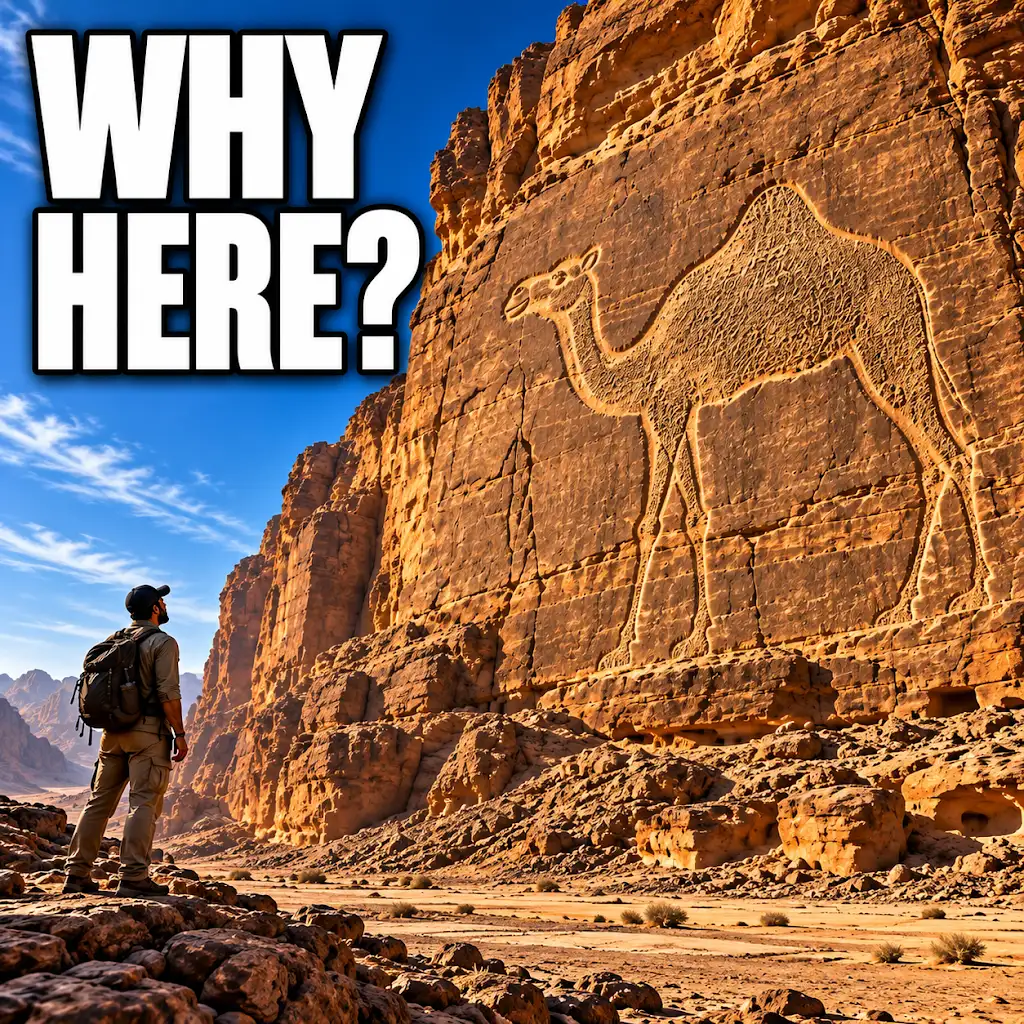
Why Were Giant Camels Carved Above the Desert?
FAQs
What evidence of prehistoric occupation has been found in the Arabian desert?
Archaeologists have discovered various artifacts such as stone tools, pottery fragments, rock art, and ancient burial sites, indicating human presence in the Arabian desert dating back thousands of years.
How did prehistoric people adapt to the harsh environment of the Arabian desert?
Prehistoric people in the Arabian desert adapted by developing advanced hunting techniques, utilizing natural resources like water sources and vegetation, and creating shelters from the extreme heat.
What role did trade play in prehistoric societies in the Arabian desert?
Trade was essential in prehistoric societies in the Arabian desert as it allowed for the exchange of goods, ideas, and technologies between different groups, contributing to cultural exchange and economic development.
Were there any significant cultural developments during prehistoric occupation of the Arabian desert?
Yes, significant cultural developments took place during prehistoric occupation of the Arabian desert, including the development of unique art styles, burial practices, and religious beliefs that reflected the beliefs and values of the ancient inhabitants.
How has the study of prehistoric occupation in the Arabian desert contributed to our understanding of human history?
The study of prehistoric occupation in the Arabian desert has provided valuable insights into early human migration patterns, technological advancements, social structures, and environmental adaptations, enriching our understanding of human history and evolution in this region.