The vast canvas of human history is etched in stone, a testament to our ancestors’ enduring stories and observations. Among the most enigmatic and widespread of these ancient narratives are the petroglyphs, rock carvings that offer a unique window into the lives and beliefs of prehistoric peoples. While many petroglyph sites depict animals central to survival or spiritual practices, a recurring and particularly fascinating subject is the camel. These ancient depictions of camels, found across continents, speak to a far more ancient and complex relationship between humans and these resilient creatures than often imagined. The exploration of these prehistoric camel petroglyphs unveils a global tapestry of shared cultural understanding, technological adaptation, and perhaps even a deep-seated reverence for an animal that has shaped civilizations.
Origins of Rock Art and the Camel Motif
The practice of creating petroglyphs is one of the earliest forms of artistic expression known to humanity, predating even the earliest forms of writing. These engravings, created by incising or abrading the rock surface, are found in every inhabited continent, suggesting a near-universal human impulse to leave a mark, to communicate, and to connect with the spiritual or natural world. The earliest known rock art dates back tens of thousands of years, with some scholars proposing origins in the Upper Paleolithic period. The motivations behind these markings are as varied as the cultures that produced them, ranging from shamanistic rituals and spiritual journeys to territorial markers, mnemonic devices, and simple artistic endeavors.
The Prehistoric Landscape and Camel Distribution
To understand the prevalence of camel petroglyphs, it is crucial to consider the prehistoric geographical distribution of camels and their relationship with early human populations. While modern understanding often associates camels primarily with arid regions of Africa and Asia, fossil evidence and genetic studies suggest a more complex evolutionary history. The dromedary camel (one species of Camelus dromedarius) and the Bactrian camel (Camelus bactrianus) are the two extant species. Their wild ancestors likely originated in North America, migrating to Asia and Africa via the Bering land bridge. By the Pleistocene epoch, camels were present in vast swathes of Eurasia and North Africa.
Early human hunter-gatherer societies would have encountered these large ungulates, and their presence would have been significant. Camels, with their ability to traverse difficult terrain and survive in harsh environments, would have been a valuable resource for sustenance, hides, and potentially even early forms of transport. The act of hunting or observing these animals would have provided ample inspiration for artistic representation. The sheer size and distinct morphology of camels, with their characteristic humps and long legs, would have made them compelling subjects for artists working with the durable medium of rock. The widespread distribution of both the animals and the rock art tradition thus provides a fertile ground for the emergence of camel petroglyphs in diverse archaeological contexts.
Early Human Interaction with Camels
The exact nature of early human interaction with camels is a subject of ongoing archaeological and anthropological research. While domestication is a more recent phenomenon, occurring only in the last few millennia, wild camels were undoubtedly part of the prehistoric ecosystem. Evidence suggests that early humans likely hunted wild camels for food. The discovery of camel bones in association with Paleolithic human settlements, sometimes bearing cut marks indicative of butchery, supports this theory.
Beyond sustenance, the very presence of these large, adaptable animals in the landscape would have held symbolic or spiritual significance. The ability of camels to endure long periods without water, their endurance, and their imposing stature might have evoked awe and respect. It is plausible that observations of their behavior, their migrations, and their resilience in the face of environmental challenges were incorporated into the mythologies and belief systems of prehistoric cultures. The creation of petroglyphs depicting camels could, therefore, represent not just a record of hunting success, but also a way to invoke their power, to understand their role in the cosmic order, or to commemorate their importance in the community’s narrative. The consistency of the camel motif across geographically disparate regions suggests a shared human experience and perhaps even a shared conceptualization of this animal’s significance.
Recent discoveries of prehistoric camel petroglyphs have shed light on the ancient relationship between humans and these magnificent creatures. These carvings not only provide insights into the daily lives of early societies but also highlight the significance of camels in trade and transportation. For those interested in the broader context of ancient innovations, a fascinating article titled “The Ingenious Inventions of Hero of Alexandria” explores the remarkable technological advancements of the time, showcasing how such inventions influenced various aspects of life. You can read more about it here: The Ingenious Inventions of Hero of Alexandria.
Global Distribution of Prehistoric Camel Petroglyphs

The presence of camel petroglyphs is not confined to a single region; instead, they appear in archaeological sites across a vast geographical expanse, spanning parts of Africa, the Middle East, Central Asia, and even extending into the Iberian Peninsula. This widespread distribution points to a complex history of human migration, cultural exchange, and the enduring appeal of the camel as a subject for artistic representation. Each region, with its unique environmental pressures and cultural traditions, offers a distinct context for understanding these ancient carvings.
The Sands of the Sahara and Arabian Peninsula
The Sahara Desert and the Arabian Peninsula are home to some of the most significant and well-preserved camel petroglyph sites. In these regions, the camel, particularly the dromedary, has been an integral part of human life for millennia, essential for survival, trade, and warfare. The earliest evidence of camel petroglyphs in these areas often dates back to the Holocene period, with some scholars suggesting even earlier origins.
Tassili n’Ajjer, Algeria: The Tassili n’Ajjer plateau in southeastern Algeria is renowned for its spectacular rock art, including a vast number of petroglyphs depicting animals. Among these, camels feature prominently, often rendered with remarkable detail and dynamism. The art here spans various periods, with some of the earliest camel depictions possibly dating to the Neolithic era, when the Sahara was a more verdant landscape. These engravings show camels in different poses, sometimes being ridden, herded, or engaged in hunting scenes, providing invaluable insights into the early human-camel relationship in North Africa.
Saudi Arabia and Yemen: Rock art sites across the Arabian Peninsula, such as those found in the Najran region of Saudi Arabia and in Yemen, also feature numerous camel petroglyphs. These carvings often appear on cliff faces and in wadis, illustrating the importance of these animals in the arid environments of the peninsula. The depictions range from simple outlines to more elaborate scenes, suggesting a continuous tradition of camel art over a long period. The accuracy of the anatomical details in many of these carvings highlights the keen observation skills of the artists and their intimate knowledge of camel anatomy.
The Silk Road Routes: Central Asia and Beyond
The ancient Silk Road, a network of trade routes connecting the East and West, traversed vast swathes of Central Asia. This region is the ancestral homeland of the Bactrian camel, and it is unsurprising that petroglyph sites along these historic routes bear witness to the camel’s significance.
Mongolia and Southern Siberia: In the vast steppes of Mongolia and southern Siberia, numerous rock art sites contain depictions of Bactrian camels. These carvings often appear in remote mountainous areas and along river valleys. The style of these petroglyphs can vary, but they frequently showcase the characteristic double humps of the Bactrian camel. Some researchers suggest that the earliest camel petroglyphs in these regions might predate their widespread use in domestication, reflecting an earlier interaction with wild or semi-wild camel populations. The sheer number of these depictions points to the central role of camels in the economy and cultural life of these nomadic and semi-nomadic societies.
Western China: Regions in western China, such as Xinjiang, which lie along historical Silk Road corridors, also boast significant collections of camel petroglyphs. These carvings are found on mountainsides and in desert areas, often depicting camels in caravans, being ridden, or in scenes of daily life. The style and iconography can vary depending on the specific cultural groups who created them, but the camel remains a consistently featured subject, underscoring its importance for transport and trade across this vast and challenging landscape.
Iberian Echoes: Unexpected European Discoveries
Perhaps one of the most surprising locations for prehistoric camel petroglyphs is the Iberian Peninsula in southwestern Europe. While camels are not native to Europe in the Holocene, the presence of these depictions raises intriguing questions about prehistoric trade networks, animal introductions, or symbolic representations.
Levantine Rock Art: In eastern Spain, particularly in the Levantine rock art tradition, which dates primarily to the Mesolithic and Neolithic periods, there are isolated but compelling instances of camel-like figures. These depictions are often more stylized and abstract than those found in their presumed homelands, making definitive identification challenging. However, some scholars interpret these figures as camels, potentially introduced through long-distance trade or as symbolic representations carried by migrating human groups. The rarity of these figures compared to other animals in Levantine art suggests they were not a regular part of the European fauna or a common subject of local mythology, making their presence all the more significant and requiring careful interpretation.
Interpretation and Meaning of Camel Petroglyphs

The interpretation of ancient art, especially petroglyphs, is a complex endeavor, requiring a multidisciplinary approach that draws on archaeology, anthropology, linguistics, and comparative mythology. While the exact meanings of prehistoric camel petroglyphs may remain elusive, their consistent presence and the contexts in which they are found offer clues to their potential significance. These interpretations often fall into categories related to practicality, spirituality, and cultural identity.
Practical and Economic Significance
Given the camel’s vital role in survival and sustenance, it is highly probable that many camel petroglyphs served a practical or economic purpose. In arid and semi-arid regions, the ability to hunt or herd camels for food, hides, and other resources would have been paramount to the survival of prehistoric communities.
Hunting Magic and Success: Depictions of camels might have been part of hunting rituals, intended to ensure success in the hunt, to appease the spirits of the animals, or to commemorate a successful kill. The act of carving the animal on rock could have been a way to imbue the hunter with the animal’s strength and endurance. Some petroglyphs show camels in motion, suggesting the depiction of actual hunting scenarios or the movement of prey.
Domestication and Transport: As human societies developed, the camel’s role evolved from primarily a hunted animal to a domesticated companion. Petroglyphs depicting camels being ridden or harnessed for carrying loads would reflect this shift. These images could represent the importance of camels in facilitating long-distance travel, trade, and the movement of goods and people across challenging terrains. The presence of such depictions would mark a significant milestone in human technological and social development.
Spiritual and Symbolic Meanings
Beyond their utilitarian value, camels likely held deep spiritual and symbolic meanings for prehistoric peoples. Their unique adaptations to harsh environments, their impressive physical capabilities, and their longevity might have been seen as embodying divine qualities or possessing mystical powers.
Totemic Significance and Ancestor Worship: In many indigenous cultures, animals serve as totems, representing ancestral spirits or clans. It is conceivable that certain groups revered camels as ancestral beings or as intermediaries between the human and spirit worlds. Petroglyphs could have been created to honor these ancestral spirits, to seek their guidance, or to assert the group’s connection to them. The consistent depiction of camels across different cultures could hint at a shared understanding of their cosmic role.
Shamanism and Spirit Journeys: The desert environments where many camel petroglyphs are found are often associated with altered states of consciousness and spiritual journeys. Camels, with their ability to traverse vast distances and endure arduous conditions, might have been seen as vehicles for spiritual travel or as guides for shamans on their journeys into the spirit world. The act of creating these petroglyphs could have been a part of shamanistic practices, aiming to connect with the spiritual essence of the camel or to invoke its protective powers.
Identity and Narrative Expression
Petroglyphs often served to reinforce social cohesion, convey tribal identity, and transmit cultural narratives from one generation to the next. Camel depictions could have played a crucial role in these aspects of prehistoric life.
Clan Symbols and Territorial Markers: In a similar vein to totemic significance, camel images might have functioned as markers of clan affiliation or territorial boundaries. A specific style of camel depiction, or its placement in a particular location, could have signaled ownership or belonging to a certain group. These markings would have served as a visual language, understood by members of the community and potentially serving as warnings to outsiders.
Mythological Narratives and Creation Stories: Prehistoric cultures relied heavily on oral traditions to explain the origins of the world, their people, and the animals they encountered. Camel petroglyphs could be visual representations of these mythological narratives, illustrating creation stories, epic journeys, or significant events involving camels. The context of the petroglyph, its surrounding imagery, and its style can provide clues to the specific story being depicted.
Scientific Methods for Studying Camel Petroglyphs
The study of prehistoric petroglyphs, including those of camels, has been significantly advanced by the application of modern scientific methods. These techniques allow researchers to date the carvings, analyze their composition, and understand their spatial relationships with other archaeological evidence, providing a more robust framework for interpretation.
Dating and Chronological Placement
Establishing the age of petroglyphs is crucial for understanding their place within broader historical and cultural trajectories. While direct dating of the rock itself is often not possible, indirect methods provide valuable chronological information.
Radiocarbon Dating: In some cases, organic materials found within the patina that forms over petroglyphs or in sediments directly associated with them can be radiocarbon dated. For instance, if a petroglyph was made in a cave, and subsequent occupation layers containing organic material were deposited on top of it, a minimum age for the carving can be established. Similarly, if charcoal or bone fragments are found in direct association with a petroglyph, they can provide dating clues.
Luminescence Dating: Techniques like optically stimulated luminescence (OSL) can be used to date sediments that have covered or been disturbed by the creation of petroglyphs. If sediments buried the petroglyph, dating these sediments can provide a maximum age. Conversely, if sediments were deposited after the carving, they can provide a minimum age.
Stylistic Analysis and Cross-Dating: While not a direct scientific dating method, stylistic analysis plays a crucial role. By comparing the style of camel petroglyphs to other dated art forms or archaeological artifacts from the same region, researchers can infer a relative chronological placement. This involves identifying recurring motifs, carving techniques, and representational conventions that are characteristic of specific periods. Cross-dating with securely dated archaeological contexts, such as pottery styles or tool assemblages found in proximity to the petroglyphs, is also a vital component.
Material Analysis and Conservation
Understanding the composition of the rock and the pigments (if any were used) involved in creating petroglyphs is essential for both scientific study and conservation efforts.
Petrographic Analysis: This involves the microscopic examination of rock samples to determine their type, mineral composition, and geological origin. This can help identify the specific rock formations used for carving and understand the geological processes that might have influenced the preservation of the petroglyphs.
Chemical Analysis of Pigments: In instances where petroglyphs were created using pigments, chemical analysis can identify the materials used, such as ochres, charcoal, or mineral oxides. This provides insights into the available resources, the technological capabilities of the artists, and potentially even the symbolic meanings associated with certain colors. Techniques like X-ray fluorescence (XRF) and Raman spectroscopy are often employed for non-destructive analysis.
Patina Analysis: The patina, a surface layer that develops on rocks over time, can provide clues to the age and weathering history of a petroglyph. Studying the composition and thickness of the patina can help in relative dating and in understanding the environmental conditions to which the rock has been exposed.
Digital Documentation and Spatial Analysis
Modern technology has revolutionized the way petroglyphs are documented and studied, allowing for more comprehensive and precise analysis.
Photogrammetry and 3D Modeling: Photogrammetry involves capturing a series of overlapping photographs of a petroglyph site from various angles. Software then processes these images to create highly detailed three-dimensional models of the carvings. These models allow for precise measurement, analysis of carving depth and techniques, and the creation of digital archives that can be accessed remotely for study and preservation.
Geographic Information Systems (GIS): GIS is used to map the locations of petroglyph sites in relation to other archaeological features, landscape characteristics, and environmental factors. This spatial analysis can reveal patterns in the distribution of camel petroglyphs, helping researchers understand their relationship with resources, settlement patterns, and potential trade routes. GIS can also be used to model the visibility and accessibility of petroglyph sites.
Remote Sensing Techniques: Techniques like LiDAR (Light Detection and Ranging) can be used to create detailed topographical maps of large areas, revealing subtle features and potentially undiscovered petroglyph sites that might be obscured by vegetation or erosion. Satellite imagery and drone-based aerial photography can also provide valuable overviews and aid in the identification and documentation of rock art locations.
Recent discoveries of prehistoric camel petroglyphs have shed light on the ancient cultures that once roamed the arid landscapes. These fascinating carvings not only provide insight into the animals that were significant to these societies but also highlight the intricate relationship between humans and their environment. For a deeper understanding of how historical narratives shape modern perspectives, you might find this article on international relations strategies insightful. It discusses the importance of context in understanding human behavior, much like how the petroglyphs reveal the past. You can read more about it here.
Challenges and Future Directions in Camel Petroglyph Research
| Metric | Value | Description |
|---|---|---|
| Estimated Age | 5,000 – 10,000 years | Approximate time period when prehistoric camel petroglyphs were created |
| Common Locations | North Africa, Arabian Peninsula, Central Asia | Regions where camel petroglyphs are predominantly found |
| Average Size | 30 – 60 cm | Typical height of camel figures in petroglyphs |
| Number of Known Sites | Over 50 | Documented archaeological sites featuring camel petroglyphs |
| Common Techniques | Pecking, Incising | Methods used to create the petroglyphs on rock surfaces |
| Significance | Symbolic, Hunting, Domestication | Possible cultural meanings behind the camel depictions |
Despite the significant advancements in understanding prehistoric camel petroglyphs, numerous challenges remain. These obstacles often stem from the inherent nature of the archaeological record, the limitations of scientific techniques, and the ongoing complexities of interpretation. Addressing these challenges will be crucial for unlocking deeper insights into the lives and beliefs of our ancient ancestors.
Preservation and Threats to Ancient Sites
The very nature of rock art, exposed to the elements, makes it inherently vulnerable. Natural processes like erosion, weathering, and vandalism pose constant threats to the survival of these invaluable historical records.
Environmental Degradation: Acid rain, freeze-thaw cycles, and biological growth can all contribute to the deterioration of rock surfaces and the obscuring or destruction of petroglyphs. Climate change, with its potential for increased extreme weather events, further exacerbates these risks. Protecting sites from natural decay requires ongoing monitoring and, in some cases, carefully considered conservation interventions.
Human Impact and Vandalism: Unfortunately, human activity remains a significant threat. Tourism, both intentional and unintentional, can lead to physical damage through contact, graffiti, or the introduction of invasive species. Looting and unauthorized excavation also pose risks to the integrity of petroglyph sites and their surrounding archaeological contexts. Effective site management, public education, and legal protection are essential to mitigate these threats.
Interpretation Gaps and Cultural Nuance
While scientific methods provide data, the interpretation of meaning remains a complex and often subjective process. Bridging the gap between archaeological evidence and the nuanced cultural contexts of prehistoric peoples presents a persistent challenge.
Understanding Prehistoric Belief Systems: Reconstructing the complex belief systems, mythologies, and spiritual practices of peoples who left no written records is a daunting task. The symbols and imagery used in petroglyphs may have had meanings that are no longer accessible to us, or that were specific to particular times and places. Reliance on analogies from later or unrelated cultures can be problematic.
Regional and Temporal Variations: The study of camel petroglyphs must acknowledge the vast regional and temporal variations in their creation and meaning. A camel depicted in the Sahara during the Neolithic period likely held different connotations and served different purposes than a camel depicted along the Silk Road in the Iron Age. Overgeneralization can obscure important distinctions.
Emerging Technologies and Interdisciplinary Collaboration
The future of camel petroglyph research lies in the continued integration of new technologies and fostering robust interdisciplinary collaboration.
Advancements in Dating and Imaging: Ongoing developments in dating techniques, such as improved radiocarbon analysis and potential new methods for dating rock surfaces, will provide more precise chronological frameworks. Similarly, ever-more sophisticated imaging technologies, like hyperspectral imaging, could reveal hidden details or pigments not visible to the naked eye, offering new avenues for analysis.
AI and Machine Learning in Pattern Recognition: Artificial intelligence and machine learning algorithms hold promise for analyzing large datasets of petroglyphs, identifying subtle patterns, and classifying styles across vast geographic areas. This could aid in the discovery of new connections and the identification of previously unrecognized motifs or thematic groupings.
Global Collaboration and Knowledge Sharing: The truly global nature of camel petroglyphs necessitates strong international collaboration among archaeologists, anthropologists, geologists, and art historians. Sharing research findings, methodologies, and data across borders will be essential for building a comprehensive understanding of this widespread phenomenon. Open access to research data and databases can accelerate discovery and foster new research questions.
The enduring presence of prehistoric camel petroglyphs across continents is a powerful reminder of the shared human experience and our deep connection to the natural world. These ancient carvings, etched into the very fabric of the Earth, continue to speak to us across millennia, inviting us to explore the rich tapestry of our collective past. The ongoing study of these remarkable images promises to further illuminate the ingenuity, spirituality, and artistic expression of the peoples who shaped our world.
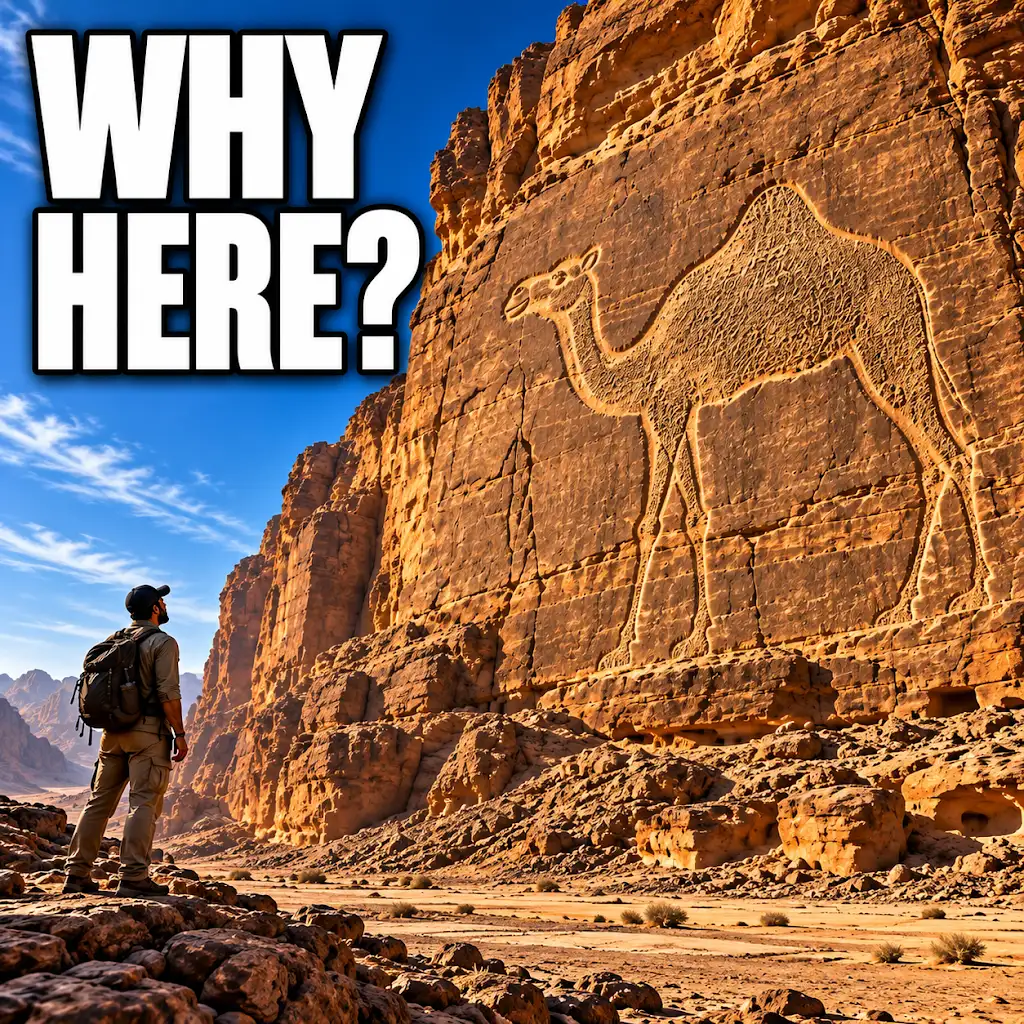
Why Were Giant Camels Carved Above the Desert?
FAQs
What are prehistoric camel petroglyphs?
Prehistoric camel petroglyphs are ancient rock carvings or engravings depicting camels that date back to prehistoric times. These petroglyphs are found in various regions around the world.
Where are prehistoric camel petroglyphs commonly found?
Prehistoric camel petroglyphs are commonly found in desert regions such as the Middle East, North Africa, Central Asia, and parts of North America. These regions were once inhabited by camels and were likely created by ancient civilizations that interacted with these animals.
What is the significance of prehistoric camel petroglyphs?
Prehistoric camel petroglyphs are significant as they provide insights into the relationship between ancient civilizations and camels. They also offer clues about the cultural, religious, and symbolic meanings associated with camels in prehistoric societies.
How are prehistoric camel petroglyphs studied by archaeologists?
Archaeologists study prehistoric camel petroglyphs by documenting their locations, recording their details, and analyzing their styles and motifs. They also compare these petroglyphs with other archaeological findings to better understand the context in which they were created.
What challenges are faced in preserving prehistoric camel petroglyphs?
Preserving prehistoric camel petroglyphs can be challenging due to factors such as weathering, vandalism, and urban development. Efforts are being made to protect these ancient rock carvings through conservation measures and public awareness campaigns.