Whispers in the Sand: Unearthing the Secrets of Camel Art
The vast, sun-scorched expanse of the Arabian Desert has long guarded its ancient secrets, a testament to forgotten civilizations and the enduring power of human ingenuity. Recent archaeological expeditions, braving the unforgiving climate and remote terrain, have unveiled a remarkable discovery: a series of intricate and ancient camel carvings etched into the stone ruins of a once-thriving settlement. These carvings, meticulously preserved by the dry desert air, offer a profound glimpse into the lives and beliefs of a people deeply connected to the dromedary, an animal that was, and in many ways still is, the lifeblood of desert survival. The discovery promises to rewrite our understanding of early desert societies, their artistic traditions, and their economic and spiritual reliance on these iconic creatures.
The site, located in a hitherto unexplored region of the Rub’ al Khali, or Empty Quarter, has revealed itself as a significant hub of ancient activity. Initial surveys suggest a settlement that flourished for centuries, its inhabitants skillfully navigating the harsh desert environment. The discovery of these camel carvings, however, has elevated the site’s importance beyond mere settlement status, hinting at a more profound cultural and symbolic significance. The sheer number and diversity of the carvings, coupled with their exceptional preservation, have left the archaeological community buzzing with excitement and speculation. This find is not just about art; it is about deciphering a lost language of symbols and images that speak volumes about a forgotten way of life.
In a fascinating recent discovery, archaeologists have unearthed ancient camel carvings that shed light on the cultural significance of these animals in historical societies. This finding not only highlights the artistic skills of past civilizations but also raises questions about the socio-economic conditions of the time. For further insights into how historical events can shape modern societies, you might find the article on the potential implications of state collapse particularly intriguing. You can read it here: The Threat of State Collapse.
The Unveiling of the Desert Canvas

The archaeological team, led by Dr. Anya Sharma of the Global Heritage Institute, had been meticulously surveying the area for several months, prompted by faint satellite imagery suggesting unusual geological formations. Their persistence paid off when, during a routine ground inspection, a glint of worked stone caught the eye of a junior researcher. Closer examination revealed a series of shallow, yet distinct, incised lines forming the unmistakable silhouette of a camel. This initial find acted as a beacon, guiding the team to a larger area where more carvings were soon uncovered, scattered across weathered rock faces and the crumbling walls of ancient structures.
The process of discovery was painstaking. The desert’s sandy embrace had partially obscured many of the carvings, requiring careful brushing and meticulous excavation to reveal their full detail. The team employed a range of non-invasive techniques, including ground-penetrating radar, to map the extent of the buried structures and to identify areas where further digging might be most fruitful. The climate, while challenging for the excavators, proved to be a boon for preservation. The extreme dryness and minimal rainfall had prevented significant erosion, allowing the ancient artists’ work to endure for millennia.
Initial Site Assessment and the Scope of the Carvings
The initial assessment of the site revealed a complex of structures, including what appear to be dwellings, storage facilities, and possibly a communal gathering space. However, it was the sheer density and variety of the camel carvings that truly captivated the researchers. They are found not only on exposed rock faces but also on the interior walls of buildings, suggesting a pervasive presence of the camel motif within the daily lives and consciousness of the inhabitants. The scale of the carvings varies dramatically, from small, palm-sized depictions to larger, more elaborate panels. Some are simple outlines, while others display remarkable detail, capturing the humped anatomy, long legs, and even the facial features of the dromedary.
The distribution of the carvings across the site has also provided initial clues. Many are concentrated around what appear to be entrances to dwellings and public spaces, hinting at a protective or auspicious purpose. Others are found in areas that might have served as workshops or gathering points, suggesting their role in storytelling, instruction, or even ritualistic practices. The sheer volume of these carvings, estimated to be in the hundreds, indicates a significant cultural investment in this particular form of artistic expression. It is clear that the camel was not merely a utilitarian animal but a central figure in the spiritual and social fabric of this ancient community.
The Artistry and Techniques Employed
The artistry displayed in these carvings is a subject of intense study. The ancient artisans utilized a variety of techniques, primarily direct incising and pecking. The lines are often sharp and deliberate, demonstrating a skilled hand and a keen understanding of the rock’s properties. In some instances, areas within the camel forms have been pecked away to create a textured surface, adding depth and dimension to the depictions. The consistency in style across many of the carvings suggests a well-established artistic tradition, possibly passed down through generations.
The level of detail varies, with some carvings offering anatomical accuracy and others being more stylized or abstract. This variation might indicate different artists, different periods of creation, or different purposes for the carvings. For example, simpler, more schematic depictions could have been functional, perhaps used for marking routes or identifying animals, while more detailed and elaborate carvings might have held greater symbolic or narrative significance. The study of the tool marks left behind is also crucial, providing insights into the types of implements used, likely made from harder stones available in the desert.
Decoding the Symbolism of the Camel

The prevalence of camel carvings in such a prominent manner immediately suggests a profound symbolic and cultural importance. In arid desert environments, the dromedary camel is an indispensable asset, providing transportation, milk, meat, and wool. However, these carvings appear to transcend purely practical representations. The sheer artistic effort involved points to a deeper reverence and a complex belief system that intertwined the animal with the very essence of life and survival in the harsh desert.
The archaeologists are carefully documenting each carving, noting its context, size, and any associated motifs. Preliminary analysis suggests that the carvings may represent different aspects of the camel’s role in society, from its strength and endurance to its role in facilitating trade and connecting communities. Some carvings depict camels in motion, perhaps traversing trade routes, while others show them in repose, highlighting their importance as providers.
The Camel as a Symbol of Sustenance and Wealth
The camel’s role as a provider of essential resources would undoubtedly have made it a symbol of sustenance and prosperity. In a land where resources are scarce, an animal capable of carrying heavy loads over vast distances, providing nourishment, and yielding valuable materials would have been seen as a divine gift. The carvings may have served as expressions of gratitude, prayers for continued abundance, or as a way to imbue the community with the camel’s strength and resilience. The presence of multiple camels in some carvings might also signify wealth and status, with larger herds indicating greater prosperity.
Furthermore, the camel was instrumental in the development of trade networks across the Arabian Peninsula. These carvings could be a visual testament to the importance of these trade routes, depicting the camels as the silent, steadfast navigators of these vital arteries of commerce. The ability to transport goods and connect disparate communities would have been a source of pride and a cornerstone of their economy.
Potential Religious or Spiritual Interpretations
Beyond sustenance and trade, the camels in these carvings might hold deeper religious or spiritual significance. Many ancient cultures imbued animals with divine attributes, associating them with gods, spirits, or cosmic forces. It is plausible that the inhabitants of this desert settlement viewed the camel as a sacred creature, perhaps a mediator between the human world and the divine, or a manifestation of a desert deity. The way some camels are depicted, with a particular posture or orientation, could suggest they were part of rituals or ceremonies.
The concentration of carvings in certain areas, such as near what might have been altars or sacred spaces, further supports this hypothesis. The careful artistry and the dedication of time and effort to create these images imply a reverence that goes beyond simple appreciation for the animal’s utility. Future research will focus on correlating these carvings with any other discovered artifacts that might shed light on their religious practices, such as pottery with similar motifs or evidence of ritualistic offerings. The possibility of the camel being a totem animal or a symbol of protection against the perils of the desert is also being explored.
Insights into Daily Life and Social Structure
The discovery of the ancient camel carvings is not solely about the animals themselves; it is also about the people who created them and the society they inhabited. The context in which these carvings are found provides invaluable clues about their daily lives, social structures, and their understanding of the world around them. The architectural remnants of the settlement, combined with the artistic expressions, paint a vivid, albeit incomplete, picture of this ancient community.
By analyzing the types of structures, the placement of dwellings, and the distribution of the carvings, archaeologists can begin to infer aspects of their social hierarchy, their daily routines, and their collective identity. The diversity in the styles and complexity of the carvings might even reflect different social roles or skill levels within the community.
Tracing Trade Routes and Economic Activity
The presence of camel carvings, particularly those depicting them in motion or in procession, strongly suggests that this settlement was situated along important trade routes. The Arabian Desert, despite its challenges, was a conduit for valuable commodities like spices, incense, frankincense, and myrrh, which were highly sought after in the ancient world. The dromedary camel was the primary mode of transport for these goods, making settlements along these routes vital hubs for commerce and exchange.
The carvings could serve as historical markers, indicating the routes that were most frequently traversed or the types of goods that were traded. By studying the stylistic similarities and differences between carvings at this site and those found in other regions, it may be possible to map out ancient trade networks with greater precision. The economic prosperity of this settlement was likely directly tied to its role in facilitating this trans-desert trade, and the camel carvings are a tangible manifestation of this economic engine.
Social Hierarchies and Community Identity
The variations in the carvings themselves could offer hints about the social hierarchy of the settlement. If certain types of carvings are found exclusively in specific areas, such as larger, more elaborate depictions in what might have been elite dwellings or communal spaces, it could indicate social stratification. Conversely, simpler, more utilitarian carvings might have been created by the general populace. The shared artistic tradition of depicting camels could also represent a strong sense of community identity, a unifying symbol that bound the inhabitants together.
The sheer effort involved in creating these carvings suggests a community that valued artistic expression and potentially shared a common set of beliefs and values centered around the camel. Whether these carvings were commissioned by leaders, created by artisans, or a collective endeavor, they speak to a society that invested in creating lasting cultural markers. The process of their creation and display likely played a role in reinforcing social bonds and transmitting cultural knowledge from one generation to the next.
Archaeologists recently made a fascinating discovery of ancient camel carvings that shed light on the cultural practices of early civilizations. This find not only highlights the significance of camels in historical trade routes but also opens up discussions about the broader implications of animal symbolism in ancient art. For those interested in understanding how modern archaeological techniques are applied to uncover such treasures, a related article on security measures in archaeological sites can provide valuable insights. You can read more about it in this informative piece.
Future Research and Preservation Challenges
| Metric | Details |
|---|---|
| Discovery Location | Al-Ula, Saudi Arabia |
| Number of Carvings Found | Over 1,000 |
| Estimated Age | Approximately 2,000 years old |
| Material | Sandstone rock surfaces |
| Significance | Oldest known camel carvings in the Arabian Peninsula |
| Carving Dimensions | Average size 30 cm x 20 cm |
| Archaeological Team | Saudi Commission for Tourism and National Heritage |
| Purpose | Likely symbolic or ritualistic representation of camels |
The discovery of these ancient camel carvings is not the end of the story; it is merely the beginning of a new chapter in understanding this lost desert civilization. The archaeological team faces numerous challenges, not least of which is the sheer scale of the site and the ongoing need for meticulous excavation and analysis. Furthermore, the delicate nature of the ancient carvings and the harsh desert environment necessitate careful preservation strategies to ensure their longevity for future generations.
The research team is already planning future expeditions and collaborations, hoping to unlock the full potential of this remarkable discovery. The goal is not just to catalog the carvings but to understand their deeper meaning, their context, and their contribution to the broader history of human civilization in arid regions.
Ongoing Excavation and Artifact Analysis
The current excavation is ongoing, with teams systematically working through different sections of the site. The discovery of the carvings has prompted a re-evaluation of previously identified structures, with a closer eye now being paid to the potential for more artistic expressions. Every shard of pottery, every stone tool, and every architectural fragment is being meticulously documented and analyzed. The hope is to find complementary artifacts that can shed further light on the carvings’ purpose and meaning.
This includes searching for tools that may have been used to create the carvings, any organic materials that could be radiocarbon-dated to establish a more precise timeline for the settlement and its artistic output, and any textual or iconographic evidence that might offer direct clues to the interpretation of the camel imagery. The systematic excavation and analysis of the entire site, not just the areas with carvings, is crucial for understanding the broader cultural context.
Preservation in a Fragile Environment
The preservation of these ancient carvings in their natural desert environment is a paramount concern. While the dry climate has been an asset for preservation thus far, it also presents challenges. Extreme temperature fluctuations, occasional sandstorms, and the potential for future human interference all pose threats. The archaeological team is working closely with conservation specialists to develop strategies for protecting the site.
This may involve establishing controlled access, implementing minimal intervention techniques during ongoing excavation, and potentially creating protective coverings or shelters for particularly vulnerable carvings. The use of advanced imaging techniques, such as 3D scanning, is also being employed to create digital records of the carvings, allowing for detailed study without the need for constant physical access and minimizing the risk of damage. The long-term plan is to ensure that these invaluable historical records are safeguarded for future scientific study and for the appreciation of generations to come. The desert may guard its secrets, but with careful stewardship, these whispers in the sand can continue to speak for millennia.
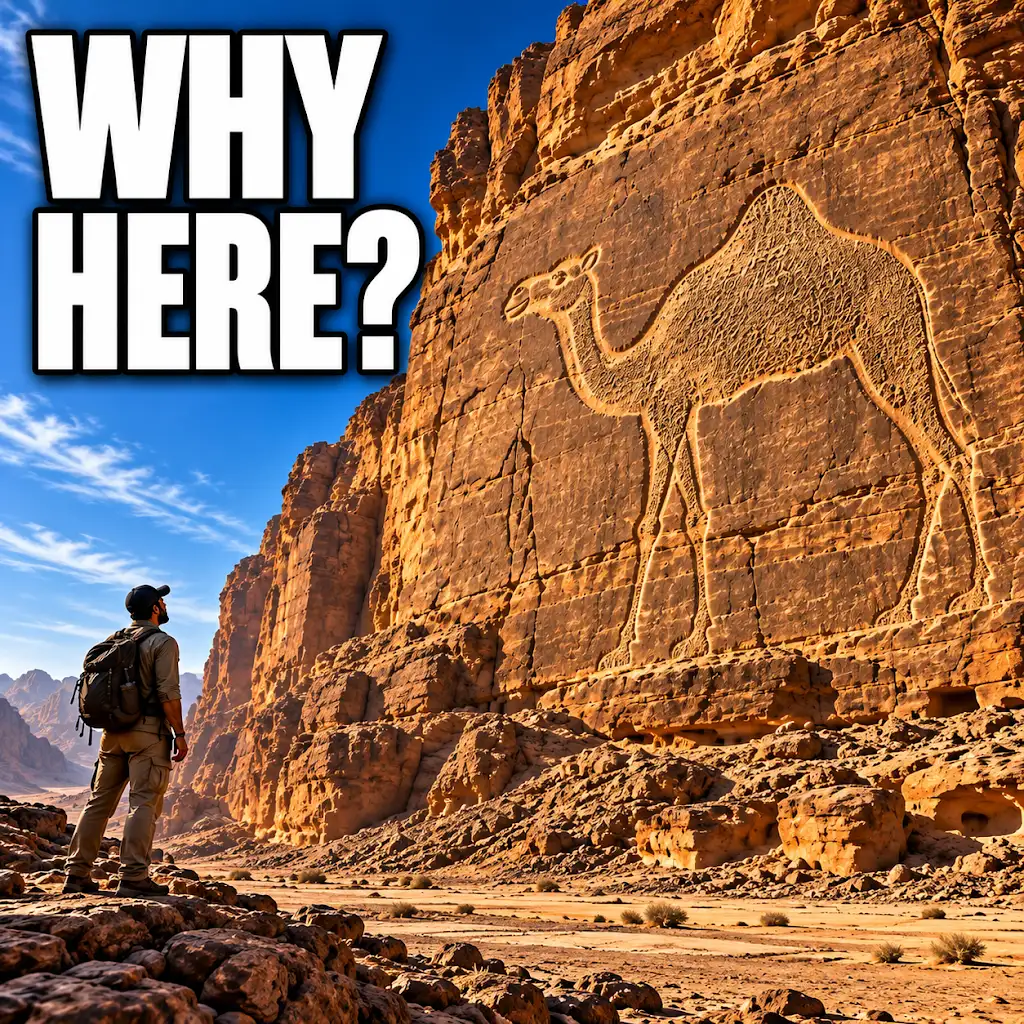
Why Were Giant Camels Carved Above the Desert?
FAQs
What did archaeologists discover related to camels?
Archaeologists discovered camel carvings, which are ancient depictions of camels carved into stone.
Where were the camel carvings found?
The camel carvings were found at an archaeological site in a desert region, providing insights into the historical significance of camels in that area.
How old are the camel carvings?
The camel carvings are estimated to be thousands of years old, dating back to a time when camels were an important part of the local culture and economy.
What do the camel carvings reveal about ancient civilizations?
The camel carvings reveal the importance of camels in ancient civilizations, showcasing the cultural significance and practical uses of these animals in daily life.
Why are the camel carvings significant to archaeologists?
The camel carvings are significant to archaeologists as they provide valuable insights into the historical relationship between humans and camels, shedding light on ancient practices and beliefs surrounding these animals.