The vast, sun-baked landscapes of arid regions hold secrets etched in stone and imprinted in the very earth. For the intrepid explorer, the archaeologist, or simply the curious traveler, the desert offers a unique opportunity to connect with the past. Central to this exploration are playa basins and the ancient rock art that often adorns their surroundings. These seemingly barren expanses are, in reality, vibrant ecosystems that once sustained human populations, leaving behind a rich tapestry of archaeological evidence. This guide delves into the fascinating world of playa basins and ancient rock art, offering insights into their significance, how to explore them responsibly, and what stories they can tell.
Unearthing the Secrets of Playa Basins
Playa basins, also known as dry lakes or ephemeral lakes, are shallow depressions in arid and semi-arid landscapes that periodically fill with water. These bodies of water are typically short-lived, evaporating under the intense desert sun, leaving behind a flat, often muddy or saline surface. While their transient nature might suggest a lack of ecological importance, playa basins are, in fact, critical hubs of biodiversity and significant archaeological sites. Their formation is intrinsically linked to the geological history of a region, often being the lowest points in a watershed where water naturally collects. Over millennia, these basins have acted as magnets for life, attracting both flora and fauna. For ancient peoples, these reliable, albeit seasonal, water sources were lifelines, attracting game animals and providing a crucial resource for survival. Consequently, human settlements and activity tend to cluster around these basins.
The Geological Genesis of Desert Depressions
The creation of playa basins is a testament to the slow, persistent forces of erosion and sedimentation. Typically, they form in closed drainage basins, areas where water flows in but does not flow out to a larger river system or ocean. Rainfall, infrequent as it may be, accumulates in these low-lying areas. As water evaporates, it leaves behind fine-grained sediments, dissolved salts, and organic matter. Over countless cycles of wetting and drying, flooding and evaporation, these processes build up the characteristic flat, smooth surface of a playa. The surrounding topography plays a crucial role, with hills or mountains directing runoff towards these depressions. The composition of the underlying bedrock and soil also influences the playa’s characteristics, affecting its salinity and the types of sediments deposited. Understanding the geological context of a playa basin is the first step in appreciating its archaeological potential, as it helps explain why humans were drawn to these specific locations.
Life’s Oasis: Ecosystems in Arid Lands
Despite their arid surroundings, playa basins support surprisingly diverse ecosystems. When water is present, even temporarily, these areas transform into vibrant oases. Seeds that have lain dormant for years germinate, and a flush of ephemeral vegetation springs to life, providing food for insects, birds, and larger mammals. The water itself attracts a variety of waterfowl and aquatic invertebrates. As the water recedes, the moist soil can still sustain plant life for a period, and the mineral-rich sediments attract herbivores seeking essential nutrients. For ancient humans, these ecological dynamics were not just a matter of survival; they were the foundation of their material culture and social structures. The predictable presence of game animals meant opportunities for hunting, while the vegetation provided resources for gathering. Archaeological evidence found within and around playa basins often includes tools for processing plants, projectile points for hunting, and remnants of hearths indicating food preparation and settlement. The success of prehistoric populations was inextricably linked to their ability to understand and utilize the seasonal rhythms of these desert oases.
Playa basins, often found in arid regions, serve as unique landscapes that have been utilized by various cultures throughout history, particularly for their significance in rock art. These ephemeral lakes not only provide essential resources but also serve as canvases for ancient artists who left behind intricate petroglyphs and pictographs. For a deeper understanding of how landscapes, including playa basins, have influenced human navigation and cultural expression, you can explore the article on the evolution of maps at Navigating the Future: The Evolution of Maps.
The Whispers of the Past: Deciphering Rock Art
Scattered across the weathered rock faces surrounding playa basins, and sometimes even on the playa surfaces themselves, are the enigmatic creations of ancient peoples: rock art. These petroglyphs (carvings or engravings) and pictographs (paintings) are not mere decorations; they are a form of communication, a visual record of beliefs, rituals, events, and the natural world as perceived by those who came before us. The study of rock art offers a unique window into the cognitive and spiritual lives of prehistoric societies, often providing insights that are otherwise unavailable through traditional archaeological excavation. The preservation of rock art is dependent on the arid climate, which minimizes weathering and erosion, making desert regions particularly rich in these invaluable cultural artifacts.
Types of Desert Rock Art: A Visual Lexicon
The rock art of desert regions can be broadly categorized into two main types: petroglyphs and pictographs. Petroglyphs are created by removing the dark outer layer of rock (the desert varnish) to expose the lighter rock beneath. This is typically achieved by pecking, grinding, or incising the rock surface with harder stones. The resulting images can range from simple geometric shapes and abstract designs to detailed depictions of animals, humans, and celestial bodies. Pictographs, on the other hand, are created by applying pigments to the rock surface. These pigments are often derived from natural sources such as mineral oxides (like hematite for red and ochre for yellow), charcoal for black, and chalk or clay for white. Pictographs are generally less durable than petroglyphs, as the pigments can fade or be washed away by infrequent rains. The style and subject matter of rock art can vary significantly across different regions and time periods, reflecting diverse cultural traditions and belief systems.
Symbolism and Interpretation: Unlocking Ancient Meanings
Interpreting the meaning of ancient rock art is a complex and often challenging endeavor. Unlike written languages, rock art lacks a direct linguistic translation. Archaeologists and art historians employ a variety of methods to approach interpretation, including ethnographic analogies, analysis of stylistic similarities and differences, and consideration of the context in which the art is found. For instance, recurring motifs might represent deities, spirits, or significant ancestral figures. Depictions of animals may relate to hunting practices, totemic affiliations, or spiritual beliefs about the animal world. Geometric patterns could represent cosmology, territorial markers, or shamanic journeys. It is crucial to approach interpretation with humility and an awareness of the inherent subjectivity involved. While definitive meanings may remain elusive, the study of rock art undoubtedly enriches our understanding of the worldview and cultural practices of ancient desert dwellers.
Navigating the Desert Landscape: Exploration Strategies
Exploring playa basins and the surrounding rock art sites requires careful planning, respect for the environment, and an understanding of the unique challenges posed by desert conditions. Responsible exploration ensures the preservation of these fragile sites for future generations while allowing for a deeply rewarding personal experience. The goal is to observe, appreciate, and learn without causing harm. This involves being prepared for the elements, minimizing your impact, and understanding the ethical considerations of visiting archaeological sites.
Essential Gear and Preparation for the Arid Environment
Before venturing into the desert, thorough preparation is paramount. This includes packing essential gear that addresses the extreme conditions. Ample water is non-negotiable; dehydration is a significant risk in arid environments. High-SPF sunscreen, a wide-brimmed hat, and protective clothing are crucial to shield against the intense sun. Sturdy hiking boots are necessary for navigating uneven terrain, and layers of clothing are advisable as desert temperatures can fluctuate dramatically between day and night. A reliable map and compass or GPS device are vital for navigation, especially in areas with few landmarks. Binoculars can be useful for spotting distant rock art panels. Additionally, a basic first-aid kit is indispensable for treating minor injuries. Always inform someone of your travel plans and expected return time.
Responsible Exploration: Leave No Trace Principles
The cardinal rule of exploring sensitive archaeological sites, including playa basins and rock art locations, is to practice the Leave No Trace principles. This means leaving the environment exactly as you found it, or even better. Avoid touching rock art; oils from human skin can damage the pigments and rock surfaces. Do not collect artifacts, no matter how small or seemingly insignificant. These objects have archaeological context and are protected by law. Stay on designated trails or well-trodden paths to avoid trampling fragile vegetation and causing erosion. Pack out everything you pack in, including all trash and food scraps. Be mindful of noise levels, as excessive noise can disturb wildlife and detract from the experience for others. When photographing rock art, avoid using flash, which can be detrimental to the art and the visitor experience. The goal is to be an observer, not an intervener, allowing the desert and its ancient stories to remain undisturbed.
The Archaeology of Daily Life: Insights from Playa Sediments
Playa basins are not just geological formations; they are time capsules. The sediments deposited within these basins, layer by layer, have preserved an extraordinary record of past environments and human activities. Archaeologists meticulously excavate these layers, known as strata, to uncover evidence of ancient lifeways, from the tools they used and the food they ate to the structures they built and the animals they coexisted with. The fine-grained nature of playa sediments often allows for the preservation of delicate organic materials that would decompose in other environments.
Uncovering Tools, Hearths, and Human Remains
Excavations in playa basins frequently yield a wealth of artifacts that illuminate the daily lives of their former inhabitants. Stone tools, such as projectile points, scrapers, and grinding implements, speak to hunting and food processing strategies. The presence of hearths, often marked by charcoal, ash, and fire-cracked rocks, indicates cooking and warmth. These hearths can also yield the remains of ancient meals, providing dietary information through the analysis of animal bones and plant seeds. In some cases, human remains may be discovered, offering profound insights into burial practices, health, and even migration patterns. The careful excavation and analysis of these materials allow archaeologists to reconstruct the material culture and subsistence strategies of past desert peoples.
Paleoenvironmental Reconstruction: Reading the Earth’s History
Beyond human activity, playa sediments offer invaluable clues about past climates and environments. The types of sediments, the presence of pollen and plant remains, and the analysis of fossilized micro-organisms can reveal information about past rainfall patterns, vegetation cover, and temperature fluctuations. For example, the presence of specific types of pollen might indicate the existence of grasslands or woodlands during a wetter period. The study of these paleoenvironmental indicators allows archaeologists to understand the ecological context in which ancient humans lived and how they adapted to changing conditions. This understanding is crucial for interpreting their cultural developments and resource management strategies. A playa basin, therefore, is not just a site of human habitation; it is a comprehensive archive of environmental history.
The fascinating interplay between playa basins and ancient rock art reveals much about the cultural practices of early civilizations. Researchers have noted that these unique geological formations often served as gathering places, where communities would leave behind intricate depictions of their lives and beliefs. For those interested in exploring the broader implications of how natural landscapes influence human activity, a related article discusses the strategic maneuvers nations are employing in the new space race, which can be found here. This connection between geography and cultural expression underscores the importance of understanding our environment in shaping human history.
Connecting with the Ancestors: The Enduring Significance of Rock Art Sites
| Metric | Description | Example Data | Significance |
|---|---|---|---|
| Number of Playa Basins | Total identified dry lake beds in a region | 15 (Southwestern USA) | Indicates potential sites for archaeological surveys |
| Age of Rock Art | Estimated age range of petroglyphs or pictographs | 2,000 – 5,000 years BP | Helps understand the timeline of human activity |
| Types of Rock Art | Classification of motifs found (e.g., geometric, animal, anthropomorphic) | Geometric (40%), Animal (35%), Anthropomorphic (25%) | Reflects cultural and symbolic meanings |
| Proximity to Water Sources | Distance from playa basins to nearest perennial water | Average 3 km | Influences settlement and art location choices |
| Preservation State | Condition of rock art (e.g., excellent, good, poor) | Good (60%), Poor (40%) | Impacts ability to study and interpret art |
| Frequency of Rock Art Sites per Basin | Average number of rock art sites found per playa basin | 3.2 sites/basin | Indicates cultural activity density |
The enduring significance of playa basins and their accompanying rock art lies in their ability to connect us with the human experience across vast stretches of time. These sites are not simply relics of the past; they are active places of cultural heritage that continue to hold meaning for Indigenous communities and offer profound learning opportunities for all visitors. Preserving and understanding these sites is a crucial responsibility, ensuring that the voices and stories of our ancestors are not lost to the sands of time. The sheer artistry and evident effort invested in creating rock art speak to a deep human need for expression, meaning-making, and connection to the spiritual realm.
Cultural Heritage and Indigenous Connections
For many Indigenous communities, rock art sites are sacred places, imbued with spiritual significance and tied to ancestral traditions. These sites often serve as classrooms for passing down knowledge, stories, and cultural practices to younger generations. They are living landscapes that connect the present to the past, a tangible link to the ancestors and their enduring presence. It is imperative to approach these sites with respect and to be aware of any local protocols or restrictions regarding access and behavior. Engaging with Indigenous knowledge holders and understanding their perspectives is an essential part of appreciating the true cultural heritage of these locations. Their connection to these lands and the art they contain is deeply ingrained and invaluable for a holistic understanding.
A Window into Human Ingenuity and Spirituality
Ultimately, exploring playa basins and ancient rock art is an exploration of human ingenuity, adaptability, and the enduring quest for meaning. The creation of rock art, in particular, showcases a sophisticated understanding of materials, artistic skill, and a rich inner world of beliefs and symbolism. These ancient expressions remind us that despite the passage of millennia, fundamental aspects of the human condition – the need to communicate, to understand our place in the universe, and to leave a mark – remain constant. By venturing into these desert landscapes, equipped with knowledge, respect, and a curious mind, one can embark on a journey of discovery that transcends time and offers a profound connection to the human story etched in the stone and earth. The desert, in its stark beauty, becomes a vast gallery, a silent testament to the enduring legacy of those who walked its paths before us.
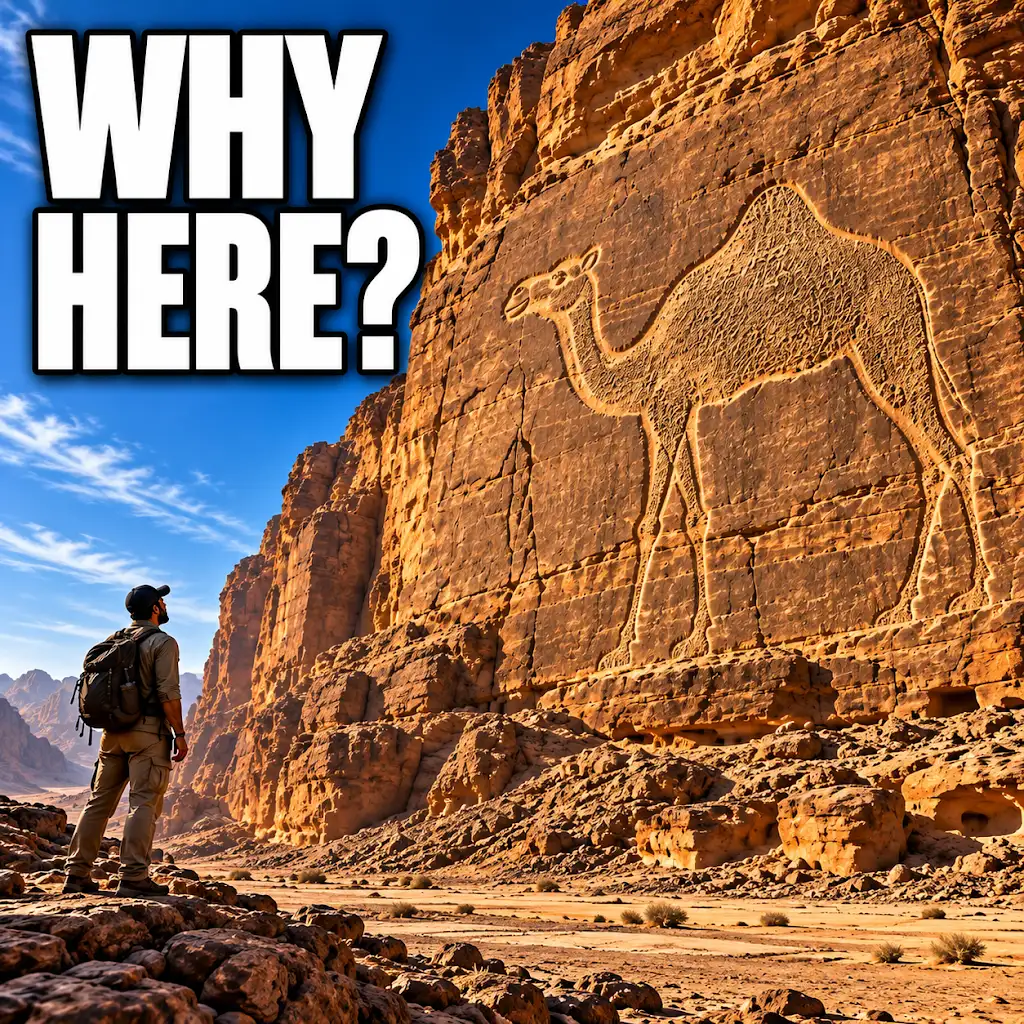
Why Were Giant Camels Carved Above the Desert?
FAQs
What are playa basins?
Playa basins are shallow, flat areas of land that periodically fill with water, typically after rainfall. They are characterized by a hard, flat surface that may crack when dry.
Where are playa basins commonly found?
Playa basins are commonly found in arid and semi-arid regions, such as deserts. They can also be found in other environments where the conditions are right for their formation.
What is rock art?
Rock art refers to human-made markings on natural stone surfaces. These markings can include paintings, engravings, and other forms of artistic expression created by ancient civilizations.
How are playa basins and rock art connected?
Playa basins often served as important locations for ancient civilizations, providing water sources and resources. As a result, rock art can sometimes be found in or near playa basins, depicting scenes of daily life, rituals, and other cultural expressions.
Why is the study of playa basins and rock art important?
The study of playa basins and rock art can provide valuable insights into the history, culture, and environment of past civilizations. It can help researchers understand how ancient societies interacted with their surroundings and how they expressed themselves through art.