The unforgiving expanse of the desert, a landscape synonymous with scarcity and extreme conditions, has always presented humanity with an ultimate test of resilience. Yet, across millennia, civilizations have not only survived but thrived in these arid realms, their success intrinsically linked to an ingenious mastery of water. These ancient societies, far from succumbing to the desert’s harsh embrace, developed sophisticated methods for locating, collecting, storing, and distributing precious water resources. Their innovations, born out of necessity and a profound understanding of their environment, reveal secrets of survival that continue to inspire and inform even in our modern age. The story of ancient water sources in the desert is not merely one of technical prowess; it is a testament to human adaptability, community collaboration, and a deep reverence for the life-giving element.
Unearthing Hidden Reservoirs: The Quest for Water
The fundamental challenge in any desert environment is the scarcity of surface water. Ancient peoples, therefore, had to become expert detectives, their survival depending on their ability to locate even the most elusive sources. This quest often involved a deep, almost intuitive understanding of geological formations, plant life, and animal behavior, all of which offered clues to the presence of subterranean water. The ability to read the landscape was paramount, transforming seemingly barren expanses into a readable map of potential life.
Reading the Signs: Landscape Clues and Botanical Indicators
Ancient desert dwellers meticulously observed the subtle nuances of their surroundings. The presence of specific plant species, like certain grasses or deep-rooted trees, served as potent indicators of accessible groundwater. Oases, those legendary pockets of verdure, were not accidental occurrences but often the result of geological features that brought water closer to the surface. Ancient peoples learned to identify these areas by the characteristic patterns of vegetation they supported. Furthermore, migrating animal herds, particularly those known to seek water, provided invaluable directional cues. Experienced trackers could follow their trails, knowing they would eventually lead to a life-sustaining source. The very shape of the land, the depressions and valleys, held secrets, as these were often natural collection points for infrequent rainfall.
The Whisper of the Earth: Groundwater and Well Construction
While surface water was rare, the desert floor often concealed vast underground reservoirs. The excavation of wells was a cornerstone of ancient desert survival strategies. These were not simple holes dug at random but carefully engineered structures, designed to access and yield water consistently. The depth of wells varied greatly, from shallow pits that tapped into perched water tables to deep shafts that reached the phreatic zone. The construction often involved reinforcing the well shaft with stones or timber to prevent collapse, demonstrating a sophisticated understanding of structural integrity. The location of wells was often determined by divination, intuition, or the accumulated knowledge of generations, passed down through oral traditions and direct observation. The sheer labor involved in digging wells, especially in hard-packed earth or rock, underscores the immense value placed on water and the collaborative spirit required for such undertakings.
Ancient civilizations often developed innovative methods to access and manage water sources in arid environments, showcasing their ingenuity in overcoming the challenges posed by desert landscapes. For instance, the Maya civilization utilized advanced filtration techniques to ensure the purity of their water supply, which is explored in detail in the article “Pure Water: The Power of Maya Filtration.” This article highlights the significance of water management in sustaining their society and can be accessed through this link: Pure Water: The Power of Maya Filtration.
Harnessing the Sky: Capturing the Elusive Rain
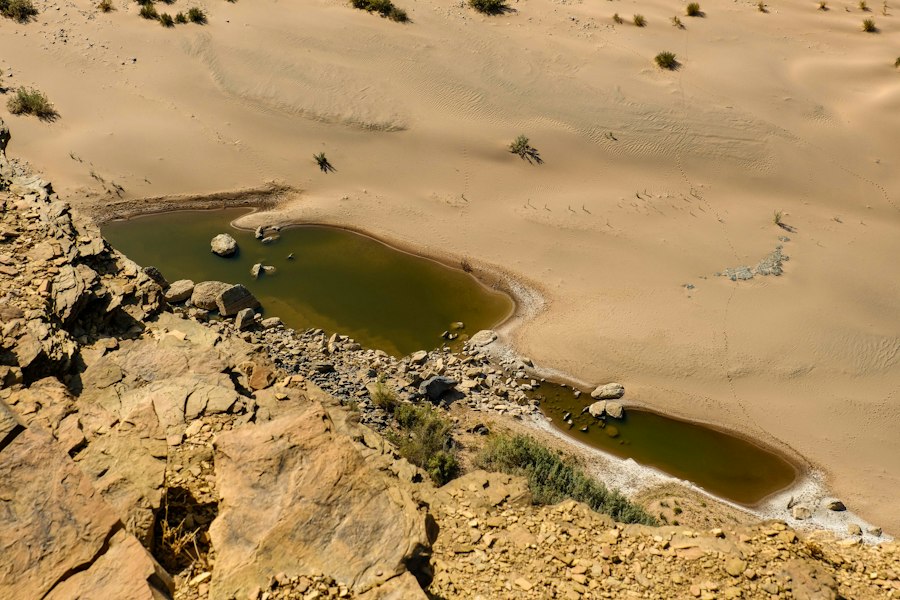
While deserts are defined by their aridity, they do experience infrequent but often intense rainfall. Ancient peoples recognized the critical importance of capturing these fleeting moments, developing ingenious systems to store every precious drop. These methods transformed moments of abundance into long-term security, buffering communities against extended periods of drought. The ingenuity lay not just in collection but in efficient storage and distribution.
The Art of the Cistern: Underground and Aboveground Storage
Cisterns were a ubiquitous and vital feature of ancient desert settlements. These reservoirs, whether carved directly into bedrock or constructed from masonry, were designed to collect rainwater from roofs, courtyards, and specially designed catchment areas. Underground cisterns offered the advantage of maintaining a cooler water temperature, reducing evaporation. Aboveground cisterns, often large and imposing, were also common, sometimes integrated into the architecture of homes or public buildings. The surfaces from which water was collected were often sealed to prevent seepage and maximize the yield. The capacity of these cisterns could be substantial, capable of sustaining a community for months, even years, after a significant rainfall. The careful planning and construction of these storage systems represented a significant investment of resources and labor, reflecting the profound understanding of water’s value.
Terraces and Channels: Directing and Funneling Runoff
Beyond individual storage, ancient desert peoples developed elaborate systems for managing surface runoff. In hilly or mountainous desert regions, terracing was employed to slow down the flow of water, allowing it to infiltrate the soil and replenish groundwater. These terraces also prevented soil erosion, a common problem in arid environments. In flatter areas, intricate networks of channels and ditches were constructed to direct rainwater from natural depressions or artificial catchments towards cisterns or communal reservoirs. These systems required meticulous surveying and a deep understanding of hydraulics, ensuring that water flowed efficiently and with minimal loss. The organization and maintenance of these large-scale water management projects often fostered a strong sense of community, as collective effort was essential for their construction and upkeep.
The Flow of Life: Distribution and Innovation

Having secured water, the next critical challenge was its equitable and efficient distribution. Ancient societies developed diverse methods to ensure that water reached where it was needed most, from individual homes to agricultural fields. These innovations were often characterized by simplicity and effectiveness, leveraging natural forces and basic engineering principles.
The Power of Gravity: Aqueducts and Conduits
In regions where water sources were located at higher elevations than the settlements they served, the construction of aqueducts was a remarkable feat of ancient engineering. These structures, often featuring a gentle, consistent gradient, used gravity to transport water over long distances. While the Romans are perhaps most famous for their monumental aqueducts, other ancient desert cultures also developed similar systems, albeit on a smaller scale and often using different materials like stone, clay pipes, or even hollowed-out logs. The construction of these conduits required precise surveying to maintain the correct slope and avoid blockages. The constant flow of water provided by aqueducts was transformative, enabling the growth of larger settlements and supporting more intensive agricultural practices than would otherwise be possible.
Community Management: Water Rights and Sharing Systems
The distribution of water in desert societies was rarely a free-for-all. Instead, it was governed by complex social structures and established rules. Water rights were often tied to land ownership, or access was managed through communal systems overseen by elders or water masters. These systems ensured that water was shared equitably, preventing disputes and maintaining social cohesion. In some cultures, specific days or times were allocated for different households or neighborhoods to draw water from communal sources. The maintenance of these sharing systems required trust, communication, and a shared understanding of the collective need. The enforcement of water laws, sometimes with severe penalties for waste or theft, underscored the critical importance of this resource to the survival of the entire community.
Agriculture in the Arid Lands: Sustaining Life Beyond Subsistence
The successful management of water in desert environments directly enabled the development of agriculture, a crucial element for supporting settled populations. Ancient desert farmers, armed with their understanding of water resources, devised techniques to cultivate crops in seemingly inhospitable conditions, transforming barren land into productive fields.
Irrigation Techniques: From Flooding to Sub-surface Delivery
Ancient agricultural practices in deserts were highly adapted to the available water. Simple flood irrigation, where fields were deliberately inundated with water from canals or streams, was common where water was abundant enough. However, in more arid regions, more sophisticated techniques were employed. Drip irrigation, in rudimentary forms, may have existed, with porous clay pots buried near plant roots releasing water slowly. Contour farming, similar to terracing, helped retain moisture in the soil. The careful timing of planting and harvesting, coinciding with predictable, albeit infrequent, water availability, was also a critical strategy. The selection of drought-resistant crops, such as certain grains, legumes, and date palms, was essential for success.
Cultivating the Oasis: Creating Microclimates for Growth
Oases, the fertile havens within the desert, were not merely natural occurrences but were often actively managed and expanded by ancient peoples. The cultivation of date palms, with their deep root systems that could access groundwater, provided both food and shade for other crops. This created a microclimate, allowing for the growth of fruits, vegetables, and fodder. The careful planning of planting within oases, with taller trees providing shade for smaller plants, demonstrated a sophisticated understanding of ecological relationships. The management of oasis agriculture was often a communal effort, with shared responsibility for irrigation, pest control, and harvesting. These cultivated oases were not just sources of sustenance but centers of culture and trade, vital nodes in the ancient desert landscape.
Ancient water sources in the desert have played a crucial role in sustaining civilizations throughout history, and understanding their significance can shed light on contemporary issues related to climate change and displacement. For instance, the article on climate refugees explores how dwindling water resources are forcing communities to abandon their homes, drawing a parallel to the historical reliance on these vital water sources. You can read more about this pressing issue in the article here.
Legacy of Resilience: Lessons from the Ancients
| Water Source | Location | Type | Estimated Age (Years) | Capacity (Liters) | Significance |
|---|---|---|---|---|---|
| Qanat | Persian Desert | Underground Channel | 2,500 | Varies (up to millions) | Ancient irrigation system supplying water to arid regions |
| Foggaras | Sahara Desert (Algeria) | Underground Tunnel | 1,000+ | Thousands to millions | Traditional water harvesting for agriculture and settlements |
| Oasis Wells | Libyan Desert | Natural Well | Varies (up to 5,000) | Thousands | Crucial for nomadic tribes and caravan routes |
| Ancient Cisterns | Negev Desert | Rainwater Storage | 2,000+ | Up to 100,000 | Collected and stored rainwater for dry seasons |
| Subterranean Lakes | Atacama Desert | Underground Lake | Unknown (Ancient) | Millions | Rare natural water reservoirs in hyper-arid environment |
The ancient peoples of the desert, through their ingenuity and perseverance, left an indelible legacy of survival. Their mastery of water management serves as a powerful reminder of human adaptability and the profound connection between civilization and its environment. Their innovations, often simple yet profoundly effective, continue to offer valuable lessons for contemporary challenges.
Enduring Wisdom for Modern Challenges
The water scarcity faced by many desert communities today echoes the struggles of their ancient predecessors. The ancient techniques of water harvesting, efficient storage, and responsible distribution offer a blueprint for sustainable water management in arid regions. The emphasis on community collaboration and equitable sharing, so vital to ancient survival, remains a critical component for addressing modern water conflicts and ensuring access for all. The deep understanding of natural systems and the resourcefulness demonstrated by these ancient societies inspire a more mindful approach to our planet’s finite resources.
The Cultural Significance of Water
Beyond its practical necessity, water held profound cultural and spiritual significance for ancient desert dwellers. It was often associated with fertility, purification, and the divine. Religious rituals and ceremonies frequently revolved around water sources, reflecting a deep reverence for this life-giving element. The stories, myths, and legends passed down through generations often centered on the quest for water, the challenges of drought, and the blessings of rainfall. This cultural imbrication of water highlights its central role in shaping the identity and worldview of desert peoples, a testament to its fundamental importance for human existence. The enduring fascination with ancient water systems lies not only in their technical brilliance but also in the profound human stories they tell of resilience, innovation, and a deep respect for the precious gift of water.

Why Were Giant Camels Carved Above the Desert?
FAQs
What are some examples of ancient water sources in the desert?
Examples of ancient water sources in the desert include oases, natural springs, underground aquifers, and ancient wells dug by civilizations that once inhabited the desert regions.
How did ancient civilizations in the desert access and utilize water sources?
Ancient civilizations in the desert accessed and utilized water sources through sophisticated irrigation systems, such as qanats, aqueducts, and wells, which allowed them to channel and store water for agriculture, drinking, and other purposes.
Why were ancient water sources crucial for the survival of civilizations in the desert?
Ancient water sources were crucial for the survival of civilizations in the desert because they provided the necessary water for drinking, agriculture, and sustaining life in an otherwise arid and inhospitable environment.
What role did ancient water sources play in the development of desert civilizations?
Ancient water sources played a significant role in the development of desert civilizations by enabling the growth of agriculture, settlement of communities, and establishment of trade routes that were supported by the availability of water.
How have modern technologies impacted the utilization of ancient water sources in the desert?
Modern technologies have impacted the utilization of ancient water sources in the desert by allowing for more efficient extraction, storage, and distribution of water, as well as the implementation of sustainable practices to preserve these valuable resources for future generations.