The dry, wind-scoured landscapes of the Middle East, long considered a cradle of civilization, are consistently yielding profound insights into humanity’s distant past. Recent archaeological endeavors, combining meticulous excavation with advanced geophysical surveying techniques, have brought to light an extraordinary collection of ancient prehistoric engravings. These artworks, etched into rock faces and stone fragments, offer an unprecedented window into the cognitive, social, and spiritual lives of early hominins and the nascent stages of human culture in this vital region. The sheer scale and detail of these discoveries suggest a level of artistic expression and symbolic thought far earlier and more complex than previously understood, reshaping our narrative of human development and the origins of art.
Whispers from the Stone Age
The arid expanses of the Middle East, stretching across vast swathes of the Levant, Mesopotamia, and the Arabian Peninsula, have always been fertile ground for archaeological exploration. However, the discovery of these extensive prehistoric engravings represents a significant leap in our understanding. Unlike more commonly found artifacts like stone tools or skeletal remains, these petroglyphs are direct expressions of abstract thought and visual communication. They speak not just of survival, but of imagination, of storytelling, and of a deeply ingrained human need to leave a mark, to communicate across generations. The careful dating of the surrounding geological layers and the stylistic analysis of the engravings themselves are crucial in placing these artworks within a clear chronological framework, pushing back the timeline of sophisticated symbolic representation in the region.
A Canvas of Antiquity
The geological formations that have preserved these ancient artworks are as varied as the engravings themselves. From the sandstone cliffs of southern Jordan, weathered by millennia of wind and sand, to the volcanic rock outcrops of northern Saudi Arabia, and the limestone formations of the Syrian desert, these natural canvases have borne witness to a forgotten artistic heritage. The selection of these locations was not random; early humans likely chose sites that were both visually prominent and perhaps held particular significance, such as water sources, migration routes, or sacred gathering places. The sheer number of individual engravings and the extent of the decorated areas suggest that these sites were not mere fleeting expressions but were actively maintained and added to over considerable periods.
Unveiling the Techniques of the Ancients
The methods employed by these prehistoric artists were remarkably ingenious, given the limited tools at their disposal. The most common technique observed is pecking, where harder stones were used to chip away at the rock surface, creating depressions that form the images. Incising, a finer method of scratching or cutting into the rock with sharp tools, is also present, often used for more detailed linework. In some cases, artists may have used a combination of techniques to achieve different textures and depths, demonstrating a sophisticated understanding of their materials and the desired visual effect. The presence of tool marks on some of the engravings further confirms the direct, manual labor involved, highlighting the skill and patience required.
Recent studies have shed light on the significance of prehistoric engravings found in the Middle East, revealing insights into the cultural practices and beliefs of ancient societies. These engravings, often depicting animals and human figures, serve as a window into the past, illustrating the connection between early humans and their environment. For a broader understanding of how such historical artifacts can influence our perception of global changes, you may find the article on anticipated global map shifts insightful. It explores the implications of historical geography on contemporary society. To read more, visit this article.
Thematic Depictions and Symbolic Meanings

The content of these newly discovered engravings is a rich tapestry of imagery, offering glimpses into the world as perceived by their creators. While direct translation of prehistoric art is inherently challenging, recurring motifs and stylistic patterns allow for educated interpretations of their potential meanings and the cultural contexts from which they arose. These themes range from the pragmatic concerns of daily life to the abstract realms of spirituality and myth.
Creatures of the Past and Present
A significant portion of the unearthed engravings features depictions of animals, many of which are now extinct or rare in the region. This includes formidable predators like lions and leopards, alongside a variety of ungulates such as wild cattle, ibex, and gazelles. The meticulous detail in rendering these creatures – their musculature, horns, and even individual hairs in some instances – speaks to a profound observational skill and a deep connection with the natural world. These animal depictions may have served various purposes: as records of hunts, as totemic symbols of social groups, or as representations of spiritual beings or forces of nature. The emphasis on certain animals might also reflect their ecological importance or their role in the subsistence strategies of these ancient communities.
Human Forms and Social Narratives
While less common than animal depictions, human figures are also present, often rendered in stylized and abstract forms. These figures are sometimes depicted engaged in activities such as hunting, dancing, or ritualistic ceremonies. The relative scarcity of detailed human portraits, compared to the more naturalistic animal renderings, suggests a possible cultural or spiritual reluctance to depict the human form with too much realism, or perhaps a focus on collective identity rather than individual representation. The scenes involving human figures can offer invaluable insights into social organization, daily routines, and potential belief systems, shedding light on how these early societies interacted and organized themselves.
Recent discoveries of prehistoric engravings in the Middle East have shed light on the artistic expressions of ancient civilizations. These engravings, found in various locations, provide insight into the cultural and social dynamics of the time. For those interested in exploring more about the implications of historical artifacts and their impact on our understanding of human innovation, a related article discusses the fascinating topic of suppressed inventions throughout history. You can read more about it here.
Abstract Symbols and Geometric Patterns
Beyond the representational imagery, a substantial number of engravings consist of abstract symbols and geometric patterns. These range from simple lines and dots to complex labyrinthine designs and intricate meanders. The precise meaning of these abstract elements remains the most enigmatic aspect of the discoveries. However, their systematic recurrence across different sites and potential chronological periods suggests they were not random scribbles but held specific, perhaps even sacred, meanings within their respective cultures. These could represent astronomical observations, calendrical systems, spiritual concepts, territorial markers, or even forms of early writing or proto-writing. The study of these abstract forms is crucial for understanding the development of symbolic thought and its transition towards more complex forms of communication.
Chronological Context and Cultural Significance

The accurate dating of these prehistoric engravings is paramount to understanding their place in the broader sweep of human history and cultural evolution. Their placement within specific archaeological periods allows for comparisons with other contemporaneous finds and helps to chart the development of artistic expression and cognitive abilities in the Middle East. The cultural significance of these sites extends beyond their artistic merit, offering insights into the lives of the people who created them and their impact on later human developments.
Establishing the Timeline
Radiocarbon dating of organic materials found in association with the engraved rock surfaces, coupled with thermoluminescence dating of sediments and the stratigraphic analysis of associated archaeological layers, has allowed researchers to establish a tentative chronology for these artworks. Initial findings suggest that some of the earliest engravings may date back to the Upper Paleolithic or even the Mesolithic periods, predating many of the established milestones of early art. Subsequent layers of engravings could extend into the Neolithic and Chalcolithic periods, showcasing a continuous tradition of rock art creation and evolution over thousands of years. This extended timeline is crucial for understanding the longevity and adaptability of artistic practices in the region.
A Window into Early Societies
These engravings are more than just ancient doodles; they are direct testaments to the cognitive capabilities and social structures of early prehistoric communities in the Middle East. The presence of complex symbolic imagery suggests advanced abstract thinking, the ability to conceptualize and represent ideas beyond immediate needs. The collaborative effort potentially involved in creating large-scale engraved panels, or the maintenance of certain sites over generations, points towards social organization, shared traditions, and possibly even specialized roles within these societies. These sites may have served as communal gathering places, places of ritual, or points of cultural transmission, fostering a sense of identity and belonging.
Bridging the Gap to Later Civilizations
The discoveries in the Middle East have profound implications for understanding the development of civilization itself. The sophistication of the art and symbolism found in these prehistoric engravings suggests that the roots of complex human expression and abstract thought run deeper in this region than previously theorized. This raises questions about the continuity of cultural traditions and the influence of these early artistic expressions on the later development of writing systems, religious iconography, and monumental architecture that characterized the rise of the great civilizations of Mesopotamia and the Levant. These engravings act as a crucial bridge, connecting the seemingly simple toolkit of early humans to the complex societal structures that followed.
Preservation and Future Research
The enduring legacy of these ancient engravings is inextricably linked to their preservation. Exposure to the elements, human activity, and the passage of time pose constant threats to these fragile artworks. Ongoing research efforts are therefore focused not only on further discovery but also on ensuring that these invaluable remnants of our past are safeguarded for future generations and for continued scientific study.
The Challenge of Conservation
The arid climate of the Middle East, while instrumental in preserving many archaeological finds, also presents unique challenges for rock art. Extreme temperature fluctuations, wind erosion, and occasional flash floods can all contribute to the degradation of engraved surfaces. Human encroachment, including tourism and infrastructure development, can also lead to accidental damage or vandalism. Conservation efforts must therefore be carefully planned and implemented, balancing the need for accessibility with the imperative of protection. This often involves the use of non-invasive monitoring techniques, the establishment of protected zones, and the development of localized conservation strategies tailored to the specific environmental conditions of each site.
Technological Advancements in Exploration
The recent surge in discoveries is largely attributable to the application of cutting-edge technologies. High-resolution satellite imagery, combined with drone-based aerial surveys and advanced Geographical Information Systems (GIS), allows archaeologists to identify potential rock art sites over vast and often inaccessible terrains with unprecedented accuracy. Ground-penetrating radar and magnetometry can also be employed to detect buried features associated with these sites, providing a more comprehensive understanding of the surrounding archaeological context. Furthermore, 3D laser scanning and photogrammetry are revolutionizing the documentation of engravings, creating highly detailed digital records that can be used for analysis, preservation, and public outreach without the need for repeated physical contact with the original artworks.
The Path Forward: Interdisciplinary Collaboration
The continued study of these prehistoric engravings necessitates a multidisciplinary approach. Archaeologists, art historians, geologists, anthropologists, and linguists must collaborate to unravel the multifaceted stories these artworks tell. Future research will undoubtedly focus on more detailed stylistic analyses, comparative studies across different regions, and attempts to correlate artistic motifs with environmental data and inferred subsistence strategies. The hope is that ongoing discoveries and the application of innovative research methods will continue to illuminate the remarkable journey of human creativity and cognition, extending ever backward into the mists of our prehistoric past. The Middle East, as always, proves to be a silent but eloquent witness to humanity’s deepest origins.
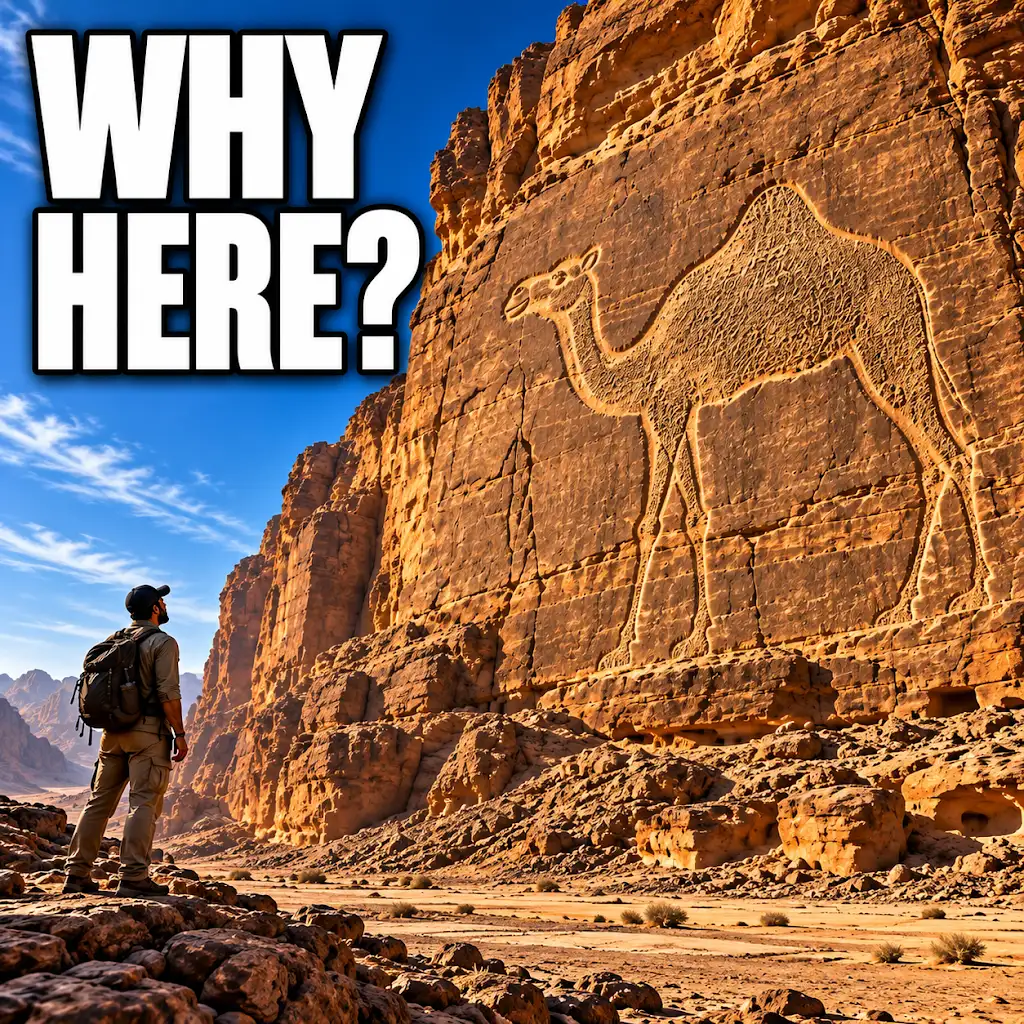
Why Were Giant Camels Carved Above the Desert?
FAQs
What are prehistoric engravings in the Middle East?
Prehistoric engravings in the Middle East are ancient rock carvings or petroglyphs created by early human civilizations in the region.
Where are prehistoric engravings commonly found in the Middle East?
Prehistoric engravings are commonly found in rocky areas, caves, and cliffs throughout the Middle East, including countries like Saudi Arabia, Jordan, and Iran.
What do prehistoric engravings in the Middle East depict?
These engravings often depict animals, hunting scenes, human figures, symbols, and various geometric shapes, providing insights into the daily lives and beliefs of ancient peoples.
How old are prehistoric engravings in the Middle East?
Some prehistoric engravings in the Middle East date back thousands of years, with some estimates suggesting they could be as old as 10,000 years or more.
Why are prehistoric engravings in the Middle East important?
These engravings are important as they offer valuable clues about the cultural practices, artistic expressions, and spiritual beliefs of early human societies in the Middle East, helping archaeologists and historians better understand the region’s ancient past.