Whispers in Stone: Unveiling the Ancient Camel Carvings
Across the arid landscapes of the Middle East and North Africa, etched into the very stone of remote cliff faces, lie silent testaments to a bygone era. These are the ancient camel carvings, not mere doodles or idle artistic expressions, but intricate symbols that speak volumes about the lives, struggles, and triumphs of the peoples who once traversed these harsh terrains. For millennia, camels have been the lifeblood of desert civilizations, their resilience and adaptability allowing for the very existence of trade routes and nomadic cultures. The carvings, found in scattered locations from the Arabian Peninsula to the Sahara, serve as a unique window into this profound relationship, offering a glimpse into a world where survival was inextricably linked to the magnificent desert ship.
These petroglyphs, painstakingly chiseled by hand, range in complexity from simple outlines to remarkably detailed depictions. They are found not in easily accessible locales, but often in challenging, windswept canyons and high plateaus, suggesting that their creators intentionally placed them in significant, perhaps sacred, or strategically important positions. The sheer labor involved in their creation, without the benefit of modern tools, underscores their importance. These were not fleeting artistic endeavors; they were deliberate messages left for posterity, for fellow travelers, or perhaps for the very spirits of the desert. The repeated motif of the camel, often depicted with a rider, a laden burden, or in herds, leaves no doubt about the central role this animal played. Beyond the literal representation, however, lies a deeper layer of meaning, one that intertwines the animal with concepts of trade, wealth, sustenance, and the very act of navigating and surviving in environments that would otherwise be impassable. Understanding these carvings requires looking beyond the immediate image to decipher the cultural and economic narratives they encapsulate.
The intriguing phenomenon of camels carved on cliffs has captivated researchers and historians alike, prompting investigations into the cultural and environmental contexts of these ancient artworks. A related article, which delves into the significance of such inscriptions and their connection to ancient climate patterns, can be found at Uncovering the Secret Inscription of Ancient Climate. This piece explores how these carvings may reflect the interactions between humans and their changing environment, shedding light on the historical importance of camels in the societies that created these remarkable cliffside artworks.
The Silent Sentinels of Desert Commerce

The presence of camel carvings on ancient cliff faces is inextricably linked to the development and sustenance of long-distance trade networks. These petroglyphs served as more than just artistic representations; they acted as markers, signposts, and even as a form of ancient cartography, guiding caravans across vast and often featureless desert expanses. The routes they adorned were vital arteries of commerce, connecting disparate cultures and facilitating the exchange of goods, ideas, and technologies.
Navigational Aids and Territorial Markers
The precise placement of these carvings is often a key to their function as navigational aids. Found along known ancient caravan routes, particularly at junctions, passes, or points where water sources were scarce, they would have been readily visible to experienced travelers. A well-executed depiction of a camel, perhaps with a directional element or in conjunction with other symbols, could have provided crucial confirmation of the correct path. Imagine a weary caravan arriving at a desolate crossroads under the harsh desert sun. A familiar carving on a rock face, signifying a known route and the presence of other travelers before them, would have been an immense relief and a vital piece of information. These carvings acted as silent sentinels, affirming the presence of established routes and warning against the dangers of straying into unknown or treacherous territories.
Furthermore, these rock art sites often served as territorial markers. Clans, tribes, or confederations of traders would likely have used these carvings to denote their spheres of influence or control over particular routes. The style and frequency of carvings could have indicated which group held sway in a given region, subtly communicating ownership and deterring potential rivals. The creation of these markers was an assertion of presence and control, a way of saying, “This path, this resource, this land belongs to us, and we have traveled here before.” This territorial aspect is particularly evident in areas where multiple rock art sites are clustered, suggesting a deliberate pattern of demarcation and communication.
Depicting the Pillars of Trade: Goods and Wealth
Beyond the camel itself, the carvings sometimes provide clues about the very nature of the trade that sustained these communities. While direct depictions of specific trade goods are rare, certain symbolic elements can be interpreted as representing valuable commodities. For instance, depictions of laden camels, with their humps seemingly bulging, might represent stored provisions, textiles, or other valuable cargo. In some instances, abstract symbols or geometric patterns accompanying camel imagery could have signified specific types of goods, such as spices, precious metals, or even enslaved people, though deciphering these precise meanings remains a challenge for archaeologists.
The camel, as the primary mode of transport for these goods, therefore became a potent symbol of wealth and prosperity. A large herd of depicted camels or particularly robust-looking animals could have represented the owner’s affluence and success in trade. The act of carving these animals, especially in prominent locations, was a way of celebrating and potentially boasting about one’s economic standing and the vital role they played in connecting distant markets. The carvings served as a visual representation of the flow of wealth and the economic power generated by trans-desert trade, a powerful message in societies where such wealth was hard-won and deeply valued. The very act of depicting these symbols reinforced the importance of trade in their society and the status it conferred upon those who were successful within it.
The Enduring Saga of Desert Survival

The camel carvings are not solely about commerce; they are also profound expressions of human resilience and the strategies employed to survive in some of the world’s most unforgiving environments. The camel’s ability to endure extreme heat, prolonged periods without water, and to carry heavy loads over vast distances made it indispensable for human survival in arid regions. The carvings thus reflect a deep understanding and respect for this symbiotic relationship.
A Lifeline in Arid Lands: Water and Sustenance
Water was, and remains, the most precious commodity in desert environments. The locations of many camel carvings are often found in proximity to ancient wells, oases, or seasonal water sources. This suggests that these carvings may have served as markers indicating the availability of water, a critical piece of information for both human and animal life. A carving near a water source could have been a beacon of hope for thirsty travelers, a sign that sustenance was within reach.
Beyond water, the camel itself provided sustenance. Its milk was a vital source of nutrition, and in times of dire need, its meat could be consumed. The carvings, by celebrating the camel, were also celebrating the source of these essential provisions. The image of a healthy, well-fed camel, as depicted in some rock art, would have been a powerful symbol of abundance and the ability to sustain life even in the harshest conditions. The very act of etching these animals into stone can be seen as a ritualistic invocation of their life-giving properties, a way of ensuring their continued presence and benefit to the community. The connection between the camel and the promise of survival is a recurring theme, underscoring the deep reliance of these peoples on their animal companions.
Understanding the Desert’s Rhythms: Adaptation and Resilience
The camel’s ability to navigate and thrive in the desert meant that human populations could also establish a presence and develop a way of life in these challenging landscapes. The carvings offer a visual narrative of this adaptation. They depict the camel in various poses, some suggesting movement, others rest, hinting at the careful management and understanding of these animals required for successful desert living. The depiction of herds, for example, might reflect a nomadic lifestyle, where communities moved with their animals to follow grazing grounds and water sources.
The resilience of the camel became synonymous with the resilience of the people who depended on it. The carvings, in a sense, embody this shared tenacity. They are a testament to the ingenuity and fortitude of ancient peoples who learned to harness the power of the camel to conquer the desert, to connect with others, and ultimately, to survive and thrive where few others could. These etchings in stone are not just about the animal; they are about the human spirit’s capacity to adapt, to endure, and to find ways to flourish against all odds. The persistence of these carvings through millennia speaks to the enduring power of this relationship and the lessons of survival they impart.
The Language of Symbols: Deciphering the Iconography
The camel carvings are more than just literal depictions; they are imbued with symbolic meaning, reflecting a complex visual language that communicated a range of ideas and beliefs to their intended audience. While definitive interpretations can be elusive, scholars have identified recurring motifs and patterns that offer valuable insights into the cultural and spiritual world of these ancient peoples.
Beyond the Beast: Spiritual and Mythological Interpretations
In many ancient cultures, animals held significant spiritual or mythological importance. The camel, as the linchpin of desert life, would have been no exception. The carvings may have served as representations of deities, ancestral spirits, or powerful totems associated with protection, fertility, or successful journeys. The act of carving could have been a form of appeasement, a prayer for safe passage, or an invocation of the camel’s inherent strength and endurance for spiritual as well as practical benefit.
Some scholars suggest that certain elaborate carvings, particularly those featuring anthropomorphic elements or unusual animal configurations, might represent mythological narratives or creation stories. The camel could have been seen as a mediator between the earthly realm and the spiritual world, a creature capable of traversing both. The power and mystique associated with such a creature would naturally lend itself to incorporation into the spiritual beliefs of the people who relied on it so heavily. The very act of creating these enduring images might have been a way to imbue the camel with a form of immortality, ensuring its continued benevolent influence.
Stylistic Variations and Regional Identifications
The artistic styles of camel carvings can vary significantly across different regions and time periods, providing clues about cultural exchanges and distinct regional traditions. For instance, carvings found in the Arabian Peninsula might exhibit different stylistic features compared to those in the Sahara. These variations can include differences in the level of detail, the depiction of anatomical features, the use of geometric patterns, and the overall composition.
By studying these stylistic differences, archaeologists can begin to identify the distinct cultural groups responsible for the carvings and map out the spread of artistic influences and trade networks. A particular style of camel carving might be traced to a specific tribe or period, allowing for a more nuanced understanding of the history and movements of these ancient peoples. The identification of these regional styles is crucial for understanding the broader context of these carvings, moving beyond individual sites to recognize them as part of a larger, interconnected cultural landscape. The evolution of these styles over time can also reveal changes in artistic techniques, beliefs, and societal practices.
The intriguing phenomenon of camels carved on cliffs has puzzled historians and archaeologists for years, with many theories suggesting they were created as symbols of trade routes or as markers for travelers. To explore the broader implications of how ancient civilizations communicated through art and symbols, you might find it interesting to read a related article that discusses the vulnerability of lunar habitats to attack, highlighting the importance of understanding our past as we venture into space. For more insights, check out this article on vulnerability of lunar habitats.
Preserving the Past: The Challenges of Conservation
| Aspect | Details |
|---|---|
| Purpose | Camels carved on cliffs served as symbolic representations of trade routes and caravans in ancient times. |
| Location | Commonly found in desert regions such as the Arabian Peninsula, North Africa, and Central Asia. |
| Historical Significance | Indicate the importance of camels in transportation and commerce across harsh desert environments. |
| Cultural Meaning | Often linked to nomadic tribes and their reliance on camels for survival and mobility. |
| Artistic Style | Petroglyphs or relief carvings, sometimes accompanied by inscriptions or other symbols. |
| Time Period | Many carvings date back thousands of years, from prehistoric times to early historic periods. |
| Function | May have served as territorial markers, spiritual symbols, or guides for travelers. |
The ancient camel carvings, etched into vulnerable rock surfaces, face numerous threats to their preservation. The very elements that have preserved them for millennia, such as dry, arid conditions, can also be their undoing, exacerbated by the impacts of human activity and climate change. Safeguarding these invaluable historical records is a critical undertaking for archaeologists and heritage conservationists.
Natural Erosion and Environmental Degradation
Over centuries, natural processes like wind erosion, freeze-thaw cycles (in some regions), and the slow weathering of rock can gradually wear away the intricate details of the carvings. Even in arid environments, fluctuations in temperature and humidity can contribute to the degradation of the rock surface. The porous nature of some rock types makes them particularly susceptible to damage. Unprotected, these ancient images are slowly but surely being erased by the very forces of nature that have shaped the desert landscapes they inhabit.
Furthermore, increased desertification and changes in rainfall patterns, potentially linked to climate change, can also impact the stability of the rock formations and the condition of the carvings. The encroaching sands, while sometimes acting as a protective blanket, can also exert pressure and cause abrasion. Understanding these natural processes is crucial for developing effective conservation strategies.
Human Impact: Tourism, Vandalism, and Development
Modern human activities pose significant threats to these fragile heritage sites. Increased tourism, while bringing economic benefits, can also lead to accidental damage. Visitors, whether intentionally or unintentionally, can touch, lean on, or even chip away at the carvings. Vandalism, driven by ignorance or malice, is another serious concern, with deliberate defacement or removal of carvings causing irreparable harm.
Industrial development, mining, and urban expansion in areas surrounding these sites can also lead to indirect damage through dust pollution, vibrations, and habitat destruction. The uncontrolled expansion of infrastructure can also lead to the accidental destruction of undiscovered rock art sites. Protecting these carvings requires a delicate balance between allowing access for study and appreciation, and implementing strict measures to prevent damage. This involves site management, public education, and the enforcement of protective legislation. Raising awareness about the significance of these carvings and fostering a sense of collective responsibility for their preservation is paramount for ensuring their survival for future generations. The long-term survival of these whispers in stone depends on our commitment to safeguarding them.
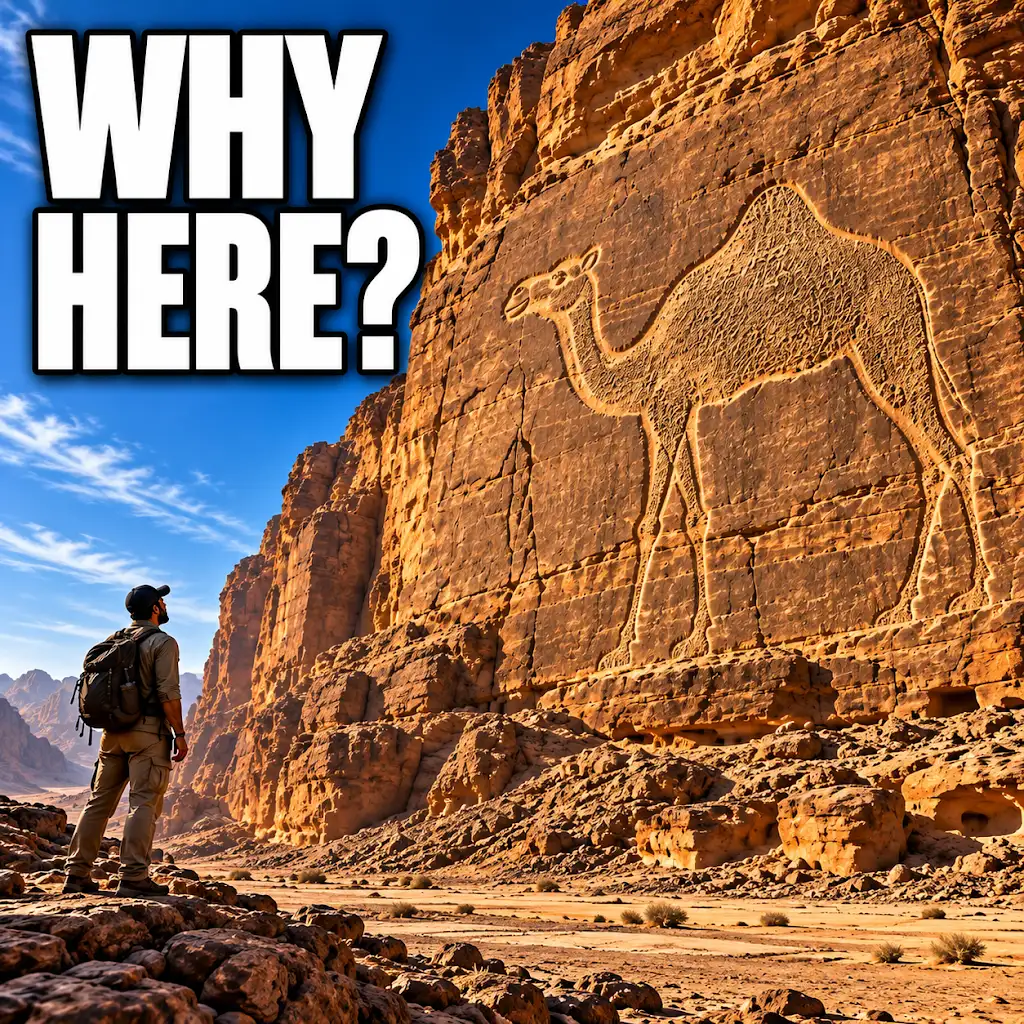
Why Were Giant Camels Carved Above the Desert?
FAQs
1. Why were camels carved on cliffs?
The camels were carved on cliffs as a form of rock art, possibly to depict the importance of camels in the region’s history and culture.
2. What is the significance of camels in the area where the cliffs are located?
Camels have been historically important in the region for transportation, trade, and survival in harsh desert environments, making them a symbol of resilience and adaptability.
3. Who created the camel carvings on the cliffs?
The exact creators of the camel carvings are unknown, but they are believed to have been made by ancient civilizations or indigenous peoples who inhabited the area.
4. When were the camel carvings on the cliffs made?
The camel carvings on the cliffs are estimated to date back to various time periods, ranging from hundreds to thousands of years ago, based on archaeological evidence and dating techniques.
5. Are there other types of rock art found in the same area as the camel carvings?
Yes, in addition to the camel carvings, there may be other forms of rock art such as human figures, animals, symbols, and abstract designs, providing insights into the cultural practices and beliefs of the ancient inhabitants of the region.