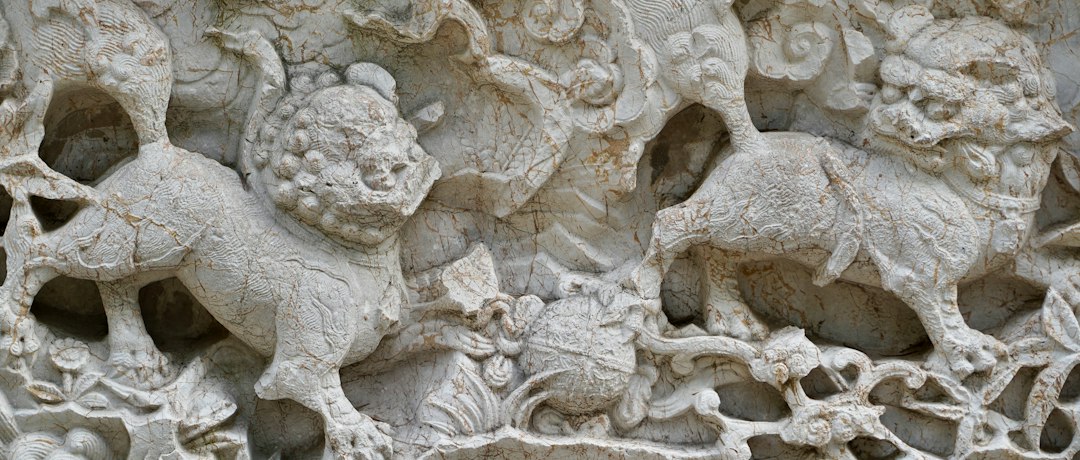
Unveiling the Sands of Time: The Enigma of Ancient Camel Carvings
The desert, a canvas etched by wind and time, holds within its embrace countless secrets. Among these whispers from the past, the ancient camel carvings stand as silent sentinels, their forms meticulously incised into the rock faces of arid landscapes across the globe. These petroglyphs, depicting the iconic dromedary and its Bactrian counterpart, offer a tantalizing glimpse into the lives and beliefs of prehistoric and early historic human societies. The fundamental question that arises when confronted with these weathered images is one of profound curiosity and scholarly pursuit: how old are these timeless artifacts? Pinpointing an exact age for rock art, particularly that found in remote and often challenging environments, is a complex endeavor, fraught with methodological hurdles and requiring a multidisciplinary approach. Yet, through a combination of archaeological context, stylistic analysis, and scientific dating techniques, researchers are gradually piecing together the chronological puzzle of these fascinating camel carvings, revealing a history that spans millennia and underscores the profound connection between early humans and these resilient desert voyagers.
Recent discoveries have shed light on the age of the ancient camel carvings found in various archaeological sites. These intricate carvings, believed to date back thousands of years, offer valuable insights into the cultures that thrived in arid regions. For a deeper understanding of how such artifacts connect to lost technologies and ancient civilizations, you can read more in this related article: Unearthed: The Lost Tech They Hid.
Decoding the Past: Methods for Dating Rock Art

The inherent challenge in dating rock art lies in its intangible nature. Unlike portable artifacts that can be excavated from stratified layers of soil, petroglyphs are fixed to the bedrock, making direct radiocarbon dating impossible in most cases. However, archaeologists and geologists have developed a suite of indirect methods to assign chronological frameworks to these ancient etchings. These techniques, while not always yielding precise dates, provide crucial insights into the relative and absolute ages of the carvings, allowing for a more nuanced understanding of their historical significance.
The Geological Lens: Examining the Rock and Its Environment
The very rock that bears the camel carvings offers clues to their antiquity. The type of rock, its weathering patterns, and the geological processes it has undergone can provide a broad temporal context. For instance, if a carving is found on a rock surface that has been significantly eroded over time, it suggests a considerable age. The presence of patina, a surface layer that forms on rocks exposed to the atmosphere, can also be a useful indicator. The thickness and composition of this patina, often a combination of mineral deposition and biological growth, can be assessed and, in some cases, dated.
Stratigraphic Clues: Rockfalls and Associated Deposits
While the carvings themselves may not be directly datable, their association with archaeological layers can provide invaluable information. If a rock bearing a carving has fallen from a cliff face and is subsequently buried within an archaeological stratum, the age of that stratum can offer a minimum age for the carving. Similarly, the presence of artifacts, such as stone tools or pottery shards, in direct association with the carvings can help to anchor them within a known cultural or temporal period. However, careful excavation and analysis are required to ensure that the association is genuine and not the result of later disturbance or natural processes.
Patina Analysis and Dating Techniques
The patina that forms over rock surfaces is a key area of research for dating petroglyphs. Different types of patina, such as desert varnish (a dark, glossy coating rich in iron and manganese oxides) and desert crusts (calcareous or siliceous layers), form at varying rates depending on the local climate and the rock’s mineral composition. Scientists employ techniques like Accelerator Mass Spectrometry (AMS) radiocarbon dating of organic matter trapped within the patina layers, or uranium-series dating of carbonate crusts, to establish chronological ranges. These methods are complex and require meticulous sample collection to avoid contamination, but they have proven effective in providing absolute dates for some rock art sites.
The Stylistic Tapestry: Art Historical and Typological Approaches
Beyond the geological context, the artistic style of the camel carvings themselves provides a significant avenue for dating. Researchers analyze the way the camels are depicted – their proportions, the rendering of their features, the techniques used for incising the rock – and compare these elements to known chronological sequences of art from the region. This involves identifying recurring motifs, artistic conventions, and technological advancements in tool use.
Evolution of Depiction: From Simple Outline to Detailed Representation
As societies evolved, so too did their artistic expressions. Early camel carvings might be characterized by simple, schematic outlines, reflecting a more basic understanding or purpose. Over time, artists may have developed more sophisticated techniques, leading to carvings with greater detail, such as the rendering of hump forms, legs, and even facial features. By documenting this stylistic evolution across different sites, researchers can establish a relative chronology, placing newer styles as chronologically later than older, simpler ones.
Iconographic Significance: Recurring Symbols and Their Meanings
The iconography of the carvings can also offer clues. Are there other symbols depicted alongside the camels, such as human figures, hunting scenes, or abstract designs? The presence and style of these accompanying motifs can be compared to dated artifacts or other established archaeological sequences. For example, if a particular geometric pattern is consistently found with camel carvings and is also known to be associated with a specific Bronze Age culture, it suggests a similar timeframe for the rock art.
The Biological Clues: Traces of Life on the Stone
In some instances, the very organisms that have interacted with the rock surface over time can provide dating evidence. Microscopic analysis of the patina can reveal the presence of lichens, algae, and other microorganisms. The growth rates of these organisms are influenced by environmental conditions and can, under certain circumstances, be used to estimate the age of the rock surface and, by extension, the carvings.
Lichenometry: A Measure of Time Through Growth Rings
Lichenometry is a dating technique that relies on the growth rate of lichens on rock surfaces. Certain species of lichens grow in a circular pattern, and their diameter can be measured. By comparing the size of lichens on a petroglyph to known growth curves for those species in a particular environment, researchers can estimate the age of the carving. This method is most effective in environments where lichen growth is relatively consistent and can be calibrated with other dating methods. However, it is important to note that lichen growth can be affected by factors such as rainfall, temperature, and the underlying rock composition.
The Dawn of Camel Domestication: A Prehistoric Foundation
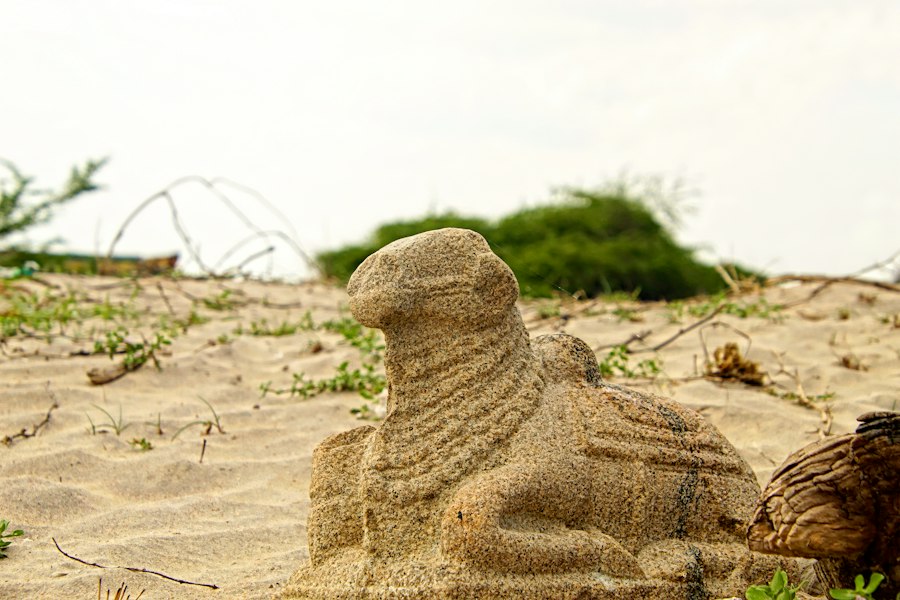
The age of camel carvings is inextricably linked to the history of camel domestication and their subsequent importance in human societies. The earliest evidence of camels being utilized by humans, whether for transport, food, or other purposes, sets a temporal boundary for when such depictions might have first appeared. Understanding this evolutionary relationship is crucial for interpreting the significance and dating of the carvings.
The Dromedary’s Journey: From Wild Ancestor to Desert Ship
The Arabian camel, or dromedary, is believed to have originated in the Arabian Peninsula. While the exact timeline of its domestication is debated, evidence suggests that it began several thousand years ago. Archaeological findings, including camel bones and depictions in art, indicate that by the late Neolithic and early Bronze Age, the dromedary was playing a significant role in the human landscape. These early domesticated camels would have facilitated trade routes, enabled nomadic lifestyles, and become a vital resource in arid regions.
Early Evidence of Camel Use: Bones, Artifacts, and Literary Mentions
The fossil record provides some of the earliest insights into camel presence. While not direct evidence of domestication, discoveries of camel bones in association with human settlements can indicate their proximity and potential interaction. More concrete evidence comes from early artifacts, such as camel figurines or depictions on pottery. Furthermore, ancient texts, when available and datable, can offer historical accounts of camel use. For instance, early inscriptions or literary works from regions where camels were prevalent might describe their importance in daily life, warfare, or commerce, providing a historical anchor for their depiction in art.
The Bactrian’s Domain: Central Asia and the Silk Road
The two-humped Bactrian camel, native to the steppes of Central Asia, also has a long history of domestication and interaction with human societies. Its resilience to extreme temperatures made it an indispensable asset for traversing the vast and harsh terrains of its homeland. The rise of the Silk Road, a network of trade routes connecting East and West, further cemented the Bactrian camel’s importance in facilitating long-distance trade and cultural exchange.
Domestication Centers and Trade Routes
The domestication of the Bactrian camel is thought to have occurred in Central Asia, likely in regions that are now part of Turkmenistan, Uzbekistan, or Kazakhstan. Archaeological evidence from sites in these areas, including the presence of domesticated camel bones and associated artifacts, points to a timeline that likely predates widespread use of the dromedary in its own native range. The development of trade routes, particularly those that would eventually coalesce into the Silk Road, necessitated robust transportation systems, and the Bactrian camel proved ideally suited for this role, carrying goods and people across immense distances.
Case Studies: Notable Camel Carving Sites and Their Ages
Examining specific well-studied sites of ancient camel carvings provides concrete examples of the dating methodologies in action and the chronological ranges that have been established. These locations, often rich in archaeological context, offer invaluable insights into the lives and cultures that created these enduring images.
The Negev Desert: Tracing Bedouin Heritage
The Negev Desert in Israel is home to a remarkable concentration of rock art, including numerous depictions of camels. These petroglyphs are often attributed to ancient nomadic groups, including the ancestors of the modern Bedouin. Researchers have employed a combination of stylistic analysis and contextual archaeology to date these carvings.
Wadi Murra and the Early Bronze Age
In the Wadi Murra region of the Negev, camel carvings have been found in association with archaeological remains that point to occupation during the Early Bronze Age, approximately 3000-2000 BCE. The style of some of these depictions, characterized by their somewhat abstract and schematic forms, aligns with artistic conventions of this period. The discovery of pottery shards and stone tools in proximity to the carvings further supports this temporal attribution. Some researchers propose that these carvings may represent some of the earliest depictions of domesticated camels, reflecting their increasing importance for transport and sustenance in the desert environment.
Late Iron Age and Roman Period Art
Further analysis of camel carvings in the Negev, particularly those found at sites like Har Karkom, suggests a broader chronological spread. Some of these later carvings exhibit more detailed renderings of camel anatomy, reflecting a development in artistic skill and potentially a different cultural context. Stylistic comparisons with rock art from the Late Iron Age (around 800-500 BCE) and even the Roman period (up to the 4th century CE) have been made, indicating that the practice of carving camels continued for millennia, evolving with the societies that inhabited the region. The interpretation of these later carvings often relates to their role in facilitating trade routes and their significance for nomadic pastoralists during these periods.
Saudi Arabia: The Kingdom’s Ancient Animal Artistry
Saudi Arabia, with its vast desert expanse and rich archaeological heritage, boasts numerous sites with ancient camel carvings. The sheer volume and variety of these petroglyphs make it a crucial region for understanding the history of camel art.
Al-Jubbah and the Paleolithic-Neolithic Transition
The rock art site of Al-Jubbah, located in the Hail region, is renowned for its extensive collection of petroglyphs, including many camel depictions. While precise dating of many of these carvings is challenging, stylistic analysis and the presence of associated artifacts suggest a very early origin, potentially extending back to the late Paleolithic or early Neolithic periods, perhaps as early as 10,000 BCE or even earlier for some simpler etchings. Some of the more elaborate carvings of camels, however, are thought to belong to later periods, possibly the Neolithic and Bronze Ages. The presence of depictions of hunting scenes involving camels suggests a period when these animals were still part of the wild fauna, or perhaps during the early stages of their domestication. The remarkable preservation of these carvings at Al-Jubbah allows for detailed study of early artistic techniques.
Najran and the Arabian Camel’s Zenith
The region of Najran, in southwestern Saudi Arabia, is another significant repository of camel carvings. Many of these are attributed to the later periods of Arabian history, including the Sabaean and Himyarite kingdoms (roughly 1st millennium BCE to 6th century CE). These carvings often depict camels in processional scenes, adorned with elaborate tack, suggesting their importance in trade caravans and perhaps even religious ceremonies. Stylistic similarities to other South Arabian inscriptions and artwork help to place these carvings within a well-established chronological framework. The detailed rendering of the camels, their harness, and accompanying human figures offer insights into the sophisticated culture and economic activities of these ancient civilizations.
Jordan’s Wadi Rum: A Canvas of Nomadic Life
The dramatic desert landscape of Wadi Rum in Jordan is dotted with ancient rock art, much of it featuring camels. These petroglyphs provide a window into the lives of the nomadic peoples who traversed this region for millennia.
Nabataean and Early Islamic Influences
Camel carvings in Wadi Rum have been dated to various periods, with significant concentrations attributed to the Nabataean period (roughly 4th century BCE to 2nd century CE) and the early Islamic era (from the 7th century CE onwards). Nabataean camel carvings often appear alongside inscriptions in the Nabataean script and depictions of other animals, reflecting their role in the burgeoning trade networks. Later camel carvings, influenced by Islamic artistic traditions, may exhibit different stylistic features and themes. The context of these carvings, often found near ancient caravan routes and water sources, underscores the enduring importance of the camel as a means of survival and prosperity in this arid environment.
The fascinating history of camel carvings has intrigued archaeologists and historians alike, as they provide insight into ancient cultures and their interactions with these majestic animals. To delve deeper into the significance of ancient art and memory techniques, you might find it interesting to explore a related article that discusses the role of mnemonic devices in preserving history. This article can be found here, offering a broader context for understanding how ancient civilizations communicated and remembered their experiences.
The Cultural Significance: More Than Just Animals
| Location | Estimated Age | Material | Significance |
|---|---|---|---|
| Saudi Arabia (Jubbah) | 7,000 – 8,000 years old | Rock carvings (petroglyphs) | One of the oldest known camel depictions, indicating early domestication |
| Jordan (Wadi Rum) | Approximately 3,000 years old | Sandstone carvings | Depicts camels used in trade and transport in ancient times |
| Egypt (Nubian Desert) | About 4,000 years old | Rock engravings | Shows camels as part of desert life and caravan routes |
| United Arab Emirates (Hatta) | 2,000 – 3,000 years old | Petroglyphs on rock faces | Represents camels in early settlement and trade contexts |
The ancient camel carvings are not merely decorative etchings on rock; they are imbued with profound cultural significance, reflecting the deep connection between early human societies and these remarkable animals. The motivations behind their creation were diverse, ranging from practical purposes to spiritual beliefs.
Facilitating Trade and Communication: The Camel as a Symbol of Connection
Camels, with their ability to traverse vast distances and carry heavy loads, were instrumental in the development of ancient trade routes. The carvings likely served as markers along these routes, indicating important pathways, water sources, or destinations. They may have also functioned as a form of communication, conveying messages about the presence of caravans, the availability of resources, or even warnings to travelers. The depictions of camels laden with goods or moving in long processions speak to their central role in the economic and social fabric of ancient desert civilizations.
Markers on Ancient Highways: Navigational Aids and Territorial Claims
In vast and often featureless desert landscapes, visual cues are essential for navigation. Camel carvings, strategically placed, could have served as literal road signs for ancient travelers. Their prominent locations on cliff faces or prominent rock formations would have made them visible from a distance, guiding caravans through treacherous terrain. Furthermore, these carvings might have also served as territorial markers, signifying the domain of a particular tribe or group, and perhaps even acting as a form of early cartography, mapping out important routes and resources.
Visual Narratives of Commerce and Cultural Exchange
The depictions of camels in trade scenes, often shown alongside human figures and goods, offer visual narratives of ancient commerce. These carvings capture the essence of the Silk Road and other transcontinental trade networks, illustrating the movement of goods such as spices, textiles, and precious metals. The presence of camels in these scenes highlights their indispensable role in facilitating cultural exchange and the diffusion of ideas and technologies across diverse regions. They are a testament to the interconnectedness of the ancient world, mediated by the resilience and endurance of the camel.
Spiritual Beliefs and Ritualistic Practices: Connecting with the Divine
Beyond their practical utility, camels held significant spiritual and ritualistic importance for many ancient cultures. They were often associated with deities, used in religious ceremonies, or believed to possess symbolic power. The carvings may reflect these beliefs, serving as offerings, prayers, or representations of the sacred.
Totemic Significance and Ancestral Worship
In some societies, animals were considered totemic, representing ancestral spirits or clan affiliations. Camel carvings could have served as a means of honoring these totems and maintaining a connection with ancestral lineage. The act of carving itself might have been a ritualistic practice, performed with the intention of invoking the spirit of the animal, seeking its protection, or celebrating its power. The detailed and often reverent depiction of the camels suggests a deep respect and perhaps even a sense of awe for these creatures.
Representations of Deities and Mythological Narratives
Certain camel motifs might have been associated with specific deities or figures in ancient mythologies. For example, if a particular god or goddess was believed to be represented by a camel, carvings depicting the animal could have served as a form of worship or a plea for divine intervention. Furthermore, the carvings might have illustrated mythological narratives involving camels, recounting stories of their creation, their role in the cosmos, or their interactions with supernatural beings. Unraveling these mythological connections requires careful cross-referencing with other forms of ancient art, literature, and archaeological evidence.
The Camel as a Symbol of Power and Resilience
The camel’s ability to survive and thrive in harsh desert environments made it a potent symbol of strength, endurance, and resilience. These qualities were likely admired and emulated by human societies living in these same challenging landscapes.
Embodying Desert Survival: Strength in Adversity
For communities whose lives were intrinsically tied to the desert, the camel embodied the very essence of survival. Its ability to endure long periods without water, to navigate vast distances under scorching sun, and to carry sustenance and life-giving goods across seemingly impassable terrain made it an object of profound admiration. The carvings, therefore, could be seen as an attempt to capture and project these admirable qualities onto their own lives, or to imbue the camel with a sacred power that would ensure their own survival in the face of adversity.
Status and Prestige: The Camel in Elite Artistry
In some societies, the ownership and use of camels, particularly large herds, would have signified wealth and status. Elaborate carvings of camels, perhaps adorned with decorative elements or depicted in scenes of abundance, could have been commissioned by elites to display their prestige and power. The artistic skill involved in some of these carvings, requiring specialized tools and considerable effort, would also have been a marker of societal advancement and the ability to support specialized artisans. These carvings served as a visual declaration of the importance of the camel to the social hierarchy and economic prosperity of a community.
The Enduring Legacy: A Window into Prehistory and Beyond
The ancient camel carvings, spanning millennia and found across diverse geographical regions, offer an unparalleled window into the past. Their study not only sheds light on the evolution of artistic expression but also provides invaluable insights into the socio-economic, cultural, and spiritual lives of the peoples who created them. As research continues, the enigma of their precise age gradually yields to more nuanced understanding, revealing a timeless connection between humanity and the enduring spirit of the desert’s most iconic voyager.
Continuing Research and Future Discoveries
The field of rock art research is dynamic and ever-evolving. New sites are continually being discovered, and advancements in dating technologies and analytical methods are allowing for more precise and comprehensive interpretations of existing ones. Future research on camel carvings will likely focus on integrating data from various disciplines, including archaeology, geology, anthropology, and art history, to build a more complete picture of their chronological context and cultural significance. The exploration of remote desert regions, utilizing advanced remote sensing technologies, holds the promise of uncovering previously unknown rock art sites, further enriching our understanding of human history and our relationship with the natural world.
Technological Advancements in Dating and Analysis
The application of cutting-edge technologies is revolutionizing the study of rock art. Non-invasive dating techniques, such as portable X-ray fluorescence (pXRF) to analyze the elemental composition of patinas and infrared spectroscopy to identify organic residues, are becoming increasingly sophisticated. Furthermore, 3D scanning and photogrammetry are enabling the creation of highly detailed digital models of petroglyphs, allowing for precise measurement, stylistic analysis, and virtual reconstruction of damaged or inaccessible carvings. These advancements are not only improving the accuracy of dating but also enhancing our ability to interpret the nuances of artistic techniques and the cultural contexts in which these carvings were created.
Cross-Cultural Comparisons and Global Narratives
As more camel carving sites are studied and dated, the opportunity for robust cross-cultural comparisons becomes increasingly significant. By analyzing stylistic similarities and differences, as well as common themes and motifs, researchers can begin to construct global narratives about the diffusion of camel domestication, the spread of trade networks, and the shared human experiences that led to the creation of such art. Understanding how different cultures depicted and interacted with camels can illuminate broader patterns of human adaptation, innovation, and the interconnectedness of ancient societies across continents. The study of these timeless artifacts promises to continue revealing the complex and fascinating tapestry of human history.
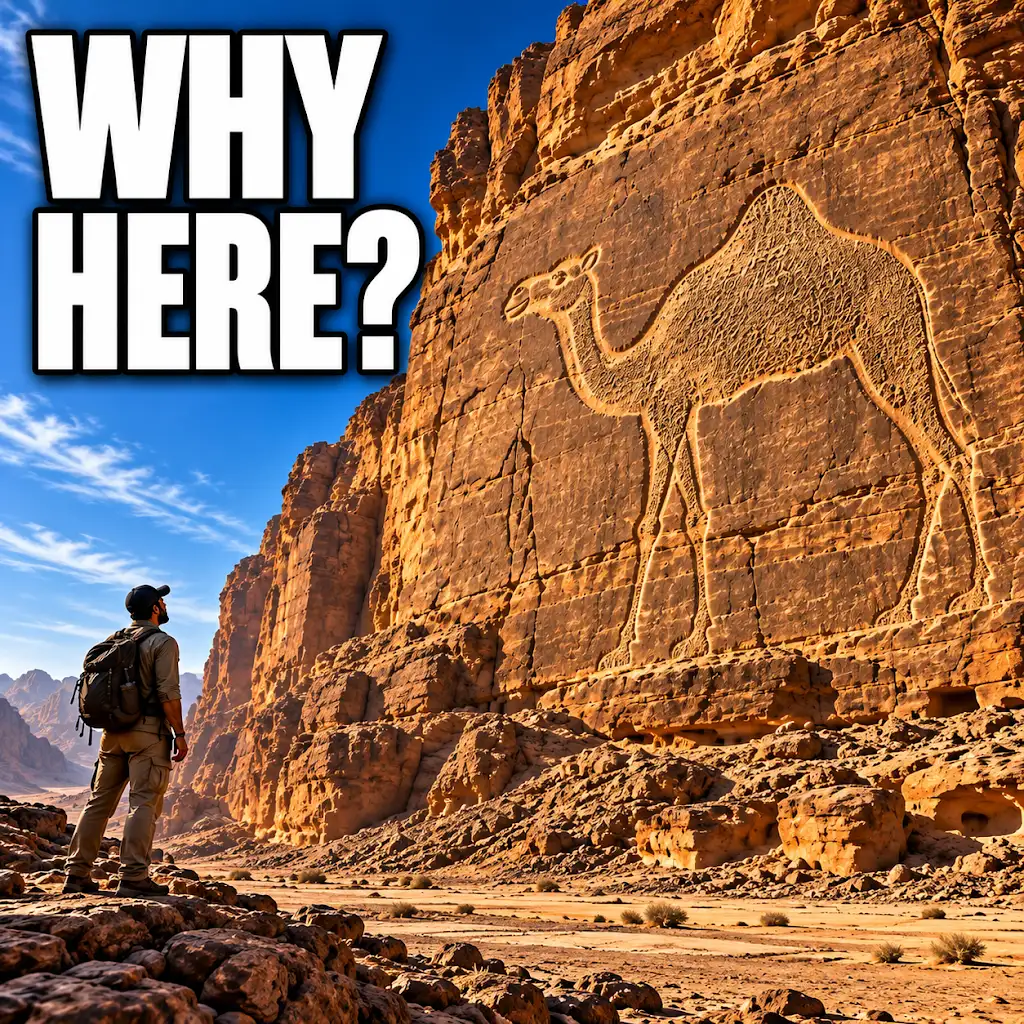
Why Were Giant Camels Carved Above the Desert?
FAQs
1. How old are the camel carvings?
The camel carvings are estimated to be around 2,000 years old, dating back to the prehistoric era.
2. Where were the camel carvings discovered?
The camel carvings were discovered in the desert region of Saudi Arabia, specifically in the Al Jawf province.
3. Who created the camel carvings?
It is believed that the camel carvings were created by ancient civilizations or nomadic tribes that inhabited the region during that time period.
4. What is the significance of the camel carvings?
The camel carvings are considered to be important archaeological artifacts that provide insights into the cultural and artistic practices of the ancient inhabitants of the region.
5. Are the camel carvings protected?
Yes, the camel carvings are protected as a cultural heritage site by the Saudi Arabian government to ensure their preservation for future generations.