
The Cajun-French Canadian Connection: It’s Not Exactly the Same, But There’s Family
So, you’re wondering if Cajun DNA and French Canadian DNA are the same thing? The short answer is no, not entirely, but they’re definitely close cousins. Think of it like this: both are descendants of people who originally came from France, but over centuries, they’ve taken different paths, lived in different places, and mixed with different groups. This has resulted in distinct genetic profiles, even though you can find shared ancestry. We’ll dive into what makes them unique, where they overlap, and why it matters if you’re looking into your family tree.
The exploration of Cajun DNA reveals fascinating connections to French Canadian ancestry, highlighting the intricate tapestry of cultural and genetic heritage in North America. For those interested in delving deeper into the historical narratives that shape these identities, a related article can be found at The Political Cover-Up of Ancient History, which discusses the broader implications of historical narratives and their impact on contemporary understanding of cultural identities.
Unpacking the Acadian Origins: Where Cajun DNA Really Starts
The story of Cajun DNA begins with the Acadians. These were French settlers who, starting in the 17th century, made their home in what is now the Maritime provinces of Canada: Nova Scotia, New Brunswick, and Prince Edward Island. They weren’t just passing through; they established communities, developed agriculture, and built a life for themselves in this new world. Their isolation from France, coupled with their interactions with Indigenous populations, started to shape their unique genetic makeup even at this early stage.
The Great Upheaval: The Defining Moment for Acadians
The pivotal event that dramatically altered the course of Acadian history, and consequently their genetic legacy, was the “Grand Dérangement” or the Great Expulsion, which began in 1755. The British, who had gained control of Acadia, forcibly removed the Acadians from their homeland. This wasn’t a gentle relocation. Families were separated, homes were burned, and people were dispersed across British colonies, Britain itself, and even to France. Many died during this brutal period.
The Louisiana Sanctuary: A New Home and a New Identity
While many Acadians ended up scattered, a significant number eventually found their way to Louisiana. Drawn by the fertile lands and the opportunity to rebuild their lives, these exiles established themselves in the southern part of the territory. They brought their language, their culture, and their genetic heritage with them. It was in this new environment, surrounded by different peoples and facing new challenges, that the distinct “Cajun” identity began to solidify. The word “Cajun” itself is a phonetic adaptation of “Acadian.”
Tracing the French Canadian Genetic Landscape
French Canadian DNA, on the other hand, tells a story of a different kind of settlement and development in North America. While also originating from French colonists, their journey and subsequent interactions led to a somewhat different genetic fingerprint.
Early Colonization of New France: Building a Distinct Society
French colonization in North America, particularly in the St. Lawrence River Valley (modern-day Quebec), began around the same time as Acadia, but the patterns of settlement and governance were different. New France was a more centralized colonial enterprise with a stronger focus on trade and military presence, alongside agricultural development. This led to a greater influx of settlers from various regions of France over a longer period.
Different European Ancestries and Indigenous Contributions
While the foundational ancestry of French Canadians is overwhelmingly from France, there are some notable differences compared to their Acadian cousins. The genetic contributions from other European groups, particularly within France itself, might vary. Furthermore, the nature and extent of interactions with Indigenous peoples differed between the Acadian and New France regions. This can manifest in subtle but measurable differences in the genetic profiles.
Key Genetic Markers: Where Acadian and French Canadian DNA Diverge
When geneticists analyze DNA, they look at specific markers that can reveal patterns of ancestry. While both Cajun and French Canadian populations share significant French heritage, there are distinctions that emerge.
Autosomal DNA: The Broad Strokes of Ancestry
Autosomal DNA testing, which is what most consumer DNA tests use, examines DNA from all 22 pairs of chromosomes. This type of testing will show a significant percentage of French ancestry for both Cajuns and French Canadians. However, the finer details can reveal subtle differences. For example, the specific regions within France that contributed most to each population might show up with slightly different proportions. You might also see variations in admixture with other European groups, depending on the specific ancestral pathways.
Y-DNA and mtDNA: Tracing the Direct Male and Female Lines
Y-DNA (passed down from father to son) and mitochondrial DNA (mtDNA, passed down from mother to child) are particularly useful for tracing ancient paternal and maternal lineages. For Cajuns, Y-DNA studies often show a strong presence of haplogroups common in western France, reflecting the origins of the Acadians. Similarly, mtDNA can also show patterns linked to specific French ancestral regions. French Canadians will also show these French haplogroups, but potentially with different frequencies or with more pronounced contributions from certain regions of France compared to others. These tests can also highlight different patterns of admixture with Indigenous haplogroups or haplogroups from other European populations that may have settled in their respective regions.
The exploration of Cajun DNA reveals fascinating connections to French Canadian ancestry, highlighting the rich cultural tapestry that defines these communities. For those interested in understanding the broader implications of heritage and identity, a related article discusses the complexities of government-controlled assets and their impact on cultural preservation. You can read more about this intriguing topic in the article found here. This connection between genetics and cultural heritage underscores the importance of recognizing our roots in shaping contemporary identities.
The Influence of Other Ancestries: Beyond France
| Metric | Cajun DNA | French Canadian DNA | Notes |
|---|---|---|---|
| Primary Ancestry | French (Acadian), Native American, African | French (mostly from Normandy, Brittany, and Île-de-France regions) | Cajuns descend from Acadian exiles with some admixture; French Canadians from original French settlers |
| Genetic Markers | High frequency of Acadian-specific Y-DNA haplogroups (e.g., R1b), some Native American mtDNA haplogroups | Predominantly European Y-DNA haplogroups (R1b), low Native American admixture | Cajuns show more genetic diversity due to admixture |
| Admixture Percentage | ~70-80% French, 10-20% Native American, 5-10% African | ~90-95% French, | Reflects historical intermarriage and migration patterns |
| Genetic Drift | Significant due to founder effect and geographic isolation | Moderate, with some regional isolation effects | Cajun population bottlenecks increased drift effects |
| Common Surnames | Boudreaux, Thibodeaux, Landry | Tremblay, Gagnon, Roy | Reflects different regional origins in France |
It’s crucial to remember that neither Cajun nor French Canadian populations are purely French. Over centuries, both groups have had interactions with other populations, leading to unique genetic contributions.
African Contributions to Cajun DNA
One of the most significant distinguishing factors in Cajun DNA is the presence of African ancestry. This is largely due to Louisiana’s history as a slaveholding state. While the majority of Cajuns are of European descent, many also have African ancestors who were enslaved or who came to Louisiana through other pathways. This admixture is a defining characteristic of Cajun genetics and contributes to the unique cultural identity. The extent and specific origins of this African ancestry can vary greatly from family to family.
Indigenous Contributions in Both Groups
Both Acadian (and thus Cajun) and French Canadian populations have ancestral ties to Indigenous peoples of North America. The nature and prevalence of these connections can differ. Acadians, living in proximity to Mi’kmaq and Maliseet peoples, likely had more interactions that would show up in genetic testing. Similarly, the early French settlers in New France also intermarried with various Indigenous groups, such as the Huron-Wendat and Algonquin. These Indigenous contributions are an integral part of the genetic tapestry of both populations.
Other European Migrations and Admixtures
Beyond France, both groups have seen influences from other European populations. For French Canadians, this might include more direct immigration or intermarriage with people from other parts of Europe over time, particularly those who settled in Quebec. For Cajuns, while the primary focus is on French and African ancestry, there can be traces of Spanish, Italian, or other European origins due to the complex colonial history of Louisiana and subsequent migration patterns.
Why Understanding the Differences Matters: For Genealogy and Identity
Knowing the genetic distinctions between Cajun and French Canadian DNA isn’t just an academic exercise; it can have real implications for individuals exploring their heritage.
Navigating the Genealogical Maze
If you’re working on your family tree and find yourself with a strong French ancestry but also hints of Louisiana or Acadian heritage, understanding these genetic differences can be a powerful clue. Similarly, if your research points towards Quebec, the genetic markers might align more with the French Canadian profile. Recognizing these nuances can help you pinpoint specific ancestral locations and families. For instance, finding a significant African DNA percentage in your results might strongly suggest Cajun lineage, whereas a very low percentage might point more towards French Canadian ancestry with only a distant Indigenous connection.
Reframing Identity and Connection
For many, understanding their genetic makeup is a deeply personal journey. For those with Cajun roots, acknowledging the African and Indigenous contributions is crucial to a complete understanding of their identity. For French Canadians, recognizing the specific regional French origins and the unique patterns of Indigenous admixture tells a story of resilience and adaptation in a different corner of North America. It’s about appreciating the multifaceted nature of human migration and the ways our ancestors have shaped who we are today. It’s also about recognizing that while the label might be different, the shared French origins create a foundational bond, even with the divergences.
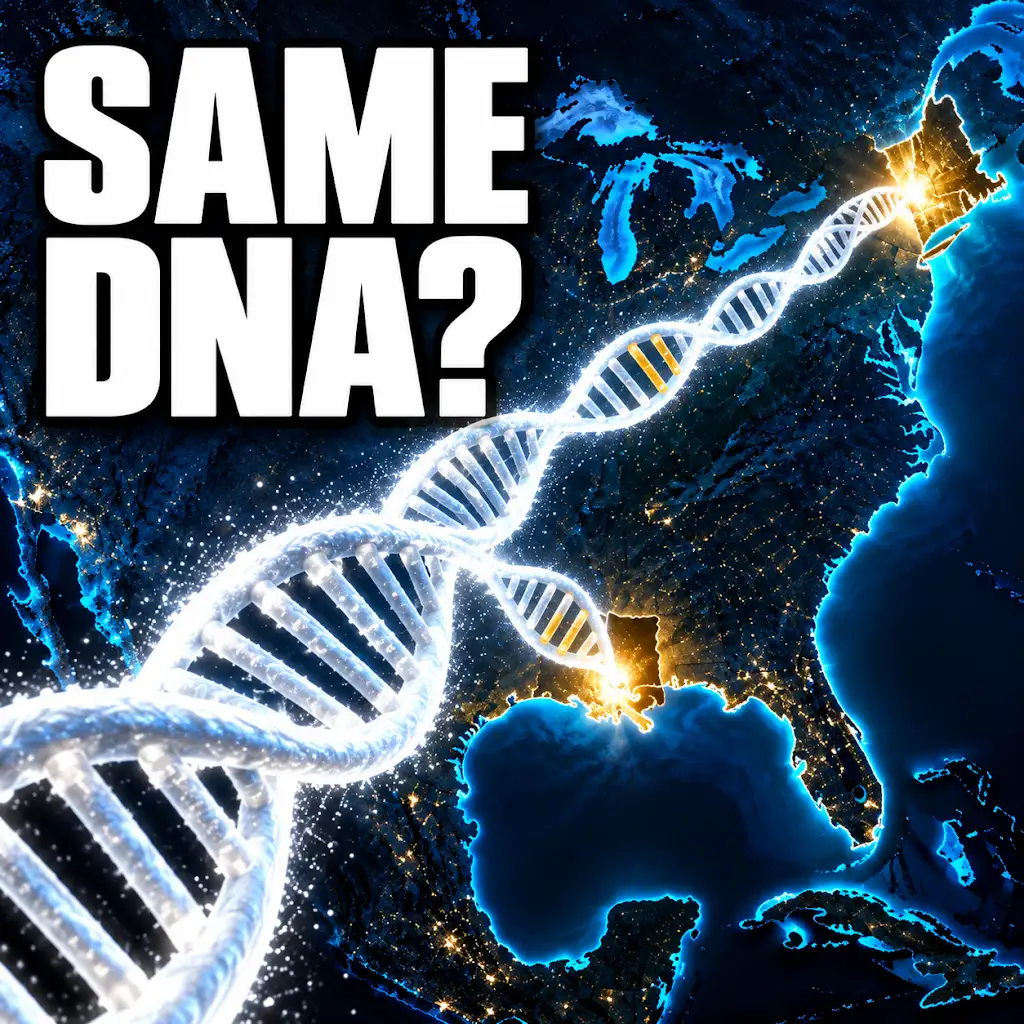
Cajun or French Canadian? The DNA Looked the Same—Until Researchers Looked Closer
FAQs
1. What are the similarities between Cajun DNA and French Canadian DNA?
Both Cajun and French Canadian populations have a strong genetic connection to the French settlers who arrived in North America during the 17th and 18th centuries. This shared ancestry is reflected in their DNA, with a significant overlap in genetic markers.
2. How do Cajun and French Canadian genetic profiles differ?
While both groups share a common French heritage, Cajun DNA shows additional influences from other populations, such as Native American, African, and Spanish ancestry. These diverse genetic contributions have shaped the unique genetic profile of the Cajun population.
3. Can DNA testing distinguish between Cajun and French Canadian ancestry?
Modern DNA testing techniques can differentiate between Cajun and French Canadian ancestry by analyzing specific genetic markers that are unique to each population. By comparing these markers, researchers can identify distinct genetic signatures associated with Cajun and French Canadian heritage.
4. What historical factors have influenced the genetic makeup of Cajun and French Canadian populations?
The genetic makeup of Cajun and French Canadian populations has been influenced by historical events such as colonization, intermarriage with indigenous peoples, and migration patterns. These factors have contributed to the diversity and complexity of their genetic profiles.
5. How has the study of Cajun and French Canadian DNA contributed to our understanding of population genetics?
Studying the DNA of Cajun and French Canadian populations has provided valuable insights into the genetic history of North America and the complex interactions between different ethnic groups. By analyzing genetic data, researchers can trace population movements, genetic admixture, and cultural exchanges that have shaped the genetic diversity of these populations.