French Canadian ancestry is a fascinating area to explore, and when we talk about genetic similarity and heritage, it boils down to understanding how your DNA might reflect your family’s roots in Quebec and surrounding regions. Essentially, if you have French Canadian ancestry, you’re likely to share certain genetic markers with other individuals who also trace their lineage back to this specific population group. This isn’t about being “identical,” but rather about statistical probabilities based on shared ancestral journeys. It means your DNA could show a stronger representation from Northern and Western Europe, with a particular emphasis on regions that historically supplied settlers to New France, and also reflect the unique genetic landscape that developed within the French Canadian population itself over centuries.
Unpacking the “French Canadian” Genetic Signature
When geneticists look at DNA, they’re not just seeing “French” or “Canadian.” They’re looking for patterns. For French Canadians, these patterns are quite distinct due to a history of geographical isolation, founder effects, and specific migration routes. The primary source of genetic material comes from the early French settlers who arrived in North America starting in the 17th century. These settlers, predominantly from northwestern France, brought their unique genetic makeup with them. Over time, the population of New France grew, and while there was some intermingling with Indigenous peoples and later immigrant groups, the core genetic profile remained largely intact and evolved distinctly from mainland France and other French-speaking populations around the world.
The Founding Populations: Who Were They?
The individuals who first established the French Canadian population were a relatively small group of people. They came from various regions of France, but a significant proportion originated from Normandy, Brittany, Anjou, Maine, and Poitou. These were often farmers, artisans, and laborers seeking new opportunities in the burgeoning colony. The “King’s Daughters” (filles du roi) and soldiers who remained after military campaigns also played a crucial role in repopulating the colony. Their limited number means that the genetic diversity of the initial settlers had a profound and lasting impact, a phenomenon known as the “founder effect.” This effect can lead to a higher frequency of certain genes, and consequently, certain genetic conditions, within the descendant population compared to their ancestral regions.
The Role of Isolation and Endogamy
For centuries, the vast distances of North America, coupled with cultural and linguistic barriers, meant that the French Canadian population developed in relative genetic isolation. Marriage within the community (endogamy) was common, further concentrating the genetic heritage of the founding groups. This isolation allowed specific genetic traits and variations to become more prevalent within the French Canadian population. While genetic exchange did occur, particularly with English-speaking settlers and Indigenous communities, the dominant influence remained that of the early French colonists. This geographical and social context is key to understanding why a distinct “French Canadian” genetic profile emerged.
French Canadian ancestry has been a topic of interest for many researchers, particularly in understanding the genetic similarities among individuals of this heritage. A related article that delves into the complexities of ancestry and historical mapping is available at this link: Debunking the Piri Reis Map: Why It’s Impossible. This article explores the implications of historical documents and maps on our understanding of ancestry, including how genetic studies can illuminate the connections between different cultures and populations.
Tracing Your Roots: Genetic Testing and French Canadian Ancestry
If you’re curious about your French Canadian heritage, DNA testing can be a powerful tool. These tests analyze your autosomal DNA, which you inherit equally from all your ancestors. By comparing your DNA to large databases of individuals with known ancestries, testing companies can estimate the percentages of your DNA that likely come from different ancestral populations. For someone with French Canadian roots, you’ll typically see significant percentages attributed to Northwestern Europe, and more specifically, often to a category labeled “French,” “French-Canadian,” or a broader “European” category that includes these origins.
What Your DNA Results Might Show
When you receive your genetic ancestry results, you might see breakdowns that indicate a strong European component. This is where understanding the nuances of testing comes in. Many companies will label a significant portion of your ancestry as “French,” “French/German,” or “Northwest European.” For those with a clear French Canadian lineage, you might also see a specific “French Canadian” or “Quebecois” ethnicity estimate from certain providers who have specifically curated their reference populations for this group. This reflects the shared genetic heritage of people whose families have lived in Quebec and surrounding areas for generations, stemming from those original French settlers.
Beyond the Broad Strokes: Regional European Connections
It’s important to remember that “French Canadian” isn’t a single, monolithic genetic block. The original settlers came from various regions in France, and this diversity is still detectable. Your results might point to specific regions within France, such as Normandy, Brittany, or areas in the west and north, which were primary departure points. Sometimes, these results might appear as broader European categories, but with closer examination of how the algorithms interpret your DNA, you can often infer these more specific ancestral origins. Understanding these regional connections can be incredibly illuminating and help you connect with specific historical records or cultural traditions.
The Unique Genetic Landscape of French Canadians
The French Canadian population isn’t just a subset of France’s genetic makeup; it has evolved into its own distinct genetic group. This is due to several factors, including the aforementioned founder effect and the period of relative isolation. Certain genetic variations that are rare elsewhere in the world can be found at higher frequencies within French Canadians. This is not necessarily a negative thing, but it is a biological reality that can be observed through genetic analysis and has implications for understanding population health.
Founder Effects and Increased Frequencies of Certain Genes
The concept of the founder effect is central to understanding French Canadian genetics. Because the initial population was relatively small, the specific genes carried by those founding individuals were passed down to subsequent generations with a higher likelihood. This can lead to certain genetic variations becoming more common in the French Canadian population than in the general populations of France or other European countries. These variations can range from neutral traits to those that might be associated with specific health conditions. Identifying these can sometimes offer clues for family health history.
Interplay with Indigenous and Other European Genes
While isolation was a significant factor, it wasn’t absolute. French Canadians also have a history of intermingling with Indigenous populations in North America, as well as later waves of immigration from other European countries, such as Ireland and Scotland. These interactions have contributed to the genetic tapestry of the French Canadian population. Your DNA results might reflect these influences, perhaps showing smaller percentages of Indigenous American ancestry or ancestry from other European regions, depending on your specific family history. This admixture is a normal and fascinating part of human migration and history.
Connecting Genetic Data with Genealogical Research
Genetic testing is a powerful tool, but it’s most impactful when combined with traditional genealogical research. Your DNA results can provide clues and point you in new directions, but they don’t tell the whole story on their own. By cross-referencing your genetic matches with historical documents like birth certificates, marriage records, and census data, you can build a more complete and accurate picture of your ancestral journey. This is where the real detective work begins, and it’s often the most rewarding part.
Using DNA Matches to Extend Your Family Tree
If your DNA test reveals matches with other individuals, these are people who share a common ancestor with you. For those with French Canadian ancestry, you might find a cluster of matches who also show strong French Canadian ethnicity estimates. These individuals could be distant cousins whose family trees overlap with yours. By communicating with these matches and comparing your research, you can often extend your family tree further back, discover unknown relatives, and uncover new branches of your ancestry that you might not have found through paper records alone. This collaborative aspect of DNA testing is incredibly valuable.
Verifying and Discovering Ancestral Branches
Genetic data can act as a powerful verification tool for your genealogical research. If your paper trail suggests a particular ancestor, but you’re unsure, a DNA match who also shows that ancestor in their tree can offer strong evidence. Conversely, DNA can also reveal entirely unexpected ancestral branches. Perhaps you discover a cluster of matches with a strong French Canadian profile, but your current research doesn’t connect you to them. This might indicate a missing link or an ancestor you were unaware of, prompting you to dig deeper into specific historical periods or geographical areas.
Recent studies have highlighted the genetic similarities among individuals of French Canadian ancestry, shedding light on the unique heritage and historical migrations that have shaped this population. For those interested in exploring the broader implications of ancestry and cultural identity, a fascinating article discusses the downfall of ancient civilizations and the various factors that contributed to their failures. You can read more about this intriguing topic in the article here. Understanding these connections can provide valuable insights into how ancestry influences modern communities.
Exploring Cultural and Historical Connections
| Metric | Description | Value | Unit |
|---|---|---|---|
| Average Genetic Similarity | Mean percentage of shared DNA among individuals of French Canadian ancestry | 85 | % |
| Runs of Homozygosity (ROH) | Average length of homozygous segments indicating genetic relatedness | 15 | Mb |
| Effective Population Size | Estimated number of individuals contributing genes to the current population | 3,000 | Individuals |
| Founder Effect Index | Measure of genetic drift due to initial small population size | 0.75 | Index (0-1) |
| Average Pairwise FST | Genetic differentiation between French Canadians and other populations | 0.02 | FST value |
| Percentage of Shared Haplotypes | Proportion of haplotypes common within French Canadian individuals | 60 | % |
Understanding your French Canadian ancestry isn’t just about DNA percentages; it’s about connecting with a rich and vibrant culture and a fascinating history. The genetic patterns you see are a reflection of the journeys, challenges, and resilience of your ancestors. Exploring their stories can deepen your appreciation for your heritage and provide a sense of belonging. This connection goes beyond genetics and into the realm of shared experiences, traditions, and historical narratives.
The Enduring Culture of Quebecois Identity
The genetic heritage of French Canadians is intrinsically linked to the development of Quebecois culture. From language and cuisine to music and literature, a distinct cultural identity has been forged over centuries. Understanding your genetic background can inspire you to explore these cultural elements further. Perhaps you’ll delve into learning more about the French language, explore traditional Quebecois recipes, or research the historical events that shaped the identity of your ancestors. This cultural exploration can be a deeply personal and enriching experience.
Historical Migration Patterns and Their Genetic Echoes
The genetic similarities you share with other French Canadians are a direct echo of historical migration patterns. The initial settlement of New France, the subsequent growth and relative isolation of the population, and the various intermingling events all left their mark on the DNA of this group. By understanding these historical movements, you can gain a deeper appreciation for how your genetic makeup came to be. It’s a tangible link to the past, demonstrating how human mobility and societal development leave a lasting imprint on our biological inheritance. This is what makes exploring French Canadian ancestry so compelling – it’s a journey through both genetics and history.
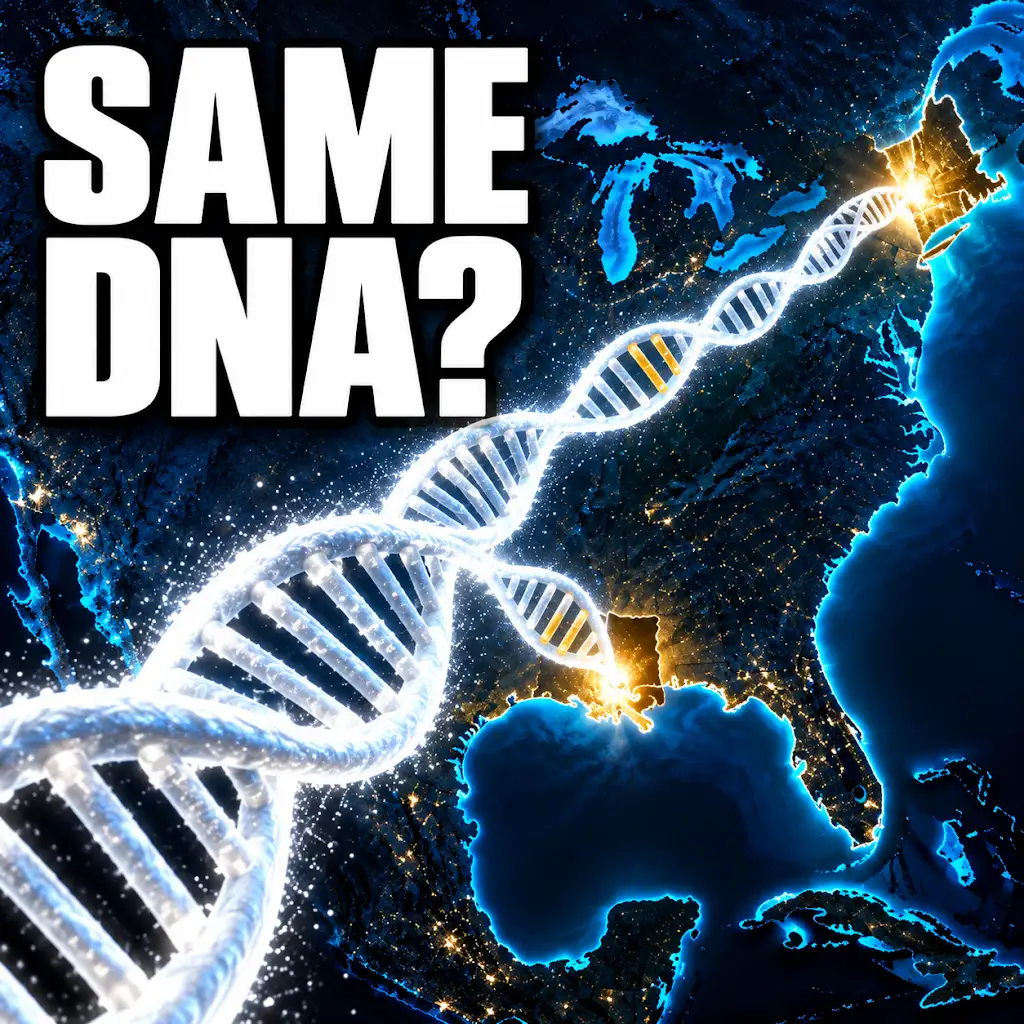
Cajun or French Canadian? The DNA Looked the Same—Until Researchers Looked Closer
FAQs
1. What is the genetic similarity between French Canadians and other populations?
French Canadians have been found to have genetic similarities with populations in France, as well as with other European populations due to their French ancestry.
2. Are there any unique genetic markers that are specific to French Canadian ancestry?
Studies have identified certain genetic markers that are more common in individuals with French Canadian ancestry, which can help in tracing their genetic roots.
3. How does the history of French Canadian migration impact their genetic makeup?
The history of French Canadian migration, including the founder effect and genetic drift, has influenced the genetic diversity and composition of the French Canadian population.
4. Can genetic testing help individuals of French Canadian descent learn more about their ancestry?
Genetic testing can provide individuals with French Canadian ancestry valuable insights into their genetic background, including information about their ancestral origins and migration patterns.
5. What role does genetic research play in understanding the history and heritage of French Canadians?
Genetic research plays a crucial role in unraveling the complex history and heritage of French Canadians, shedding light on their genetic connections with other populations and their unique genetic characteristics.