The sands of Morocco whisper tales of a forgotten past, a past etched not in written records but in the very earth itself. For decades, a curious phenomenon has captivated archaeologists and researchers: the “Moroccan Prehistoric Wall.” This enigmatic structure, stretching for miles across arid landscapes, defies easy categorization and sparks intense debate about its origins, purpose, and the societies that conceived and constructed it. Is it a monumental feat of engineering, a defensive barrier of immense strategic importance, or something far more nuanced, a reflection of ancient social organization and ritualistic practices? The unraveling of these ancient mysteries promises to illuminate a crucial, yet largely unknown, chapter in human history.
Echoes from the Earth: The Discovery and Nature of the Moroccan Prehistoric Wall
The discovery of what is now commonly referred to as the Moroccan Prehistoric Wall is not a singular event but a gradual accumulation of observations. For many years, local populations and early explorers noted unusual linear arrangements of stones across the Moroccan plateau, particularly in regions like the High Atlas and pre-Saharan zones. These were often dismissed as natural geological formations or remnants of more recent, albeit still ancient, human activity. However, as archaeological surveys became more systematic and aerial photography provided broader perspectives, the sheer scale and organized nature of these stone lines became undeniable.
Laying the Foundations: Early Observations and Recognition
Initial archaeological fieldwork in the early to mid-20th century began to document these stone structures more formally. Pioneers like Georges Souville, a prominent French archaeologist specializing in North African prehistory, noted the presence of vast alignments of stones. These early reports, however, were often scattered and lacked the comprehensive mapping and dating techniques available today. The sheer vastness of the Moroccan landscape meant that many of these features remained obscure, hidden by the terrain and easily mistaken for natural features. The understanding of their potential significance as deliberate human constructions was slow to emerge, overshadowed by more easily datable and recognizable sites like dolmens and rock art.
Defining the Structure: Characteristics and Distribution
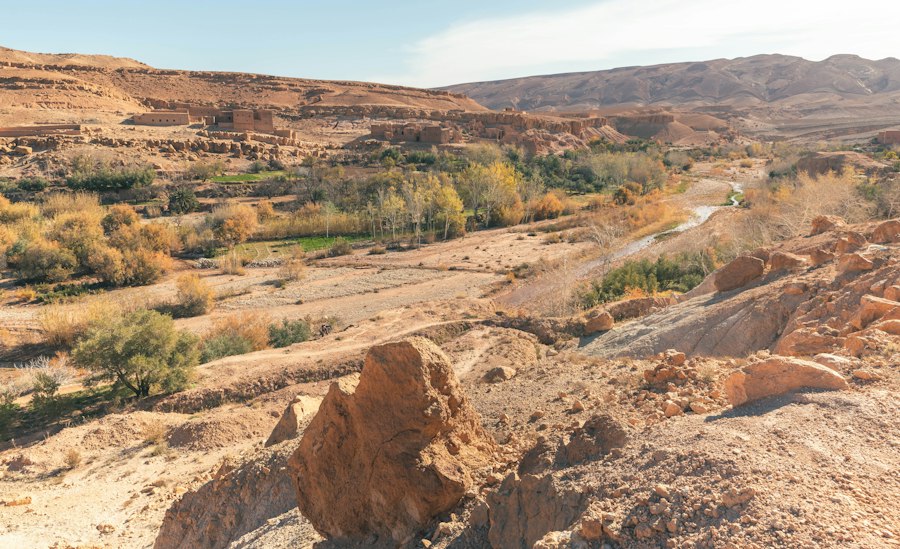
The Moroccan Prehistoric Wall is not a single, continuous structure in the conventional sense of a walled city or a clearly defined defensive rampart. Instead, it typically manifests as a series of parallel or staggered stone alignments, often low in height, constructed from locally sourced stones. These can range from simple, single lines of boulders to more complex arrangements involving double rows or interspersed larger stones. The scale is what truly sets them apart. These alignments can stretch for kilometers, traversing valleys, cresting hills, and disappearing into the desert horizon. Their distribution is not uniform, with concentrations found in specific geographical areas, suggesting a regional rather than a pan-Moroccan phenomenon. The material used, predominantly unworked or minimally worked stones, indicates a reliance on available resources and significant human labor. The precise definition of what constitutes the “wall” itself remains a point of discussion, with some researchers including extensive field systems and animal enclosures as part of the broader landscape modifications attributed to these ancient builders.
The ongoing debate surrounding the prehistoric walls of Morocco has sparked significant interest among historians and archaeologists, drawing parallels to other global historical preservation efforts. For instance, an article discussing the strategic maneuvers of nations in the new space race highlights how countries prioritize their historical and cultural heritage in the face of modern challenges. This article can be found at The New Space Race: Nations’ Moon Grab Tactics, providing insights into how the preservation of history plays a crucial role in shaping national identity and policy.
Shifting Sands of Time: Dating and Chronological Debates
One of the most significant challenges in understanding the Moroccan Prehistoric Wall lies in its precise dating. The lack of organic materials suitable for radiocarbon dating within the stone structures themselves, and the often eroded nature of associated archaeological deposits, makes it difficult to pinpoint a definitive chronological window for their construction and use. This has led to a wide range of proposed timeframes, sparking considerable debate among scholars.
The Neolithic Enigma: Early Hypotheses and Evidence
Many initial hypotheses placed the construction of these walls within the Neolithic period, a time of significant societal transformation in North Africa characterized by the adoption of agriculture and settled lifestyles. Evidence cited for this period includes the general association of some stone alignments with Neolithic settlements, the presence of polished stone tools in their vicinity, and the perceived technological capabilities of Neolithic societies in organizing labor for large-scale projects. The idea of early agriculturalists defining land boundaries or protecting nascent farming communities from wild animals or rival groups provided a compelling narrative for the wall’s existence. However, direct, incontrovertible dating evidence linking specific wall segments to definitively Neolithic archaeological layers has been scarce.
Beyond the Neolithic: Expanding the Chronological Framework
As archaeological research progressed and new dating techniques were applied to related contexts, the chronological understanding of the Moroccan Prehistoric Wall began to broaden. Some researchers now suggest that construction and modification of these stone alignments may have continued into later periods, including the Chalcolithic and even into the early Iron Age. This expanded timeframe opens up new possibilities for understanding the wall’s purpose, suggesting it might have served evolving needs across different cultural phases. The possibility of multiple construction phases, with different groups adding to or modifying existing structures over centuries, further complicates the dating process but also offers a more dynamic picture of its role in ancient Moroccan life. The debate now centers on identifying specific periods of intense construction and understanding the gradual evolution of these monumental features.
Unraveling the Purpose: Theories on Function and Meaning
The sheer scale and widespread nature of the Moroccan Prehistoric Wall naturally lead to questions about its purpose. Without written records, archaeologists must rely on comparative analysis, geological context, and the interpretation of associated archaeological finds to construct plausible theories. These theories range from purely utilitarian functions to more symbolic and ritualistic interpretations.
The ongoing debate surrounding the prehistoric walls of Morocco has sparked significant interest among historians and archaeologists, drawing parallels to other historical structures around the world. A related article discusses the implications of shifting wealth and the potential impact on global heritage sites, highlighting how economic changes can influence preservation efforts. For more insights on this topic, you can read the article here. This connection underscores the importance of understanding the broader context in which these ancient structures exist.
Guardians of the Land: Defensive and Territorial Hypotheses
One of the most persistent theories suggests the walls served a defensive purpose. In a landscape prone to both environmental challenges and potential inter-group conflict, the construction of linear defenses could have been a logical strategy. These walls might have delineated territorial boundaries, protected settlements or vital water sources from raiders, or channeled animal migrations. The staggered nature of some alignments could have created a disorienting effect for attackers, while broader systems might have enclosed grazing lands or agricultural plots. However, the relatively low height and the lack of clear fortifications like watchtowers in many sections challenge the notion of purely military defenses on a grand scale.
Sculpting the Landscape: Agricultural and Pastoral Interpretations
Another prominent set of theories focuses on the role of the walls in managing the landscape for agricultural and pastoral activities. In arid and semi-arid environments, water management is crucial. The stone alignments could have been designed to direct rainwater runoff, create microclimates for cultivation, or prevent soil erosion. They might have also served as boundaries for agricultural fields or enclosures for livestock, separating different herds or protecting them from predators. Evidence from some sites includes the presence of associated agricultural terraces or clearings, lending credence to these interpretations. The extensive nature of the walls suggests a sophisticated understanding of land use and resource management on a community or even regional level.
Beyond the Practical: Ritual and Symbolic Significance
Beyond utilitarian explanations, some scholars propose that the Moroccan Prehistoric Wall held significant ritualistic or symbolic meaning for its creators. The sheer effort involved in their construction, often in remote and challenging locations, suggests a purpose that transcended mere practicality. These alignments could have marked sacred routes, delineated ceremonial spaces, or served as markers for astronomical observations. The alignment of certain sections with celestial events or significant topographical features has been noted, hinting at a cosmological understanding embedded in their construction. The possibility that these walls represented a collective societal endeavor, reinforcing social cohesion and shared identity, also adds a layer of symbolic interpretation.
Unearthing the Builders: Societies and Lifestyles
The construction of the Moroccan Prehistoric Wall would have required a significant investment of labor, organization, and social cohesion. Understanding who built these structures and how they lived provides crucial context for their purpose and significance. Archaeological evidence, though often fragmentary, offers glimpses into these ancient societies.
Nomadic Roots and Settled Transitions: Lifestyle Adaptations
The societies that built the Moroccan Prehistoric Wall likely inhabited a landscape that was characterized by both nomadic pastoralism and increasingly settled agricultural practices. The arid environment would have necessitated mobility to follow grazing lands and water sources. However, the development of agriculture, even on a small scale, would have encouraged more sedentary lifestyles. The walls could represent a response to these shifting dynamics, providing a means to manage resources and territories as societies transitioned between mobile and more fixed existences. The dual nature of these societies, adept at both movement and construction, is a key aspect of their adaptive strategies.
Community Effort and Social Organization: The Labor Behind the Lines
The construction of miles of stone alignments would have been an immense undertaking, requiring coordinated efforts from potentially large groups of people. This points to a level of social organization and cooperation that goes beyond small, isolated family units. It suggests the existence of communal decision-making processes, the ability to mobilize labor over extended periods, and potentially a shared understanding of the project’s importance. Whether this organization was based on kinship groups, tribal structures, or nascent forms of more complex

They Found a 4,000-Year-Old Defense Line in Morocco
FAQs
What is the Morocco prehistoric wall debate about?
The Morocco prehistoric wall debate revolves around the discovery of a mysterious stone wall in the northern region of Morocco, which some believe to be prehistoric in origin.
Where exactly is the prehistoric wall located in Morocco?
The prehistoric wall is located in the northern region of Morocco, near the town of Berkane in the Oujda-Angad province.
Who discovered the prehistoric wall in Morocco?
The prehistoric wall in Morocco was discovered by a group of researchers led by archaeologist Alexander Holler.
What are some theories about the purpose of the prehistoric wall in Morocco?
Some theories suggest that the prehistoric wall in Morocco may have served as a defensive structure, while others believe it could have had ceremonial or symbolic significance.
What evidence supports the claim that the prehistoric wall in Morocco is indeed ancient?
Initial analysis of the prehistoric wall’s construction and materials, as well as carbon dating of nearby artifacts, provide evidence that the wall dates back to prehistoric times, possibly as far back as 2,000 years ago.