The Echo of Exile: Unraveling Acadian History Through DNA
The Acadian “Grand Dérangement,” the forced expulsion of Acadians by the British from their homeland in present-day Nova Scotia between 1755 and 1763, is a profound and sorrowful chapter in North American history. You might wonder if the story of this mass displacement, this scattering of a people, can be traced through something as modern as genetics. The answer is a resounding yes. While history books tell us about the events, the journeys, and the eventual settlements, genetic studies offer a unique, biological imprint of these movements, revealing patterns of ancestry that reflect the dispersal and resilience of the Acadian people. It’s like finding an echo of their past in our present-day DNA.
The Acadian Le Grand Dérangement, a significant event in Canadian history, has had lasting effects on the genetics and cultural identity of the Acadian people. An interesting article that explores the broader implications of historical migrations and their impact on genetic diversity can be found at this link: Mexico’s Strategic Development Industrial Zone Plan. This article discusses how strategic planning and development in various regions can influence demographic shifts, which may parallel the historical movements seen during the Acadian expulsion.
The Acadian Genesis: Roots in a New World
Before the Grand Dérangement, there was the establishment of Acadia. This wasn’t a gradual migration; it was a deliberate colonization effort, primarily by the French. Understanding where the Acadians came from genealogically is key to understanding where they went.
Early Settlers: A French Foundation
The very first Europeans to settle in Acadia were from various regions of France. These weren’t just farmers or laborers; they were adventurers, exiles, and people seeking new opportunities. Their origins are a crucial starting point for tracing Acadian lineage.
Regional Origins in France
Research has shown that early Acadian settlers hailed from a diverse set of French provinces. Normandy, Brittany, and Poitou are frequently cited as major sources. This wasn’t a monolithic migration from a single town or region; it was a mix of people from different parts of northwestern France. This initial diversity is itself a thread that runs through Acadian history.
Other European Contributions
While predominantly French, the early Acadian population wasn’t exclusively so. Small numbers of individuals from other European backgrounds, perhaps through earlier colonial ventures or as intermediaries, also contributed to the gene pool. These can include individuals with Spanish or Portuguese ancestry, reflecting broader European trade routes, and even some Irish connections, though these are less prominent.
Life in Acadia: A Developing Identity
Life in Acadia was characterized by hard work, relative isolation from Europe, and a unique cultural development. This period saw the formation of a distinct Acadian identity, a process that also left its mark on their genetic makeup.
Isolation and Endogamy
Over generations, living in a relatively isolated region with limited new immigration from Europe, Acadians developed a degree of endogamy – marrying within their own communities. This isn’t to say they never married outsiders, but the pattern of community-based marriage contributed to the preservation and amplification of certain genetic markers.
Adaptation to the Landscape
The Acadians were renowned for their agricultural ingenuity, particularly their mastery of diking marshes for farming. This sustained lifestyle in a challenging environment likely also played a subtle role in shaping their genetic profile, though the direct evidence for this is more speculative compared to tracing migration routes.
The Grand Dérangement: A Violent Scattering
The Grand Dérangement was a brutal forced removal. Thousands of Acadians were rounded up, their homes burned, and they were put onto ships and sent to various destinations, often with little regard for keeping families together. This event is the primary driver for much of what we see in Acadian genetic studies today.
The Deportation Routes: Where Did They Go?
The British strategically dispersed the Acadians. Some were sent back to France, others to the Caribbean, some to England, and a significant number to the Thirteen Colonies. Each of these destinations created new pockets of Acadian ancestry.
To France and the Caribbean
A portion of the deported Acadians made their way back to France. However, the climate and unfamiliarity with French society led many to seek other options, and some faced harsh conditions in the Caribbean colonies. These movements represent a significant re-shuffling of Acadian populations.
To the Thirteen Colonies
This is a crucial dispersal point. Large numbers of Acadians landed in what would become New England, New York, and even as far south as Maryland. They often faced suspicion and prejudice in these British colonies, leading to further migrations.
The “Grand Dérangement” in Reverse: The Return
While many Acadians never returned to their original homeland, a significant number eventually made their way back, especially after the Treaty of Paris in 1763, which ceded Acadia to Great Britain. This return, however, was often to different parts of the Maritimes, forming new settlements like those in Prince Edward Island and New Brunswick.
The Impact on Family Structures
The deportation wasn’t just about moving people; it was about breaking up communities and families. Siblings were separated, parents from children. This disruption is something that genetic studies can, to some extent, infer when examining how certain ancestral lines ended up in different geographical locations.
Genetics as a Historical Witness: Tracing the Footprints
Now, how does all this translate into DNA? Genetic markers, particularly Y-DNA (passed from father to son) and mitochondrial DNA (mtDNA, passed from mother to child), as well as autosomal DNA (which comes from both parents and all ancestors), act like biological breadcrumbs.
Y-DNA Studies: The Paternal Line
Y-DNA analysis can trace paternal lineages back through thousands of years. For Acadian populations, studies have shown a strong prevalence of Y-DNA haplogroups common in northwestern France, confirming their French origins.
French Haplogroups in Acadian Descendants
Specific Y-DNA haplogroups, like R1b with its common subclades found in western Europe, are highly represented in Acadian male lineages. The consistency of these haplogroups across Acadian communities, even those dispersed far from their original homeland, provides robust evidence of their shared ancestry.
Tracing Sub-Branches of French Ancestry
By examining finer Y-DNA haplogroup distinctions, researchers can sometimes even pinpoint more specific regions within France from which Acadian paternal lines originated, corroborating historical records and offering new insights.
Mitochondrial DNA (mtDNA): The Maternal Line
mtDNA provides a similar tracing capability for maternal lineages. Studying mtDNA in Acadian populations reveals their maternal ancestral roots, which also predominantly lie in France.
Maternal Links to French mtDNA Profiles
Consistent with Y-DNA findings, Acadian mtDNA studies reveal haplogroups that are characteristic of women from regions like Normandy and Brittany. This reinforces the picture of a predominantly French founding population.
Identifying Potential Non-French Maternal Ancestry
While French mtDNA is dominant, these studies can also sometimes reveal instances of other maternal ancestries, perhaps from encounters during the deportation or from earlier interactions with indigenous populations or other European settlers.
Autosomal DNA: The Broader Ancestral Tapestry
Autosomal DNA, inherited from all your ancestors, provides a more complex but comprehensive view. It can reveal admixture and the relative proportions of ancestry from different populations.
Admixture Analysis: Beyond French Roots
Autosomal DNA analysis in Acadian descendants often shows a primary component of French ancestry. However, it can also reveal smaller, yet significant, contributions from other European populations. This can include Iberian (Spanish/Portuguese) and even sometimes British Isles ancestry, reflecting historical interactions and the scattering during the Grand Dérangement.
Indigenous Ancestry: A Subtle but Present Thread
Importantly, genetic studies have also begun to illuminate the presence of Indigenous ancestry within Acadian populations. This is a testament to the long history of interaction between Acadians and the Mi’kmaq and other Indigenous peoples of the region, pre-dating and continuing through the period of displacement. The degree of this ancestry varies, but its presence is a significant aspect of the Acadian genetic heritage.
The Acadian Le Grand Dérangement is a significant event in Canadian history, marked by the forced displacement of Acadians in the 18th century, which has had lasting impacts on the genetics and cultural identity of their descendants. Understanding these genetic influences can be further explored in a related article that discusses the broader implications of historical events on population genetics and cultural narratives. For more insights on how information control has shaped societal structures, you can read about it in this article on the history of information control.
The Long Reach of Displacement: Modern Genetic Signatures
| Genetic Marker | Frequency in Acadian Population (%) | Comparison to General French Population (%) | Significance |
|---|---|---|---|
| Y-DNA Haplogroup R1b | 85 | 75 | Indicates strong paternal lineage from Western Europe |
| mtDNA Haplogroup H | 40 | 45 | Common maternal lineage in Acadian and French populations |
| Autosomal SNPs related to French ancestry | 92 | 90 | High retention of French genetic markers post-Dérangement |
| Genetic Diversity Index | 0.65 | 0.70 | Moderate diversity due to founder effects and isolation |
| Presence of British Isles Genetic Markers | 10 | 15 | Lower admixture compared to general population |
The Grand Dérangement wasn’t just an event of the past; its consequences are still observable in the genetic makeup of people of Acadian descent today, living across North America and beyond.
Geographical Clusters of Acadian DNA
Genetic studies have been instrumental in identifying distinct geographical clusters of Acadian ancestry. For example, Acadians who returned to or settled in New Brunswick and Prince Edward Island will show a strong, relatively undiluted Acadian genetic signature.
The Maritimes: A Haven and a Reservoir
Communities in New Brunswick and Prince Edward Island, which became major resettlement areas for Acadians, often exhibit the most pronounced Acadian genetic profile, reflecting their concentration and continued community endogamy.
New England and Louisiana: Divergent Paths
Acadian descendants in New England, who often assimilated more readily into the broader Anglo-American population, may show a more diluted Acadian genetic signature, with larger contributions from English, Irish, and other European ancestries. Conversely, the “Cajuns” of Louisiana, who are descendants of Acadian exiles who eventually made their way south, have their own distinct genetic profile, influenced by their unique history and some admixture with other populations in the American South.
Tracing Familial Connections Across Continents
Genetics can also help connect individuals with Acadian heritage who may not know they are related. By comparing DNA segments, people can discover distant cousins, bridging gaps in oral histories and uncovering lost family branches, many of which were separated by the Grand Dérangement.
Rediscovering Lost Kin
For many, genetic genealogy has been a powerful tool for rediscovering lost branches of their family tree, branches that were severed by the forced migrations of the 18th century.
Validating Historical Narratives
Genetic findings often provide a biological validation for historical accounts of Acadian movements and settlements. They can confirm theories about where groups dispersed and how they integrated into new societies.
The Acadian Le Grand Dérangement, a significant event in Canadian history, has left a lasting impact on the genetics of the Acadian people, shaping their identity and heritage. For those interested in exploring how historical events influence modern genetics, a related article discusses the complexities of supply chains and their implications on various populations. You can read more about this topic in the article found here. Understanding these connections can provide deeper insights into the genetic diversity and resilience of communities affected by historical disruptions.
Looking Forward: The Evolving Story of Acadian Genetics
The field of genetic genealogy is constantly evolving, and with it, our understanding of historical events like the Grand Dérangement. As more people delve into their ancestry and contribute to large genetic databases, the picture becomes even clearer.
Advancements in Genetic Technology
New technologies are allowing for more detailed and accurate genetic analysis. This means we can identify smaller ancestral contributions and trace lineages with greater precision than ever before.
Deeper Ancestral Resolution
Future studies will likely be able to pinpoint Acadian ancestral origins in France with even finer detail and potentially identify more nuanced interactions with other populations during and after the displacement.
The Living Legacy of Acadian Resilience
Ultimately, tracing Acadian history through genetics is more than just an academic exercise. It’s a testament to the enduring spirit and resilience of a people who, despite being torn from their homeland, managed to preserve their culture, their identity, and their lineage, leaving an indelible mark on the genetic landscape of North America. Their story, etched in both history books and our DNA, continues to be told.
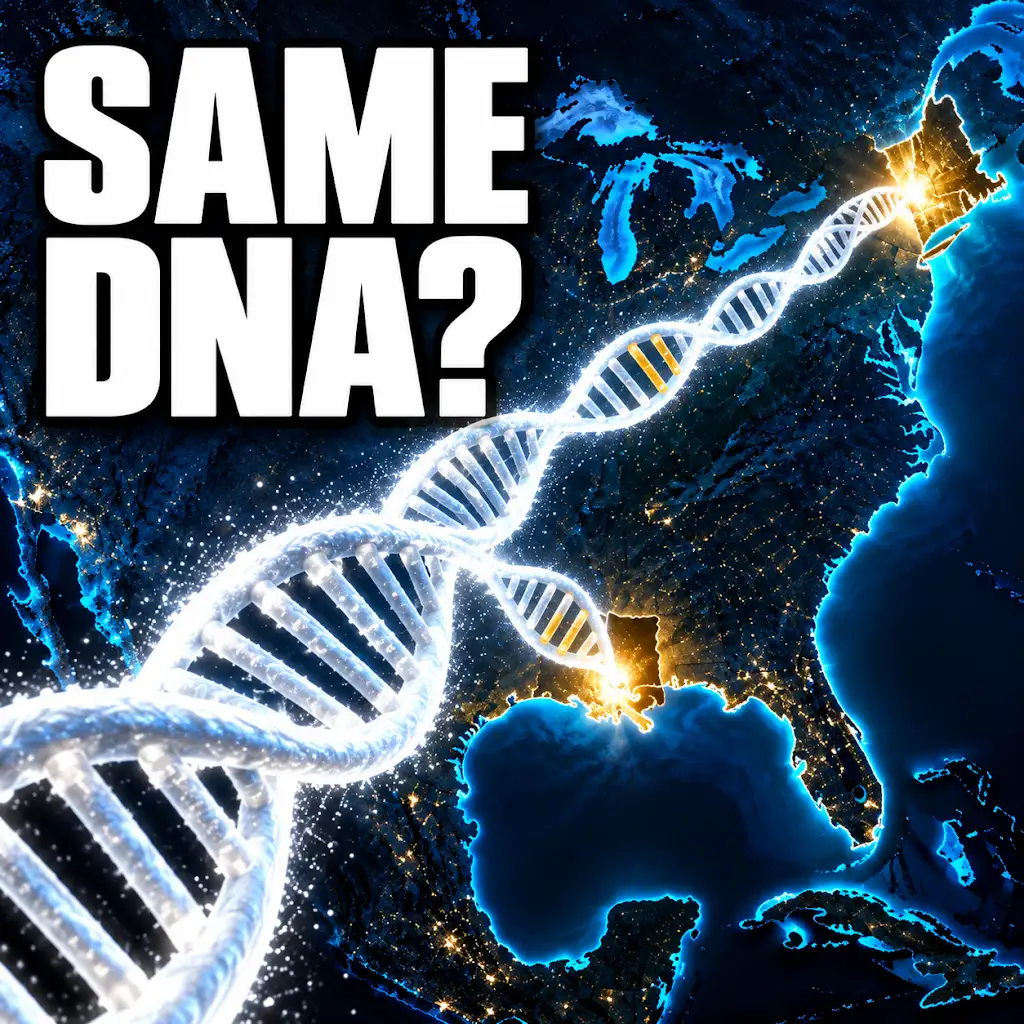
Cajun or French Canadian? The DNA Looked the Same—Until Researchers Looked Closer
FAQs
What is the Acadian Le Grand Dérangement?
The Acadian Le Grand Dérangement refers to the forced deportation of Acadian people by the British from Acadia (present-day Maritime provinces of Canada) in the mid-18th century.
How did the Acadian Le Grand Dérangement impact the genetics of the Acadian population?
The Acadian Le Grand Dérangement led to a significant disruption in the genetic makeup of the Acadian population, as families were separated and scattered across different regions.
Are there genetic markers that can be traced back to the Acadian Le Grand Dérangement?
Yes, studies have shown that certain genetic markers can be traced back to the Acadian Le Grand Dérangement, indicating the genetic impact of this historical event on the Acadian population.
How has modern genetic research shed light on the genetic legacy of the Acadian Le Grand Dérangement?
Modern genetic research has used DNA analysis to trace the genetic legacy of the Acadian Le Grand Dérangement, providing insights into the population’s genetic diversity and ancestry.
What are some of the implications of studying the genetics of the Acadian Le Grand Dérangement?
Studying the genetics of the Acadian Le Grand Dérangement can help researchers understand the long-term effects of historical events on population genetics, as well as provide valuable information for genealogical research and ancestral connections among Acadian descendants.