Curious about your French Canadian heritage? A French Canadian ancestry DNA test can definitely help you uncover those roots. It’s a pretty straightforward way to get a glimpse into your family’s past, beyond what you might already know. These tests look at specific parts of your DNA to connect you with others who share similar genetic markers, and often, they can pinpoint regions where your ancestors lived.
What a French Canadian DNA Test Can Actually Reveal
So, what exactly can you expect to learn from a DNA test geared towards French Canadian ancestry? It’s not just about getting a percentage. These tests work by analyzing your autosomal DNA, which is inherited from both sides of your family. Companies have compiled vast databases of DNA samples from people with known ancestral backgrounds, and when you compare your DNA to these databases, you get an estimate of where your ancestors likely came from.
Regional Breakdown: More Than Just “France”
When you test for French Canadian ancestry, you’re not just going to get a broad “French” result. The beauty of these tests is their ability to drill down into more specific regions. Think of it this way: France itself has a rich tapestry of regional identities, and when people migrated to New France (which is what Canada was called during the French colonial period), they came from particular areas. These areas often had distinct dialects, traditions, and even genetic nuances.
A good French Canadian DNA test will likely highlight ancestral origins within France, such as Normandy, Brittany, Poitou, and the Basque Country. It might also point to regions in Canada where these families settled and intermingled, like Quebec, Acadia (parts of the Maritime provinces), and even certain areas of Ontario and the Western provinces where descendants later moved. Understanding these regional connections can be a powerful way to connect with your history, as it might explain specific family surnames, cultural practices you’ve observed, or even unique physical traits.
Unexpected Connections: Beyond the French Core
It’s also quite common for French Canadian DNA tests to reveal surprising connections that go beyond the expected French lineage. Many of the early settlers in New France weren’t exclusively from France. There were people from other European countries who were drawn to the opportunities in the New World, often through French ports or military service.
You might discover a genetic contribution from the British Isles, Germany, the Netherlands, or even further afield. These findings can be fascinating, opening up entirely new avenues for genealogical research. For instance, if you see a significant percentage attributed to Great Britain, it might lead you to explore the history of English or Scottish settlers who interacted with French communities, or perhaps even individuals who married into French families before or after the migration. Similarly, German or Dutch markers could point to soldiers who served in French regiments or immigrants who assimilated into the French Canadian population. These unexpected ties are a testament to the complex migratory patterns and cultural exchanges that shaped North America.
If you’re interested in exploring your French Canadian ancestry through DNA testing, you might find it fascinating to read about the broader historical context of ancient civilizations and their influence on modern cultures. A related article that delves into this topic is titled “The Day of Two Suns: Ancient History Unveiled.” You can access it here: The Day of Two Suns: Ancient History Unveiled. This article provides insights that may enrich your understanding of the diverse heritage that shapes French Canadian identity today.
Getting Started: Choosing the Right Test
Picking the right DNA test can feel a bit overwhelming with so many options out there. For French Canadian ancestry, some companies are better equipped than others to provide detailed regional breakdowns. It’s not just about the brand name; it’s about the depth and breadth of their reference populations and how they interpret the data.
Major Players and Their Strengths
Several well-known DNA testing companies offer ancestry services. When considering a French Canadian focus, look at how each company handles European populations, particularly Western Europe. Companies like AncestryDNA, MyHeritage, and 23andMe are popular choices. AncestryDNA, for instance, often has a very large user database, which increases the chances of finding DNA matches with others who have French Canadian roots. MyHeritage is particularly strong with European data and has a significant presence in Canada. 23andMe offers a different approach to genetic ancestry, often providing insights into specific traits and health predispositions alongside ethnicity estimates.
When choosing, consider the following:
- Reference Population: Does the company have a robust reference population for French and French Canadian populations? The accuracy of your ethnicity estimate depends heavily on the quality of their reference data.
- Ethnicity Estimate Granularity: How detailed is the regional breakdown? Do they just say “France” or can they identify specific regions within France and Canada?
- DNA Matching: How extensive is their DNA matching network? Finding relatives who have also tested can be one of the most rewarding aspects of the process.
- User Interface and Tools: Is the platform easy to navigate? Do they offer tools to help you explore your results and connect with others?
What to Expect in Your Results Packet
Once you’ve sent in your sample and the lab has done its work, you’ll receive a report. This report typically includes an ethnicity estimate, broken down into percentages attributed to various regions or ethnic groups. For French Canadian ancestry, you’ll likely see a significant portion attributed to French origins, but as mentioned, it will often be more specific. You might also see results from surrounding areas that were historically connected to French migration patterns.
Beyond the ethnicity estimate, you’ll usually get a list of DNA matches – people in the company’s database who share a statistically significant amount of DNA with you. These matches can be incredibly valuable for genealogical research, as they might be distant cousins who can share family trees or oral histories. Some companies also provide tools to visualize your matches and their potential relationships to you.
Navigating Your French Canadian Genetic Findings
Receiving your DNA results is just the first step. The real journey begins when you start to interpret what those percentages and matches actually mean for your personal family history. It’s a bit like putting together a puzzle, where your DNA provides some of the crucial pieces.
Interpreting Ethnicity Estimates: A Guide
Your ethnicity estimate is a snapshot, a best guess based on current scientific understanding and the company’s reference populations. It’s important to remember that these percentages can shift slightly over time as companies update their algorithms and expand their databases. A higher percentage for a specific region means that your DNA is more similar to the reference samples from that area.
For French Canadian ancestry, you might see percentages like:
- Western Europe (including France, Belgium, Switzerland): This will likely be your largest segment. It might be further broken down into regions like Northern France, Western France, or even more specific provinces if the company’s data allows.
- British Isles (England, Scotland, Ireland, Wales): As mentioned, this is a common secondary finding due to historical migrations and interactions.
- Germany/Northwestern Europe: This can also appear due to historical movements and border changes.
- Indigenous North American: While less common than in some other colonial populations, some French Canadian families may have Indigenous ancestry through intermarriage.
It’s also wise to approach very small percentages (e.g., less than 2%) with a bit of caution. These can sometimes be noise in the data or represent very ancient ancestral connections that are difficult to pinpoint precisely.
Making Sense of DNA Matches
DNA matches are where the genetic information really comes alive. These are individuals who share a certain amount of DNA with you. The amount of DNA you share with someone is a good indicator of how closely related you are. Companies will often estimate the relationship (e.g., 1st cousin, 2nd cousin, 3rd cousin).
For French Canadian ancestry, your matches might include:
- Close Relatives: Parents, siblings, aunts, uncles, and cousins who have also tested.
- Distant French Canadian Cousins: People whose families have also been in North America for generations, often with shared ancestral lines from Quebec, Acadia, or other French settlements.
- Connections to Other European Ancestries: If your results showed a British or German component, you might find matches whose families are primarily from those regions.
The key here is to use these matches as leads for further genealogical research. If you find a match with someone who has a detailed family tree, see if you can find common surnames or ancestral locations. This can help you confirm and extend your own family tree.
Building Your Family Tree with DNA Insights
Your DNA test results are a fantastic starting point, but they’re most powerful when integrated with traditional genealogical research methods. Think of the DNA as a roadmap and the historical records as the actual roads you travel on.
Combining DNA with Historical Records
Once you have an idea of potential ancestral regions or surnames from your DNA test, you can start digging into historical documents. This might involve searching census records, birth, marriage, and death records, immigration manifests, land records, and church registers.
For French Canadian ancestry, key resources include:
- Parish Records: Churches in French Canada kept meticulous records of baptisms, marriages, and burials. These are often invaluable for tracing families back through generations.
- Quebec Vital Records: The provincial government of Quebec has digitized and made accessible a vast collection of vital records.
- Drouin Records: The Drouin Institute is a renowned source for genealogical research in Quebec and Acadia, with a comprehensive collection of records.
- FamilySearch.org and Ancestry.com: These websites offer access to a massive amount of digitized records, including many relevant to French Canadian genealogy.
By comparing your DNA matches’ family trees with your own research, you can often confirm ancestral lines and identify new branches of your family tree that you might not have discovered otherwise. A DNA match might have a documented ancestor in a region where your DNA suggests an origin, providing a crucial link.
Overcoming Genealogical Roadblocks
French Canadian genealogy can sometimes present unique challenges. Records might be in French, or they might be incomplete due to historical events or the sheer passage of time. However, DNA can often help break through these barriers.
If you hit a dead end with a particular ancestor in your paper trail, but you have DNA matches who share that ancestor, their tree might contain the missing information. Conversely, if your DNA suggests a certain ancestral region but you can’t find a record to confirm it, you might be able to search for records from that specific region and look for surnames that appear in your DNA matches’ trees.
Consider these strategies:
- Focus on surnames: When looking at your DNA matches, pay attention to common surnames in their trees. These can be excellent clues for your own research.
- Geographic clustering: If many of your matches have ancestral ties to a particular area in Quebec or Acadia, focus your record-searching efforts on that location.
- Utilize shared matches: Many DNA platforms allow you to see which matches you have in common with another match. This can help you triangulate ancestral lines and confirm relationships.
The interplay between DNA evidence and documentary research is incredibly powerful. DNA doesn’t replace traditional genealogy; it complements and enhances it, offering a more complete and sometimes surprising picture of your past.
Exploring your French Canadian ancestry through DNA testing can provide fascinating insights into your heritage and family history. Many individuals are turning to genetic testing to uncover their roots and connect with their past. If you’re interested in understanding the broader implications of ancestry and identity, you might find this article on supply chain risks particularly enlightening, as it discusses how our backgrounds can influence various aspects of our lives today.
Beyond the Basics: Advanced Ancestry Exploration
| Metric | Value | Description |
|---|---|---|
| Percentage of French Canadian Ancestry | 85% | Estimated proportion of DNA linked to French Canadian heritage |
| Common Haplogroups | R1b, I1 | Typical Y-DNA haplogroups found in French Canadian males |
| Average Shared Centimorgans | 1500 cM | Average amount of shared DNA with known French Canadian relatives |
| Number of French Canadian Matches | 25 | Number of close DNA matches identified with French Canadian ancestry |
| Estimated Migration Period | 1600-1750 | Timeframe when ancestors likely migrated to Canada from France |
| Ethnicity Estimate Confidence | High | Confidence level in the ethnicity estimate for French Canadian ancestry |
Once you’ve delved into the initial results of your French Canadian DNA test, there are ways to go deeper. The technology and the genealogical resources available are constantly evolving, opening up new possibilities for discovery.
Exploring Deeper Genetic Ancestry
Many DNA testing companies offer more advanced tools and analyses beyond the basic ethnicity estimate. Some can identify specific haplogroups, which trace paternal or maternal lineages back thousands of years. While these are usually more general than specific regional estimates, they can offer a fascinating glimpse into the deep ancestral past of your male and female lines.
Furthermore, some platforms are developing more sophisticated methods for ethnicity estimation, incorporating new scientific research and expanding their reference populations. This means that your ethnicity estimate might change slightly over time as the science improves, potentially offering even more granular insights into your French Canadian heritage.
Connecting with the French Canadian Diaspora
The French Canadian population isn’t confined to Quebec and Acadia. Due to economic reasons, political shifts, and the lure of opportunity, French Canadians have migrated throughout North America and even to other parts of the world. You might find that your DNA matches connect you not only with people in Canada but also with individuals in the United States (especially in New England, the Midwest, and Louisiana), and even further afield.
Engaging with these connections can be a rich experience. These distant cousins might have unique family stories, oral histories, or even photographs that can illuminate your family’s journey. Some may have already completed extensive genealogical research that can benefit you. Participating in online forums or social media groups dedicated to French Canadian genealogy can also be a valuable way to connect with others who share similar ancestral lines and experiences. This diaspora is a testament to the resilience and spread of French culture and heritage.
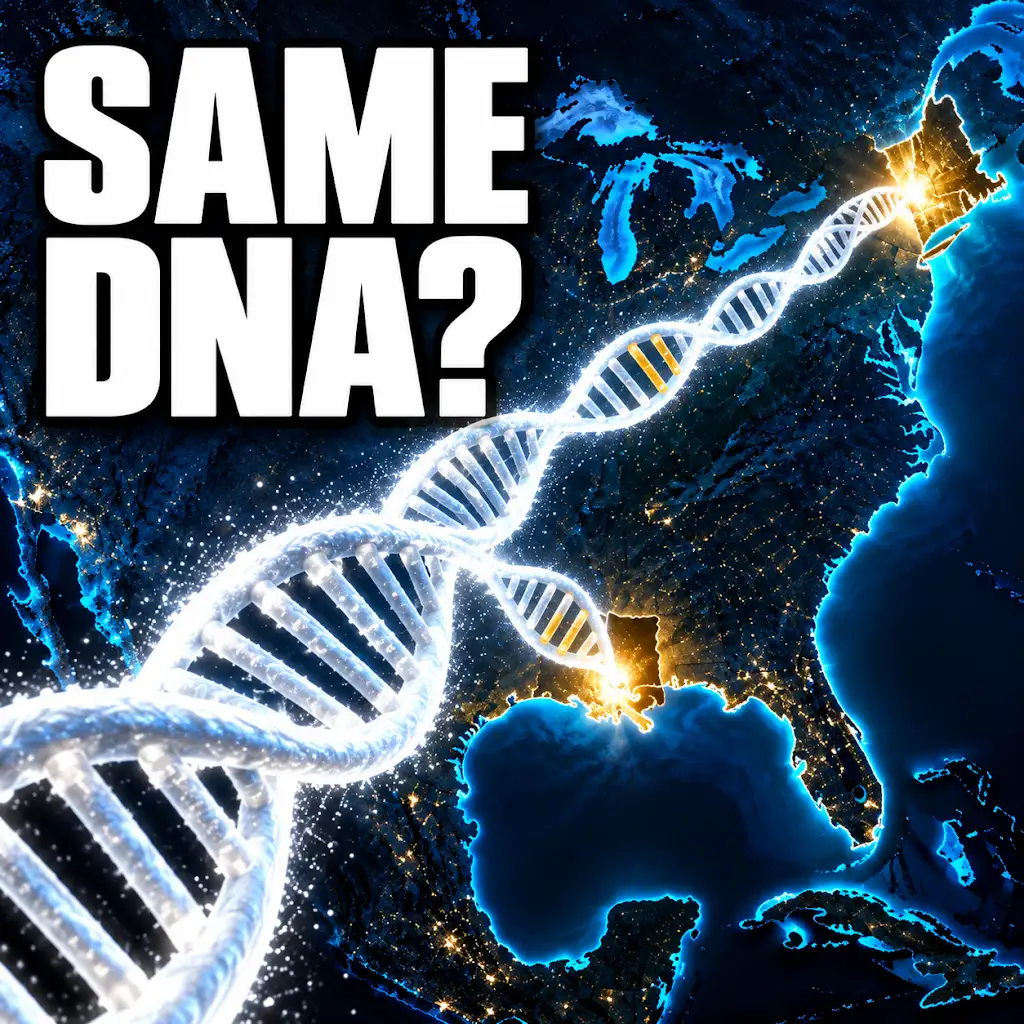
Cajun or French Canadian? The DNA Looked the Same—Until Researchers Looked Closer
FAQs
1. Can a French Canadian ancestry DNA test determine my specific French Canadian heritage?
Yes, a French Canadian ancestry DNA test can provide information about your specific French Canadian heritage by analyzing your genetic markers and comparing them to reference populations from France and Canada.
2. How accurate are French Canadian ancestry DNA tests?
French Canadian ancestry DNA tests are generally accurate in determining your genetic connections to French Canadian populations. However, the accuracy may vary depending on the database used by the testing company and the size of the reference population.
3. What information can I expect to learn from a French Canadian ancestry DNA test?
A French Canadian ancestry DNA test can provide insights into your genetic ethnicity, potential French Canadian ancestors, migration patterns, and genetic matches with other individuals who share French Canadian heritage.
4. Can a French Canadian ancestry DNA test help me connect with living relatives in Canada or France?
Yes, a French Canadian ancestry DNA test can help you connect with living relatives in Canada or France by identifying genetic matches who share a common ancestor with you. Many testing companies offer tools to facilitate communication with genetic relatives.
5. How do I choose a reputable company for a French Canadian ancestry DNA test?
When choosing a company for a French Canadian ancestry DNA test, consider factors such as the size of their reference database, the accuracy of their ethnicity estimates, the privacy of your genetic data, and the tools they provide for exploring your genetic heritage and connecting with relatives.