Thinking about digging into your Cajun roots? You’re in luck! Genetics can offer a pretty fascinating glimpse into where your Cajun ancestors might have come from, beyond just the historical records. While it’s not like finding a direct ancestor’s name on a DNA report, certain genetic markers are strongly associated with populations that contributed to the Cajun gene pool. Think of it as finding fingerprints left behind by groups who settled in Acadia and later Louisiana.
Unpacking the Acadian Origins: The French Connection
The story of the Cajuns is inextricably linked to the Acadians, French colonists who settled in the region of Acadia (modern-day Nova Scotia, New Brunswick, and parts of Maine) in the 17th century. Their genetic legacy, therefore, is primarily a French one, but with nuances that set them apart.
The Ancestral French Footprint
At its core, the Cajun population’s genetics reflect a significant contribution from French settlers. These weren’t just any French people, though. They were predominantly from specific regions of France, particularly western France. This means you’re likely to see a stronger representation of genetic profiles typically found in areas like Normandy, Brittany, Poitou, and Saintonge, compared to, say, the genetic makeup of someone whose ancestors are from the south of France. This regional specificity is a key piece of the puzzle. When you look at genetic databases, you’ll often see Acadian and Cajun samples clustering with these western French populations. It’s a direct line back to the original colonists.
Early Migrations and Settlement Patterns
The initial settlement of Acadia was not a mass migration but a series of smaller, incremental movements. Families and small communities established themselves, and over time, their isolation and unique environment led to the development of a distinct Acadian identity. This early period of limited gene flow within Acadia itself is important. It meant that the founding populations’ genetic characteristics became amplified within the Acadian community before the forced expulsions. Understanding these early settlement patterns helps explain why certain genetic patterns became so pronounced.
Recent studies on Cajun ancestry have revealed fascinating genetic markers that trace the unique heritage of this vibrant community. For those interested in exploring the broader implications of ancestry and genetic lineage, a related article titled “The River: Engine Powering the Two Crowns” provides insightful perspectives on how geography and history shape cultural identities. You can read more about it here: The River: Engine Powering the Two Crowns.
The Great Upheaval: Exile and Resettlement

The defining event in Acadian history is the “Le Grand Dérangement” (The Great Upheaval) in the mid-18th century, when the British forcibly expelled the Acadians from their homeland. This diaspora scattered them across various British colonies in North America, and eventually, many found their way to Louisiana. This period of displacement and resettlement is crucial for understanding the genetic landscape of modern Cajuns.
Scattering and Survival
The expulsion wasn’t a single, neat event. Families were separated, and individuals ended up in different locations. Some were sent to England, others to France, and many to the Thirteen Colonies along the Atlantic coast. Those who eventually made it to Louisiana often did so after a period of living among other populations. This means that while their core ancestry remained Acadian-French, the period of exile provided opportunities for genetic mixing with the populations they encountered. This is a vital point for understanding the variations seen in Cajun genetics.
The Louisiana Journey: A New Acadia
The migration to Louisiana was a significant turning point. The exiled Acadians, now often referred to as Cajuns (a corruption of “Acadian”), found a new home in the bayou country. This region offered a degree of isolation that, in some ways, mirrored their original Acadian settlements. However, Louisiana was also a melting pot of cultures. The Cajuns interacted with existing populations, including Native Americans and enslaved Africans, and later with immigrants from Spain, Germany, and Italy. This interaction, though sometimes limited by social structures, inevitably contributed to the genetic makeup of the Cajun people.
Beyond France: Other Contributing Ancestries

While French ancestry forms the bedrock of Cajun genetics, several other groups played a role in shaping the unique genetic tapestry of Louisiana Cajuns. These contributions, though often smaller in percentage, are significant in their impact.
The Spanish Influence: A Colonial Connection
Spain held significant influence in Louisiana for a period, particularly in the late 18th century. While the primary Acadian influx predates much of the direct Spanish colonial administration, there were periods of overlap and subsequent migration that facilitated some degree of intermingling. Spanish settlers brought their own distinct genetic profiles, which can be detected in Cajun populations. This is not about a mass Spanish invasion, but rather a more subtle assimilation and intermarriage that occurred over generations. The legacy is detectable in specific genetic markers.
The African Contribution: A Complex History
The history of African peoples in Louisiana is deeply intertwined with the state’s development, including that of the Cajun community. While the forced migration of enslaved Africans is a painful reality, it also undeniably contributed to the genetic diversity of the region. Through a complex history of interaction, intermarriage, and community formation, African genetic ancestry is present in many Cajun families. It’s important to note that the extent and nature of this contribution can vary significantly from family to family, reflecting the diverse social and historical contexts within Louisiana. This is a sensitive but critical aspect of Cajun ancestry.
Indigenous Peoples of Louisiana: The First Residents
Long before European or African arrival, Indigenous peoples inhabited the lands that would become Louisiana. Various tribes, including the Chitimacha, Atakapa, Choctaw, and others, were present in the region where Cajuns eventually settled. While historical records of intermarriage can be scarce or fraught, genetic studies have revealed evidence of Native American ancestry in Cajun populations. This suggests that interactions, whether through trade, intermarriage, or other forms of cultural exchange, did occur between Acadian settlers and Indigenous groups, leaving a genetic trace. This indigenous contribution is a key differentiator for Louisiana Cajuns compared to their Acadian ancestors in Canada.
Genetic Markers: What to Look For
When we talk about “genetic markers,” we’re essentially referring to specific variations in our DNA that can be passed down from our ancestors. For tracing Cajun ancestry, certain haplogroups and autosomal DNA patterns are particularly telling.
Y-DNA Haplogroups: The Paternal Line
Y-DNA is passed down exclusively from father to son. Therefore, Y-DNA haplogroups can help trace a paternal lineage. For Western European ancestry, particularly French, certain Y-DNA haplogroups are common. Haplogroup R1b, especially subclades prevalent in Western Europe, is very widespread. While R1b is common across much of Europe, specific subclades can be more indicative of French or Iberian origins. For Cajuns, you’d expect to see R1b subclades that are commonly found in regions like western France. It’s less about finding a unique “Cajun haplogroup” and more about identifying the specific European haplogroup frequencies that align with Acadian settlement areas.
Mitochondrial DNA (mtDNA): The Maternal Line
Mitochondrial DNA is inherited from the mother to all her children. This allows for tracing a maternal lineage. European mtDNA haplogroups are prevalent in Cajun populations, reflecting their maternal ancestral lines. Common European haplogroups such as H, U, and J are frequently found. Again, the focus isn’t on a singular mtDNA haplogroup defining Cajuns, but rather on the frequency and distribution of European haplogroups that align with the ancestral populations of Acadia and later Louisiana. The presence of certain African or Native American mtDNA haplogroups would also point to those contributing ancestries.
Autosomal DNA: The Mosaic of Ancestry
Autosomal DNA testing, which analyzes DNA from all 22 pairs of non-sex chromosomes, is the most comprehensive way to explore your ancestry. This is where you get a percentage breakdown of your ethnic origins. For Cajuns, you’ll typically see a strong European component, with a significant portion often attributed to France. However, you might also see smaller percentages from other regions that reflect the historical interactions in Louisiana, such as Spain, West Africa, and even Indigenous American populations. The key here is the combination and proportions. A strong French percentage combined with smaller, but discernible, amounts from other historically relevant regions is a strong indicator of Cajun ancestry.
Recent studies on Cajun ancestry have revealed fascinating genetic markers that trace the unique heritage of this vibrant community. These markers not only highlight the diverse origins of Cajun people but also provide insights into their historical migrations and cultural influences. For those interested in understanding how various factors, including economic changes, can impact communities, a related article discusses the implications of nearshoring on inflation and its broader effects on society. You can read more about this topic in the article here.
Interpreting Your Genetic Results: Putting the Pieces Together
| Genetic Marker | Chromosome Location | Frequency in Cajun Population (%) | Associated Ancestry | Notes |
|---|---|---|---|---|
| HLA-B*35 | 6p21.3 | 18 | French/European | Common in French populations, indicative of European ancestry |
| Y-DNA Haplogroup R1b | Y Chromosome | 65 | Western European | Predominant paternal lineage among Cajuns |
| mtDNA Haplogroup H | mtDNA | 40 | European | Common maternal lineage in Cajun populations |
| rs1426654 (SLC24A5) | 15q21.1 | 75 | European | Skin pigmentation marker prevalent in European ancestry |
| rs2814778 (Duffy-null allele) | 1q23.2 | 5 | African | Low frequency, indicating minor African admixture |
| rs4988235 (LCT gene) | 2q21 | 60 | European | Lactase persistence allele common in European descent |
So, you’ve taken a DNA test and have your results. How do you make sense of them in the context of Cajun ancestry? It’s not always straightforward, and it’s a bit of detective work.
Connecting DNA to Genealogy: The Synergy
Your DNA results are a powerful complement to traditional genealogical research. If your family tree points to Acadian roots, and
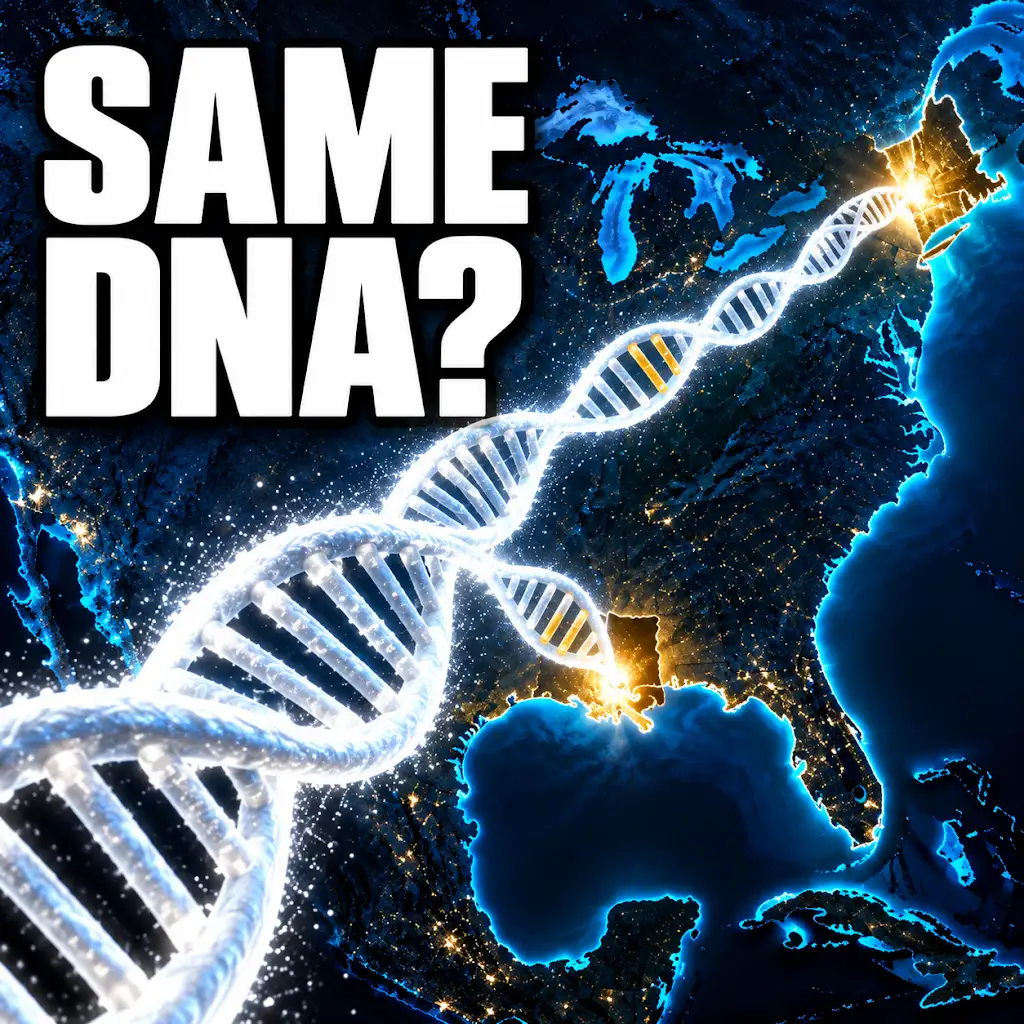
Cajun or French Canadian? The DNA Looked the Same—Until Researchers Looked Closer
FAQs
What are genetic markers used for in determining Cajun ancestry?
Genetic markers are used to trace the ancestry of Cajun people by identifying specific DNA sequences that are unique to individuals with Cajun heritage.
How accurate are genetic markers in determining Cajun ancestry?
Genetic markers can provide a high level of accuracy in determining Cajun ancestry, as they can pinpoint specific genetic variations that are common among individuals with Cajun roots.
Can genetic markers distinguish between different Cajun lineages?
Yes, genetic markers can help distinguish between different Cajun lineages by identifying variations in DNA sequences that are specific to each lineage.
Are genetic markers the only method used to determine Cajun ancestry?
No, genetic markers are just one of the methods used to determine Cajun ancestry. Other methods, such as genealogical research and historical records, are also commonly used to trace Cajun heritage.
Can genetic markers be used to connect Cajun individuals with distant relatives?
Yes, genetic markers can be used to connect Cajun individuals with distant relatives by comparing their DNA sequences and identifying shared genetic markers that indicate a common ancestry.