
So, you’re curious about French Canadian genetic genealogy? It’s a fascinating rabbit hole to go down! Essentially, using DNA to trace your French Canadian heritage offers a unique way to connect with your ancestors, often uncovering details and branches of your family tree you might not find through traditional paper trails alone. Think of it as adding a new layer of understanding to those old family stories.
The Ancestral Echo: What DNA Tells Us About French Canadian Heritage
When we talk about French Canadian genetics, we’re often looking at a very specific blend of ancestral lines. The original settlers came primarily from regions in France, like Normandy, Brittany, Anjou, Poitou, and Touraine. Over centuries, this population developed in relative isolation in Quebec and parts of Acadia, leading to some distinctive genetic markers. This doesn’t mean everyone with French Canadian roots will have the exact same DNA profile, but there are certain tendencies that can point you in the right direction when analyzing your DNA results. It’s a way to see how those early European migrations and subsequent geographic isolation have left their mark.
Early Settlers and Their Origins
The foundational population of New France (what is now Quebec) was relatively small. This founder effect is crucial. A smaller group of individuals migrating to a new land means their genetic contributions are amplified over generations. These early colonists weren’t a random sampling of all of France; they were often from specific rural communities. This has had a lasting impact on the genetic landscape of French Canadians. Understanding these origins helps us interpret the DNA matches we find.
The “Founder Effect” and Its Genetic Implications
The founder effect is a concept that comes up a lot in French Canadian genealogy. When a new population is established by a small number of individuals, the gene pool of this new population is largely determined by the genes of these founders. This means that certain genetic traits or variations can be more common in a founder population than in the general population of their origin. For French Canadians, this means some DNA segments or specific genetic markers might appear more frequently than they would in a broader French or European population. This can be a powerful clue when you’re trying to pinpoint your French Canadian ancestry.
Beyond Quebec: Acadian and Other French-Speaking Communities
While Quebec is the most prominent area, it’s important to remember Acadia. The Acadians, descendants of French colonists who settled in parts of present-day Nova Scotia, New Brunswick, and Prince Edward Island, also have a distinct genetic history. Their story is one of hardship and dispersal, particularly the Grand Dérangement, which scattered them across North America. Their genetic profile shares much with Quebecois but also has unique nuances due to their different settlement patterns and experiences. Other French-speaking communities across Canada and the US also contribute to the broader picture.
French Canadian genetic genealogy has gained significant attention in recent years, as individuals seek to uncover their ancestral roots and connect with their heritage. A related article that explores the broader implications of genealogy and its impact on personal identity can be found at this link. This piece highlights how understanding one’s lineage can influence not only personal narratives but also societal perspectives on heritage and belonging.
Navigating DNA Testing for French Canadian Ancestry
Choosing the right DNA test is the first practical step. For French Canadian genealogy, you’ll want a test that provides a comprehensive analysis of your autosomal DNA, which traces your ancestry from both your maternal and paternal sides. Companies like AncestryDNA and MyHeritage are particularly popular for those with European roots, as they have large databases that include many users with French Canadian heritage. They also often provide ethnicity estimates that can highlight regions in France or even specific European ancestral components.
Autosomal DNA: Your Primary Tool
Autosomal DNA tests look at 22 pairs of chromosomes (excluding the sex chromosomes). This type of DNA is inherited from all your recent ancestors, making it the most comprehensive for genealogical research. It’s what most of the major DNA testing companies offer. The results show you segments of DNA you share with other users, which can help you find relatives, and an ethnicity estimate, which gives you a breakdown of your ancestral origins. For French Canadian ancestry, this is the bread and butter.
Ethnicity Estimates: A Starting Point, Not a Definitive Answer
It’s crucial to understand that ethnicity estimates from DNA tests are just that – estimates. They are based on comparisons with reference populations that the testing company has compiled. While they can be a good starting point, especially for identifying broad ancestral regions like “France” or “Western Europe,” they are not always precise. They can also sometimes miss nuances or group distinct populations together. So, when your ethnicity estimate shows a percentage for France, it’s a signal to investigate further, not a final declaration.
Utilizing Your DNA Matches
This is where the real genealogical gold lies. Your DNA matches are people who share a detectable amount of DNA with you. By looking at shared matches, you can often figure out which branch of your family tree a particular match belongs to. If you have matches who have already researched their French Canadian roots, they can be invaluable in helping you identify common ancestors. This is especially true for the more isolated French Canadian populations, where you might find a higher proportion of matches within the community.
Tracing Your Roots: Combining DNA with Traditional Research
DNA is a powerful tool, but it’s most effective when used in conjunction with traditional genealogical research. Think of your DNA results as breadcrumbs that lead you to specific ancestors or branches of your family tree. You then use records like birth certificates, marriage licenses, census data, and church records to confirm those connections and learn more about the lives of your ancestors.
The Power of Paper Trails: Records to Seek Out
For French Canadian ancestors, there are specific types of records that are particularly useful. Parish records (baptisms, marriages, burials) are often incredibly detailed and can go back centuries. Civil registration records also become important. Census records, when available, can show you household structures and occupations. Land records can reveal where your ancestors lived and how they made their living. Don’t overlook notarial records, either; these can offer fascinating insights into daily life and family arrangements.
Bridging the Gap: Connecting DNA Matches to Records
When you find a DNA match who seems to be French Canadian, the next step is to try and connect them to your known family tree using records. If your match has a public family tree, examine it carefully. See if you can find a common ancestor. If they don’t have a tree, or it’s not detailed, you might need to start looking for records yourself based on the information they provide (like ancestral surnames or locations). This is often where the detective work gets exciting.
Dealing with Common Surnames and Intermarriage
French Canadian communities are known for having a relatively limited number of common surnames, and also a significant amount of intermarriage within families over the generations. This can make traditional research challenging, and it also means that in your DNA results, you might share DNA with multiple people through different ancestral lines. This is where meticulous record-keeping and careful analysis of shared matches become even more important. Sometimes, a DNA match might appear through a maternal line and a paternal line, which can be a strong indicator of a shared ancestor.
Common Pitfalls and How to Avoid Them
Venturing into French Canadian genetic genealogy can be incredibly rewarding, but it’s also easy to stumble. Being aware of common challenges can save you a lot of frustration and help you make more accurate discoveries.
The “Endogamy” Effect: A Double-Edged Sword
Endogamy refers to the practice of marrying within a particular group. As mentioned, the historical isolation of French Canadian communities led to a high degree of endogamy. This can be a blessing and a curse for genetic genealogists. On the one hand, it can make it easier to identify French Canadian heritage through DNA, as you’re more likely to share segments of DNA with people who are also of French Canadian descent. On the other hand, it means you might share DNA with a cousin multiple times removed through several different ancestral paths, making it harder to pinpoint exactly which ancestor a specific DNA segment comes from.
Interpreting Ethnicity Estimates: Beyond the Obvious
Don’t get too hung up on precise percentages in your ethnicity estimates. Think of them as broad indicators. If your estimate shows a significant portion of “France” or “Western Europe,” and you know you have French Canadian ancestors, it’s a good confirmation. However, if it shows something unexpected, don’t dismiss it immediately, but also don’t treat it as gospel. Sometimes, the reference populations used by the testing companies aren’t perfectly representative of specific historical migration patterns. For example, a small amount of Scandinavian DNA might show up due to historical trade routes or migrations that predated the establishment of French Canada.
The Importance of the Grandmother Hypothesis (and Other Strategies)
When trying to assign a DNA segment to a specific ancestor, many genealogists use what’s sometimes called the “grandmother hypothesis.” This involves working backward from a known DNA match and trying to identify the most recent common ancestor they share with you. If you can identify that ancestor, you can then try to trace that segment back through your own tree. For French Canadian research, where endogamy is common, it’s helpful to have strategies for triangulating (confirming) DNA matches through multiple lines if possible.
French Canadian genetic genealogy has become an intriguing field of study, revealing the rich tapestry of ancestry and heritage among the descendants of early settlers in Quebec. For those interested in exploring the implications of genetic research on understanding familial connections, a related article discusses the broader environmental challenges that can impact communities, including rising sea levels. You can read more about these pressing issues in the article found here. This intersection of genetics and environmental factors highlights the importance of preserving both our heritage and our habitats.
Looking Ahead: Resources and Future Discoveries
| Metric | Value | Description |
|---|---|---|
| Population Size | ~7.5 million | Estimated number of French Canadians primarily in Quebec and other parts of Canada |
| Founder Effect | Strong | Genetic bottleneck due to small number of original settlers in 17th century |
| Common Y-DNA Haplogroups | R1b (especially R1b-M269) | Predominant paternal lineage reflecting Western European origins |
| Common mtDNA Haplogroups | H, U, K | Maternal lineages typical of Western European ancestry |
| Genetic Diversity | Moderate to Low | Due to founder effect and relative isolation |
| Average Relatedness | Higher than general population | Many individuals share common ancestors within 10-15 generations |
| Notable Genetic Diseases | Tyrosinemia type I, Cystic fibrosis (specific mutations) | Higher prevalence due to founder mutations |
| Genealogical Records Availability | Extensive | Church and civil records dating back to 1600s aid genetic genealogy research |
The field of genetic genealogy is constantly evolving. New databases are being added, algorithms are improving, and more people are testing their DNA. For those with French Canadian roots, this means ongoing opportunities for discovery.
Essential Databases and Online Communities
There are numerous online resources that can aid your French Canadian genealogical journey. Websites like Ancestry.ca, Genealogy.com, and the Archives nationales du Québec are invaluable for traditional records. For genetic genealogy, the user trees on AncestryDNA and MyHeritage are crucial for identifying potential relatives. There are also dedicated French Canadian genealogy forums and Facebook groups where you can connect with other researchers, ask questions, and share your findings. These communities are often incredibly helpful and supportive.
Advanced DNA Analysis Techniques
Beyond basic DNA matching, there are more advanced techniques you can explore. These might include using tools that help you segment your DNA, or comparing your results with other individuals who have also researched French Canadian ancestry. Some users create detailed “pedigree charts” for their DNA matches, which can help in identifying shared ancestors. As your research progresses, you might even consider more specialized DNA tests, although for most people, autosomal DNA testing is the most practical starting point for French Canadian roots.
What the Future Holds for French Canadian Genetic Genealogy
As more individuals of French Canadian descent test their DNA, the databases will become richer, and the accuracy of ethnicity estimates will improve. We can expect to see better identification of specific regional origins within France for the early settlers, and a clearer understanding of the genetic landscape of Acadia and other French-speaking communities. Genetic genealogy is not just about finding names and dates; it’s about understanding the journey of our ancestors and the unique tapestry of their lives.
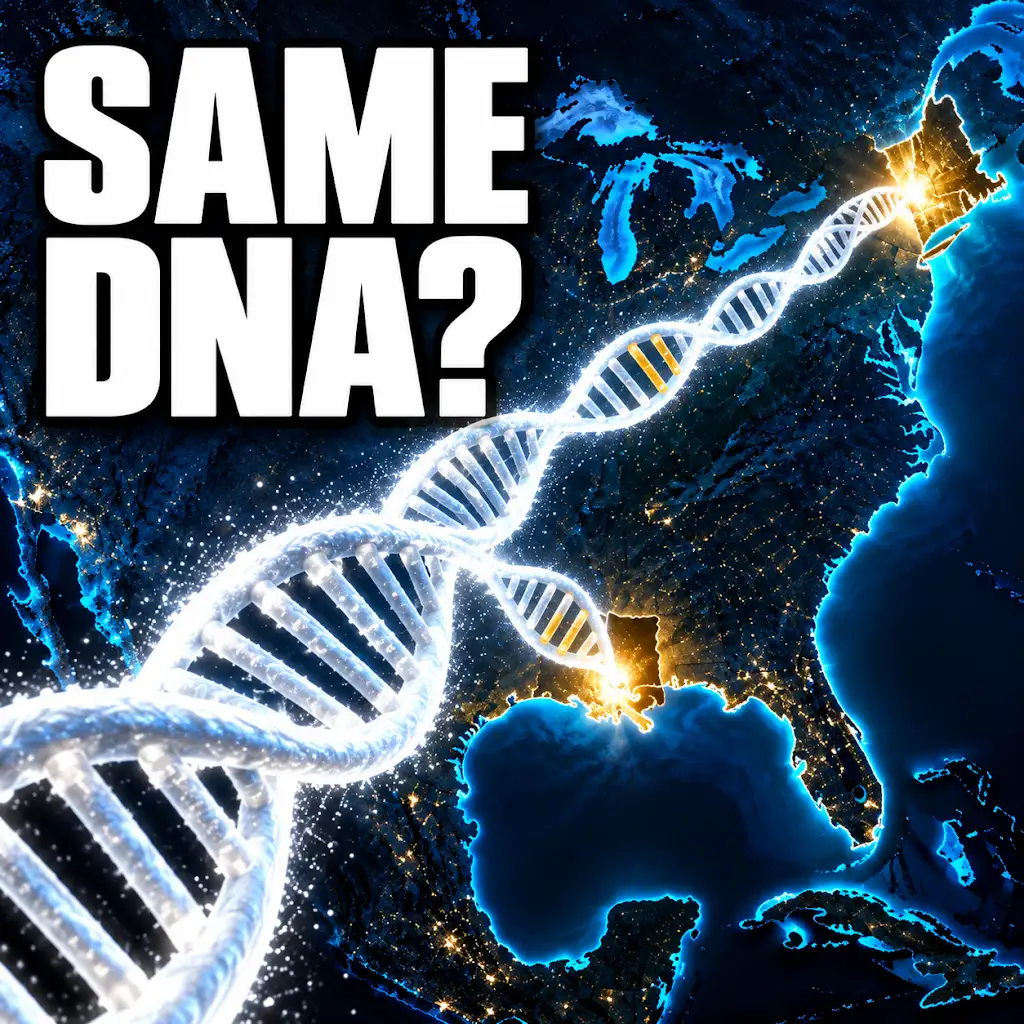
Cajun or French Canadian? The DNA Looked the Same—Until Researchers Looked Closer
FAQs
What is French Canadian genetic genealogy?
French Canadian genetic genealogy is the study of genetic relationships within the French Canadian population, focusing on tracing ancestry and genetic markers unique to individuals of French Canadian descent.
How can genetic genealogy help individuals of French Canadian descent trace their ancestry?
Genetic genealogy can help individuals of French Canadian descent trace their ancestry by analyzing their DNA to identify genetic markers specific to the French Canadian population, connecting them to potential relatives and ancestral origins.
What are some common genetic markers found in individuals of French Canadian descent?
Some common genetic markers found in individuals of French Canadian descent include markers associated with French and French Canadian ancestry, such as haplogroups R1b and H1.
Can genetic genealogy determine specific regions or provinces in France where French Canadian ancestors originated?
Genetic genealogy can provide clues to specific regions or provinces in France where French Canadian ancestors originated by analyzing genetic markers and comparing them to reference populations from different regions in France.
Are there specific genetic testing companies or databases that specialize in French Canadian genetic genealogy?
Yes, there are genetic testing companies and databases that specialize in French Canadian genetic genealogy, offering services tailored to individuals seeking to explore their French Canadian ancestry through DNA analysis.