
What’s the Deal with the Acadian Genetic Cluster?
So, you’ve seen “Acadian” pop up in your genetic ancestry results and you’re wondering what it actually means. Simply put, the Acadian genetic cluster is a group of people who share a common ancestry primarily stemming from the historical region of Acadia, which roughly corresponds to the Canadian Maritimes (Nova Scotia, New Brunswick, Prince Edward Island) and parts of Maine in the United States. It’s not just a random label; it reflects a unique blend of genetic markers that tell a story of migration, settlement, and survival. Understanding this cluster can offer a fascinating glimpse into your family’s past, but it’s important to approach it with a practical mindset, recognizing what it can and can’t tell you.
The interpretation of the Acadian genetic cluster has been a significant topic in understanding the historical migrations and social structures of the Acadian people. For a deeper exploration of related themes, including the impact of social dynamics on community resilience, you can refer to the article titled “Unearthing the Archaeology of Social Collapse,” which discusses how archaeological findings can shed light on the complexities of societal changes. You can read the article here: Unearthing the Archaeology of Social Collapse.
Tracing the Roots: The Genesis of Acadian Ancestry
The story of the Acadian genetic cluster begins with French colonization in the early 17th century. French settlers, primarily from western and northwestern France, established communities in Acadia. These early Acadians were pioneers, forging a distinct identity over generations, often with limited contact with their ancestral homeland or other French colonial settlements. This relative isolation played a significant role in shaping their genetic profile.
Early French Settlements and Origins
The initial wave of French colonists who arrived in Acadia weren’t a homogenous group from a single French province. They hailed from various regions, including Normandy, Brittany, Poitou, Saintonge, and Aunis, among others. This diversity in their origins already laid the groundwork for a mixed genetic heritage. These early settlers were often fishermen, farmers, and artisans, driven by opportunities in the New World, the fur trade, and religious motivations for some. Their settlements were strategically located along the coasts and rivers, facilitating access to resources and trade routes.
The Influence of Indigenous Peoples
It’s crucial to acknowledge the significant genetic contribution from Indigenous populations to the Acadian gene pool. Early interactions between French settlers and the Mi’kmaq and Maliseet peoples led to intermarriage and the formation of family ties. This intermingling is a vital component of the Acadian genetic signature, differentiating it from solely European-descended populations. Understanding this Indigenous heritage is as important as recognizing the French roots when interpreting an Acadian genetic cluster.
Isolation and Genetic Drift
For a considerable period, Acadian communities experienced a degree of geographical and social isolation. This isolation meant that the gene pool developed relatively independently. Over time, this can lead to genetic drift – random fluctuations in the frequency of certain gene variants within a population. This drift, combined with the founder effect (where a new population is established by a small number of individuals, carrying only a subset of the original population’s genetic diversity), contributed to the distinctiveness of the Acadian genetic cluster. It’s like a unique dialect of a language that evolves when a group is separated from the main speakers for a long time.
The Great Deportation: A Defining Moment
The mid-18th century marked a cataclysmic event for the Acadians: the Grand Dérangement, or the Great Deportation. British forces forcibly removed thousands of Acadians from their homeland, scattering them to various British colonies in North America, Britain, and France. This forced migration dramatically altered the demographic landscape and further influenced the genetic makeup of Acadian descendants.
The Expulsion and Dispersal
The British, fearing Acadian loyalty to France during times of conflict, enacted the expulsion between 1755 and 1764. Families were separated, homes were destroyed, and Acadians were often forcibly marched onto ships, with little regard for their well-being. This wasn’t a single event but a series of brutal expulsions over several years, impacting numerous communities. The Acadians were sent to places like Massachusetts, Connecticut, New York, and further south to the Carolinas. Some were sent to England and France. This widespread dispersal meant that surviving Acadians ended up in very different environments, which could lead to varied genetic interactions in their new homes.
Recent studies on the Acadian genetic cluster interpretation have shed light on the complex interplay of genetics and geography in shaping the identity of this unique population. For a deeper understanding of how various factors influence genetic diversity, you might find it interesting to explore a related article that discusses strategic approaches in different contexts. This article highlights the importance of adaptive strategies in various fields, which can be likened to the adaptive nature of genetic clusters. You can read more about it in this insightful piece on demystifying the security shoring strategy.
The Formation of New Acadiana
Despite the devastation, many Acadians eventually managed to regroup and re-establish themselves. Some returned to the Maritimes, often settling in different areas than where they were originally from. Others found refuge in Louisiana, where they evolved into the distinct Cajun culture (a corruption of “Acadian”). This subsequent migration and re-settlement created new genetic interactions and further solidified the branching nature of Acadian ancestry. The resilience of the Acadian people is a testament to their ability to rebuild and maintain their cultural identity through immense hardship.
Genetic Signatures of Resilience
The genetic patterns observed in the Acadian cluster can sometimes reflect the genetic bottlenecks and admixture events that occurred during and after the deportation. For instance, certain French regional markers might be less prevalent in some Acadian descendants due to the specific groups that managed to escape or resettle together. Conversely, the genetic contributions from Indigenous populations might be more pronounced in certain Acadian subgroups depending on where they settled after the expulsion. Analyzing these nuances can provide a deeper understanding of the historical narrative encoded within our DNA.
Interpreting Your Acadian Genetic Results
When your DNA test flags an “Acadian” component, it’s generally indicating a strong likelihood of ancestry tracing back to this historical group. However, interpreting these results requires a bit of nuance. Genetic testing services use reference populations to identify these clusters, and the precision can vary.
Understanding Reference Populations
Genetic ancestry companies build their databases by analyzing DNA from individuals with documented ancestry from specific regions and ethnic groups. For the Acadian cluster, these reference populations would ideally include individuals with a long, unbroken line of documented Acadian heritage. The accuracy of your Acadian result depends on how well the company’s reference Acadian population represents the actual historical Acadian gene pool and how your DNA compares to it. It’s like a puzzle; the more pieces you have of a specific type, the clearer the picture becomes.
What “Acadian” Typically Indicates
Generally, a significant Acadian segment in your DNA suggests a recent or not-so-recent ancestor who was part of the Acadian community. This could mean they were French settlers in Acadia, their descendants, or individuals who intermarried with Acadian families. The strength of the signal usually correlates with the proportion of Acadian ancestry in your recent generations. A small percentage might point to a more distant Acadian ancestor, while a larger percentage could indicate one or more Acadian ancestors in your more immediate family tree.
Distinguishing from General French Ancestry
It’s important to differentiate the Acadian cluster from general “French” ancestry. While
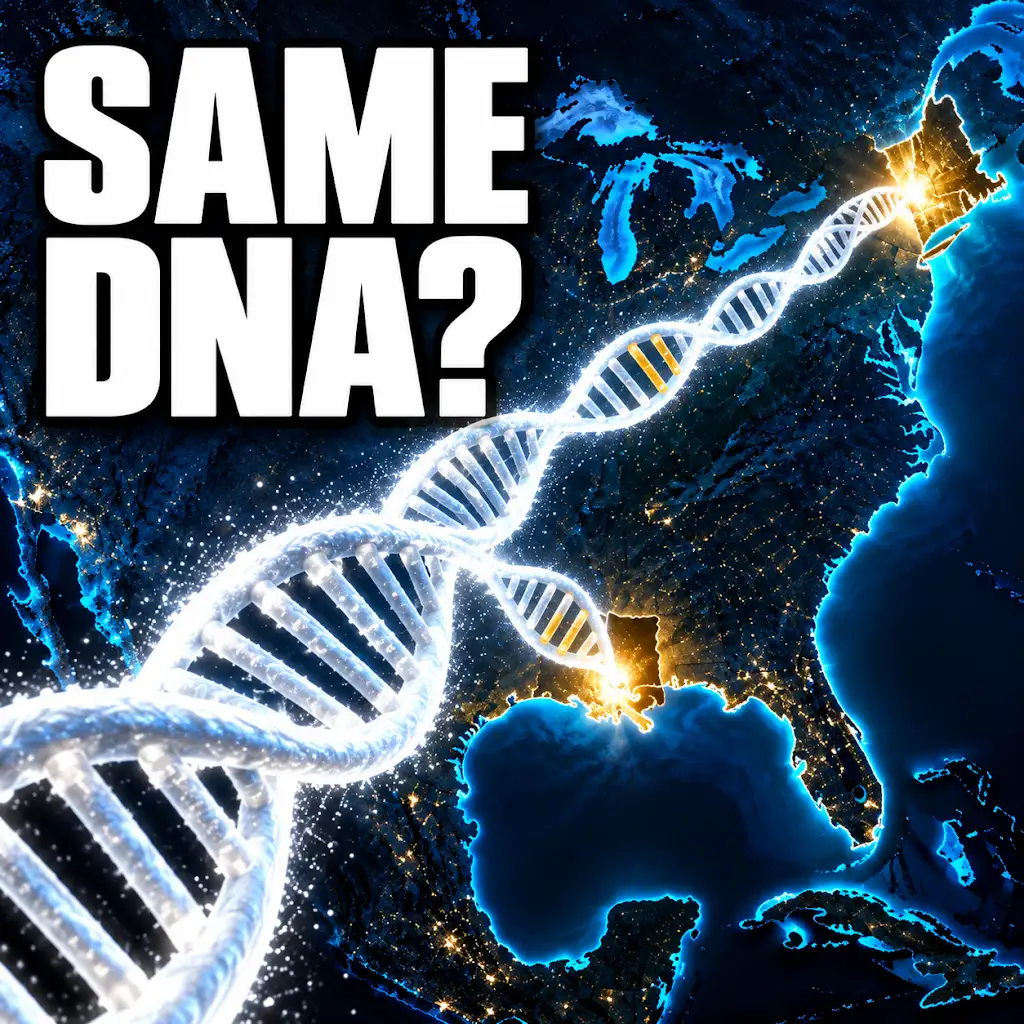
Cajun or French Canadian? The DNA Looked the Same—Until Researchers Looked Closer
FAQs
What is the Acadian genetic cluster?
The Acadian genetic cluster refers to a distinct genetic grouping found in individuals with Acadian ancestry, primarily in the Maritime provinces of Canada and parts of Louisiana in the United States.
How is the Acadian genetic cluster interpreted by researchers?
Researchers interpret the Acadian genetic cluster as a result of the unique historical and cultural factors that have influenced the genetic makeup of the Acadian population over generations.
What are some characteristics of the Acadian genetic cluster?
Characteristics of the Acadian genetic cluster may include specific genetic markers, variations in gene frequencies, and shared genetic traits among individuals with Acadian heritage.
How does the Acadian genetic cluster contribute to genetic research?
The Acadian genetic cluster contributes to genetic research by providing insights into population genetics, migration patterns, and the impact of historical events on genetic diversity within specific populations.
Are there any health implications associated with the Acadian genetic cluster?
While research on the health implications of the Acadian genetic cluster is ongoing, some studies suggest that certain genetic variations within the cluster may be associated with an increased risk of certain health conditions. Further research is needed to fully understand these implications.