
You’re probably wondering if there’s an “Acadian gene” that you can trace and what that even means in terms of who is Acadian today. The short answer is that while there isn’t a single gene that defines Acadian ancestry, there are indeed specific genetic markers and patterns that can help identify Acadian heritage, particularly when combined with historical records and genealogical research. It’s less about a unique gene and more about the combined genetic fingerprint of a population that developed in a specific geographic region and historical context.
The Historical Roots of Acadian DNA
To understand Acadian genetics, we need to go back to the beginning – the settlement of Acadia. This was a unique colonial endeavor with a specific group of French settlers.
Early Settlement and Diverse Origins
The story of Acadian genetics starts with the first French colonists who arrived in what is now Nova Scotia, New Brunswick, and parts of Maine, beginning in the early 17th century. These weren’t just random individuals; many came from specific regions in France, particularly the western provinces like Poitou, Saintonge, and Normandy. This initial gene pool, while French, was already somewhat localized. What’s interesting is that it wasn’t exclusively French. There were also some individuals with Flemish, English, and even some early Spanish connections who became part of the foundational Acadian population. This mix, though small, contributed to the unique genetic tapestry that would later emerge. The emphasis was on establishing a self-sufficient agricultural community, and the settlers came with families, which fostered a relatively closed, endogamous population over time.
A Distinctive Island Identity: Île Sainte-Jean and Île Royale
Before the tragic deportations, certain islands played a crucial role in Acadian settlement. Île Sainte-Jean (now Prince Edward Island) and Île Royale (now Cape Breton Island) were significant Acadian strongholds. The populations on these islands, due to their relative isolation and specific settlement patterns, developed particularly distinct genetic profiles. The island communities, while connected to mainland Acadia, often had their own unique marriage patterns and social structures, which can be reflected in their genetic heritage. The presence of strong fishing communities also meant a slightly different demographic makeup compared to some of the more agricultural mainland settlements.
The Acadian genetic legacy in North America is a fascinating topic that highlights the influence of early French settlers on the genetic makeup of the region. For those interested in exploring the broader implications of historical migrations and their impact on modern populations, an intriguing related article can be found at Uncovering the Secret History of Antarctica. This article delves into the hidden narratives of human exploration and settlement, drawing parallels to the stories of migration that shaped North America.
The Impact of the Great Expulsion and Diaspora
The mid-18th century saw a cataclysmic event that profoundly shaped Acadian genetic legacy: Le Grand Dérangement, or the Great Expulsion. This forced dispersal scattered Acadians across North America and beyond.
Scattering Across North America and Beyond
The expulsion, beginning in 1755, wasn’t a simple event. Acadians were rounded up and deported to various destinations. Many ended up in the British colonies to the south, in New England, New York, Pennsylvania, and Maryland. Others were sent to France, England, or the Caribbean. A significant number eventually found their way to Louisiana, where they became the ancestors of the modern-day Cajuns. This scattering is critical for understanding where Acadian genetic markers can be found today. The descendants of those who ended up in different geographic locations often maintained distinct communities, influenced by their new environments and the people they encountered.
The Louisiana Cajun Connection
The descendants of Acadians who settled in Louisiana are perhaps the most well-known group today. The term “Cajun” is derived from “Acadian.” Genetically, there’s a strong and demonstrable link. Louisiana Cajuns have retained a significant portion of their Acadian genetic heritage, though over centuries, intermingling with other populations in Louisiana – including French Louisianans, Spanish, Africans, and Native Americans – has also influenced their genetic makeup. However, specific autosomal DNA markers and Y-DNA/mtDNA haplogroups are often found in higher frequencies among Cajuns, pointing directly back to their Acadian ancestors. The geographical isolation of some parts of Louisiana also helped preserve certain ancestral traits.
New England and Maritime Acadian Descendants
It’s crucial to remember that not all Acadians went to Louisiana. Many descendants of those deported to New England and the Maritime provinces (Nova Scotia and New Brunswick) remained, and new waves of Acadians returned to these regions in subsequent years. These communities in places like Maine, Massachusetts, Nova Scotia, and New Brunswick also carry the Acadian genetic legacy. While they may have experienced different influences than their Louisiana cousins – perhaps more intermarriage with English, Irish, or Scottish populations in New England, or continued French-Canadian connections in the Maritimes – their core Acadian ancestry is still detectable. Studying these distinct branches of the Acadian diaspora is vital for a comprehensive understanding of their genetic footprint.
Tracing Acadian Ancestry Through Genetics Today
Modern genetic testing offers powerful tools for individuals to explore their Acadian heritage. It’s a journey that complements traditional genealogy.
Autosomal DNA Testing: The Broad Picture
Autosomal DNA testing, which analyzes DNA from all 23 pairs of chromosomes, is a common starting point for many. This type of test provides a broad overview of your ancestry, breaking it down into percentages from different regions. For someone with Acadian heritage, you might see results that include significant French ancestry, but with nuances. Acadian results often show a distinct clustering of French origins, sometimes with a higher-than-expected percentage of British Isles ancestry (due to the historical context of the deportations and subsequent settlements) or even some Iberian components. The key is often the pattern of French ancestry rather than a generic French percentage, as it can sometimes point to specific western French regions.
Y-DNA and mtDNA: Tracing Paternal and Maternal Lines
Y-DNA (passed from father to son) and mtDNA (passed from mother to all children) testing offer a more specific look at direct paternal and maternal lineages, respectively. For Acadian research, these can be incredibly illuminating. If your Y-DNA haplogroup matches those found predominantly among the early French settlers of Acadia, or if your mtDNA haplogroup aligns with those common in western France, it can strongly support an Acadian connection. Specific haplogroups are indeed more prevalent in Acadian populations due to the founder effect – the limited number of founders establishing the initial population. Researchers and genetic genealogy communities often identify these specific Y-DNA and mtDNA signatures associated with Acadian ancestry.
The Role of Genetic Genealogy Communities and Databases
Untangling complex ancestry like Acadian heritage is often a collaborative effort. Online genetic genealogy communities and specialized databases are invaluable. These platforms allow individuals to connect with others who share common ancestors and genetic markers. For Acadian researchers, this means finding distant cousins who have also tested, sharing family trees, and comparing detailed genealogical data with genetic results. Many groups are dedicated to specific ethnic or historical populations, including Acadians and Cajuns. These communities often pool their knowledge and genetic data, identifying common ancestral lines and refining our understanding of Acadian genetic patterns.
Common Genetic Signatures and Founder Effects
Acadian populations, due to their history, exhibit certain genetic characteristics that researchers can identify.
Specific French Regional Affinities
While the overall French component is expected, advanced analysis can sometimes pinpoint more specific regional affinities within France. Early Acadian settlers primarily hailed from western France. Genetic studies have observed a higher frequency of certain Y-DNA and mtDNA haplogroups and autosomal DNA signatures in Acadian descendants that are also common in these western French regions. This isn’t a definitive marker on its own, but when combined with other evidence, it strengthens the case for Acadian ancestry, suggesting a particular subset of French ancestry rather than a general one.
The Impact of Founder Effects and Bottlenecks
The historical events of Acadian settlement, expulsion, and resettlement created population bottlenecks and founder effects. A bottleneck occurs when a population’s size is drastically reduced, leading to a loss of genetic diversity. A founder effect happens when a new population is established by a small number of individuals, carrying only a fraction of the original population’s genetic variation. For Acadians, both events played a role. The initial limited number of French settlers in Acadia, followed by the dramatic dispersal and subsequent re-establishment of communities, means that certain genetic variants either became very common (due to being carried by the founders) or were lost entirely. This creates a distinct genetic signature that can be traced.
The “Isolates” and Their Genetic Significance
Certain Acadian communities, due to geographic isolation or socio-historical factors, developed into what geneticists call “isolates.” These populations have had limited gene flow with surrounding groups for extended periods. The Cajun communities in the bayous of Louisiana, for example, are often cited as excellent examples of such isolates. Their relative genetic distinctiveness from both their French origins and their neighbors in Louisiana makes them particularly interesting for studying the long-term effects of isolation on gene pools. Similarly, some older Acadian communities in the Maritimes may also exhibit signs of historical isolation.
The Acadian genetic legacy in North America reveals fascinating insights into the historical migration patterns and cultural influences of the Acadian people. This legacy is not only significant in understanding the demographic makeup of regions like Canada and parts of New England but also connects to broader discussions about exploration and mapping in the early modern period. For instance, the debate surrounding the accuracy of the Piri Reis map highlights how historical documents can shape our understanding of geography and navigation. To explore this topic further, you can read about it in this article on the Piri Reis map accuracy debate.
Beyond Genetics: The Importance of Genealogy and Culture
| Metric | Value | Description |
|---|---|---|
| Estimated Population | 500,000+ | Number of people in North America identifying as Acadian descendants |
| Primary Regions | Nova Scotia, New Brunswick, Maine, Louisiana | Key areas where Acadian genetic legacy is most prominent |
| Y-DNA Haplogroups | R1b, I1 | Common paternal lineages found in Acadian male descendants |
| mtDNA Haplogroups | H, U5, K | Common maternal lineages found in Acadian female descendants |
| Genetic Admixture | Primarily French, with some Indigenous and British | Major ancestral contributions to Acadian genetic makeup |
| Historical Migration Period | 1604-1755 | Timeframe of initial Acadian settlement in North America before the Great Expulsion |
| Great Expulsion Impact | ~11,500 deported | Number of Acadians forcibly removed during the 1755-1764 period |
| Genetic Studies Conducted | 5+ | Number of major genetic research projects focused on Acadian populations |
While genetics can provide clues, it’s not the whole story. To truly understand Acadian legacy, you need to weave together genetics, genealogy, and cultural heritage.
The Complementary Power of Genealogy
Genealogy is the bedrock of tracing any ancestry, and Acadian heritage is no exception. Birth, marriage, and death records, census data, land records, and church archives are essential. Genetic testing can confirm or suggest ancestral links, but genealogical research often provides the concrete proof and the narrative. For example, if your DNA suggests French ancestry, genealogical records can pinpoint if those French ancestors were among the early settlers of Acadia, or if they arrived later through other migration routes. Combining DNA matches with documented family trees is how the most accurate picture emerges. It helps to differentiate between general French ancestry and specific Acadian lineage.
The Cultural Tapestry of Acadian Descendants
The Acadian legacy is also profoundly cultural. The unique language (Acadian French), music, cuisine, traditions, and sense of community are powerful indicators of heritage. While genetics tells us about biological inheritance, culture tells us about learned behaviors, beliefs, and shared experiences passed down through generations. Someone with significant Acadian genetic markers but no connection to Acadian culture might be a distant relative, whereas someone with a strong connection to Acadian traditions and language might have Acadian ancestors, even if their genetic profile is less overtly “Acadian.” The interplay between genetic heritage and cultural transmission is a fascinating aspect of Acadian identity.
Modern Acadian Identity: A Blend of Past and Present
Today, Acadian identity is diverse and evolving. It encompasses descendants in Louisiana (Cajuns), those in the Canadian Maritimes, and communities throughout North America and beyond. These groups may have varying degrees of genetic connection to the original Acadian settlers, and their cultural expressions of Acadian heritage can also differ. The journey of tracing Acadian genetic legacy is one that often reveals not just a biological past, but a complex story of resilience, adaptation, and the enduring strength of a people scattered by history but connected by heritage. It’s about understanding the threads that tie you to that foundational group of French settlers and their descendants who navigated immense challenges to preserve their identity.
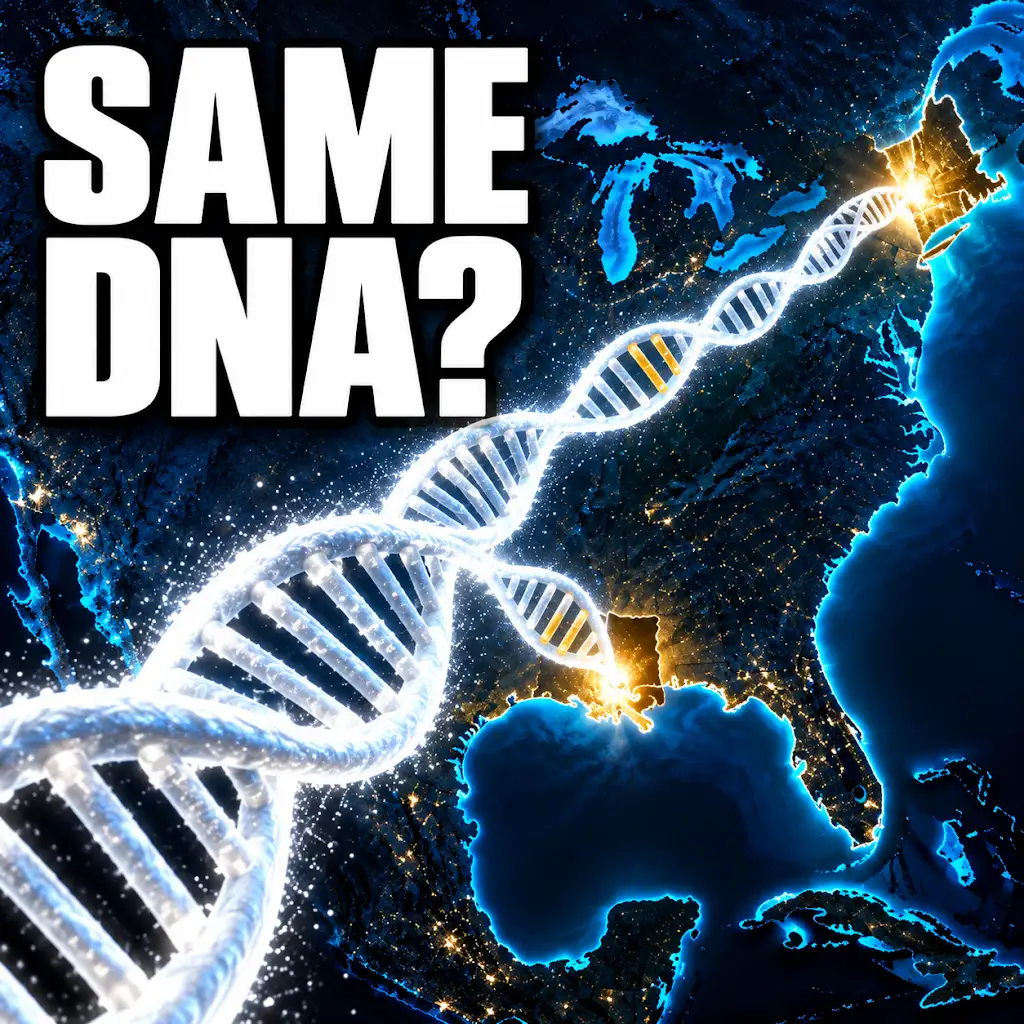
Cajun or French Canadian? The DNA Looked the Same—Until Researchers Looked Closer
FAQs
What is the Acadian genetic legacy in North America?
The Acadian genetic legacy in North America refers to the genetic markers and traits that have been passed down through generations of Acadian descendants living in regions such as Louisiana, Quebec, and the Maritime provinces of Canada.
How did the Acadian genetic legacy develop in North America?
The Acadian genetic legacy in North America developed as a result of the intermingling of Acadian settlers with various indigenous populations, as well as with other European settlers, particularly the French. This mixing of genetic backgrounds has contributed to the unique genetic makeup of Acadian descendants today.
What are some common genetic markers found in Acadian descendants in North America?
Some common genetic markers found in Acadian descendants in North America include markers associated with French and indigenous populations, as well as markers that are specific to the Acadian population. These markers can help researchers trace the genetic history of Acadian families.
How has the Acadian genetic legacy influenced the culture and identity of Acadian descendants in North America?
The Acadian genetic legacy has influenced the culture and identity of Acadian descendants in North America by contributing to their unique heritage and sense of belonging. Many Acadian descendants take pride in their genetic heritage and use it to connect with their roots and history.
What are some ongoing research efforts focused on the Acadian genetic legacy in North America?
There are ongoing research efforts focused on the Acadian genetic legacy in North America, including genetic studies aimed at tracing the origins and migration patterns of Acadian settlers, as well as studies exploring the health implications of specific genetic markers found in Acadian descendants.