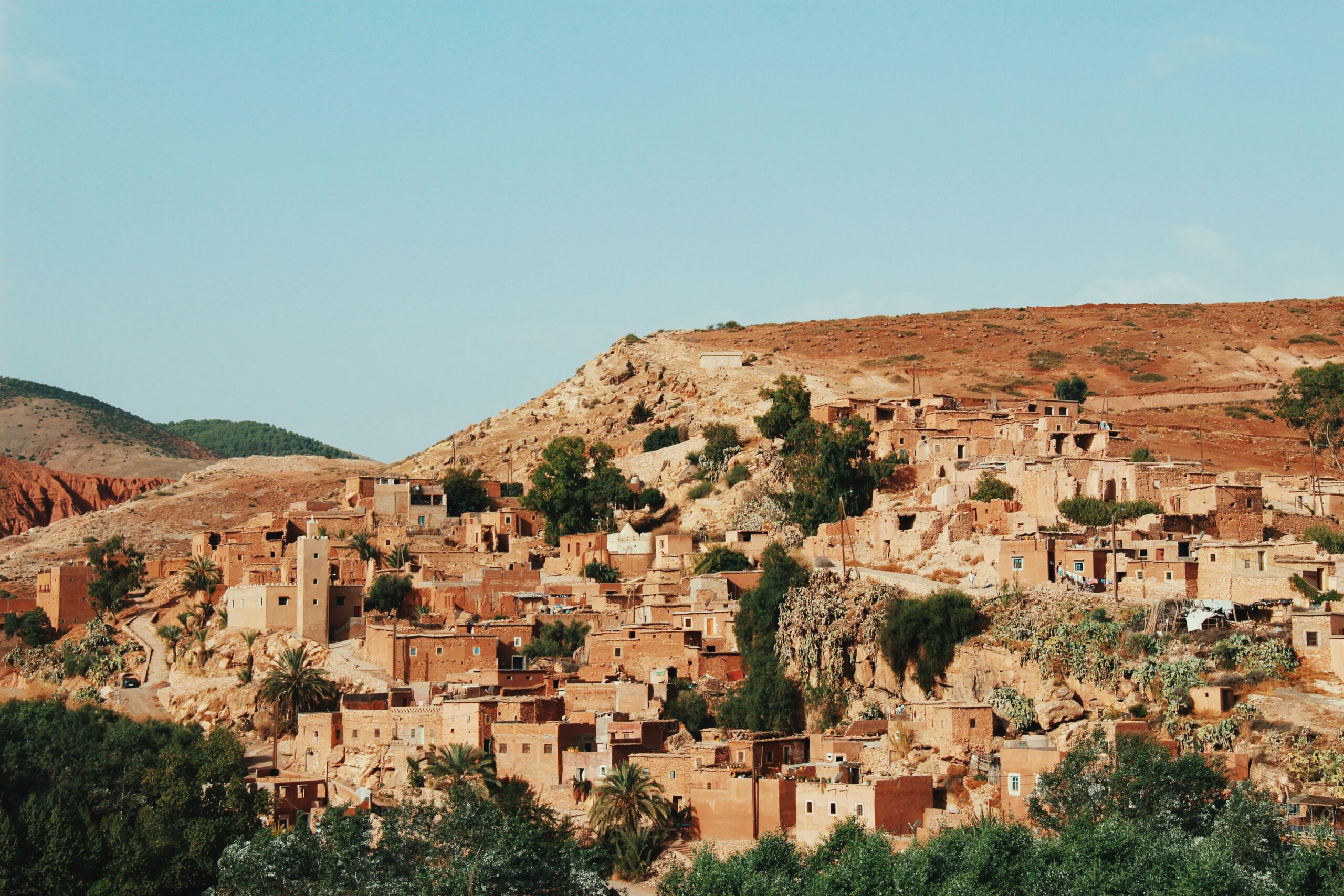
Discovering the ancient heart of Morocco unveils a tapestry woven with timeless beauty, a land where history whispers from weathered kasbahs and vast, untamed landscapes stretch towards horizons painted with an artist’s palette. Beyond the bustling souks of Marrakech and the blue-washed alleys of Chefchaouen lies a realm of hidden valleys, silent deserts, and rugged mountain ranges, each holding secrets of a past that shaped the very soul of this North African jewel. To truly explore ancient Morocco is to embark on a journey of immersion, a descent into a world where tradition endures and the raw magnificence of nature commands reverence. This exploration will guide the reader through some of the most captivating, lesser-trodden paths, revealing the profound beauty and enduring spirit of a land that has captivated travelers for centuries.
The Atlas Mountains: Majestic Peaks and Berber Villages
The majestic Atlas Mountains, a formidable spine running across Morocco, serve as a dramatic backdrop to its ancient soul. This formidable range, often overlooked in favor of coastal cities and desert oases, harbors a rich history and a unique cultural heritage, primarily through its indigenous Berber inhabitants. The sheer scale and ruggedness of the Atlas are breathtaking, offering a stark contrast to the more familiar images of Moroccan landscapes. Here, ancient trails wind through dramatic gorges, past snow-capped peaks that gleam under the African sun, and into remote villages where life has changed little for generations.
High Atlas Trails and Hidden Valleys
The High Atlas, with its imposing Toubkal Massif, the highest peak in North Africa, presents an unparalleled trekking experience. For the intrepid explorer, trails like the ascent of Jbel Toubkal offer not just a physical challenge but a profound connection with the raw power of nature. Beyond the summit, however, lie the true hidden gems: secluded valleys accessible only on foot or by mule. These valleys, often carved by glacial activity over millennia, are pockets of tranquility, adorned with terraced fields, gushing rivers, and the scent of wild herbs. Villages like Aroumd, clinging precariously to the mountainside, offer a glimpse into a resilient way of life, where communities have thrived in harmony with the challenging terrain for centuries. The architecture here is an extension of the landscape itself – stone houses with flat roofs, built to withstand the elements, blending seamlessly into the ochre and brown hues of the mountains. Local guides, often descendants of the very people who carved these paths, possess an intimate knowledge of the land, sharing stories and insights that breathe life into the ancient stones and the traditions they represent.
Berber Culture and Traditions
The Berber people, the indigenous inhabitants of North Africa, are the custodians of much of Morocco’s ancient heritage. Their culture, predating Arab influence, is deeply intertwined with the mountainous landscapes. In the Atlas Mountains, their traditions are a living testament to a proud and enduring spirit. Hospitality is paramount; visitors are often welcomed into homes for mint tea and conversation, a chance to learn about their unique language, Amazigh, and their ancestral customs. The rhythm of life in these villages is dictated by the seasons, by the planting and harvesting of barley and wheat, and by the herding of sheep and goats. Artisans continue to practice ancient crafts, weaving vibrant carpets with intricate geometric patterns, fashioning pottery using traditional techniques, and creating delicate silver jewelry, each piece telling a story passed down through generations. Festivals, though infrequent, are vibrant celebrations of community and faith, often involving music, dance, and elaborate feasts. Exploring these villages is not merely about sightseeing; it is about engaging with a living history, understanding a worldview shaped by the land and by a profound respect for ancestors and community.
The Kasbahs of the Southern Atlas
The southern foothills of the Atlas Mountains are dotted with magnificent kasbahs, ancient fortified villages that stand as sentinels of a bygone era. These impressive structures, often built from pisé (rammed earth), are architectural marvels, designed for defense and to house entire communities. The Kasbah Ait Benhaddou, a UNESCO World Heritage site, is perhaps the most iconic, its terracotta ramparts rising majestically from a desert plain, looking as though it has emerged directly from the earth. But beyond this well-known landmark lie numerous other kasbahs, some partially restored and inhabited, others in various states of elegant decay, their crumbling walls whispering tales of caravan routes, tribal disputes, and periods of immense wealth and influence. Exploring these kasbahs involves traversing narrow, winding alleyways, climbing to rooftop terraces for panoramic views, and imagining life within their thick walls centuries ago. The intricate detailing in the doorways, the geometric motifs adorning the facades, and the strategic placement of watchtowers all speak to a sophisticated understanding of architecture and defense. These kasbahs are not just historical monuments; they are living museums, offering a tangible connection to Morocco’s rich and complex past.
Ancient Morocco is often celebrated for its rich history and diverse landscapes, but there is much more to discover beneath the surface. A fascinating article that explores the broader context of prehistoric human migration, including the intriguing connections to ancient landscapes, can be found at this link: Prehistoric Human Migration to Antarctica. This piece delves into how early humans adapted to various environments, shedding light on the hidden landscapes that shaped their journeys and experiences.
The Sahara Desert: Whispers of Ancient Caravans

The vast expanse of the Sahara Desert, a shimmering sea of sand, is a landscape of profound beauty and an echo of ancient trade routes that once crisscrossed its immensity. To venture into the Sahara is to confront a different kind of ancient Morocco, one defined by silence, by the relentless beauty of the dunes, and by the enduring legacy of the camel caravans that navigated its treacherous terrain for millennia. This is a world of stark contrasts, where the harshness of the environment has forged resilience and where the immensity of the sky at night inspires awe.
Erg Chebbi and Erg Chigaga: Dunes of Immense Beauty
The great ergs, or dune seas, of the Sahara are the embodiment of the desert’s allure. Erg Chebbi, near Merzouga, and Erg Chigaga, a more remote and wilder expanse, offer landscapes of unparalleled beauty. Here, towering dunes, sculpted by the wind into graceful curves, stretch as far as the eye can see. Sunrise and sunset paint these sandy mountains in hues of gold, orange, and crimson, creating a spectacle that is both humbling and breathtaking. Camel treks into the heart of these dunes are an essential experience, allowing visitors to mimic the journeys of ancient travelers. As the camel sways, the silence of the desert envelops, broken only by the soft padding of hooves and the occasional call of a desert bird. Overnight stays in traditional Berber camps, nestled amongst the dunes, provide an opportunity to witness the desert’s transformation under the starlit sky. The Milky Way, unhindered by light pollution, blazes with an intensity rarely seen, a celestial panorama that connects the present with the ancient wonder of the cosmos.
The hidden landscapes of ancient Morocco reveal a rich tapestry of history and culture that continues to intrigue researchers and travelers alike. Recent discoveries have shed light on the advanced technologies and architectural marvels of the region, showcasing how these ancient societies thrived in harmony with their environment. For those interested in exploring more about the technological advancements of ancient civilizations, a fascinating article titled “Uncovering Ancient Tech” delves into similar themes and can be found here. This exploration not only highlights Morocco’s past but also encourages a deeper appreciation for the ingenuity of ancient peoples across the globe.
Nomadic Life and Desert Survival
The Sahara is not an empty wasteland; it is a home to resilient communities who have adapted to its extreme conditions for generations. Nomadic tribes, such as the Ait Atta, continue to traverse the desert with their herds of camels and goats, their lives dictated by the availability of water and pasture. Experiencing their way of life, even for a short period, offers a profound understanding of human adaptability and the deep connection between people and their environment. Sharing a meal of tagine cooked over an open fire, listening to their stories of the desert’s challenges and its subtle beauties, provides an invaluable insight into a culture shaped by the harsh realities and the profound peace of this vast wilderness. Their knowledge of the desert – its hidden wells, its changing winds, its constellations that guide their path – is an ancient wisdom passed down through oral tradition.
Ancient Trade Routes and Lost Cities
The Sahara was once the lifeblood of trans-Saharan trade, connecting sub-Saharan Africa with the Mediterranean world. Ancient caravan routes, though now largely reclaimed by the sands, leave their subtle imprint on the landscape. Traces of these routes can sometimes be found in the form of scattered pottery shards, ancient wells, and the faint outlines of long-abandoned encampments. Exploring these areas with experienced guides can reveal the remnants of once-thriving trading posts and oasis towns that facilitated the movement of goods like gold, salt, and slaves. The legend of lost cities, swallowed by the desert, adds an air of mystery to these explorations, fueling the imagination about the vibrant past that once pulsed through these seemingly desolate expanses. These journeys into the Sahara are a poignant reminder of Morocco’s historical role as a bridge between continents and cultures, a crucial nexus in the ancient global economy.
The Prehistoric Rock Art: Etchings of Early Civilizations

Venturing into the lesser-known corners of Morocco reveals a startling and significant aspect of its ancient past: prehistoric rock art. These enigmatic etchings and paintings, found in remote mountain regions and along desert escarpments, offer a rare glimpse into the lives and beliefs of early human inhabitants, predating even the most ancient historical records. They are a silent testament to a time when art was intrinsically linked to survival, ritual, and the expression of a nascent human consciousness.
The Jebel Saghro and Anti-Atlas Engravings
The Jebel Saghro and Anti-Atlas mountain ranges, often overlooked in favor of the more accessible High Atlas, are repositories of some of Morocco’s most important prehistoric rock art sites. Here, ancient engravings, meticulously chipped into the rock surface, depict a diverse array of subjects. Famously, these include depictions of cattle, sheep, and goats, highlighting the importance of livestock in these early societies. More intriguing are the figures of warriors, often armed with spears and shields, suggesting a complex social structure and perhaps even early forms of conflict. There are also abstract symbols and geometric patterns, whose meanings are lost to time but speak to a sophisticated symbolic language. Sites like Foum-Tizza and Taikourt contain a wealth of these engravings, often found on large boulders and cliff faces, waiting to be discovered by those who venture off the beaten path. The scale of some of these sites, with hundreds of engravings spread across a wide area, indicates significant human activity over long periods.
Interpretations and Mysteries of the Art
The interpretation of prehistoric rock art is a challenging but fascinating endeavor. While the depictions of animals provide clues about diet and subsistence, the human figures and abstract symbols raise more profound questions. Are they ritualistic markings, shamanistic visions, or simply artistic expressions? The presence of what appear to be astronomical symbols has led some researchers to speculate about early observations of the stars and celestial events. The sheer age of some of these engravings, dating back thousands
They Found a 4,000-Year-Old Defense Line in Morocco
FAQs
What is the significance of the hidden landscape in ancient Morocco?
The hidden landscape in ancient Morocco provides valuable insights into the history, culture, and daily life of the people who lived in the region thousands of years ago. It helps archaeologists and historians piece together the puzzle of the past.
How was the hidden landscape in ancient Morocco discovered?
The hidden landscape in ancient Morocco was discovered through a combination of archaeological excavations, satellite imaging, and ground-penetrating radar technology. These methods helped uncover buried structures and artifacts that were previously unknown.
What kind of structures have been found in the hidden landscape of ancient Morocco?
Archaeologists have found a variety of structures in the hidden landscape of ancient Morocco, including ancient settlements, tombs, temples, and irrigation systems. These structures provide clues about the daily life and societal organization of the people who lived in the region.
Why is the hidden landscape of ancient Morocco important for understanding the past?
The hidden landscape of ancient Morocco is important for understanding the past because it offers a glimpse into the lives of ancient civilizations that once thrived in the region. By studying the artifacts and structures found in the hidden landscape, researchers can learn about the culture, economy, and social dynamics of these ancient societies.
What challenges do archaeologists face in studying the hidden landscape of ancient Morocco?
Archaeologists studying the hidden landscape of ancient Morocco face challenges such as preserving fragile artifacts, deciphering ancient inscriptions, and interpreting the significance of the structures they uncover. Additionally, funding and logistical constraints can also pose obstacles to conducting thorough research in the region.