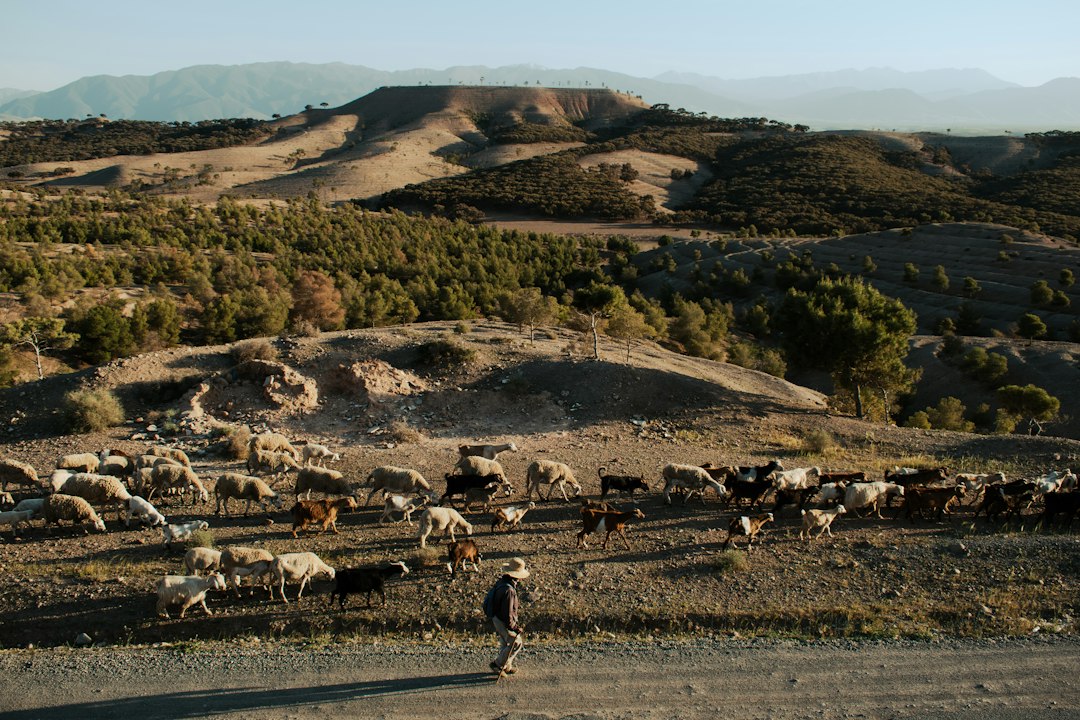
The sun-baked earth of Morocco has long held secrets of its ancient past, and among the most revealing are the remnants of its Bronze Age farming tools. These artifacts, unearthed from dusty tell sites and scattered across arid landscapes, offer a tangible connection to the daily lives and ingenious innovations of those who first coaxed sustenance from this land. Far from being mere relics, these tools are windows into a sophisticated agricultural system that laid the groundwork for much of what would follow in Moroccan history. Through careful examination and analysis, archaeologists and historians are piecing together a narrative of resilience, adaptation, and a deep understanding of the natural world.
Whispers from the Loam: The Archaeological Landscape
The story of Moroccan Bronze Age farming tools begins with the earth itself. Archaeological excavations across the country, from the fertile plains of the Gharb to the more challenging terrains of the interior, have consistently yielded a rich tapestry of material culture. These sites, often characterized by stratified layers of human occupation, provide the context for understanding the evolution of agricultural practices. The Bronze Age in Morocco, generally spanning from around 2000 BCE to 1200 BCE, was a period of significant cultural and technological development. It was a time when settled communities began to flourish, relying increasingly on cultivated crops and animal husbandry. The tools discovered are not found in isolation but are typically situated within settlements, burial sites, and associated agricultural features, painting a holistic picture of life in that era.
Unearthing the Past: Excavation and Preservation
The process of discovering these invaluable artifacts is a meticulous and often painstaking endeavor. Archaeologists employ systematic excavation techniques, carefully removing layers of soil to reveal the remains of ancient habitations and their associated tools. Stratigraphy, the study of the layers of rock and soil, plays a crucial role in dating the finds and understanding their temporal relationships. Preservation is paramount, with teams employing specialized methods to conserve fragile materials, from corroded metal to weathered stone. Radiocarbon dating, alongside typological analysis of tool forms, helps to establish reliable chronologies for the different types of implements and their use. The careful documentation of every find, including its precise location and context, is essential for later interpretation and comparative studies.
The Moroccan Tell: A Microcosm of Ancient Life
Many Bronze Age sites in Morocco are characterized as “tells” – artificial mounds created by the accumulation of debris from successive periods of human occupation. These tells are invaluable because they preserve not only the physical structures of settlements but also the discarded materials of daily life, including farming implements. The Gharb region, in particular, is known for its numerous tell sites, suggesting a significant concentration of agricultural activity. The layers within these tells offer a chronological sequence, allowing researchers to trace the development of tool technology and farming techniques over centuries. The presence of hearths, storage pits, and evidence of food processing within these settlements further reinforces the connection between the tools and their agricultural purpose.
The study of Morocco’s Bronze Age farming tools offers fascinating insights into the agricultural practices of ancient civilizations. These tools not only reflect the technological advancements of the time but also provide a glimpse into the socio-economic structures that supported farming communities. For a deeper understanding of how such ancient economies functioned and ultimately fell, you can explore the article titled “The Fall of Ancient Economies: A Historical Analysis” available at this link.
The Toolkit of the Ancient Farmer: Materials and Forms

The Bronze Age farming tools of Morocco are a testament to the ingenuity of their creators, utilizing the materials readily available to them and shaping them into effective implements. The predominant materials were stone, bone, and, as the name suggests, bronze. The choice of material often dictated the form and function of the tool, with each possessing its own strengths and limitations in the challenging environment of ancient North Africa. The development of metallurgy, particularly the working of bronze, represented a significant technological leap, allowing for the creation of more durable and efficient tools.
Stone as the Foundation: Early Agricultural Implementations
Before the widespread adoption of metal, stone was the primary material for tools. The early Bronze Age farmers relied on chipped and ground stone tools for a variety of agricultural tasks. These included hand axes, adzes, and scrapers, which, while seemingly rudimentary, were essential for clearing land, preparing soil, and harvesting. Obsidian, a volcanic glass, was often favored for its sharpness, producing exceptionally keen edges for cutting and scraping. Flint was another common material, known for its durability and ability to be flaked into precise shapes. Mortars and pestles, also made from stone, were crucial for grinding grains into flour, a staple of the Bronze Age diet.
The Dawn of Metal: Bronze in the Fields
The advent of bronze metallurgy brought about a revolution in agricultural tools. Bronze, an alloy of copper and tin, offered a significant advantage in terms of hardness and durability compared to most stone. This allowed for the creation of more robust and efficient implements. Bronze sickles, with their curved blades, were particularly effective for harvesting grains, allowing for quicker and cleaner cuts than stone blades. Bronze hoes and axes, though likely more expensive and thus perhaps less common than their stone counterparts, would have greatly improved the efficiency of plowing and clearing land. The discovery of bronze casting techniques demonstrates a sophisticated understanding of material properties and manufacturing processes.
Beyond Metal and Stone: Bone and Wood in Agriculture
While stone and bronze often dominate the archaeological record, it is important not to overlook the role of other materials like bone and wood. Bone, readily available from animal husbandry, was used to fashion awls, needles, and other small tools. It could also be shaped into more robust implements, such as spatulas or even rudimentary digging tools, particularly for softer soils. Wood, though perishable and rarely preserved, would have been a crucial material for tool handles, plow components, and perhaps even rudimentary wheeled carts. The absence of preserved wooden artifacts does not negate their importance in the agricultural landscape of the Bronze Age.
Cultivating the Land: Agricultural Practices and Techniques

The tools discovered are not merely static objects; they are intimately connected to the practices and techniques that defined Bronze Age agriculture in Morocco. Understanding how these tools were used allows us to reconstruct the agricultural calendar, the types of crops cultivated, and the methods employed to maximize yields in a diverse and sometimes challenging environment. The success of these early farmers was a testament to their keen observation of the seasons, their knowledge of soil types, and their ability to adapt to the prevailing climate.
Tilling and Sowing: Preparing the Ground
The fundamental act of preparing the soil for planting was central to Bronze Age farming. While the full complexity of plowing techniques is still debated, the presence of robust digging tools, such as adzes and possibly early forms of hoes or spades, suggests methods for turning over and breaking up the earth. The development of the ard, a simple plow that scratches the soil rather than fully inverting it, may have begun during this period. Such a tool, likely fashioned from wood and perhaps tipped with bronze or stone, would have been pulled by draft animals, significantly increasing the area that could be prepared for sowing. The careful selection of arable land, likely near water sources, was crucial for success.
Harvesting the Bounty: Reaping the Rewards
Harvesting was a critical and labor-intensive period. The sickle, often made of bronze with a carefully shaped blade, was the primary tool for reaping grains like wheat and barley, which were staples of the Bronze Age diet. The curved shape of the sickle allowed for efficient gathering of stalks, and its sharpened edge ensured a clean cut. Harvesting would have been a communal effort, with entire families and communities participating. Following the harvest, further processing of the grain would have been necessary, involving threshing – separating the grain from the chaff – and winnowing, where the lighter chaff was blown away, a process likely aided by large flat baskets or simple tools.
Irrigation and Water Management: A Matter of Survival
Morocco’s climate can be characterized by periods of drought, making water management a crucial aspect of Bronze Age agriculture. While large-scale irrigation systems as we understand them today were likely absent, evidence suggests that early farmers understood the importance of water. Proximity to rivers, springs, and natural depressions that retained moisture would have been key factors in site selection. The construction of small, localized channels to divert water or the digging of wells to access groundwater could have been employed. The success of agriculture in many parts of Morocco would have been heavily dependent on rainfall patterns, making the observation of seasonal variations and the timing of planting and harvesting particularly important.
The Broader Context: Society, Economy, and Legacy
The farming tools of the Moroccan Bronze Age are more than just individual implements; they are pieces of a larger puzzle that reveals insights into the society, economy, and enduring legacy of these ancient peoples. The development of agriculture fundamentally transformed human societies, leading to settled lifestyles, population growth, and the emergence of more complex social structures. The agricultural surplus generated by these early farmers would have facilitated trade, specialization of labor, and the development of early forms of political organization.
From Subsistence to Surplus: The Economic Impact
The effectiveness of Bronze Age farming tools enabled communities to move beyond mere subsistence living. The ability to produce more food than was immediately needed created an agricultural surplus. This surplus was not only a buffer against lean times but also a valuable commodity for trade. Grains, processed foods, and possibly even livestock could have been exchanged for other resources, such as metal ores, manufactured goods, or luxury items. This economic activity would have fostered interdependence between different communities and contributed to the growth of regional trade networks. The development of storage techniques, such as granaries and pottery vessels, was essential for preserving this surplus.
Social Structures and Community Life
The reliance on agriculture and the management of its resources would have undoubtedly shaped the social structures of Bronze Age Morocco. Labor organization, particularly during planting and harvest seasons, would have necessitated cooperation and potentially hierarchical structures to manage communal efforts. The ownership of land and the distribution of the agricultural surplus could have led to social stratification, with some individuals or families holding more influence or wealth than others. The stable settlements that agriculture supported allowed for the development of more complex social relationships, rituals, and belief systems. The continuity of some settlement patterns over generations suggests a deep connection to the land and its agricultural potential.
Echoes in the Present: The Enduring Agricultural Heritage
The agricultural practices and innovations of the Moroccan Bronze Age have left an indelible mark on the country’s enduring heritage. Many of the crops cultivated then, such as wheat and barley, remain central to Moroccan cuisine. The deep understanding of the land, its rhythms, and its limitations, which was essential for Bronze Age farmers, continues to inform agricultural practices in various regions of Morocco today. While modern technology has transformed farming, the fundamental principles of soil cultivation, water management, and crop rotation, honed over millennia, still resonate. The legacy of these early farmers is not just in the archaeological record but in the very sustenance of the land and the traditions that continue to thrive.
Recent discoveries in Morocco have shed light on the farming tools used during the Bronze Age, revealing how ancient agricultural practices shaped the region’s development. These findings highlight the significance of innovation in tool-making and its impact on food production. For a deeper understanding of how advancements in technology influence various fields, you might find this article on military decision-making interesting, as it explores the broader implications of innovation in different contexts. You can read more about it here.
Beyond the Artifact: Unanswered Questions and Future Directions
| Tool Name | Material | Estimated Age (Years BP) | Function | Region Found | Dimensions (cm) |
|---|---|---|---|---|---|
| Bronze Plowshare | Bronze | 3500-3000 | Soil tilling | Middle Atlas Mountains | 30 x 10 x 2 |
| Sickle Blade | Bronze | 3200-2800 | Harvesting crops | Rif Mountains | 15 x 3 x 0.5 |
| Hoe | Bronze | 3400-2900 | Weeding and soil preparation | High Atlas | 25 x 8 x 1.5 |
| Grinding Stone | Stone | 3600-3100 | Grinding grains | Ouarzazate region | 20 x 20 x 5 |
| Seed Drill | Bronze and Wood | 3300-3000 | Planting seeds | Tafilalt Oasis | 40 x 15 x 10 |
Despite the significant insights gained from the study of Moroccan Bronze Age farming tools, many questions remain unanswered, and the field of research is constantly evolving. The ongoing discoveries and the application of new analytical techniques promise to shed further light on the intricacies of this ancient agricultural system and its place within the broader context of North African history. The challenges of preservation, the limits of interpretation, and the desire to understand the human element behind these tools drive future research.
Gaps in the Record: The Perishability Problem
One of the most significant challenges in understanding Bronze Age agriculture is the inherent perishability of many materials. Wooden tools, agricultural implements, and even organic remains like seeds and crop residues are rarely preserved, especially in the often arid or semi-arid conditions of Morocco. This leaves significant gaps in our understanding of the complete toolkit and the full range of agricultural techniques employed. The lack of preserved organic remains also makes it difficult to definitively identify the exact crop varieties cultivated and their dietary importance. Future discoveries, perhaps in exceptionally well-preserved anaerobic environments, could offer crucial missing pieces.
The Role of Draft Animals and Plow Technology
While the presence of robust digging tools and the logical progression of agricultural development suggest the use of draft animals and some form of plowing, the precise nature of these technologies remains a subject of ongoing research. Identifying definitive archaeological evidence for early plows or harnesses is challenging. Furthermore, understanding the types of animals used for traction – whether oxen, donkeys, or other species – and their contribution to agricultural efficiency is crucial. Comparative studies with neighboring regions and further excavation of potential plow marks or animal husbandry sites could provide more clarity.
Comparative Studies and Interregional Connections
The study of Moroccan Bronze Age farming tools is enriched by comparative analysis with findings from other Bronze Age cultures across North Africa and the wider Mediterranean. Understanding similarities and differences in tool design, material usage, and agricultural techniques can reveal patterns of technological diffusion, cultural exchange, and independent innovation. Were certain tools or techniques introduced from elsewhere, or did they develop independently in response to local environmental conditions? Investigating trade networks and potential migration patterns can offer further context for understanding the development of Moroccan agriculture. Future research will likely focus on more systematic comparisons and the integration of data from a wider geographical area to paint a more comprehensive picture. The legacy of these early farmers, imprinted on the land and in the artifacts they left behind, continues to inspire and inform our understanding of human ingenuity and adaptation in the face of environmental challenges.

They Found a 4,000-Year-Old Defense Line in Morocco
FAQs
What types of farming tools were used during the Bronze Age in Morocco?
During the Bronze Age in Morocco, farmers used tools such as sickles, hoes, plows, and digging sticks to cultivate the land and harvest crops.
Were Bronze Age farming tools in Morocco made solely from bronze?
No, Bronze Age farming tools in Morocco were not exclusively made from bronze. While some tools were indeed made from bronze, others were crafted from materials such as stone, wood, and bone.
How were Bronze Age farming tools in Morocco different from tools used in other regions?
Bronze Age farming tools in Morocco were often simpler in design compared to tools used in other regions. They were typically handmade and tailored to suit the specific needs of the local agricultural practices.
What evidence supports the existence of Bronze Age farming tools in Morocco?
Archaeological excavations in Morocco have uncovered various farming tools dating back to the Bronze Age. These artifacts, including sickles, plows, and grinding stones, provide tangible evidence of ancient agricultural practices in the region.
How did the use of farming tools impact agriculture during the Bronze Age in Morocco?
The introduction of farming tools during the Bronze Age revolutionized agriculture in Morocco by increasing efficiency and productivity. Farmers were able to cultivate larger areas of land, leading to surplus food production and the growth of settlements and communities.