So, you’re curious about those Cajun French Canadian fine-scale genetics, huh? In a nutshell, it’s about digging into the really granular genetic makeup of people with Cajun and French Canadian ancestry to understand their unique historical journeys and how they connect to broader ancestral patterns. Think of it as tracing your family tree, but with a super-powered microscope that looks at tiny DNA markers, revealing details about who your ancestors were, where they came from, and how they ended up in places like Louisiana or Quebec. It’s not just about broad strokes of “French” or “Canadian”; it’s about the specific migrations, admixtures, and isolated communities that shaped these distinct groups.
The Acadian Exodus and Genetic Echoes
The story of Cajun genetics is inextricably linked to the Acadian expulsion, a pivotal event that scattered a French-speaking population from their original homeland in what is now Nova Scotia and New Brunswick. This forced migration, beginning in the mid-18th century, led many Acadians to seek refuge in Louisiana, where they eventually became known as Cajuns. This diaspora created a genetic bottleneck and unique founder effects, meaning the genetic profile of the Louisiana Cajuns is largely derived from a relatively small group of individuals who survived and resettled.
Tracing the Acadian Roots: Beyond the Broad Stroke
When we talk about Acadian genetics, we’re not just saying “French.” The Acadians themselves were a diverse group, comprised of settlers from various regions of France, including Normandy, Poitou, and Saintonge. Over centuries of isolation in their new world, their genetic makeup began to diverge from their European origins. The expulsion and subsequent resettlement in Louisiana further amplified these differences. Fine-scale genetic analysis can help pinpoint these specific regional French ancestries within the Acadian population, distinguishing them from other French immigrant groups in North America.
Louisiana’s Unique Genetic Landscape
The environment and history of Louisiana played a significant role in shaping Cajun genetics. The relative isolation of many Cajun communities, particularly in the bayou regions, allowed for a degree of genetic drift. This means that certain gene variants became more or less common due to random chance, rather than selective pressures. Furthermore, interactions with other populations in Louisiana – Indigenous peoples, African slaves, and later European immigrants – have also contributed to the complex genetic tapestry of Cajuns. Fine-scale studies look for these unique combinations of markers that distinguish Cajuns from other French-speaking populations or even other populations within Louisiana.
The Canadian Connection: Quebec and Beyond
French Canadian populations, particularly those in Quebec, represent another major branch of French colonial settlement in North America. Unlike the Acadians, the Quebecois population experienced a different trajectory. While they also faced periods of relative isolation, the scale of migration and settlement was different, leading to a distinct genetic profile. Understanding the genetic links between Acadians and Quebecois requires looking at shared ancestral origins in France and then analyzing the divergence patterns that occurred due to their separate historical experiences.
Distinguishing French Canadian from Acadian
While both groups share a French colonial heritage, fine-scale genetic analysis can reveal subtle yet significant differences. The specific regions of France from which early settlers emigrated to Quebec might differ slightly from those who settled in Acadia. Furthermore, the historical patterns of intermarriage and gene flow within Quebec and between Quebec and other parts of Canada have shaped its unique genetic signature. Comparing these detailed genetic profiles allows researchers to quantify the degree of relatedness and divergence between these two major French-speaking populations in North America.
Cajun French Canadian fine scale genetics is a fascinating topic that explores the intricate genetic makeup of the Cajun population, which has roots in French-speaking settlers from Canada. For those interested in understanding the broader implications of genetic diversity and its impact on cultural identity, a related article can be found at this link. While the article primarily discusses financial regulations, it highlights the importance of understanding complex systems, much like the genetic frameworks that shape communities.
Unpacking European Ancestry: The French Mosaic
At the heart of both Cajun and French Canadian genetics lies a foundation of European ancestry, predominantly from France. However, “French” is a broad term, and the genetic landscape of France itself is a mosaic of regional variations. Fine-scale genetic studies aim to unravel these complexities, identifying the specific French regions that contributed most significantly to these North American populations. This goes beyond simply identifying “French” ancestry and seeks to understand the nuances of lineage from areas like Brittany, Normandy, Picardy, Anjou, Poitou, and others.
Recent studies in Cajun French Canadian fine scale genetics have revealed fascinating insights into the unique genetic makeup of this community, highlighting the influence of historical migrations and cultural exchanges. For those interested in the broader implications of genetic research, an intriguing article titled “The Curse of the Mummy’s Tomb: The Dig That Should Have Stayed Buried” explores the unexpected consequences of archaeological endeavors and the stories they unveil. You can read more about it here.
Regional French Substrates: Beyond a Monolithic Origin
Historically, migration patterns within France were not uniform. Individuals and families moved from particular regions to pursue opportunities or escape hardship. When these groups emigrated to North America, they often settled in concentrated communities, carrying their specific regional genetic signatures with them. Fine-scale genetic analyses can detect these subtle differences in marker frequencies that are characteristic of particular French regions. This allows for a more precise understanding of where the ancestors of Cajuns and French Canadians originated within France itself.
The Impact of Migration Routes and Timing
The specific ports of departure in France and the arrival points in North America also mattered. For example, the settlements in Acadia might have drawn more heavily from certain coastal regions of northwestern France, while those in Quebec might have had a different primary sourcing. The timing of these migrations also played a role, as demographic shifts and genetic patterns within France evolved over time. Understanding these historical migration routes and the periods during which these populations established themselves in North America is crucial for interpreting their genetic makeup.
Identifying Non-French European Admixture
While French ancestry is dominant, it’s rarely the sole component. Over centuries, and especially after settlement in North America, intermarriage with other European groups occurred. This could include individuals of British, Irish, Scottish, German, or other European backgrounds. Fine-scale genetic studies are adept at identifying these secondary ancestral contributions, allowing for a more comprehensive picture of an individual’s genetic heritage. The presence and proportion of these non-French European markers can provide insights into historical interactions and assimilation patterns.
Indigenous Gene Flow: A Layer of Ancestry

One of the most significant aspects of fine-scale genetics in understanding Cajun and French Canadian ancestry is the identification of Indigenous gene flow. Both populations show evidence of admixture with various Indigenous North American groups. This reflects the historical realities of early colonial encounters, trade, and intermarriage. The nature and extent of this Indigenous ancestry can vary significantly between individuals and between different regional Cajun and French Canadian communities.
Identifying Specific Indigenous Groups
The Americas are home to hundreds of distinct Indigenous nations, each with its own unique genetic profile. Fine-scale genetic studies can go beyond simply stating “Indigenous” ancestry and attempt to identify which specific Indigenous groups are represented in an individual’s DNA. This requires detailed reference populations of Indigenous peoples from relevant regions, allowing for more precise attributions. For Cajun and French Canadian populations, this often involves identifying ancestry from groups that inhabited the areas where they settled, such as the Mi’kmaq and Maliseet in the Maritimes, or various Indigenous peoples in the Mississippi Valley and further south in Louisiana.
The Nature of Early Encounters
The presence of Indigenous DNA speaks to the complex and often intertwined histories of European colonists and Indigenous peoples. It can reflect instances of alliance, trade, and intermarriage, as well as the tragic consequences of colonization. Understanding the patterns of Indigenous admixture can provide clues about the social dynamics and relationships that existed between these groups during the colonial era. For instance, a higher proportion of Indigenous ancestry might correlate with regions where Indigenous populations were more numerous or where there were stronger inter-group relations.
Differentiating Indigenous Contributions
It’s important to recognize that Indigenous admixture may not be uniform across all Cajun and French Canadian individuals. The specific Indigenous groups encountered and the patterns of intermarriage would have varied depending on the geographic location and the historical period. Fine-scale analysis helps to untangle these variations, revealing how different Indigenous ancestral contributions might be present in distinct Cajun or French Canadian communities, or even in different branches of the same family tree.
African Ancestry: Contributions to the Cajun Tapestry
In Louisiana, the genetic landscape of Cajuns is further enriched by African ancestry, a direct consequence of the region’s history of slavery and the subsequent development of its social and cultural fabric. While often less discussed than French or Indigenous contributions, African ancestry is a vital component of the Cajun identity and genetic heritage for many individuals. Fine
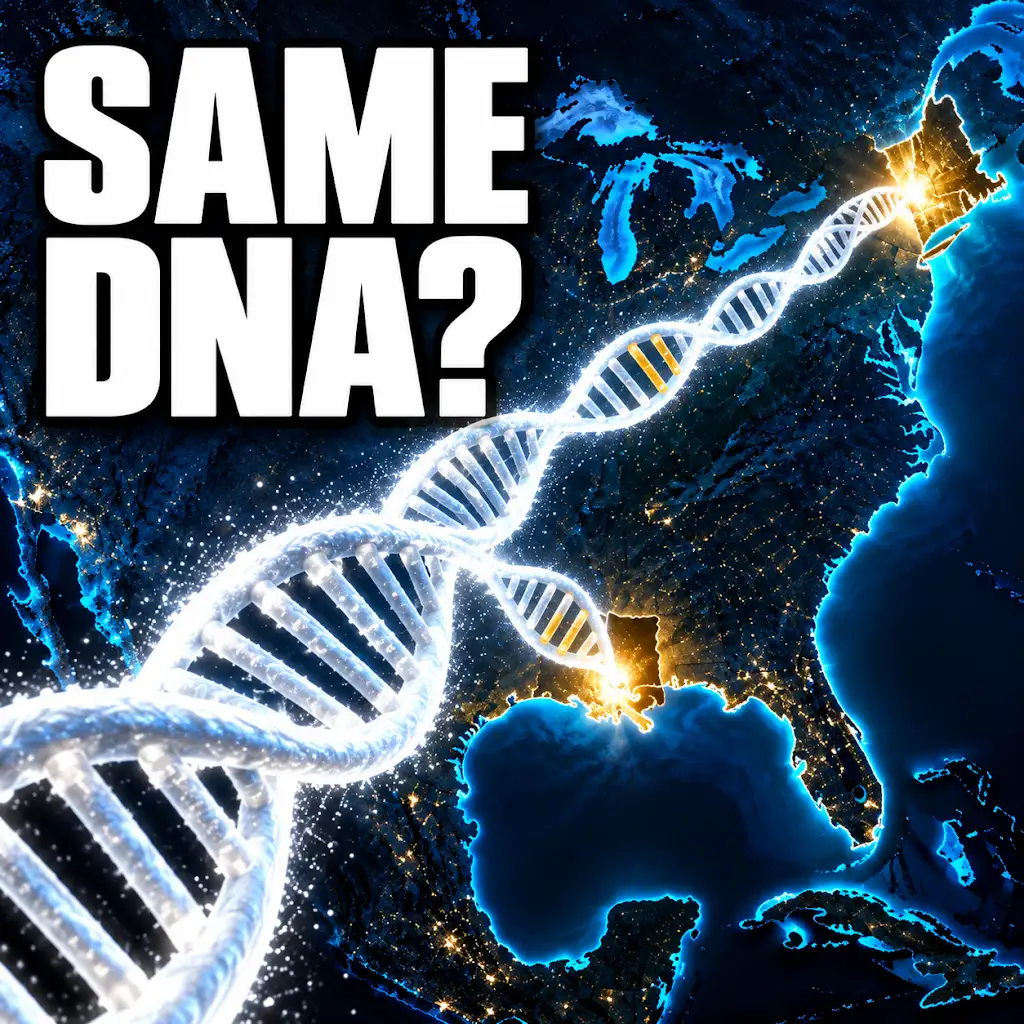
Cajun or French Canadian? The DNA Looked the Same—Until Researchers Looked Closer
FAQs
What is Cajun French Canadian fine scale genetics?
Cajun French Canadian fine scale genetics refers to the study of the genetic makeup of individuals with Cajun and French Canadian ancestry at a detailed level, focusing on specific genetic variations and markers.
What are some key characteristics of Cajun French Canadian fine scale genetics?
Some key characteristics of Cajun French Canadian fine scale genetics include a unique combination of French, Acadian, and Native American genetic influences, as well as a high degree of genetic homogeneity within certain populations.
How is Cajun French Canadian fine scale genetics studied?
Cajun French Canadian fine scale genetics is typically studied using advanced genetic sequencing techniques to analyze specific genetic markers and variations within the DNA of individuals with Cajun and French Canadian heritage.
What are the potential applications of studying Cajun French Canadian fine scale genetics?
Studying Cajun French Canadian fine scale genetics can provide insights into population history, migration patterns, genetic diseases, and personalized medicine for individuals with this specific ancestry.
Are there any ethical considerations associated with studying Cajun French Canadian fine scale genetics?
Ethical considerations related to studying Cajun French Canadian fine scale genetics may include issues of informed consent, privacy, data security, and the responsible use of genetic information for research and healthcare purposes.