So, you’re curious about Cajun genetic ancestry? Essentially, it boils down to a very specific group of people whose ancestors migrated from Acadia (modern-day Nova Scotia and surrounding areas) to Louisiana in the 18th century. This migration, driven by historical events like the British expulsion of the Acadians, created a distinct cultural and genetic pocket in the American South. Their heritage is a fascinating blend of French roots with influences from other groups they encountered along the way, and genetic testing can offer a peek into this unique lineage.
Where Did the Cajuns Come From? A Historical Snapshot
The story of Cajun genetic ancestry begins not in Louisiana, but much further north and east. It’s a tale of migration, displacement, and resilience, all of which have left an indelible mark on their genetic makeup. Understanding these historical movements is key to grasping the “why” behind their unique genetic profile.
The Acadian Homeland
Before becoming “Cajuns,” these people were Acadians. They were primarily French settlers who established colonies in what is now Nova Scotia, Prince Edward Island, and parts of New Brunswick in Canada, starting in the early 17th century. They developed a distinct culture, often isolated from mainstream French society, and became skilled farmers and fishermen, adapting to the coastal environment. Their initial genetic pool was largely French, with some influences from other European settlers who arrived in the region at various times.
The Great Expulsion and Scattering
The pivotal event that shaped Cajun genetic ancestry was the “Grand Dérangement,” or the Great Expulsion, by the British starting in 1755. Fearing Acadian loyalty to France, especially during conflicts like the French and Indian War, the British forcibly removed them from their lands. Families were separated, homes were destroyed, and Acadians were dispersed to various British colonies in North America, Britain, and even France. This period of upheaval meant that not all Acadians went to Louisiana directly. Some were deported to places like Maryland and Virginia, and a portion of what we now consider Cajun people have ancestors who made their way to Louisiana from these other locations after the expulsion.
The Louisiana Settlement
A significant number of Acadians eventually found their way to the southwestern region of Louisiana. They were drawn to the fertile lands and the opportunity to rebuild their lives. Here, they established themselves in a new environment, developing the unique culture we now associate with “Cajuns.” The term “Cajun” itself is a corruption of “Acadian,” reflecting this historical journey. This geographical isolation and the formation of a distinct community were crucial in solidifying a unique genetic heritage.
Cajun genetic ancestry is a fascinating topic that delves into the unique heritage of the Cajun people, primarily descended from Acadian exiles in Louisiana. For those interested in exploring how cultural and historical factors shape genetic backgrounds, a related article titled “Unearthing the Archaeology of Social Collapse” provides insights into the broader implications of ancestry and community resilience. You can read it here: Unearthing the Archaeology of Social Collapse.
The Genetic Tapestry: Who Makes Up Cajun Ancestry?
When we talk about Cajun genetic ancestry, it’s not a single, monolithic entity. It’s a fascinating blend, with a strong French foundation being the most prominent thread. However, like any group that has lived in a particular region for centuries, there are other influences that have contributed to their genetic landscape.
The Dominant French Contribution
The most significant genetic component of Cajun ancestry is undeniably French. The original settlers of Acadia were primarily from various regions of France. Over generations, these French genes became deeply embedded in the Acadian population. When they settled in Louisiana, they largely maintained their French language and cultural traditions, and this genetic lineage remained the strongest. Genetic studies consistently show a high percentage of French ancestry among individuals who identify as Cajun.
Early Louisiana Influences
Once in Louisiana, the Acadians didn’t exist in a vacuum. They interacted with other groups already present in the region or who arrived around the same time. This led to some intermingling and the incorporation of other genetic markers.
- Spanish and Portuguese: Louisiana was under Spanish rule for a period, and there was some Spanish immigration. Similarly, Portuguese sailors and settlers arrived in the Gulf Coast region. These influences can be detected in the genetic profiles of some Cajun families.
- German: There was a significant German presence in Louisiana, particularly along the “German Coast” north of New Orleans. While not as directly integrated into the core Acadian communities, some intermarriage and cultural exchange did occur, contributing a German element to the broader genetic mix of the region, which could indirectly influence Cajun ancestry.
- Native American: Interactions between European settlers and the indigenous populations of North America were common. While the extent of Native American admixture in Cajun populations can vary, genetic studies have shown a detectable, though generally smaller, Native American component in the Cajun gene pool. This reflects historical relationships and intermarriages that took place over centuries.
- African: Louisiana has a long history of African presence, both through the transatlantic slave trade and later immigration. While the enslaved population primarily lived in different social and geographical spheres, there was intermarriage and children born from unions between Europeans and people of African descent. This has contributed an African genetic component to the broader Louisiana population, and some of this is also present in Cajun ancestry. However, it’s important to note that the degree of African admixture can vary significantly from family to family.
What Genetic Testing Reveals About Cajun Heritage
For many, genetic testing offers a tangible way to explore their family history and connect with their heritage. When it comes to Cajun ancestry, DNA tests can provide fascinating insights, though it’s important to understand what the results mean and their limitations.
Interpreting Your DNA Results
When you take a genetic ancestry test, you’re essentially comparing your DNA to reference populations that researchers have studied. For Cajun ancestry, this means looking for markers that are common in populations historically associated with Acadia and southwestern Louisiana, as well as the source populations of the influences mentioned earlier.
- French and Northwestern European: Expect to see a significant portion of your ancestry attributed to France and Northwestern Europe. This is the bedrock of Cajun heritage.
- Iberian Peninsula (Spain/Portugal): Depending on your family lines, you might see results indicating Spanish or Portuguese ancestry. This reflects the historical presence of these groups in Louisiana.
- Germanic Europe: A smaller percentage might point to Germany or surrounding Germanic regions.
- Native American: If your family has Native American roots, this might show up as a specific percentage, often linked to tribes historically present in the southeastern United States or those who intermingled with early settlers.
- Sub-Saharan African: Similarly, an African component would be indicated if you have ancestors from Sub-Saharan Africa.
It’s crucial to remember that genetic testing provides probabilities, not definitive certainties. The accuracy depends on the company’s reference databases and algorithms.
Beyond the Broad Strokes: Regional Specificity
While most consumer DNA tests will give you broad regional categories, some advanced analyses and research projects are beginning to tease out more specific nuances within Cajun populations. These might look at:
- Acadian Origins: Researchers are working to identify genetic signatures that are more specifically linked to the original Acadian settlements before the expulsion, differentiating them from later French immigration.
- Louisiana Isolation: The relative isolation of Cajun communities in Louisiana for centuries has led to some unique genetic patterns. Testing might reveal these localized genetic variations that distinguish them from mainland French populations.
- Specific Family Lines: The influence of other groups (Spanish, German, Native American, African) can be highly specific to individual family trees. One family might have a stronger Spanish link, while another might have more discernible Native American heritage. Genetic testing can sometimes highlight these differences.
The Cultural and Genetic Interplay: More Than Just DNA
Cajun genetic ancestry doesn’t exist in a vacuum; it’s inextricably linked to the vibrant culture that has developed in Louisiana. The shared history, language, and traditions have not only shaped who Cajuns are as a people but have also influenced their genetic landscape.
Language as a Genetic Marker?
While language is cultural, the historical concentration of French speakers in Acadia and then Louisiana has, in a way, acted as a geographic and social barrier that helped preserve certain genetic lines. The emphasis on maintaining French language and customs within Acadian communities contributed to their relative genetic endogamy – marrying within the group. This helped to keep their distinct genetic makeup more intact compared to populations with more fluid social and linguistic boundaries.
Food, Music, and Community
The distinctive Cajun cuisine, music, and strong sense of community are all products of this historical journey. These cultural elements have acted as unifying forces, reinforcing identity and encouraging people to stay connected to their roots. This social cohesion can, in turn, indirectly influence genetic patterns by encouraging relationships within the community. While these are cultural aspects, they are deeply intertwined with the shared history that underpins Cajun genetic identity.
The Living Heritage
Cajun genetic ancestry is not just a relic of the past; it’s a living heritage. Descendants of the Acadians continue to live in Louisiana, preserving traditions and contributing to the state’s unique cultural tapestry. Genetic testing can be a tool for individuals to connect with this ongoing legacy, understanding their place within this rich history. It’s about recognizing the journey of their ancestors and the factors that have shaped their identity over centuries.
Cajun genetic ancestry is a fascinating topic that delves into the unique heritage of the Cajun people, who are primarily descended from Acadian exiles. For those interested in learning more about this rich history, a related article provides a simple explanation of the genetic influences that shaped Cajun identity. You can explore this further by visiting this informative page, which breaks down the complex ancestry and cultural evolution of the Cajun community in an accessible way.
Understanding the Nuances: What to Expect and What to Be Aware Of
| Genetic Ancestry Component | Approximate Percentage | Description |
|---|---|---|
| French | 60-70% | Primary European origin from settlers in Acadia (now Eastern Canada) |
| Native American | 10-15% | Contributions from indigenous tribes in the region, such as the Atakapa and Chitimacha |
| West African | 10-15% | Influence from African slaves brought to Louisiana during colonial times |
| Other European | 5-10% | Includes Spanish, German, and Irish ancestry from later migrations |
Exploring your Cajun genetic ancestry can be a rewarding experience, but it’s good to go into it with realistic expectations and an awareness of potential complexities.
Not Everyone in Louisiana is Cajun
It’s important to distinguish Cajun heritage from the broader population of Louisiana, which is incredibly diverse. While there’s overlap, not everyone with roots in Louisiana has Acadian ancestry. Louisiana has a rich history shaped by French, Spanish, African, Native American, German, Italian, and many other influences, creating a complex mosaic. Cajun ancestry refers specifically to the descendants of the Acadians who settled in southwestern Louisiana.
Variations Within Cajun Families
Even within families who identify as Cajun, there can be significant genetic variations. This is due to:
- Intermarriage: Over centuries, intermarriage with other groups in Louisiana has occurred to varying degrees. Some families may have more pronounced Spanish or African ancestry, for example, while others might have maintained a more exclusively Acadian genetic profile.
- Geographic Concentration: “Cajun Country” itself is a broad area. Families from different parishes within this region might have slightly different historical interactions with neighboring communities or different degrees of isolation, leading to subtle genetic differences.
The Power of Genealogy Research
While DNA testing can provide a snapshot, it’s most powerful when combined with traditional genealogical research. Birth certificates, marriage records, census data, and family stories can help you:
- Trace Specific Lines: Genealogy can help you pinpoint which ancestors contributed which genetic components. For instance, if your DNA shows Spanish ancestry, genealogical research might reveal a specific great-grandparent who was of Spanish descent and lived in Louisiana.
- Understand Context: Genealogy provides the narrative behind the numbers. It explains why certain genetic markers are present and how they fit into your family’s history.
- Verify DNA Results: Sometimes, genealogical research can confirm or shed light on ambiguous DNA results.
Beyond Ethnicity: Health and Traits
Many genetic testing companies also offer insights into health predispositions and inherited traits. While these can be interesting, it’s crucial to remember that:
- These are predispositions, not destiny. Having a genetic marker associated with a certain trait or health condition doesn’t mean you will definitely develop it.
- The science is evolving. Our understanding of the links between genes and health is constantly improving.
- Consult healthcare professionals. For any health-related information derived from genetic testing, it’s always best to discuss it with a doctor or genetic counselor.
Ultimately, exploring your Cajun genetic ancestry is a journey of discovery. It’s a chance to connect with a unique piece of history and understand how your ancestors’ lives have shaped your own, not just genetically, but culturally and personally.
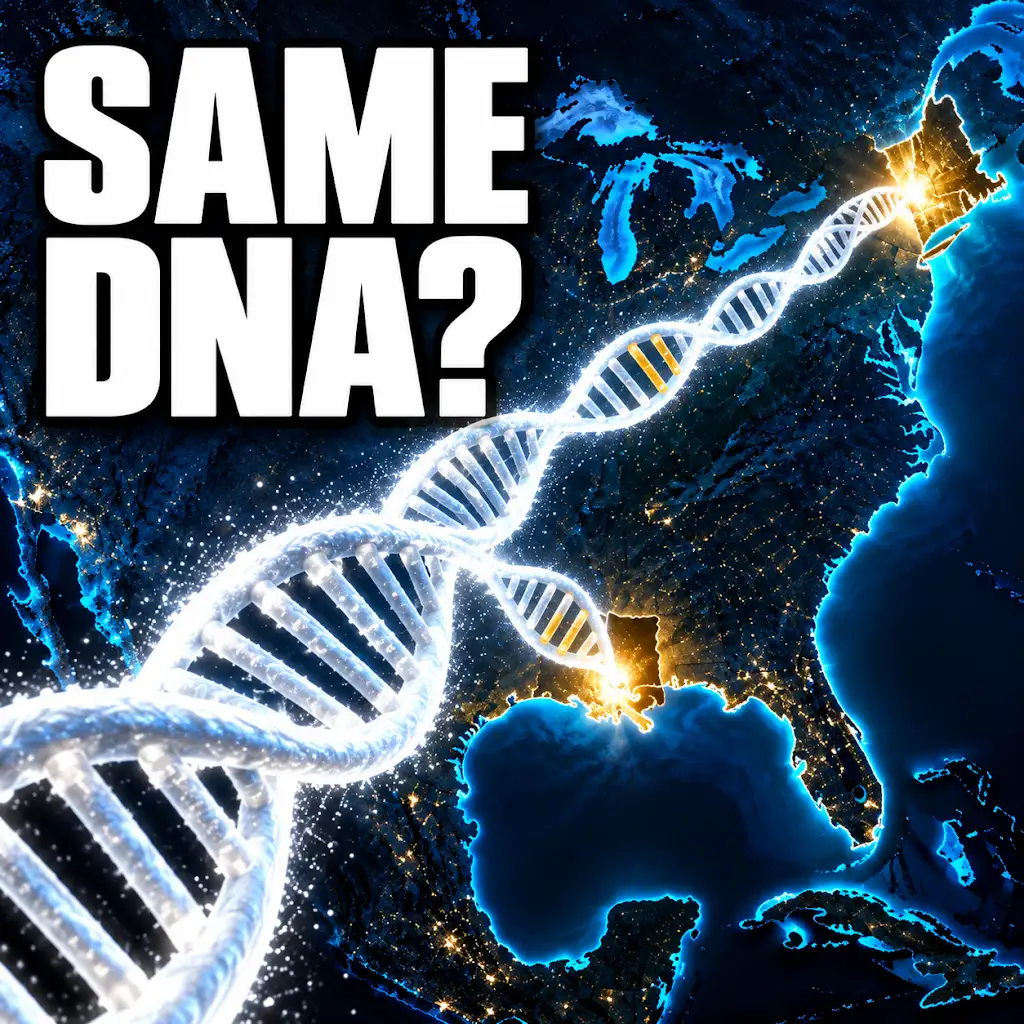
Cajun or French Canadian? The DNA Looked the Same—Until Researchers Looked Closer
FAQs
What is Cajun genetic ancestry?
Cajun genetic ancestry refers to the genetic makeup of individuals who are descendants of the Acadian people, French colonists who settled in the Canadian Maritimes in the 17th century and later migrated to Louisiana.
How did the Cajun population come to have a unique genetic profile?
The Cajun population developed a unique genetic profile due to a combination of factors, including intermarriage among Acadians, French settlers, Native Americans, and Africans, as well as geographic isolation in Louisiana.
What are some common genetic markers found in Cajun populations?
Common genetic markers found in Cajun populations include a mix of European, Native American, and African ancestry, with specific genetic variations that are unique to the Cajun population due to their history and intermarriage.
Can genetic testing help individuals of Cajun descent learn more about their ancestry?
Yes, genetic testing can provide individuals of Cajun descent with insights into their genetic ancestry, including the percentage of European, Native American, and African heritage they may have inherited from their Cajun ancestors.
Are there any health implications associated with Cajun genetic ancestry?
Studies have shown that individuals with Cajun genetic ancestry may have a higher risk for certain genetic conditions, such as hereditary breast and ovarian cancer, due to specific genetic mutations that are more common in this population.