
Marilyn Monroe’s paternal lineage has long been a subject of intense speculation, a persistent enigma woven into the fabric of her iconic and tragic life. Born Norma Jeane Mortenson, her mother, Gladys Pearl Baker, was married twice before Marilyn’s birth, and the identities of the men in her life at crucial junctures have fueled decades of debate. While Gladys herself offered conflicting accounts, the prevailing narrative often pointed to her second husband, James Dougherty, or a man named Edward G. Robinson Jr., the son of the famous actor. However, more recent investigations, employing advancements in genetic analysis and meticulous historical research, are beginning to shed new light on this enduring mystery, potentially revealing the truth about Marilyn Monroe’s genetic father.
Tracing the Roots of Uncertainty: Early Life and Maternal Lineage
Norma Jeane Mortenson was born on June 1, 1926, in Los Angeles. Her mother, Gladys Pearl Baker, was a film editor who struggled with mental health issues throughout her life. The identity of Norma Jeane’s biological father was never definitively established by Gladys, contributing significantly to the ensuing ambiguity. Gladys was married to Martin Edward Mortensen, a name often misspelled as Mortenson, from 1924 to 1925. They divorced shortly before Norma Jeane’s conception. Gladys then married Ervin L. Goddard in 1926, but this marriage was also short-lived. It is within this period of fractured relationships and shifting marital statuses that the paternal question arises.
The Shadow of Mortensen: A Questionable Connection
Martin Edward Mortensen, whose name appears on Norma Jeane’s birth certificate as the father, became a central figure in the early speculation. However, historical records indicate that Gladys and Mortensen were separated for a significant period before Norma Jeane’s birth, casting doubt on his paternity. Mortensen was a machinist by trade and reportedly a troubled individual. His presence on the birth certificate is often attributed to Gladys’s desire for a sense of legitimacy or a pragmatic attempt to avoid further complications. The lack of definitive proof of their cohabitation or relationship around the time of conception has left his claim as biological father in question.
Gladys’s Conflicting Narratives: A Mother’s Burden
Gladys Pearl Baker’s accounts of Norma Jeane’s paternity were notoriously inconsistent. In some instances, she alluded to Mortensen as the father, likely due to his name on the birth certificate. At other times, she hinted at other men, including a man named Edward G. Robinson Jr. This inconsistency stemmed from a complex set of factors, including her own emotional turmoil, her desire to protect Norma Jeane, and perhaps even a need to sensationalize or obscure the truth for reasons unknown. Her fragile mental state and her own unresolved issues undoubtedly played a significant role in the ambiguity surrounding her daughter’s parentage.
The “Other” Men: Exploring Potential Candidates
Beyond Mortensen, other men were present in Gladys’s life, and their names have surfaced in discussions about Marilyn’s father. One of the most persistent theories involved Edward G. Robinson Jr., the son of the renowned actor. Gladys had a brief affair with him around the time of Norma Jeane’s conception. Robinson Jr. himself expressed a belief that he might be the father, and his son, Jeffrey Robinson, has publicly acknowledged this possibility, even undergoing DNA testing in an attempt to clarify the matter. Another individual, Stanley Gifford, a colleague of Gladys’s at Paramount Studios, has also been cited as a potential father due to their known relationship.
The mystery surrounding Marilyn Monroe’s genetic father has captivated many, leading to various theories and investigations into her lineage. For those interested in exploring related topics, an intriguing article titled “Iraq’s Fragmentation: A Looming Crisis” delves into the complexities of identity and heritage in a different context. You can read more about it here: Iraq’s Fragmentation: A Looming Crisis. This piece highlights how personal and national identities can intertwine, much like the ongoing quest to uncover the truth about Monroe’s ancestry.
The Rise of the Hollywood Icon: Secrecy and Speculation

As Norma Jeane Baker transformed into the global phenomenon known as Marilyn Monroe, the question of her paternal lineage continued to loom, often in hushed tones and sensationalized tabloid reports. Her meteoric rise to stardom only amplified the public’s fascination with every aspect of her life, including the origins of her striking beauty and captivating persona. The lack of a clear paternal figure in her life was often interpreted as a poignant symbol of her perceived lack of roots or a contributing factor to her emotional vulnerabilities.
The Making of a Star: From Norma Jeane to Marilyn
The transition from Norma Jeane Baker to Marilyn Monroe was a carefully orchestrated process. Her early life, marked by periods in foster care and an orphanage, contributed to her sense of displacement. As her acting career began to gain momentum, her public image was meticulously crafted. The mystery surrounding her father, however, remained an unresolved subplot, a shadow that persisted despite her dazzling success. This personal enigma mirrored the complexities of the characters she often portrayed – women grappling with identity and seeking validation.
Public Fascination and Tabloid Intrigue
The media, eager to delve into the private lives of celebrities, latched onto the story of Marilyn Monroe’s unknown father. The lack of concrete answers provided fertile ground for speculation and rumor. Tabloids published numerous articles, often with sensational headlines, proposing various candidates and fabricating elaborate theories. This constant media attention, while contributing to her fame, also added another layer of pressure and scrutiny to her already complex existence. The absence of a definitive paternal figure became a narrative thread that was frequently exploited.
The Legal and Personal Void
Legally, the paternity of Marilyn Monroe remained unconfirmed. This had implications for her identity and her upbringing, as she spent significant portions of her childhood in foster care. Personally, the absence of a father figure undoubtedly had a profound impact on her. She often spoke of longing for a stable family environment and the love and guidance a father might provide. This emotional void, coupled with her other personal struggles, contributed to her lifelong quest for belonging and acceptance.
Unearthing Genetic Clues: The Dawn of DNA Analysis

The advent of sophisticated DNA analysis techniques in the late 20th and early 21st centuries offered a revolutionary path to potentially resolving long-standing genealogical mysteries. For Marilyn Monroe, this scientific advancement held the promise of finally answering the question that had eluded definitive proof for decades. The focus shifted from anecdotal evidence and speculation to empirical, biological data.
The Power of Genetic Profiling
DNA analysis allows for the comparison of genetic material to establish biological relationships with a high degree of certainty. By comparing the DNA of a descendant with that of potential relatives, or by analyzing genetic material found in historical artifacts, it becomes possible to trace lineage. In the case of Marilyn Monroe, this meant investigating any available biological samples that could be linked to her or her potential fathers.
The Search for Viable Samples
The primary challenge in applying DNA analysis to Marilyn Monroe’s paternity case was the scarcity of viable biological samples. Her remains were cremated, and any personal belongings that might have contained her DNA were dispersed or deteriorated over time. Similarly, obtaining DNA from potential fathers who were deceased presented its own set of difficulties, requiring access to their remains or their direct descendants. The search for these elusive samples became a critical phase in the investigation.
The Role of Forensic Genealogy
Forensic genealogy, a field that combines genetic analysis with traditional genealogical research, proved instrumental in this pursuit. Researchers and genealogists meticulously scoured historical records, traced family trees, and identified potential living relatives of the individuals who were considered candidates for Marilyn’s paternity. This rigorous groundwork was essential in identifying individuals from whom DNA samples could be ethically and practically obtained.
Groundbreaking Investigations: The Case for Edward G. Robinson Jr.
Over the years, various individuals have been proposed as Marilyn Monroe’s biological father. However, recent and ongoing investigations have increasingly pointed towards Edward G. Robinson Jr. as the most probable candidate, driven by compelling evidence and advancements in genetic science.
The Robinson Family Connection
Edward G. Robinson Jr. was the son of the famous actor Edward G. Robinson and his wife, Jane. Marilyn Monroe was known to have had a brief but significant relationship with Robinson Jr. in the early 1940s, around the time of her conception. This connection, coupled with his later acknowledgment of the possibility, made him a primary focus of renewed investigation. His son, Jeffrey Robinson, has been particularly instrumental in pursuing the truth.
Jeffrey Robinson’s DNA Quest
Jeffrey Robinson, the son of Edward G. Robinson Jr., has been a driving force in attempting to definitively resolve the paternity question. He has publicly stated his belief that his father might be Marilyn Monroe’s father and has actively sought to obtain DNA evidence to confirm or deny this possibility. This personal quest has been fueled by a desire for clarity and a sense of historical truth.
Analysis of Historical Artifacts: Hair Samples and Personal Effects
The investigation into Edward G. Robinson Jr.’s potential paternity has involved the analysis of various historical artifacts. Notably, hair samples believed to be from Marilyn Monroe, purportedly collected during her lifetime, have been subjected to DNA testing. These samples, when compared with DNA from Edward G. Robinson Jr.’s descendants or his own DNA if available, can provide crucial genetic links. The meticulous process of verifying the provenance and authenticity of these artifacts is paramount to the reliability of the findings.
Comparative Genetic Studies: Unveiling the Likelihood
Through comparative genetic studies, researchers have analyzed the DNA profiles obtained from these historical samples and compared them with those of known relatives of Edward G. Robinson Jr. If a significant portion of shared DNA markers is found, it strongly suggests a biological relationship. While definitive proof can be complex due to the passage of time and the potential for fragmented DNA, the cumulative evidence from these genetic comparisons has begun to build a compelling case.
The mystery surrounding Marilyn Monroe’s genetic father continues to intrigue both fans and historians alike, as new theories and evidence emerge. Recent discussions have drawn parallels between her enigmatic lineage and other historical mysteries, such as those explored in the article about ancient navigation techniques. For a fascinating read on how ancient civilizations navigated the seas, you can check out this related piece on Minoan celestial navigation, which highlights the complexities of uncovering truths from the past.
The Evolving Narrative: Implications and Future Directions
| Aspect | Details |
|---|---|
| Subject | Marilyn Monroe’s Genetic Father Mystery |
| Birth Name | Norma Jeane Mortenson (later Baker) |
| Birth Date | June 1, 1926 |
| Known Father on Birth Certificate | Unknown or listed as “Charles Stanley Gifford” (disputed) |
| Mother | Gladys Pearl Baker |
| Potential Fathers Suggested | Charles Stanley Gifford, Martin Edward Mortenson, or other unknown men |
| Evidence Type | Birth records, personal letters, family testimonies, DNA analysis (limited) |
| DNA Testing Status | No conclusive public DNA test results available to confirm paternity |
| Impact on Biography | Contributes to ongoing speculation and mystery surrounding Marilyn Monroe’s early life |
| Research Challenges | Incomplete records, multiple claims, lack of direct DNA evidence |
The ongoing investigations into Marilyn Monroe’s paternal lineage are not merely an academic exercise in celebrity gossip. They hold the potential to rewrite a small but significant chapter of Hollywood history and offer a deeper understanding of the icon’s personal life and the influences that shaped her. The confirmation of her biological father could provide crucial insights into her genetic predispositions, her appearance, and even aspects of her personality that have long been debated.
Understanding the Icon Through Her Ancestry
The identification of Marilyn Monroe’s genetic father could offer a more complete picture of her heritage. Understanding the family background, potential health predispositions, and even personality traits of her paternal lineage could shed new light on her complex character and the challenges she faced throughout her life. This biological connection could provide a missing piece in the puzzle of her identity, offering a more nuanced understanding beyond the public persona.
The Ethical Considerations of Genetic Discovery
As genetic science advances, so too do the ethical considerations surrounding its application. In cases involving historical figures and potential living relatives, paramount importance is placed on consent, privacy, and the respectful handling of genetic information. The pursuit of truth must be balanced with the rights and sensitivities of all involved parties, ensuring that these investigations are conducted with the utmost ethical integrity.
The Enduring Legacy and Unanswered Questions
While new insights are continually emerging, the mystery of Marilyn Monroe’s paternal lineage may not have a single, definitive, universally accepted answer for some time. The challenges of obtaining and analyzing historical DNA, coupled with the complexities of genealogical research, mean that absolute certainty can be elusive. However, the ongoing efforts represent a significant step forward in unraveling this enduring enigma, ensuring that the story of Marilyn Monroe continues to be explored and understood in ever-greater depth. The journey to understand her origins, like her life, remains a compelling narrative of fascination, speculation, and the relentless pursuit of truth.
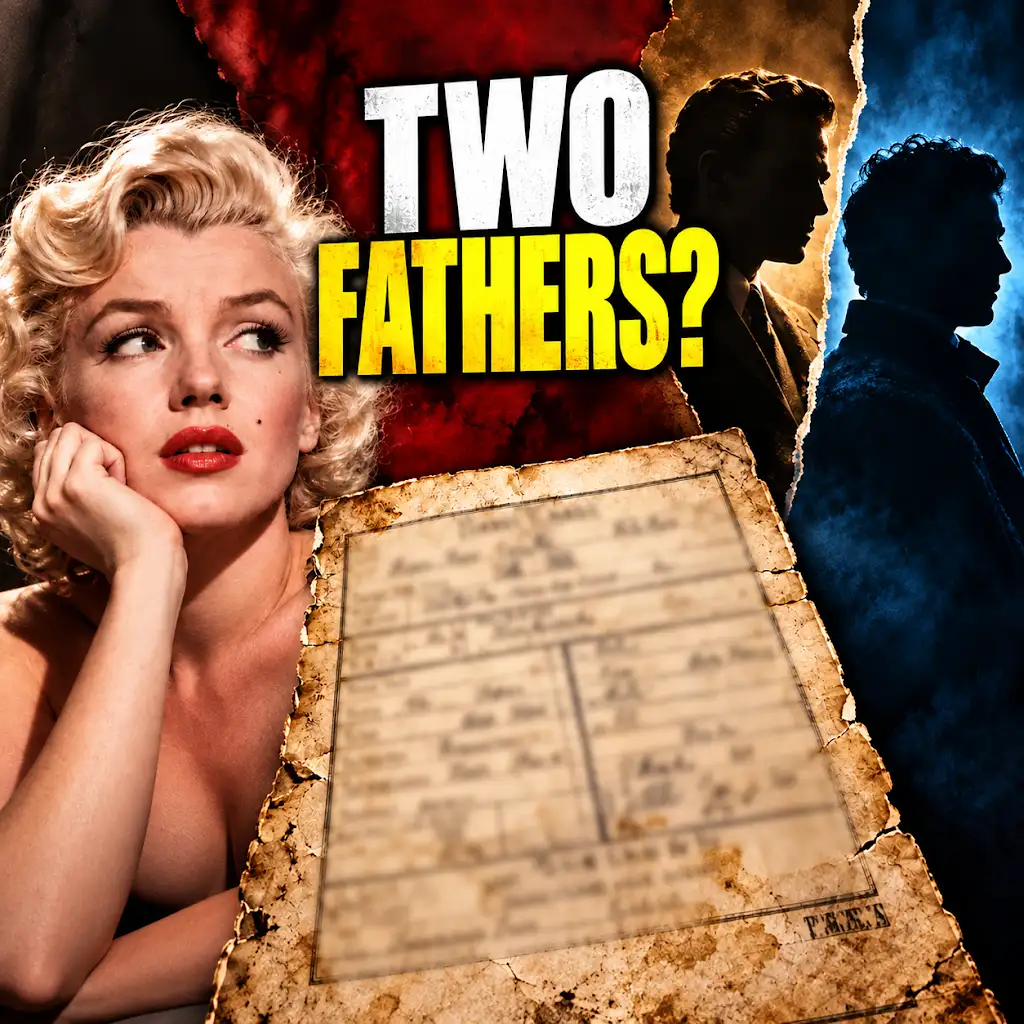
Marilyn Monroe’s Birth Certificate Named One Man. DNA Pointed to Another
FAQs
1. Who is believed to be Marilyn Monroe’s genetic father?
It is believed that Charles Stanley Gifford, a colleague of Marilyn Monroe’s mother, Gladys Baker, is her genetic father.
2. Why is there a mystery surrounding Marilyn Monroe’s genetic father?
There is a mystery because Marilyn Monroe’s mother, Gladys Baker, had multiple relationships around the time of Marilyn’s conception, making it unclear who her biological father is.
3. What evidence supports the theory that Charles Stanley Gifford is Marilyn Monroe’s genetic father?
Evidence includes physical similarities between Marilyn Monroe and Gifford, as well as accounts from family members and acquaintances suggesting a close relationship between Gifford and Gladys Baker.
4. How has modern technology played a role in uncovering Marilyn Monroe’s genetic father mystery?
Modern DNA testing has allowed researchers to analyze genetic material from Marilyn Monroe’s relatives and compare it to potential paternal candidates, providing more insight into her genetic lineage.
5. What impact does the revelation of Marilyn Monroe’s genetic father have on her legacy?
The revelation could potentially change the narrative surrounding Marilyn Monroe’s upbringing and identity, shedding new light on her personal history and adding complexity to her iconic status in popular culture.