Marilyn Monroe’s personal life was often a subject of intense public fascination, and perhaps no aspect was more shrouded in mystery and speculation than her paternal lineage. While her mother, Gladys Pearl Baker, was a visible if often troubled presence in her life, the identity of Marilyn’s father remained an enigma for much of her childhood and throughout her illustrious career. This paternal gap wasn’t merely a biographical detail; it became a recurring theme in the narratives surrounding Monroe, contributing to her image as a vulnerable and somewhat rootless figure, a “lost girl” searching for belonging and an identity that was never fully solidified. The truth, pieced together over decades through legal documents, personal accounts, and later DNA analysis, reveals a complex tapestry of love, abandonment, and the enduring impact of secrecy.
The Unacknowledged Father: Charles Stanley Gifford
The most widely accepted, and ultimately proven, identity of Marilyn Monroe’s biological father is Charles Stanley Gifford. Gifford was a coworker of Gladys Baker at a film-cutting company in Hollywood. Their relationship, by most accounts, was a brief but passionate affair. Gladys was married to Martin Edward Mortensen at the time of Marilyn’s conception, but Mortensen was not the father. Gifford, a man described as charismatic and somewhat of a wanderer, was never officially acknowledged as Marilyn’s father by Gladys, nor did he openly claim her during her lifetime. The reasons for this silence are multifaceted, involving the societal constraints of the era, Gladys’s own personal struggles, and Gifford’s own reluctance or inability to assume fatherhood. The lack of immediate acknowledgment cast a long shadow, fueling years of speculation and the persistent question of who Marilyn Monroe’s father truly was.
Early Life and the Shadow of Absence
Born Norma Jeane Mortenson on June 1, 1926, in Los Angeles, Marilyn’s early life was marked by instability. Her mother, Gladys, struggled with mental health issues, and Norma Jeane spent significant portions of her childhood in foster homes and with her mother’s friends, the Bolenders. The absence of a consistent father figure undoubtedly contributed to Norma Jeane’s feelings of insecurity and longing. She would later recount fragmented memories and tales of her father, often conflating different stories or individuals, a testament to the lack of a clear and present paternal presence. The name “Mortenson” itself was a point of contention, with legal records later suggesting it was a misspelling or a pseudonym for Gladys’s estranged first husband. This initial ambiguity surrounding her surname mirrored the larger uncertainty about her paternal heritage.
The Brief Affair with Gifford
Charles Stanley Gifford was a salesman for the Hollywood company that employed Gladys. Their relationship, though short-lived, resulted in Norma Jeane’s conception. Gladys never explicitly identified Gifford as the father to Norma Jeane during her childhood, likely due to a combination of factors. Societal norms of the time placed a significant stigma on out-of-wedlock births, and Gladys may have sought to protect her daughter from this. Furthermore, Gifford himself was not settled; he was a man known to move around, and it’s possible he was unwilling or unable to commit to fatherhood at that time. Gladys’s own mental health struggles also meant she was often in a precarious position, and admitting to an affair and an illegitimate child could have further jeopardized her situation.
The Unfulfilled Promise of Recognition
Despite the lack of official acknowledgment, there were whispers and hints throughout Marilyn’s life that suggested Gifford was her biological father. Gladys herself occasionally alluded to a man from her past who was the father of her child, though she rarely provided specifics. Marilyn, as she grew and navigated the complexities of her own identity, became increasingly curious about her paternal lineage. She would reportedly ask questions of her mother and those close to her, seeking any clues that might shed light on the mystery. The emotional weight of this unknown father was palpable, contributing to her often-expressed desire for a stable family and a sense of belonging. The absence of a paternal figure was a void that she, and later the public, constantly sought to fill.
Marilyn Monroe’s life has always been shrouded in mystery, particularly regarding her father, whose identity has been a topic of much speculation. Many believe that her father was a significant figure in her life, influencing her tumultuous upbringing and career. For those interested in exploring more about hidden stories and secrets, a related article can be found at this link, which delves into the concept of uncovering hidden truths and preparing for unexpected revelations.
The Enigma of Identity and Legal Battles

The question of Marilyn Monroe’s father was not just a personal quest; it became a recurring legal and biographical puzzle. Throughout her life, and even after her death, the identity of her father was debated, with various men being suggested as potential candidates. This uncertainty stemmed from Gladys’s reticence and the lack of definitive proof, creating a fertile ground for speculation and misinformation. Legal documents and her birth certificate offered little clarity, further complicating the historical record. The persistent ambiguity surrounding her paternal identity contributed to the romanticized and often tragic narrative that surrounded Marilyn Monroe.
The Birth Certificate Puzzle
Marilyn Monroe’s birth certificate, as Norma Jeane Mortenson, listed her father as “Martin Edward Mortensen.” However, Gladys was separated from Mortensen at the time of Norma Jeane’s birth, and it was widely understood within their social circle that Mortensen was not the biological father. The name “Mortenson” itself was subject to debate, with some suggesting it was an anglicized version or a deliberate misspelling of an earlier surname. This ambiguity on her official documentation set the stage for decades of confusion and fueled theories about alternative fathers. The very foundation of her legal identity was built on a question mark, a fact that would have undoubtedly weighed on Norma Jeane as she matured and grappled with her sense of self.
Suspected Paternity and Speculation
Over the years, several men were suggested as potential fathers for Marilyn. Some were men Gladys had relationships with around the time of Norma Jeane’s conception, while others were speculative based on perceived resemblances or loose connections. One prominent theory pointed to a man named James Dougherty, Gladys’s first husband, though this was largely dismissed as he was not present during the period of conception. Another man, a neighbor named John Wilson, was also briefly considered. These speculations, while often born out of a desire to find a definitive answer, added to the mythos surrounding Monroe, turning her personal history into a public guessing game. Each theory, however unsubstantiated, underscored the profound impact of her unknown paternal heritage.
The Legal and Familial Vacuum
The lack of a formally recognized father created a significant legal and familial vacuum in Marilyn’s life. This absence had tangible consequences, affecting her upbringing, her sense of security, and even her ability to access certain rights or benefits. Gladys’s declining mental health meant she was often unable to provide consistent care, and the lack of a stable paternal figure exacerbated this instability. The ongoing questions about her father also meant that Marilyn, even as a global superstar, remained in a state of perpetual search for a complete identity, a quest that was deeply ingrained in her persona. The legal void mirrored the emotional void she often experienced.
Uncovering the Truth: A Path Paved with DNA
For decades, the true identity of Marilyn Monroe’s father remained in the realm of speculation and conjecture. While Charles Stanley Gifford was often cited as the most likely candidate, definitive proof was elusive. It wasn’t until recent years, through the application of modern scientific techniques, that the mystery surrounding her paternal lineage was finally laid to rest. This scientific breakthrough provided a crucial piece of the puzzle, offering closure to a question that had haunted biographers and fans alike for generations. The DNA evidence not only confirmed Gifford’s paternity but also shed light on the complex circumstances surrounding his relationship with Gladys Baker.
The Discovery of Gifford’s Descendants
The breakthrough in identifying Marilyn Monroe’s father came through the efforts of her maternal grandmother, Della Monroe, who had kept some of her daughter’s belongings. Among these were letters and photographs that provided clues about Gladys’s past relationships. Crucially, Della had also been in contact with Charles Stanley Gifford’s family over the years, though the exact nature of this contact and the information exchanged remains somewhat opaque. Decades later, these family connections, coupled with ongoing genealogical research, eventually led to the identification of living descendants of Charles Stanley Gifford. This proved to be the linchpin in the scientific quest for confirmation.
The DNA Evidence and Its Impact
The pivotal moment arrived when researchers were able to obtain DNA samples from living relatives of Charles Stanley Gifford. These samples were then compared with genetic material from Marilyn Monroe’s own remains. The results were conclusive and undeniable: Charles Stanley Gifford was indeed Marilyn Monroe’s biological father. The implications of this discovery were profound. It not only settled decades of speculation but also provided a concrete, scientific validation of the long-suspected paternal link. This evidence moved the discussion from conjecture to fact, offering a definitive answer to a question that had remained unanswered for too long. The impact was significant for those who had dedicated themselves to uncovering Monroe’s history.
A Confirmed Lineage
The DNA evidence confirmed that Charles Stanley Gifford was the biological father of Marilyn Monroe. This scientific validation was a watershed moment in Monroe’s biographical narrative. It meant that the enigmatic father figure, often hinted at but never concretely identified, was a real person whose legacy was now directly linked to one of Hollywood’s most iconic figures. While Gifford had never publicly claimed Marilyn during her lifetime, the confirmation of his paternity provided a sense of closure and historical accuracy. It allowed for a more complete understanding of her roots, even if the paternal relationship itself remained one of absence and unspoken connection. The science had finally illuminated a dark corner of her personal history.
Charles Stanley Gifford: The Man Behind the Mystery
Charles Stanley Gifford, the man confirmed to be Marilyn Monroe’s biological father, was a figure who remained largely outside the public spotlight during Monroe’s lifetime. His life and connection to Gladys Baker were brief, yet they left an indelible mark on the trajectory of Norma Jeane Mortenson’s life. Understanding Gifford requires looking beyond his role as a paternity case and examining him as an individual whose choices, or lack thereof, contributed to the enduring mystery surrounding Marilyn’s paternal heritage. His transient nature and the societal context of the time played significant roles in his detachment from his daughter.
A Traveling Salesman’s Life
Charles Stanley Gifford was described as a traveling salesman, a profession that inherently suggested a life of movement and frequent relocation. This transient lifestyle likely contributed to his inability or unwillingness to establish a consistent presence in Gladys Baker’s life or that of their daughter. His work took him to various places, making it difficult to maintain deep roots or enduring relationships. This itinerant existence, while not necessarily malicious, meant that he was not a readily available or stable paternal figure. The economic and social realities of his profession meant that commitment and stability were often sacrificed for the demands of his livelihood.
The Nature of His Relationship with Gladys
The relationship between Gifford and Gladys Baker was, by all accounts, a relatively short-lived affair. They met while working at the same Hollywood film-editing company, and their connection was a brief but intense spark. Gladys, already separated from her first husband, found herself pregnant as a result of this union. Gifford was aware of the pregnancy, but the extent of his involvement or commitment at that time is unclear. The societal pressures on unmarried mothers in the 1920s were significant, and it’s plausible that Gifford, faced with the prospect of fatherhood outside of marriage, opted for distance rather than responsibility. The brevity of their liaison meant that any potential for a father-daughter bond was nipped in the bud.
The Decision to Remain Silent
The primary reason Charles Stanley Gifford remained a mystery for so long was his decision to not publicly acknowledge or claim Norma Jeane as his daughter. While the exact motivations behind this silence are complex and subject to interpretation, several factors likely contributed. The social stigma attached to illegitimate children in that era was immense, and Gifford may have feared the repercussions. His itinerant lifestyle might have also made it difficult to integrate a child into his life. Furthermore, Gladys herself may have encouraged or accepted his silence, perhaps to protect herself and her daughter from further complications or simply because Gifford was not a man who could offer a stable home. This silence, whether born of fear, practicality, or indifference, had profound and lasting consequences for Marilyn.
The story of Marilyn Monroe’s father has long been shrouded in mystery, with various accounts and theories circulating over the years. Many fans and historians have sought to uncover the truth behind her lineage, often leading to intriguing discoveries about her family’s past. For those interested in exploring similar themes of survival and resilience, an article on ancient civilization techniques during droughts offers fascinating insights into how societies have navigated challenges throughout history. You can read more about these techniques in this related article.
The Legacy of a Missing Father
| Aspect | Details |
|---|---|
| Marilyn Monroe’s Birth Name | Norma Jeane Mortenson |
| Known Father’s Identity | Unknown; no confirmed biological father |
| Mother’s Name | Gladys Pearl Baker |
| Mother’s Marriages | Married to Martin Edward Mortensen (Marilyn’s legal father) |
| Biological Father Theories | Various speculations, including Charles Stanley Gifford and others, but none confirmed |
| Marilyn’s Relationship with Father | Never met her biological father; raised mostly by foster families and orphanages |
| Historical Evidence | No definitive proof or documentation confirming her biological father’s identity |
| Conclusion | The story of Marilyn Monroe’s father remains unverified and largely speculative |
The absence of a paternal figure in Marilyn Monroe’s life had a profound and lasting impact, shaping not only her personal identity but also her public persona. The search for her father became a metaphor for her own quest for belonging, love, and stability. This paternal void contributed to the enduring narrative of her vulnerability and the complex emotions that often characterized her life and career. The mystery surrounding her father amplified the sense of her as a solitary figure, a star whose brilliance was often dimmed by the shadows of her personal history.
The Impact on Marilyn’s Psyche
Marilyn Monroe’s childhood was characterized by instability and a lack of consistent parental figures. The absence of her father left a significant void, contributing to her lifelong struggles with insecurity, self-doubt, and a deep yearning for love and acceptance. She often spoke of her desire for a stable family and a sense of rootedness, desires that were undoubtedly amplified by her fragmented upbringing. The unacknowledged father became a symbol of the love and security she felt she lacked, a missing piece of her identity that she constantly sought to find. This internal struggle often manifested in her on-screen performances, where she often played characters grappling with similar feelings of abandonment and vulnerability.
A Recurring Theme in Her Life and Career
The mystery of her father was not just a private concern for Marilyn; it became a recurring theme that subtly, and at times overtly, permeated her life and career. The image of the vulnerable orphan, searching for connection, resonated deeply with audiences and contributed to her appeal. She often gravitated towards roles that explored themes of loss, identity, and the search for belonging. Her personal struggles with relationships and her public image as a woman seeking validation could be seen, in part, as a reflection of the unresolved issues stemming from her paternal absence. The unanswered question of “who is my father?” echoed in her own questions of “who am I?” and “who will love me?”
The Search for Identity and Belonging
Ultimately, the true story behind Marilyn Monroe’s paternal mystery is a poignant reminder of the enduring human need for identity and belonging. While the scientific confirmation of Charles Stanley Gifford’s paternity provided a historical closure, the emotional impact of his absence continued to resonate throughout Marilyn’s life. Her journey, marked by immense talent and undeniable charisma, was also a testament to the profound effects of early life experiences. The story of her father is not just a biographical footnote; it is an integral part of the complex and enduring legacy of Marilyn Monroe, a woman whose life, in many ways, was a quest for a stable and loving foundation that was tragically elusive. The mystery of her father served as a constant undercurrent to her search for self.
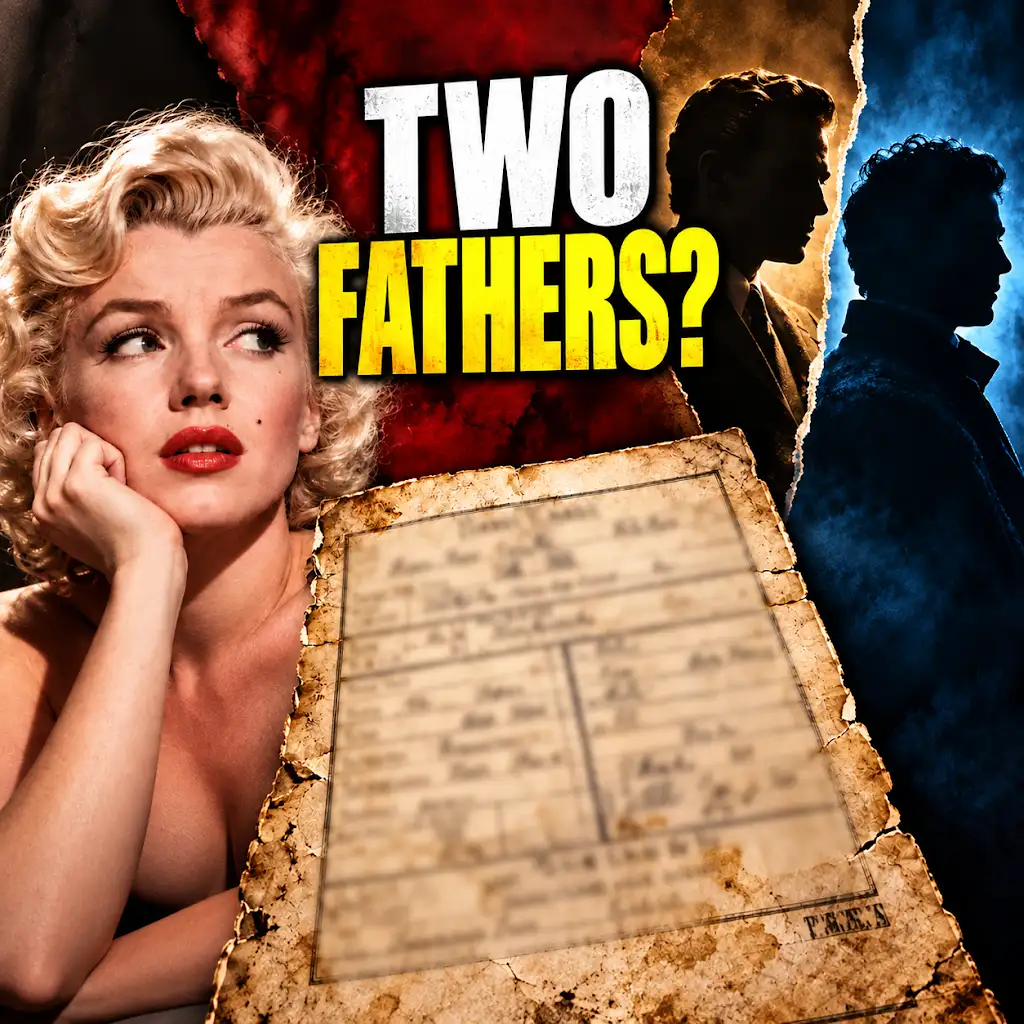
Marilyn Monroe’s Birth Certificate Named One Man. DNA Pointed to Another
FAQs
Is the story about Marilyn Monroe’s father being true?
Yes, the story about Marilyn Monroe’s father being unknown for most of her life is true. Her mother, Gladys Baker, never revealed the identity of Marilyn’s father, leading to much speculation and mystery surrounding the topic.
Did Marilyn Monroe ever find out who her father was?
It is believed that Marilyn Monroe never found out the true identity of her father. Despite her efforts to uncover the truth, she was never able to confirm who he was, leaving this aspect of her life shrouded in mystery.
What impact did not knowing her father have on Marilyn Monroe?
Not knowing her father had a significant impact on Marilyn Monroe’s life. It is said that the absence of a father figure contributed to her feelings of abandonment and insecurity, which may have influenced her relationships and career choices.
Were there any theories about who Marilyn Monroe’s father could be?
Several theories have been proposed over the years regarding the identity of Marilyn Monroe’s father. Some speculate that it could have been a man named Charles Stanley Gifford, while others suggest it may have been a man named C. Stanley Gifford. However, none of these theories have been definitively proven.
How did Marilyn Monroe’s father story impact her legacy?
Marilyn Monroe’s father story added to the mystique and allure surrounding her persona. The unresolved mystery of her father’s identity has become a part of her legacy, contributing to the ongoing fascination with her life and career even decades after her passing.