The Shadow of Doubt: Early Life and Maternal Relationships
Marilyn Monroe, born Norma Jeane Mortenson on June 1, 1926, remains one of Hollywood’s most enduring icons, a figure shrouded in both public adoration and private mystery. While her dazzling screen presence and tragic life have been dissected countless times, one persistent question has lingered for decades: who was Marilyn Monroe’s biological father? For much of her life and even after her death, the name Charles Stanley Gifford was prominently, though often speculatively, linked to her paternity. This article delves into the available evidence, examining the claims, the counter-arguments, and the enduring uncertainty surrounding Gifford’s potential fatherhood.
Norma Jeane’s early life was marked by instability and a complex maternal lineage. Her mother, Gladys Pearl Baker (née Monroe), was a woman who battled severe mental health issues and financial struggles throughout her life. Gladys was married twice before Norma Jeane’s birth. Her first marriage to Jasper Newton Baker, a childhood sweetheart, ended in divorce before Norma Jeane’s conception. Her second marriage, to Martin Edward Mortensen, was short-lived and annulled. It was during this period, when Gladys was known to be involved with multiple men, that Norma Jeane’s paternity became a subject of debate. Gladys herself, at different times and under varying circumstances, offered conflicting accounts about Norma Jeane’s father, further complicating the narrative. Some accounts suggest her father was a man named Edward Mortensen (an alternate spelling of her second husband’s surname), while others pointed to Gifford. The lack of a definitive, legally established father figure from birth laid the groundwork for the enduring questions that would follow.
The question of whether Charles Stanley Gifford was Marilyn Monroe’s father has intrigued many fans and historians alike, leading to various discussions and articles exploring the complexities of her family background. For those interested in delving deeper into the nuances of familial connections and their impact on personal identities, a related article can be found at The Impact of Nearshoring on Global Trade Frameworks, which, while focused on trade, also touches on the broader implications of relationships and connections in various contexts.
The Gifford Connection: Claims and Circumstances

Charles Stanley Gifford was a man of humble origins, working as a film laboratory technician. His connection to Gladys Baker is primarily through his acquaintance with her and his reported presence in her life around the time of Norma Jeane’s conception. The narrative that links Gifford to Norma Jeane’s paternity often stems from Gladys herself. In various interviews and statements over the years, Gladys reportedly identified Gifford as Norma Jeane’s father. These statements, however, were often made during periods of significant emotional distress and were not always consistent.
Furthermore, accounts from individuals who knew Gladys during that time have also contributed to the Gifford theory. Some friends and acquaintances recalled Gladys mentioning Gifford as a potential father. The timing of their relationship, reportedly in the late 1920s, aligns with Norma Jeane’s birth. Gifford was also described as a man who was aware of the possibility of being the father, though his level of engagement or acknowledgment of this possibility remains unclear and debated. It is important to note that Charles Stanley Gifford himself rarely, if ever, publicly acknowledged paternity, and the primary sources for this claim often originate from Gladys Baker, whose reliability was frequently questioned due to her mental health struggles. This ambiguity, fueled by inconsistent testimonies and a lack of definitive proof, has made the Gifford connection a persistent and tantalizing piece of Monroe’s personal history.
Forensic Investigations and Genetic Evidence: Seeking Definitive Answers

The persistent speculation surrounding Marilyn Monroe’s paternity naturally led to attempts to resolve the question through more concrete means. Over the years, various individuals and researchers have pursued DNA testing, hoping to provide a definitive answer. The most significant and widely publicized of these efforts involved the exhumation of Marilyn Monroe’s remains and the collection of DNA samples from her alleged father, Charles Stanley Gifford, or his descendants.
The Posthumous DNA Tests
In the late 2000s, a private investigator named Milo Speriglio, who had previously written a book suggesting Gifford was Monroe’s father, conducted a DNA test. This test involved comparing DNA from a strand of Monroe’s hair, allegedly obtained from a museum, with DNA samples from Gifford’s son, Bernard Gifford. The results of this test were reported to be inconclusive or did not establish a definitive biological link. However, the validity and methodology of this particular test have been subject to considerable scrutiny and debate within the genealogical and forensic communities. The source of the hair sample and the chain of custody were also points of contention.
Later, in the early 2010s, a more comprehensive DNA analysis was conducted. This involved obtaining DNA samples from Gifford’s deceased son, Bernard, and comparing them with DNA extracted from Monroe’s remains. This study, often cited as more scientifically rigorous, also reportedly failed to establish a definitive biological link between Charles Stanley Gifford and Marilyn Monroe. While these tests have not definitively ruled out Gifford, they have also not provided the conclusive evidence that many had hoped for. The inherent difficulties in obtaining pristine DNA samples from historical figures and the ethical considerations surrounding exhumation add layers of complexity to these scientific endeavors. The absence of irrefutable genetic proof leaves the question open to interpretation and fuels ongoing debate.
Alternative Paternity Claims and Family Histories
While Charles Stanley Gifford has been the most prominently discussed potential father, he is not the only individual whose name has been linked to Marilyn Monroe’s paternity. The complex web of Gladys Baker’s relationships during the relevant period has led to other theories, however less substantiated.
The Mortensen Connection Revisited
As mentioned earlier, Gladys Baker was married to Martin Edward Mortensen, and it was under this marriage that Norma Jeane was born. While the marriage was reportedly annulled before the birth, the legal and social implications of this union have sometimes led to speculation about Mortensen being the father. However, there is little concrete evidence to support this claim, and Gladys herself often referred to Mortensen as Norma Jeane’s father in a way that suggested he was more of a stepfather figure, or that she was using his name for legitimacy. The name “Mortensen” itself, with its variations in spelling, has added to the confusion over the years.
Other Speculative Connections
Beyond Gifford and Mortensen, other men have been mentioned in passing in discussions about Monroe’s paternity, often based on anecdotal evidence or speculation. These individuals were reportedly part of Gladys Baker’s social circle or had brief relationships with her. However, none of these speculative connections have garnered the same level of attention or investigation as the Gifford theory. The lack of substantial evidence, corroborating testimonies, or any inclination from Gladys Baker to point in these directions has kept these theories on the fringes of the discussion. Ultimately, the persistent focus on Gifford stems from Gladys’s own statements and the circumstances surrounding her life.
The intriguing question of whether Charles Stanley Gifford was Marilyn Monroe’s father has captivated many, leading to various discussions and articles on the topic. For those interested in exploring the complexities surrounding Monroe’s parentage and the impact of her upbringing on her life and career, a related article can provide valuable insights. You can read more about the nuances of personal history and identity in the context of celebrity by visiting this article.
The Enduring Enigma: Legacy and Conclusion
| Metric | Data |
|---|---|
| Claim | Charles Stanley Gifford was Marilyn Monroe’s father |
| Historical Evidence | No credible evidence supports this claim |
| Marilyn Monroe’s Documented Father | Gladys Pearl Baker (mother), father officially unknown or disputed |
| Charles Stanley Gifford’s Relationship to Marilyn Monroe | No documented relationship |
| Commonly Accepted Fact | Charles Stanley Gifford was not Marilyn Monroe’s father |
The question of Marilyn Monroe’s biological father remains, in many ways, an enduring enigma. Despite attempts at scientific resolution and the extensive biographical research conducted over decades, a definitive answer continues to elude us. The lack of conclusive DNA evidence from the more rigorous tests, coupled with the often contradictory and emotionally charged testimonies of Gladys Baker, leaves a void that speculation and conjecture are eager to fill.
The fascination with this unresolved paternity issue speaks to a broader human desire for certainty and closure, particularly when it comes to figures as iconic and yet as seemingly vulnerable as Marilyn Monroe. Her life, marked by a search for love, belonging, and a stable identity, is often viewed through the lens of her origins. Uncovering her biological father would, for some, provide a crucial piece in the puzzle of her complex psyche and tragic destiny.
However, it is also important to acknowledge that the search for a biological father does not define Marilyn Monroe. Her legacy is built on her undeniable talent, her captivating screen presence, and the cultural impact she continues to exert. While the truth of her paternity might offer a more complete biographical picture, it does not diminish her achievements or the enduring power of her star persona. The ongoing debate surrounding Charles Stanley Gifford and Marilyn Monroe’s fatherhood serves as a testament to the enduring mysteries that can surround even the most public of lives, and perhaps, in its own way, adds another layer to the complex and captivating legend of Marilyn Monroe. The truth, or the lack thereof, about her father remains a poignant footnote in the grand narrative of one of the 20th century’s most unforgettable women.
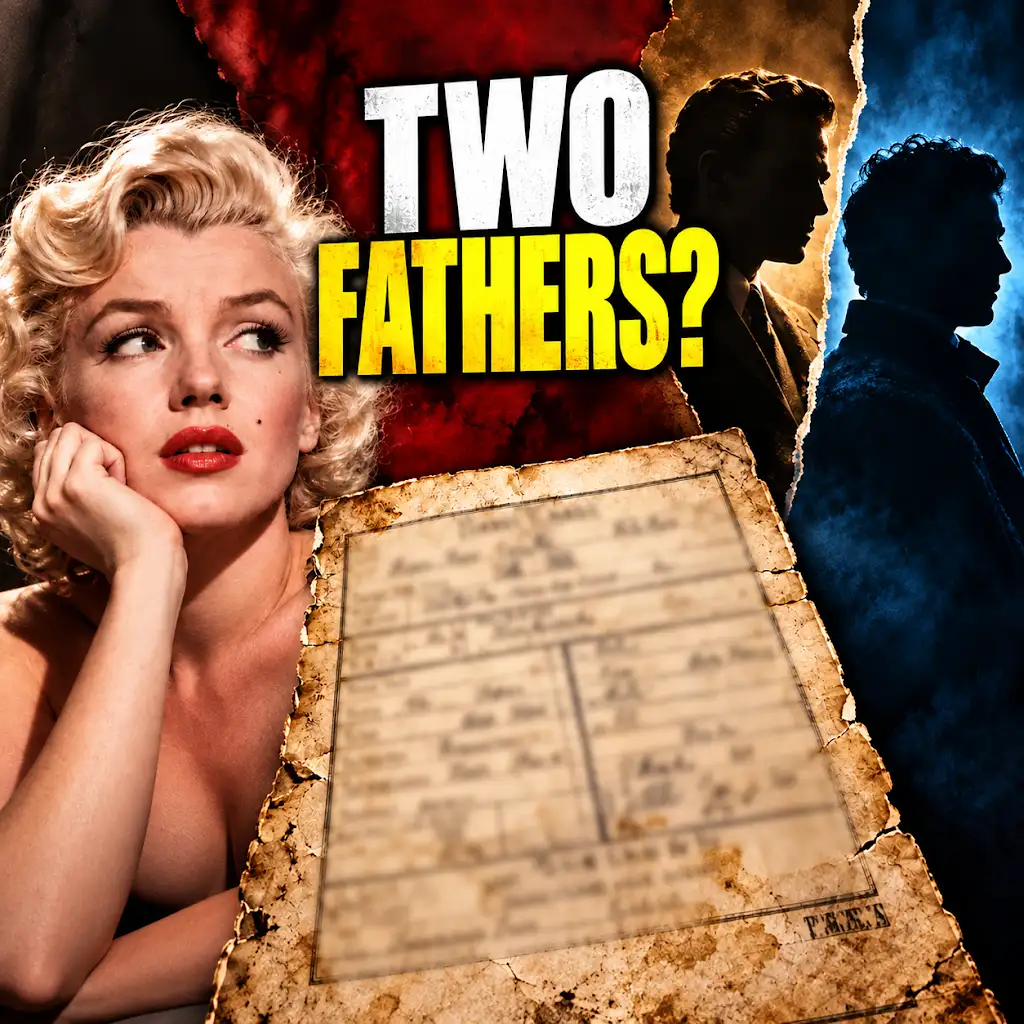
Marilyn Monroe’s Birth Certificate Named One Man. DNA Pointed to Another
FAQs
1. Was Charles Stanley Gifford confirmed to be Marilyn Monroe’s father?
No, there is no confirmed evidence or documentation to support the claim that Charles Stanley Gifford was Marilyn Monroe’s biological father.
2. What is the basis for the speculation that Charles Stanley Gifford could be Marilyn Monroe’s father?
The speculation arises from the fact that Marilyn Monroe’s mother, Gladys Pearl Baker, was known to have been involved with multiple men during the time of Marilyn’s conception, including Charles Stanley Gifford.
3. Has DNA testing been conducted to determine Marilyn Monroe’s paternity?
As of now, there is no publicly known DNA testing that has been conducted to definitively determine Marilyn Monroe’s biological father.
4. Are there any reliable sources or historical records linking Charles Stanley Gifford to Marilyn Monroe’s paternity?
There are no reliable sources or historical records that definitively link Charles Stanley Gifford to being Marilyn Monroe’s father. The speculation remains largely unsubstantiated.
5. How does the theory of Charles Stanley Gifford being Marilyn Monroe’s father impact her legacy?
The theory does not have a significant impact on Marilyn Monroe’s legacy as it is not widely accepted or supported by concrete evidence. Marilyn Monroe’s legacy as an iconic actress and cultural figure remains based on her own achievements and contributions to the entertainment industry.