The Unsettled Question: Norma Jeane’s Biological Father
Marilyn Monroe, the iconic actress, sex symbol, and cultural phenomenon, remains a figure of enduring fascination. Yet, beneath the dazzling surface of her stardom lies a profound personal mystery: the identity of her biological father. This question, which gnawed at Norma Jeane Mortenson (her birth name) throughout her life and continues to intrigue biographers and historians, is a central element in understanding the complex tapestry of her origins and the emotional landscape that shaped her. While her mother, Gladys Pearl Baker, provided the only concrete, albeit often unreliable, information, the paternity of Marilyn Monroe has been the subject of speculation, investigation, and ultimately, an unresolved debate that adds another layer to her tragic and captivating story.
Gladys Baker’s Tangled Relationships
Gladys Pearl Baker was a woman of tumultuous life, marked by personal struggles, mental health challenges, and a series of relationships that contributed to the enigma surrounding Norma Jeane’s parentage. Born Gladys Pearl Monroe in 1902, she would later adopt the surname Baker during her brief marriage to J.C. Martin. However, it was her subsequent relationships that proved most pivotal in the narrative of Marilyn’s birth. Gladys was married three times, but none of these unions produced Marilyn. Instead, her daughter was conceived during periods of romantic entanglements with men who, at various times, were either presented as potential fathers or remained shadowy figures in her mother’s accounts. The instability and lack of clear paternal presence from the outset cast a long shadow over Norma Jeane’s early years, contributing to her feelings of abandonment and insecurity.
The Short-Lived Marriage to J.C. Martin
Gladys’s first marriage was to J.C. Martin in 1924. While this marriage provided her with the surname Baker, it was a short-lived union that ended in divorce. Martin was not the biological father of Norma Jeane. The significance of this marriage lies primarily in its contribution to Gladys’s identity at the time of Norma Jeane’s conception, influencing the names and family history she would later present, albeit inconsistently, to her daughter.
The Brief Romance with Edward Mortensen
The man most frequently cited as Norma Jeane’s biological father is Edward “Eddy” Mortensen. Gladys and Eddy were reportedly involved in a relationship in the mid-1920s. Mortensen, a Norwegian immigrant and a carpenter, is said to have been aware of Gladys’s pregnancy and acknowledged his potential paternity. However, the relationship was transient, and Mortensen left before Norma Jeane was born. While Gladys initially named her daughter Norma Jeane Mortenson, a clear indication of Eddy’s supposed fatherhood, the subsequent narrative became clouded. Mortensen himself, when questioned in later years, offered conflicting accounts, adding to the confusion. Some evidence suggests he may have been aware of his potential fatherhood but was unwilling or unable to take on parental responsibilities. His presence, or lack thereof, in Norma Jeane’s life is a poignant detail, as his name was the only one that officially linked her to a male figure in her early life.
The Shadow of Other Suitors
Beyond Mortensen, Gladys Baker’s life was punctuated by other relationships that have led to speculation about Norma Jeane’s paternity. Among these was a man named James Dougherty, whom Gladys later married in 1942. While Dougherty became Marilyn’s stepfather and was a stable presence in her life for a period, he was not her biological father. However, there were periods of overlap in Gladys’s romantic life, and other men, whose names are less consistently documented, have been proposed as possibilities. The pervasive ambiguity surrounding these relationships underscores the precariousness of Gladys’s emotional and financial stability, and by extension, the foundation of Norma Jeane’s early existence.
The mystery surrounding the father of Marilyn Monroe has intrigued historians and fans alike for decades, with various theories and claims emerging over the years. For those interested in exploring the complexities of memory and how it relates to historical figures, a fascinating article titled “Unlocking Ancient Memory Grids: Mnemonic Devices” delves into the techniques that can help us remember and connect with the past. You can read it here: Unlocking Ancient Memory Grids: Mnemonic Devices. This article not only sheds light on memory techniques but also encourages readers to reflect on the stories of iconic personalities like Monroe and the legacies they leave behind.
Unraveling the Evidence: Digging into the Paternity Puzzle
The quest to definitively identify Marilyn Monroe’s biological father has been a long and often frustrating endeavor. For decades, biographers and researchers have sifted through fragmented records, personal accounts, and even sought scientific evidence in an attempt to solve this enduring mystery. The lack of definitive documentation, coupled with the unreliable memories and shifting narratives of those involved, has made concrete conclusions elusive. Nevertheless, various avenues of investigation have been pursued, each offering a piece of the puzzle, though none have provided the complete picture.
The Role of Gladys Baker’s Accounts
Gladys Baker’s recollections of Norma Jeane’s paternity were notoriously inconsistent and often contradictory. Throughout her life, she provided different stories to different people, sometimes pointing to Edward Mortensen, at other times suggesting other men, and occasionally admitting her own uncertainty. These shifting accounts can be attributed to a variety of factors, including her own emotional state, her desire to protect Norma Jeane, or perhaps a genuine confusion stemming from the transient nature of her relationships. For Norma Jeane, these inconsistent narratives would have been deeply unsettling, contributing to her lifelong search for a stable sense of identity and belonging. Her mother’s inability to provide a clear, unwavering answer about her father likely amplified Norma Jeane’s feelings of being adrift.
Edward Mortensen’s Ambiguous Legacy
Edward Mortensen remains the most prominent figure in the paternity debate, largely due to the name given to Norma Jeane at birth. However, his own involvement in the matter was consistently ambiguous. While he reportedly acknowledged the possibility of his fatherhood, he never officially recognized Norma Jeane as his daughter. Years later, when he was an elderly man, Mortensen was approached by biographers and journalists. His responses were often evasive or offered contradictory versions of events. He sometimes expressed a vague sense of regret or acknowledged that he “might have been” the father, but never with definitive certainty. This continued uncertainty from Mortensen himself, the closest figure to a confirmed father, perpetuated the mystery and prevented a definitive resolution.
The Dougherty Connection and its Limitations
James Dougherty, Marilyn’s stepfather, was a steady presence in her early life and later offered his own perspective on her paternity. He recalled conversations with Gladys where she mentioned Edward Mortensen as a potential father. However, Dougherty himself was never presented as the biological father, and he never claimed to be. His role was that of a supportive figure, marrying Gladys when Norma Jeane was a young woman and offering her a semblance of family stability during a critical period. His testimony, while valuable for understanding Norma Jeane’s upbringing, does not shed direct light on her biological lineage from her mother’s side.
DNA Testing and the Search for Certainty
In the 21st century, the advent of advanced DNA testing offered a new possibility for resolving historical paternity mysteries. Biographers and enthusiasts have explored the potential for DNA analysis using hair samples or other biological material from Marilyn Monroe herself, or from potential paternal relatives. However, obtaining uncontaminated and scientifically viable samples from historical figures presents significant challenges. While some speculative DNA tests have been conducted or discussed, none have yielded conclusive, widely accepted results that definitively identify Marilyn Monroe’s biological father. The scientific hurdles, coupled with the scarcity of reliable genetic material, have kept this aspect of the mystery stubbornly unresolved.
The Impact of Paternity Uncertainty on Norma Jeane’s Life
The enduring question of her father’s identity cast a long shadow over Norma Jeane Mortenson’s life, profoundly influencing her sense of self, her relationships, and her relentless pursuit of love and validation. This uncertainty was not merely a biographical footnote; it was a deep-seated emotional wound that contributed to her insecurities and fueled her search for belonging. The absence of a paternal figure, coupled with her mother’s instability, created a void that Norma Jeane spent her life trying to fill, often through her public persona and her interactions with men.
The Search for a Father Figure and Validation
From her earliest years, Norma Jeane craved a stable, loving father figure. Placed in foster homes and institutions for much of her childhood, she experienced a constant cycle of abandonment. This lack of consistent paternal presence undoubtedly contributed to her deep-seated insecurities and her desperate need for approval. The men in her life, from James Dougherty to her husbands Joe DiMaggio and Arthur Miller, were often seen as potential replacements for the father she never knew. She sought validation in their eyes, hoping to find the affirmation and security that had been missing from her foundational years. This pattern of seeking external validation was a recurring theme throughout her adult life, tragically impacting her emotional well-being.
The Shadow of Abandonment and Insecurity
The instability of her mother’s life and the mystery surrounding her father undoubtedly fostered a profound sense of abandonment in Norma Jeane. This feeling of being unwanted or incomplete would have been a constant companion, shaping her interactions and her perception of herself. Her insecurities manifested in various ways, including her fear of aging, her anxiety about her career, and her vulnerability in relationships. The unresolved paternity question symbolized a larger lack of a definitive origin story, leaving her feeling rootless and perpetually searching for a solid ground upon which to build her identity.
The Marilyn Monroe Persona as a Shield
Norma Jeane’s transformation into Marilyn Monroe was, in many ways, a conscious or subconscious effort to create a persona that would command attention, elicit admiration, and perhaps, in a compensatory way, fill the void left by her absent father. The glamorous, alluring image of Marilyn was a powerful shield, allowing her to project an image of confidence and desirability that often masked her inner turmoil. This constructed identity, while bringing her immense fame and fortune, also served to further distance her from her early, uncertain origins. The public fascination with Marilyn often overshadowed the woman, Norma Jeane, who was still grappling with the fundamental questions of her identity and parentage.
The Lingering Questions in Her Later Years
Even as Marilyn Monroe reached the pinnacle of global stardom, the question of her paternity continued to haunt her. While she rarely spoke about it publicly, her private journals and interviews with close friends reveal her ongoing preoccupation with this unresolved aspect of her life. The lack of a definitive answer about her father’s identity likely contributed to her feelings of isolation and her struggles with mental health. The mystery remained a poignant symbol of her fractured past, a wound that never fully healed, and a constant reminder of the fundamental questions about who she was and where she came from.
The Unofficial Candidates: Exploring Other Theories
While Edward Mortensen is the most frequently discussed contender for Marilyn Monroe’s paternity, the enduring mystery has naturally given rise to other theories and potential candidates. The lack of definitive proof surrounding Mortensen, coupled with Gladys Baker’s often confusing accounts, has opened the door for speculation and the exploration of other men who may have been involved in her life during the critical period of Norma Jeane’s conception. These alternative theories, while often less substantiated, contribute to the rich and complex tapestry of the paternity puzzle.
The Case of Arthur Miller’s Father
A lesser-known theory suggests that Martha’s cousin, Albert, a lawyer, may have been Norma Jeane’s father. Gladys Baker was purportedly involved with Albert for a brief period. However, this theory lacks substantial evidence and is largely based on anecdotal accounts and speculation within certain circles. The connection is tenuous, and there’s no direct evidence to support it over other possibilities.
The Enigma of Charles Stanley Gifford
Charles Stanley Gifford, an executive at Consolidated Film Industries, a studio where Gladys Baker worked as a film editor, has also been posited as a potential father. Gifford was married at the time, and his alleged involvement with Gladys occurred during a period when her romantic life was particularly complex. Some speculation suggests that Gladys may have been involved with Gifford shortly before her relationship with Edward Mortensen. However, direct evidence of Gifford’s paternity remains elusive. His name has surfaced in various speculative discussions, but concrete proof is absent. The possibility of his involvement adds another layer of complexity to Gladys’s romantic entanglements during the time of Norma Jeane’s conception.
Speculation and the Desire for Closure
The persistent nature of the paternity question speaks to a deep human desire for closure and a complete understanding of origins. For Marilyn Monroe, this quest was deeply personal, a yearning for a solidified identity. For those who study her life, it represents an intellectual puzzle, a historical enigma to be solved. The proliferation of theories, even those with limited evidence, reflects this desire to fill the void and provide a definitive answer. Each theory, however speculative, represents an attempt to bring clarity to a life that was, in many ways, defined by its uncertainties.
The question of who fathered Marilyn Monroe has intrigued fans and historians alike for decades, leading to various theories and speculations about her parentage. In exploring the complexities of historical narratives, one might find it interesting to read about how maps can reveal hidden truths, as discussed in a related article on uncovering glacial history with the Piri Reis map. This article delves into how historical documents can shape our understanding of the past, much like the ongoing discussions surrounding Monroe’s lineage. For more insights, you can check out the article here.
The Enduring Legacy of an Unsolved Mystery
| Metric | Details |
|---|---|
| Subject | Father of Marilyn Monroe |
| Marilyn Monroe’s Birth Name | Norma Jeane Mortenson |
| Known Father | Unknown |
| Mother | Gladys Pearl Baker |
| Father’s Identity Status | Not definitively established |
| Possible Candidates | Multiple men, including Charles Stanley Gifford (speculated) |
| Marilyn’s Legal Father’s Name | Martin Edward Mortenson (stepfather) |
| Historical Records | Birth certificate lists “unknown” or no father |
The question of who fathered Marilyn Monroe remains, for the most part, unanswered. Despite decades of investigation, speculation, and the passage of time, no definitive proof has emerged to conclusively identify her biological father. While Edward Mortensen stands as the most plausible candidate, and his name appears on her birth certificate, the lingering ambiguities surrounding his involvement and Gladys Baker’s inconsistent accounts mean that certainty eludes historians and biographers alike. This unresolved paternity mystery has become an intrinsic part of Marilyn Monroe’s mythos, adding another layer of complexity and poignancy to her extraordinary and ultimately tragic life.
The Significance of Unanswered Questions
The enduring nature of this mystery underscores the profound impact of absent fathers and unstable childhoods on an individual’s life. For Norma Jeane, the lack of a definitive paternal connection was not just a biographical detail; it was a fundamental aspect of her identity crisis. Her lifelong search for love, validation, and a sense of belonging can be deeply understood through the lens of this unanswered question. The mystery of her father’s identity serves as a powerful reminder of the lasting effects of childhood uncertainty and the profound human need for a clear sense of origin and connection.
The Mythologized Figure and the Real Woman
Marilyn Monroe, the global icon, is a figure steeped in legend and allure. However, the unresolved paternity mystery reminds us of the real woman, Norma Jeane Mortenson, who grappled with profound personal challenges. The quest for her father’s identity is a testament to her human desire for completeness, a yearning for a foundational piece of her personal history that remained forever out of reach. The mystery continues to fascinate because it speaks to the complexities of human lives, the secrets that families keep, and the enduring power of the unknown.
A Legacy Beyond Paternity
While the question of her father’s identity is a significant aspect of Marilyn Monroe’s story, her legacy extends far beyond this personal mystery. She remains an enduring symbol of Hollywood glamour, a groundbreaking actress, and a cultural icon whose influence continues to resonate. Her life, marked by both immense success and profound personal struggle, serves as a complex and captivating narrative that continues to inspire discussion and analysis. The unsolved paternity mystery is a poignant thread in that narrative, but it does not define the entirety of her remarkable and impactful life.
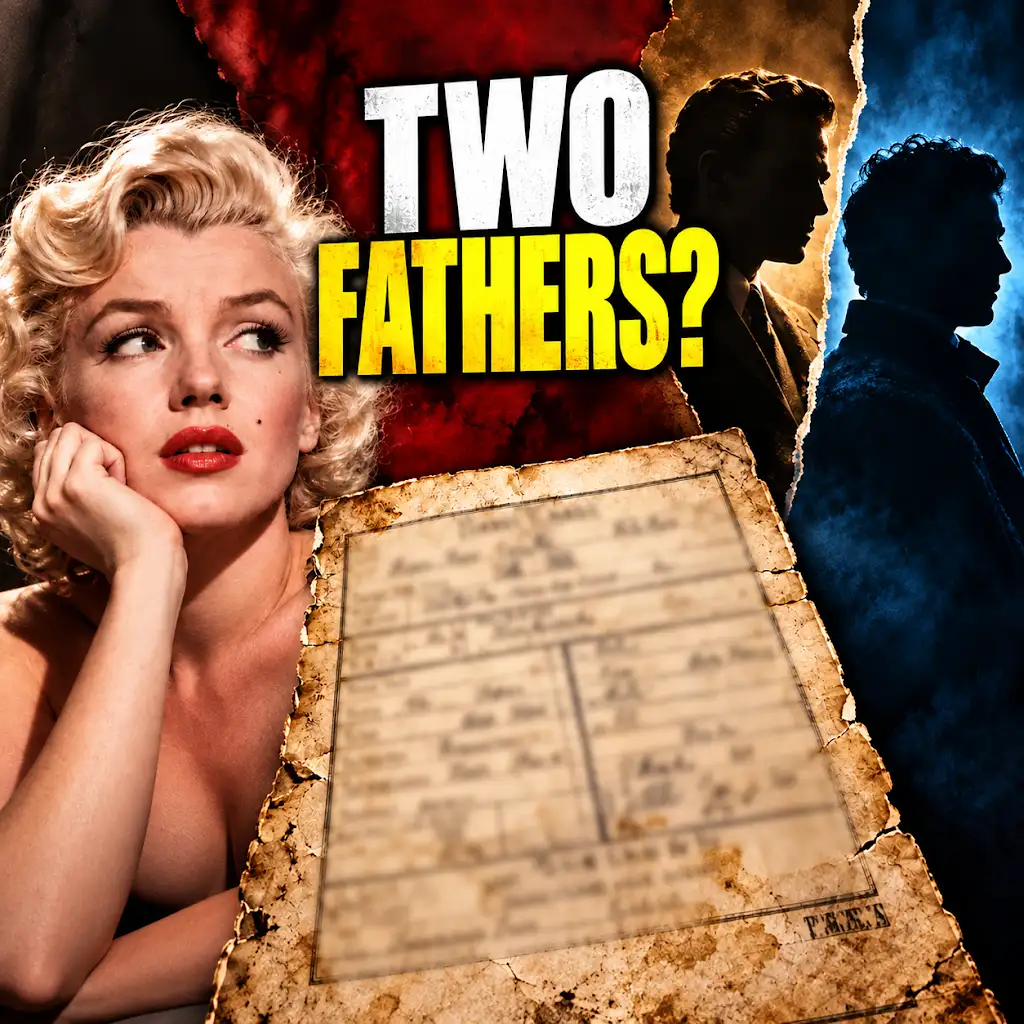
Marilyn Monroe’s Birth Certificate Named One Man. DNA Pointed to Another
FAQs
1. Who is believed to be the father of Marilyn Monroe?
It is widely believed that Marilyn Monroe’s father was a man named Charles Stanley Gifford, who was a salesman and a lover of Marilyn’s mother, Gladys Pearl Baker.
2. Is there any evidence to support the claim that Charles Stanley Gifford is Marilyn Monroe’s father?
There is no concrete evidence to definitively prove that Charles Stanley Gifford is Marilyn Monroe’s biological father. The belief is largely based on speculation and accounts from Marilyn’s family members and acquaintances.
3. Are there any other potential candidates who could be Marilyn Monroe’s father?
Some other names have been suggested as potential fathers of Marilyn Monroe, including Edward Mortenson and C. Stanley Gifford. However, these claims have not been substantiated with solid evidence.
4. Did Marilyn Monroe ever publicly acknowledge who her father was?
Marilyn Monroe never publicly acknowledged or confirmed the identity of her biological father during her lifetime. The mystery surrounding her paternity remains unresolved.
5. How has the uncertainty about Marilyn Monroe’s father impacted her legacy?
The uncertainty surrounding Marilyn Monroe’s father has added to the mystique and intrigue surrounding her life and legacy. It has fueled speculation and interest in her personal history, contributing to the ongoing fascination with the iconic actress.