Marilyn Monroe’s biological father, Charles Stanley Gifford, remains a figure shrouded in mystery and speculation, a shadow that persistently hovered over the life and legacy of one of Hollywood’s most iconic stars. While Marilyn Monroe, born Norma Jeane Mortenson, spent her formative years unaware of her paternity, the question of her father’s identity would become a recurring theme in her life, fueling countless rumors and journalistic investigations. Gifford, a man of humble origins and a transient lifestyle, never formally acknowledged Norma Jeane, yet his presence, or more accurately, his absence, undeniably shaped the emotional landscape of the woman who would become Marilyn Monroe. The story of Charles Gifford is not one of grand pronouncements or paternal presence, but rather a tale of missed connections, societal constraints, and the enduring quest for identity.
The Elusive Father: Unraveling the Gifford Identity
Charles Stanley Gifford’s existence was largely a footnote in the early life of Norma Jeane Mortenson until later biographers and researchers began to piece together fragments of information. Born in 1907 in California, Gifford was the son of William Gifford and Elizabeth “Lizzie” Ann Baker. His childhood was marked by instability, with his parents moving frequently, a pattern that would unfortunately continue into his own adult life. Gifford’s early years were characterized by a lack of consistent schooling and a struggle to find stable employment. He drifted between various jobs, often in manual labor, and his life was not one that would have readily intersected with the social circles of Gladys Pearl Baker, Norma Jeane’s mother.
The precise circumstances of Gladys and Charles’s relationship remain somewhat obscure, shrouded in the mists of oral history and contradictory accounts. Gladys, a woman who herself battled significant personal demons, including mental health issues and financial insecurity, was married twice before Norma Jeane’s birth. Her first husband, Jasper Baker, was absent for much of their marriage, and her second husband, Martin Edward Mortensen (who later changed his surname to Mortenson), was seemingly unaware of Gladys’s pregnancy with Norma Jeane. It is within this complex tapestry of relationships that Charles Gifford emerges as the most likely biological father. Biographers and researchers, including Donald Spoto in his seminal work “Marilyn Monroe: The Biography,” have presented compelling evidence suggesting that Gladys and Charles were involved in a brief but significant relationship in early 1926, several months before Norma Jeane’s conception. This period is crucial as it predates Gladys’s brief marriage to Martin Mortensen.
The Shadow of Uncertainty: Early Life and Potential Paternity
Charles Gifford’s early life was not marked by any particular distinction or social prominence. He was a working-class individual, a transient figure who moved from place to place, making it difficult for biographers to track his movements and definitively connect him to Gladys Baker during the critical period. Accounts suggest he was a charming but unreliable individual, prone to fleeting romances and a general disinterest in settling down. These characteristics would have made a stable paternal role for him highly unlikely, even if he had been aware of Norma Jeane’s existence from birth.
Gladys’s own life was a turbulent one. Having experienced her own share of hardship and abandonment, she struggled to provide a stable environment for her daughter. Her mental and emotional well-being fluctuated, leading to Norma Jeane being passed between foster homes and relatives. In this context, the question of paternity, while significant for Norma Jeane’s sense of identity, was likely not the primary concern for Gladys, who was grappling with immediate survival. The surname “Mortenson” that Norma Jeane was given at birth was an attempt by Gladys to create a sense of lineage, but it was a lineage that ultimately masked the potential truth of Gifford’s involvement. The evidence, primarily gathered from oral histories and circumstantial details, points to a brief affair between Gladys and Charles Gifford, a fleeting encounter that would have profound, albeit delayed, consequences.
The Biographer’s Pursuit: Piecing Together the Fragments
The search for Charles Gifford’s identity and his connection to Marilyn Monroe has been a painstaking endeavor for biographers and historians. Unlike many prominent figures whose family histories are well-documented, Gifford’s life was largely unrecorded. His transient nature and lack of significant public presence meant that official records were scarce. Researchers have relied on a patchwork of anecdotal evidence, interviews with distant relatives of both Gifford and Baker, and comparisons of physical characteristics.
Donald Spoto’s groundbreaking biography was instrumental in bringing Gifford’s potential paternity to the forefront of public consciousness. Spoto meticulously combed through archives, interviewed individuals who knew Gladys and her family, and analyzed photographic evidence. His research pointed to a man named Charles Stanley Gifford who worked as a painter and handyman in the Los Angeles area during the period of Norma Jeane’s conception. Crucially, Spoto found accounts from individuals who knew Gladys and claimed she had spoken of a man named Charles, a handsome young man she had a brief relationship with. The physical resemblance between photographs of a young Charles Gifford and Marilyn Monroe has also been noted by many, further strengthening the theory. While conclusive DNA evidence has never been publicly presented, the weight of circumstantial evidence and the persistent findings of dedicated researchers have made Charles Gifford the most widely accepted biological father of Marilyn Monroe.
Marilyn Monroe’s complex family history has often intrigued fans and historians alike, particularly regarding her biological father, Charles Gifford. Gifford’s life and the impact it had on Monroe’s upbringing are explored in various articles, shedding light on the enigmatic nature of her origins. For those interested in a broader context of exploration and discovery, a related article titled “The Moon: Ultimate High Ground for Exploration” provides insights into the human quest for understanding our roots, both on Earth and beyond. You can read more about this fascinating topic by following this link: The Moon: Ultimate High Ground for Exploration.
A Life Unacknowledged: Gifford’s Transient Existence
Charles Gifford’s life after 1926, the year of Norma Jeane’s conception, appears to have been one of continued transience and a general detachment from settled life. He did not remain in the Los Angeles area for an extended period, and his movements are difficult to trace with precision. Information about his personal life during these years is scarce, suggesting a man who lived a relatively private existence, devoid of the kind of public record that might accompany a more settled life. He worked a variety of jobs, moving from one temporary position to another, a pattern that characterized his adult years.
There is no evidence to suggest that Gifford was aware of Norma Jeane’s birth, or of her subsequent rise to stardom. Had he been aware, it is unclear what his reaction might have been. Given his own life circumstances, the prospect of fatherhood might have been overwhelming, or perhaps he was simply unaware of his potential paternal role. The societal norms of the time, coupled with the secrecy surrounding Norma Jeane’s birth and her mother’s difficulties, would have made any attempt at formal recognition or connection highly improbable. Gifford’s life, by all accounts, was one that operated on the fringes, a stark contrast to the glittering world that his daughter would eventually inhabit.
The Phantom Presence: A Father’s Absence
The most significant aspect of Charles Gifford’s story, as it pertains to Marilyn Monroe, is his absence. He was a phantom father, a figure who existed in the realm of possibility rather than tangible reality for Norma Jeane. She spent her childhood moving between foster homes and the care of relatives, rarely experiencing the consistent presence of a father figure. While her maternal grandmother, Della Monroe, and later foster parents provided some semblance of stability, the void left by a missing father was a profound one.
This absence likely contributed to Norma Jeane’s lifelong search for love, security, and a sense of belonging. Her later relationships were often characterized by a yearning for a paternal figure, a desire to be cherished and protected. The mystery surrounding her biological father only amplified these feelings, fueling a sense of rootlessness and a profound need to understand her origins. The stories and speculation that swirled around her paternity, even if never definitively confirmed to her, undoubtedly played a role in her psychological makeup. The lack of a consistent paternal presence is a recurring theme in the biographies of women who have experienced early abandonment, and for Marilyn Monroe, this lack was compounded by the unknown identity of her biological father.
Records of a Wanderer: Tracing Gifford’s Footsteps
Tracing Charles Gifford’s footsteps is a testament to the challenges faced by genealogists and biographers when dealing with individuals who lived outside the mainstream of society. His documented life is fragmented, consisting of brief mentions in census records, employment logs, and occasional personal anecdotes. He appears to have moved throughout California and possibly other states, holding down various manual labor jobs.
His life was not one that generated extensive personal correspondence or public records beyond the bare necessities of employment and occasional residency. This lack of documentation makes it difficult to construct a comprehensive narrative of his adult life. However, the consistent thread of his transient existence is undeniable. He married and divorced at least once later in life, and had children from that marriage, but his connection to Marilyn Monroe, if he ever knew of it, remained a secret or a forgotten footnote in his own life. The very nature of his existence as a wanderer means that his story is one that is perpetually being pieced together, with gaps in knowledge that may never be fully filled.
The Unanswered Questions: Marilyn’s Quest for Paternity

While Marilyn Monroe became aware of the speculation surrounding her biological father’s identity at various points in her life, the precise circumstances of her knowledge and her feelings about it are complex and debated. It is unlikely that she had concrete proof of Charles Gifford’s paternity for much of her life, and the information she did receive was often fragmented and contradictory. The quest for this elusive identity was not just a matter of biographical curiosity but also a deeply personal one, reflecting a universal human desire to understand one’s origins.
Her mother, Gladys, was not always forthcoming or lucid when discussing Norma Jeane’s paternity. Her mental health struggles and the difficult circumstances of Norma Jeane’s birth meant that reliable information was scarce. As Norma Jeane grew into a young woman and then a global star, the question of her father’s identity became a topic of intense media interest, adding another layer of complexity to her personal quest. The absence of a confirmed father figure undoubtedly impacted her emotional development and her relationships, as she sought validation and a sense of belonging.
Whispers and Speculation: Early Awareness
It is generally accepted that Norma Jeane, and later Marilyn Monroe, was aware of the speculation surrounding her paternity from her teenage years onwards. The family history was fraught with incomplete narratives and missing pieces. Relatives and acquaintances, perhaps out of kindness or a desire to provide some explanation for her circumstances, may have shared snippets of information about a man named Charles. These whispers and speculations, however, lacked the definitive evidence that would have provided closure.
The surname “Mortenson” itself carried a question mark, as it was a name adopted by her mother’s second husband, who was not her biological father. This inconsistency in her official lineage would have undoubtedly fueled Norma Jeane’s curiosity and her desire to uncover the truth. The absence of a paternal figure in her childhood would have made the concept of an unknown father even more significant, a mystery that she, like many individuals in similar situations, would have longed to solve.
The Search for a Father Figure: Emotional Impact
The emotional impact of an unknown father on Marilyn Monroe’s life is a subject of much psychological speculation. Her career was built on an image of sensuality and vulnerability, and biographers often point to her childhood experiences of abandonment and instability as contributing factors to her complex emotional landscape. The search for a strong, protective father figure manifested in her relationships with men, some of whom were older and seemingly held a paternalistic interest in her.
Her marriages to James Dougherty, Joe DiMaggio, and Arthur Miller, while driven by genuine affection and a desire for companionship, also reflected this underlying need for security and a stable male presence. The absence of a biological father meant that she was constantly seeking validation and a sense of being truly seen and loved. The speculative nature of her paternity may have further exacerbated her feelings of insecurity and her fear of abandonment, making her deeply vulnerable in her personal relationships. The unresolved question of her biological father was a persistent undercurrent in her life, a reminder of an incomplete familial connection.
The Identity Confirmed? Evidence for Charles Gifford
The evidence pointing towards Charles Stanley Gifford as Marilyn Monroe’s biological father has been meticulously gathered and presented by various biographers and researchers. While definitive DNA proof has never been made public, the cumulative weight of circumstantial evidence, consistent testimonies, and physical resemblances has led to widespread acceptance of this paternity. The historical context of Gladys Baker’s life and the available records of Charles Gifford’s movements during the relevant period are crucial to understanding the strength of this conclusion.
The journey to identifying Gifford involved extensive research into his family history, his employment records, and his whereabouts during the critical months of 1925-1926, when Norma Jeane was conceived. Interviews with individuals who knew Gladys Baker and her associates provided key anecdotal evidence, painting a picture of a fleeting but significant relationship. The convergence of these different threads of information has created a compelling narrative, solidifying Gifford’s position as the most likely biological father.
Gladys Baker’s Accounts: Fragmented Narratives
Gladys Pearl Baker’s accounts of her past and of Norma Jeane’s paternity were often inconsistent and unreliable. Her own struggles with mental illness and the turbulent nature of her life meant that her memories could be confused or distorted. However, even within these fragmented narratives, there are persistent references to a man named Charles, a handsome young man with whom she had a brief romantic involvement. These mentions, though lacking specific details, align with the timeline of Norma Jeane’s conception.
While Gladys may not have been able to provide a definitive identification of Charles Gifford by name, her recollections of a fleeting romance with a man fitting his general description in the right timeframe are significant. These personal accounts, however hazy, form a vital piece of the puzzle, corroborating the findings of biographers who have delved into public records and other testimonies. The difficulty in obtaining clear, consistent statements from Gladys underscores the challenges faced by researchers trying to reconstruct Norma Jeane’s early life.
The Work of Biographers: Spoto and Beyond
Donald Spoto’s biography of Marilyn Monroe stands as a landmark work in uncovering the story of Charles Gifford. Spoto’s research was groundbreaking in its diligent pursuit of factual accuracy and its willingness to delve into the less-explored aspects of Monroe’s life. He meticulously documented Gifford’s family history, his movements, and his likely connection to Gladys Baker. Spoto’s work is often cited as the primary source for the assertion that Charles Gifford is Marilyn Monroe’s biological father.
Beyond Spoto, other biographers and researchers have continued to explore this aspect of Monroe’s life, building upon his foundational work. They have cross-referenced his findings with additional archival material, interviewed more distant relatives, and analyzed photographic evidence. The consensus among these researchers is that while definitive proof remains elusive, the evidence strongly supports Charles Gifford’s paternity. The consistent findings across multiple independent investigations lend significant credibility to this conclusion, transforming a historical mystery into a widely accepted narrative.
Marilyn Monroe’s complex family history has long intrigued fans and historians alike, particularly regarding her biological father, Charles Gifford. His life and the circumstances surrounding Monroe’s early years shed light on the actress’s struggles and triumphs. For those interested in exploring more about the intricate connections between family legacies and personal identity, a fascinating article can be found at this link, which delves into how historical narratives shape our understanding of individual stories.
Legacy and Lingering Questions: Gifford’s Unwritten Chapter
| Metric | Data |
|---|---|
| Full Name | Charles Gifford |
| Relationship to Marilyn Monroe | Biological Father (alleged) |
| Birth Year | Unknown |
| Occupation | Unknown |
| Known Facts | Alleged biological father; no definitive proof |
| Marilyn Monroe’s Birth Year | 1926 |
| Marilyn Monroe’s Birth Name | Norma Jeane Mortenson |
Charles Stanley Gifford’s legacy is inextricably linked to his daughter, Marilyn Monroe, even though he played no overt role in her life. His story serves as a poignant reminder of the complexities of family, identity, and the lasting impact of unseen influences. While he lived a life largely unknown to the public, his existence, and the potential paternal connection he shared with one of the world’s most famous women, continues to fascinate and intrigue. The unanswered questions surrounding his awareness of his daughter, and his potential feelings, remain a part of the enduring mystique of Marilyn Monroe.
The story of Charles Gifford is not one that offers a neat, happy ending. It is a narrative of missed opportunities, of lives lived on separate trajectories, and of the enduring power of biological ties, however tenuous. His unwritten chapter is one that is constantly being explored by those who seek to understand the full tapestry of Marilyn Monroe’s life, recognizing that even the shadows can hold profound significance.
The Unseen Father in Monroe’s Life
The absence of Charles Gifford as an active father figure undoubtedly shaped Marilyn Monroe’s personal and professional life in profound ways. Her search for love and acceptance, her vulnerability in relationships, and her sometimes self-destructive tendencies have all been linked by biographers and psychologists to her early experiences of abandonment and the mystery surrounding her paternity. The idealization of father figures, and the subsequent disappointment when relationships failed to meet these idealized expectations, are recurring themes in discussions of her life.
Even as a global icon, Marilyn Monroe harbored a deep-seated need for a paternal anchor. Her relationships, her artistic choices, and her personal struggles can all be viewed through the lens of this unfulfilled need for a consistent and loving paternal presence. The story of Charles Gifford, therefore, is not just about a man; it is about the profound impact of his absence on one of the most iconic figures of the 20th century.
The Enduring Enigma of Paternity
The question of Charles Gifford’s paternity, while widely accepted by researchers, continues to hold an element of enigma. The lack of definitive, irrefutable proof leaves a sliver of doubt for some, fueling ongoing discussion and speculation. This enduring enigma is, in part, what makes the story so compelling. It highlights the difficulties in reconstructing the past, especially when dealing with individuals who lived outside the public eye.
The story also serves as a broader commentary on the nature of identity and the importance of knowing one’s roots. For Marilyn Monroe, the quest for her biological father was a quest for self-understanding, a search for an anchor in a life that often felt adrift. The unresolved nature of this quest, and the ongoing fascination with Charles Gifford, underscore the universal human need to connect with our origins, to understand where we come from, and to fill the silences in our family histories. The story of Charles Gifford remains a vital, albeit often unseen, chapter in the enduring legend of Marilyn Monroe.
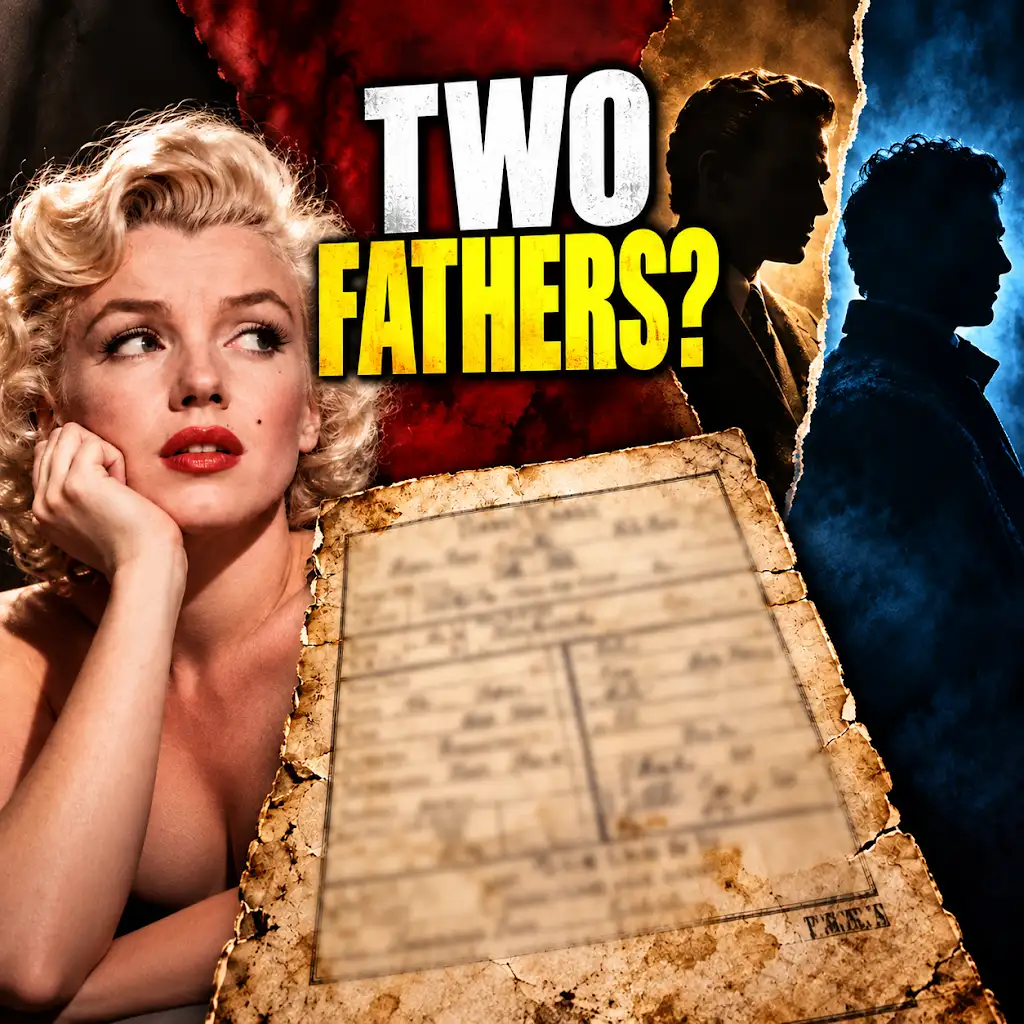
Marilyn Monroe’s Birth Certificate Named One Man. DNA Pointed to Another
FAQs
1. Who was Charles Gifford?
Charles Gifford was a man who has been speculated to be the biological father of Marilyn Monroe. He was a co-worker of Marilyn’s mother, Gladys Baker, at Consolidated Film Industries.
2. What evidence suggests that Charles Gifford could be Marilyn Monroe’s father?
There are several pieces of evidence that suggest Charles Gifford could be Marilyn Monroe’s father, including a resemblance between Gifford and Monroe, as well as statements made by Gladys Baker indicating that Gifford could be the father.
3. Was Charles Gifford ever confirmed as Marilyn Monroe’s biological father?
No, Charles Gifford was never confirmed as Marilyn Monroe’s biological father. The true identity of Monroe’s father remains a mystery, as there is no concrete evidence to definitively prove Gifford’s paternity.
4. How did Charles Gifford’s relationship with Gladys Baker impact Marilyn Monroe’s life?
If Charles Gifford is indeed Marilyn Monroe’s biological father, his relationship with Gladys Baker would have had a significant impact on Monroe’s life. It could have influenced her upbringing, sense of identity, and relationships with men.
5. What is the significance of the speculation surrounding Charles Gifford as Marilyn Monroe’s father?
The speculation surrounding Charles Gifford as Marilyn Monroe’s father adds another layer of complexity to Monroe’s already intriguing life story. It raises questions about her family history, identity, and the impact of her parentage on her career and personal life.