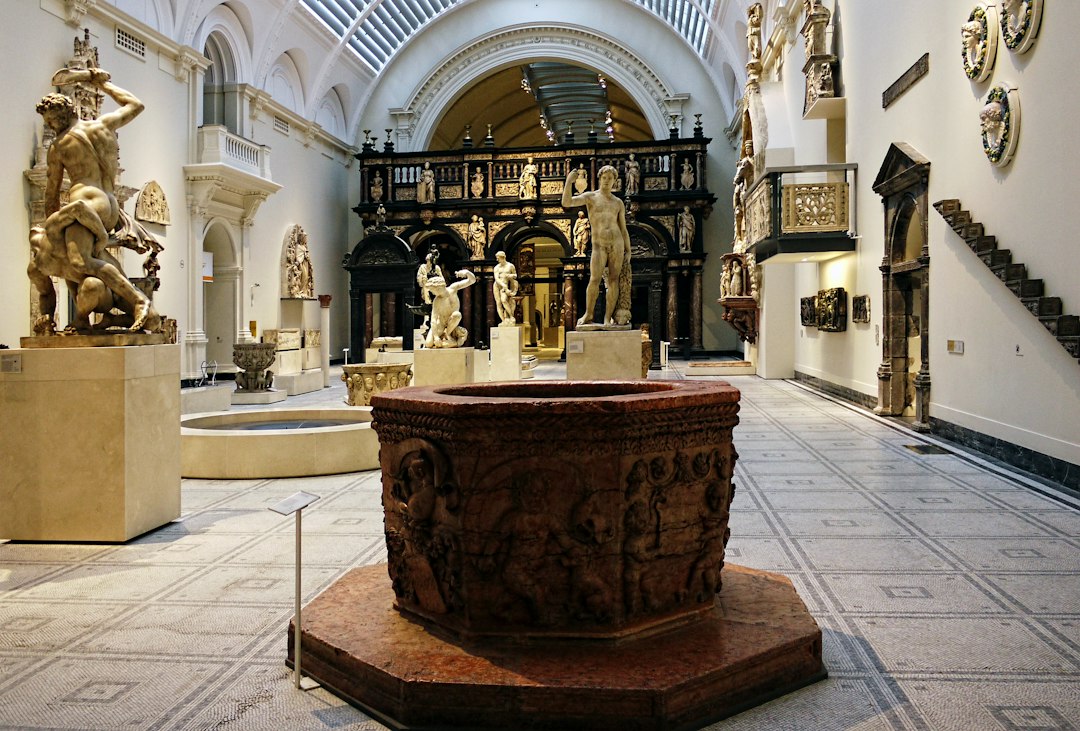
The tapestry of human civilization is woven with threads of ancient innovation, struggle, and enduring legacy. To understand the present, one must inevitably delve into the foundational epochs that shaped our world. This exploration focuses on key ancient civilizations and pivotal events, illuminating their contributions and the enduring impact they have on modern society. The study of ancient history is not merely an academic pursuit; it offers profound insights into human nature, the rise and fall of societies, and the persistent quest for order, progress, and meaning. From the fertile river valleys where the first cities bloomed to the sprawling empires that dominated vast territories, these ancient cultures laid the groundwork for much of what we take for granted today. Their achievements in governance, law, philosophy, art, architecture, and technology continue to resonate, providing a rich source of inspiration and a cautionary tale for all who seek to build and sustain civilizations.
The Cradle of Civilization: Mesopotamia and Ancient Egypt
The dawn of civilization is intimately linked to the development of agriculture and the subsequent emergence of complex societies in river valleys. Two of the most influential early civilizations, Mesopotamia and ancient Egypt, arose independently yet shared a common trajectory of innovation and societal organization. Their foundational contributions to human history are undeniable, setting precedents for governance, writing, and monumental architecture.
The Land Between Two Rivers: Mesopotamia’s Innovations
Mesopotamia, often referred to as the “cradle of civilization,” was situated in the fertile crescent between the Tigris and Euphrates rivers in modern-day Iraq. This region’s rich soil, replenished by annual floods, allowed for surplus agricultural production, which in turn supported the growth of urban centers and specialized labor. The Sumerians, one of the earliest inhabitants of Mesopotamia, are credited with numerous groundbreaking achievements.
The Birth of Writing: Cuneiform Script
Perhaps the most significant innovation of the Sumerians was the development of cuneiform, one of the earliest known writing systems. This wedge-shaped script, impressed onto clay tablets, allowed for the recording of laws, literature, economic transactions, and historical accounts. Cuneiform enabled the administration of increasingly complex societies, the dissemination of knowledge, and the preservation of culture for posterity. The Epic of Gilgamesh, a literary masterpiece inscribed in cuneiform, offers profound insights into Mesopotamian beliefs about life, death, and the human condition.
The Rule of Law: Hammurabi’s Code
Another monumental contribution from Mesopotamia was Hammurabi’s Code, promulgated by the Babylonian king Hammurabi around 1754 BCE. This comprehensive legal code, inscribed on a large stone stele, is one of the earliest and most complete legal texts from the ancient world. It aimed to establish justice and order throughout the Babylonian empire, detailing a wide range of laws governing property, family, commerce, and criminal offenses. While often characterized by its “eye for an eye” principle, Hammurabi’s Code also introduced concepts of due process and societal responsibility, laying crucial groundwork for the development of jurisprudence in later civilizations. The existence of such a detailed legal framework underscores the advanced societal organization achieved by Mesopotamians.
Urbanization and City-States
Mesopotamia was also a pioneer in urban development. Cities like Uruk, Ur, and Babylon grew into thriving centers of trade, religion, and administration. These city-states, often governed by priest-kings or later by secular rulers, developed sophisticated irrigation systems, monumental temples (ziggurats), and complex social hierarchies. The city-state model, with its independent governance and distinct cultural identity, was a characteristic feature of early Mesopotamian civilization and influenced urban development across the ancient world.
The Gift of the Nile: Ancient Egypt’s Enduring Legacy
Ancient Egypt, nurtured by the life-giving Nile River, developed a distinct and remarkably enduring civilization that spanned over three millennia. The predictable flooding of the Nile provided fertile land for agriculture, while its navigable waterway facilitated trade and communication throughout the kingdom. Egyptian civilization is renowned for its monumental architecture, intricate religious beliefs, and sophisticated administrative system.
Pharaohs and Divine Kingship
At the heart of ancient Egyptian society was the pharaoh, who was not merely a ruler but also considered a divine intermediary between the gods and the people. This concept of divine kingship provided a powerful unifying force and ensured political stability for extended periods. The pharaohs were responsible for maintaining cosmic order (maat), overseeing religious rituals, and leading the state in both peace and war. The construction of elaborate tombs, such as the pyramids, served as enduring testaments to the pharaohs’ power and their belief in an afterlife.
The Pyramids: Monuments to Eternity
The pyramids of Giza, among the most iconic structures in the world, stand as a testament to the architectural and organizational prowess of ancient Egyptians. These colossal tombs, built for pharaohs during the Old Kingdom, were constructed using an estimated 2.3 million stone blocks, each weighing an average of 2.5 tons. The precision with which these structures were erected, the sheer scale of the undertaking, and the labor required highlight the advanced engineering knowledge, mathematical understanding, and sophisticated project management capabilities of this ancient civilization. The pyramids also reflect their deep-seated beliefs about death and the afterlife, with chambers designed to protect the pharaoh’s body and facilitate his journey to the next world.
Hieroglyphs and the Rosetta Stone
Like the Sumerians, the Egyptians developed a sophisticated writing system known as hieroglyphs. These pictorial symbols, used for religious texts, monumental inscriptions, and administrative records, were central to Egyptian culture and governance. The decipherment of hieroglyphs, a process greatly aided by the discovery of the Rosetta Stone, unlocked a wealth of information about Egyptian history, religion, and daily life. The Rosetta Stone, inscribed with the same decree in three scripts (hieroglyphic, Demotic, and ancient Greek), provided the key to understanding this ancient language and has proven invaluable to Egyptologists.
One fascinating aspect of ancient history is how environmental factors influenced civilizations, particularly during the Bronze Age. A related article that delves into this topic is “Tree Rings Reveal Bronze Age Drought,” which discusses how dendrochronology has provided insights into climate conditions that affected societies thousands of years ago. Understanding these climatic shifts can help us comprehend the challenges faced by ancient peoples and the eventual decline of certain cultures. For more information, you can read the article here: Tree Rings Reveal Bronze Age Drought.
The Rise of Classical Greece: Democracy and Philosophy
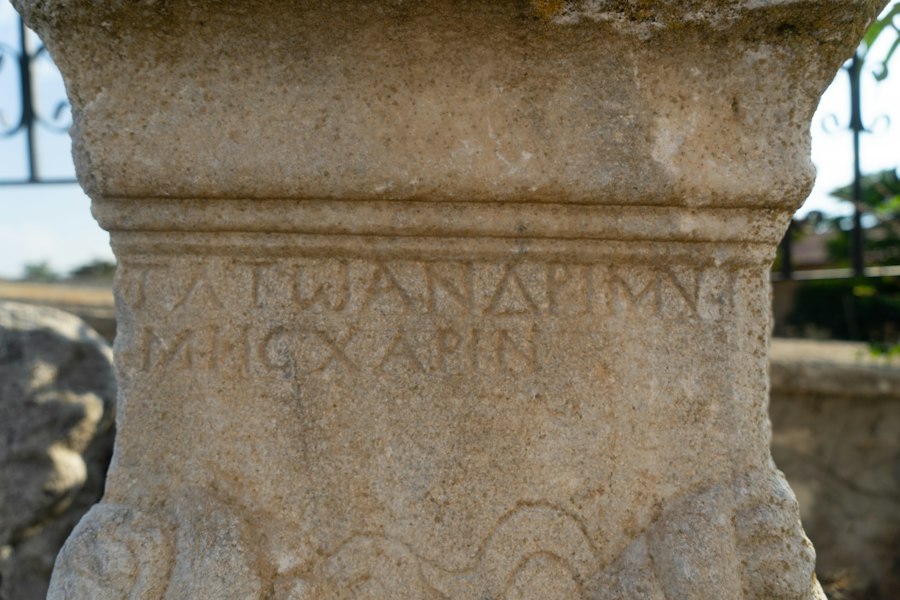
The Hellenic world, a collection of independent city-states, laid the intellectual and political foundations for Western civilization. Ancient Greece, particularly during its Classical period (roughly 500-323 BCE), witnessed groundbreaking developments in democracy, philosophy, art, and science that continue to influence thought and culture today.
The Athenian Experiment: The Birth of Democracy
Athens, more than any other Greek city-state, is renowned for its pioneering role in the development of democracy. The Athenian system, while limited to adult male citizens, represented a radical departure from the monarchical and oligarchic systems that dominated the ancient world. Key figures like Cleisthenes introduced reforms that empowered citizens through direct participation in government.
The Agora and Citizen Assemblies
The Athenian agora, a public space in the heart of the city, served as the center of political, social, and commercial life. It was here that citizens would gather to debate issues, vote on laws, and engage in civic discourse. The Assembly (Ecclesia) was the primary governing body, where citizens could directly propose and vote on legislation, declare war, and elect officials. This emphasis on citizen participation and public debate was a cornerstone of Athenian democracy and a revolutionary concept for its time. The ostracism, a process by which citizens could vote to exile individuals deemed a threat to the democracy, further illustrates the mechanisms developed to safeguard the polis.
The Golden Age of Athens
The 5th century BCE is often referred to as the Golden Age of Athens, a period of unparalleled cultural and intellectual flourishing. Following their victory over the Persian Empire, Athens experienced a surge in wealth and confidence, which fueled a remarkable outpouring of creativity. This era saw the construction of iconic buildings like the Parthenon on the Acropolis, the development of drama by playwrights such as Sophocles, Euripides, and Aristophanes, and the flourishing of philosophy. The patronage of figures like Pericles fostered an environment where art, architecture, and intellectual pursuits thrived, leaving an indelible mark on Western aesthetic and cultural values.
The Pursuit of Knowledge: Greek Philosophy
Greek philosophers embarked on a profound quest to understand the universe, human nature, and the principles of a just society. Their inquiries laid the groundwork for Western philosophical traditions and continue to be studied and debated.
Socrates, Plato, and Aristotle: The Triumvirate
Socrates, through his method of dialectic questioning (the Socratic method), encouraged critical thinking and the examination of fundamental moral and ethical concepts. His student, Plato, developed a comprehensive philosophical system that explored the theory of Forms, the ideal state, and the nature of knowledge. Plato’s Academy was a significant institution for learning. Aristotle, a student of Plato, diverged in his approach, emphasizing empirical observation and logic. His works spanned a vast range of subjects, including ethics, politics, metaphysics, biology, and physics, establishing frameworks for scientific inquiry that would endure for centuries.
Stoicism, Epicureanism, and Skepticism
Beyond the Socratic lineage, other philosophical schools emerged, each offering distinct perspectives on how to live a good life. Stoicism, founded by Zeno of Citium, emphasized virtue, reason, and acceptance of fate, advocating for emotional resilience in the face of adversity. Epicureanism, founded by Epicurus, focused on achieving pleasure through moderation, the absence of pain, and the cultivation of friendships. Skepticism, championed by Pyrrho of Elis, advocated for suspending judgment to achieve tranquility, questioning the possibility of certain knowledge. These diverse schools of thought reflect the dynamic intellectual landscape of ancient Greece and its enduring influence on Western ethics and epistemology.
The Roman Empire: Law, Engineering, and Expansion
The Roman Republic and later the Roman Empire forged one of history’s most expansive and influential political entities. From its humble beginnings as a small city-state in Italy, Rome grew to dominate the Mediterranean world, leaving a legacy of law, engineering, governance, and military organization that shaped the course of Western civilization.
From Republic to Empire: The Pax Romana
Rome’s transition from a republic, characterized by elected officials and a senate, to an empire under the rule of emperors was a complex and often tumultuous process. The unification of vast territories brought about the Pax Romana, a period of relative peace and prosperity that lasted for approximately two centuries. This era facilitated unprecedented trade, cultural exchange, and the spread of Roman influence across Europe, North Africa, and the Middle East.
Roman Law: A Foundation for Justice
One of Rome’s most enduring contributions is its legal system. Roman law, characterized by its emphasis on codified principles, procedural fairness, and the rights of citizens, formed the basis for many modern legal systems. Concepts like “innocent until proven guilty,” the distinction between public and private law, and the idea of natural law were all developed or significantly refined by Roman jurists. The Twelve Tables, the earliest Roman legal code, and later compilations like the Corpus Juris Civilis, established a framework for justice and governance that has echoed through the ages. The systematic approach to lawmaking and its codification were instrumental in administering such a vast and diverse empire.
Engineering Marvels: Aqueducts and Roads
The Romans were unparalleled engineers, whose infrastructure projects facilitated communication, trade, and the administration of their empire. Their intricate network of roads, constructed with advanced techniques, connected distant provinces and allowed for rapid troop movement and efficient commerce. The famous Roman aqueducts, some of which still stand today, stand as a testament to their mastery of hydraulics and construction. These marvels of engineering brought fresh water to cities, improving public health and enabling the growth of urban centers. Other notable engineering feats include the Colosseum, the Pantheon, and extensive public baths, all demonstrating a sophisticated understanding of materials, design, and large-scale construction.
The Spread of Latin and Roman Culture
As the Roman Empire expanded, so too did its language, Latin, and its cultural practices. Latin became the lingua franca of the western Roman Empire and the ancestor of the Romance languages (Italian, Spanish, French, Portuguese, and Romanian). Roman architecture, art, and social customs were adopted and adapted by conquered peoples, leading to a widespread dissemination of Roman civilization. This cultural assimilation, often referred to as Romanization, created a shared identity across a vast territory, fostering a sense of unity and contributing to the enduring influence of Roman culture.
The Silk Road: A Conduit of Exchange
The Silk Road was not a single road but a vast network of trade routes that connected the East and West, facilitating the exchange of goods, ideas, technologies, and cultures for over a millennium. Its impact on the development of civilizations and the spread of knowledge cannot be overstated.
Goods and Empires Intertwined
From its origins around the 2nd century BCE, the Silk Road was instrumental in the movement of luxury goods such as silk, spices, precious metals, and gemstones. These commodities fueled the economies of empires like Han China, the Roman Empire, the Sasanian Empire, and later the Mongol Empire. The demand for these goods spurred innovation in production, transportation, and financial transactions. The economic interdependence fostered by the Silk Road also led to diplomatic exchanges and alliances between distant powers, shaping geopolitical landscapes.
Beyond Commerce: The Exchange of Ideas and Religions
The Silk Road was far more than a commercial highway; it was a conduit for the transmission of ideas and beliefs. Buddhism, originating in India, spread eastward along these routes to Central Asia, China, Korea, and Japan. Christianity and Islam also traversed the Silk Road, finding new adherents and adapting to local cultures. Scientific and technological knowledge, including papermaking, gunpowder, and agricultural techniques, traveled westward from China, while innovations in astronomy, mathematics, and medicine moved eastward from the Middle East and Europe. This cross-pollination of knowledge significantly accelerated the pace of human development and enriched the cultural tapestry of the connected world.
The Mongol Empire and the Zenith of the Silk Road
The Mongol Empire, under leaders like Genghis Khan and his successors, played a crucial role in the zenith of the Silk Road’s activity during the 13th and 14th centuries. By unifying a vast swathe of Eurasia under a single administration, the Mongols provided unprecedented security and facilitated safe passage for merchants and travelers. This period, known as the Pax Mongolica, saw a dramatic increase in trade and cultural exchange, with travelers like Marco Polo undertaking epic journeys and documenting their experiences, further popularizing the East in the West.
When exploring the fascinating dynamics of ancient civilizations, one should consider the significance of river systems in shaping societies. A related article that delves into this topic is The River: Engine Powering the Two Crowns, which examines how rivers served as vital resources for agriculture, trade, and transportation in ancient cultures. Understanding these elements can provide deeper insights into the rise and fall of empires throughout history.
The Axial Age: A Revolution in Human Thought
| Topic | Period | Key Facts | Significance |
|---|---|---|---|
| Mesopotamia | c. 3500–539 BCE | First known civilization; invention of writing (cuneiform) | Foundation of urban society and written records |
| Ancient Egypt | c. 3100–30 BCE | Pharaohs, pyramids, hieroglyphics | Advances in architecture, religion, and governance |
| Indus Valley Civilization | c. 3300–1300 BCE | Urban planning, drainage systems, undeciphered script | Early example of city planning and trade networks |
| Ancient Greece | c. 800–146 BCE | Democracy, philosophy, Olympic Games | Birthplace of Western philosophy and political systems |
| Roman Empire | 27 BCE–476 CE (West) | Republic to empire, Roman law, engineering feats | Influence on law, governance, architecture, and language |
| Ancient China (Shang to Han) | c. 1600 BCE–220 CE | Invention of paper, Confucianism, Great Wall beginnings | Major contributions to culture, technology, and philosophy |
| Ancient Maya | c. 2000 BCE–1500 CE | Advanced calendar, hieroglyphic writing, pyramids | Significant achievements in astronomy and architecture |
The Axial Age, a term coined by philosopher Karl Jaspers, refers to a period of profound intellectual and spiritual transformation that occurred roughly between the 8th and 3rd centuries BCE. During this era, across different regions of the world, new philosophical and religious ideas emerged that fundamentally reshaped human understanding of the cosmos, morality, and the human condition.
New Foundations for Ethics and Spirituality
The Axial Age witnessed the birth of major philosophical and religious traditions that continue to shape global thought. In India, the Upanishads explored concepts of Brahman and Atman, leading to the development of Hinduism and the philosophical underpinnings of Buddhism with Siddhartha Gautama’s teachings on suffering, enlightenment, and the Four Noble Truths. In China, Confucius developed a system of ethics emphasizing social harmony, filial piety, and righteous conduct, while Lao Tzu’s Taoism offered a philosophy of naturalness and balance. In the West, the prophetic traditions of ancient Israel emerged, emphasizing monotheism and a covenant relationship with God, and the Greek philosophical revolution, as discussed earlier, laid the groundwork for rational inquiry and ethical reasoning.
The Emergence of Universal Ethics
A common thread running through the Axial Age transformations was the emergence of more universal ethical frameworks. While earlier belief systems often focused on tribal or city-state deities and customs, Axial Age thinkers began to articulate moral principles applicable to all humanity. Concepts of compassion, justice, individual responsibility, and the pursuit of inner peace became central. This shift marked a significant step towards a more global and interconnected understanding of morality and human purpose, setting the stage for subsequent developments in ethics and religious thought.
Enduring Impact on Modern Society
The ideas and systems that emerged during the Axial Age have had an immeasurable and lasting impact on the trajectory of human civilization. The ethical principles, spiritual insights, and philosophical inquiries born in this period continue to inform moral debates, shape religious practices, and inspire movements for social change. Understanding the Axial Age provides crucial context for appreciating the diversity of human thought and the common quests for meaning and ethical living that have characterized our species for millennia. The legacy of these ancient thinkers is not confined to history books; it is woven into the fabric of our modern world, guiding our values and shaping our aspirations.

Your 401(k) Withdrawal Can Make More of Your Social Security Taxable
FAQs
What is ancient history?
Ancient history refers to the time period before the Middle Ages, typically from the beginning of recorded human history to the fall of the Roman Empire in 476 AD.
What are some key civilizations from ancient history?
Some key civilizations from ancient history include the Egyptians, Greeks, Romans, Mesopotamians, Chinese, and the Indus Valley civilization.
What are some important events from ancient history?
Important events from ancient history include the building of the pyramids in Egypt, the founding of democracy in Athens, the conquests of Alexander the Great, and the rise and fall of the Roman Empire.
How do we learn about ancient history?
We learn about ancient history through archaeological discoveries, ancient texts and manuscripts, inscriptions, artifacts, and the study of ancient languages and cultures.
Why is ancient history important to study?
Ancient history is important to study because it helps us understand the origins of human civilization, the development of societies, cultures, and technologies, and provides valuable lessons for the present and future.