The enigma surrounding Marilyn Monroe’s biological father is a persistent thread woven into the fabric of her tragic and iconic life story. From her birth in 1926 as Norma Jeane Mortenson, the question of her true paternity lingered, shaping her identity and fueling decades of speculation. While her mother, Gladys Pearl Baker, offered conflicting accounts and official records remained ambiguous, the search for her father has been a journey through fractured family histories, legal ambiguities, and the enduring allure of Hollywood’s greatest star. This exploration delves into the principal contenders, the evidence, and the lingering questions that continue to surround this deeply personal mystery.
The Shadow of the Mortensons
Marilyn Monroe was born Norma Jeane Mortenson, a name that directly implicated Martin Edward Mortensen, a man Gladys Pearl Baker claimed was her husband and Norma Jeane’s father. However, the reality of their relationship and its paternity implications is far from straightforward. Gladys and Martin’s marriage was reportedly brief and tumultuous, marked by his frequent absences and eventual estrangement. This instability laid the groundwork for the paternity questions that would plague Norma Jeane throughout her life.
Martin Mortensen: The Nominally Official Father
Martin Edward Mortensen, a co-worker of Gladys at a film-cutting plant, is the man whose name appears on Marilyn’s original birth certificate as her father. Gladys identified him as such, and for a period, he was indeed considered the father. However, the validity of this claim has been widely questioned. Biographers and historians point to several inconsistencies and a lack of concrete evidence that Martin was physically present or sexually involved with Gladys around the time of Norma Jeane’s conception.
Circumstantial Evidence and Contradictions
The primary challenge in establishing Martin Mortensen as the biological father lies in the limited and often contradictory accounts of his relationship with Gladys. Her own statements about him varied over time, and Martin himself was largely absent from Norma Jeane’s life. Records indicate he left California shortly after her birth, and his whereabouts and contact with Gladys after that period are poorly documented. The lack of a strong, consistent personal connection makes the claim tenuous, relying heavily on a birth certificate that, in an era of less stringent record-keeping, could have been completed based on information provided without absolute verification. The name Mortenson was also reportedly misspelled on the birth certificate as Mortensen, adding another layer of confusion and potential error.
The Legalities and the Birth Certificate
The birth certificate, while appearing official, was not an irrefutable scientific declaration of paternity. In the 1920s, birth registration practices were not as rigorous as they are today. It was not uncommon for a mother to list a husband or partner as the father even if paternity was uncertain. In Gladys’s case, this could have been a pragmatic decision, an attempt to provide a semblance of legitimacy or to avoid the social stigma of a child born out of wedlock. The legal framework surrounding paternity at the time also lacked the DNA-based certainty we possess today, making official documentation a more fluid and less definitive matter. The presence of Martin Mortensen’s name on the certificate served as the official designation, but it did not definitively resolve the biological reality.
The Alternative: Edward G. Robinson Jr.
Another prominent figure often cited as a potential father is Edward G. Robinson Jr., the son of the famous actor Edward G. Robinson. This theory gained traction due to Gladys’s alleged past relationship with the elder Robinson and her purported proximity to the family during the period of Norma Jeane’s conception.
A Hollywood Connection and Whispers of an Affair
Gladys Baker worked as a film editor and had connections within the Hollywood studio system. It is theorized that she may have had a brief affair with Edward G. Robinson Sr., or at the very least, had significant social contact with his family. Some accounts suggest that Norma Jeane bore a resemblance to the Robinson family, fueling these speculative links. The social circles of the time, particularly within the glamorous but often clandestine world of Hollywood, were rife with rumors and hidden relationships.
The Lack of Concrete Proof
Despite the tantalizing Hollywood connection, concrete evidence linking Edward G. Robinson Jr. to Norma Jeane’s paternity is scarce. There is no definitive testimony from Gladys or any other credible source that directly implicates him as the biological father. While the resemblance theory persists, it is a highly subjective and unreliable form of evidence. The absence of any formal acknowledgment or legal recognition from the Robinson family further diminishes the strength of this claim. Like the Mortensons, the theory rests on whispers, circumstantial evidence, and the enduring fascination with potential secrets behind a star’s lineage.
Marilyn Monroe’s complex family history has long intrigued biographers and fans alike, particularly regarding the identity of her biological father. Recent investigations have shed light on this mystery, revealing connections that may reshape our understanding of the iconic actress’s lineage. For those interested in exploring how family dynamics can influence personal narratives, you might find the article on maximizing benefits through nearshoring for U.S. companies insightful, as it touches on the importance of understanding one’s roots in a broader context. You can read more about it here: Maximizing Benefits of Nearshoring for U.S. Companies.
The Elusive Figure of Stanley Gifford

Perhaps the most compelling and well-documented contender for Marilyn Monroe’s biological father is Stanley Gifford. Evidence, including photographs and statements from those close to Gladys, points towards a significant relationship between Gladys and Gifford around the time of Norma Jeane’s conception.
Stanley Gifford: A Former Love and a Photographic Clue
Stanley Gifford was a former husband of Gladys Pearl Baker, preceding her marriage to Martin Mortensen. Their history together, though brief, is crucial to understanding the paternity question. Biographers have unearthed evidence suggesting a genuine connection and a possible reconciliation attempt prior to Norma Jeane’s birth.
The Photographs and the Resemblance
A pivotal piece of evidence that emerged in the search for Marilyn’s father was a photograph found among Gladys’s belongings. This photograph depicted a man identified as Stanley Gifford, and many have noted a striking resemblance between Gifford and the young Norma Jeane, and later, the adult Marilyn. This visual similarity, though not definitive proof, offered a tangible clue that resonated with those seeking answers. The physical likeness, when combined with other circumstantial evidence, strengthened the case for Gifford.
Gladys’s Stated Confession and Conflicting Accounts
Crucially, there have been accounts of Gladys Pearl Baker, in moments of distress or candor, hinting at or outright stating that Stanley Gifford was Norma Jeane’s true father. These statements, while sometimes contradictory and delivered in challenging circumstances, provide the most direct human testimony to support his paternity. Her fluctuating narratives, a byproduct of her own mental health struggles and the complexities of her life, make deciphering her true intentions challenging. However, the recurring mention of Gifford in her confidences carries significant weight.
The Gifford Family’s Perspective
The Gifford family, particularly Stanley’s son, James Gifford, has also been involved in the ongoing investigation into Marilyn’s paternity. Their engagement with the issue has brought a unique perspective and further contributed to the evidence.
James Gifford’s Investigations and Statements
James Gifford, having grown up with knowledge of his father’s past and the persistent rumors surrounding Marilyn Monroe, has actively pursued the truth. He has spoken publicly about his belief that his father was Marilyn’s biological father, citing his father’s own reticence and the circumstantial evidence. His personal connection to Stanley Gifford and his understanding of his father’s character lend credibility to his statements. He has engaged with biographers and researchers, providing insights that have helped to shape the narrative.
The Absence of Genetic Confirmation
Despite the compelling circumstantial evidence and the familial statements, a definitive genetic link between Marilyn Monroe and Stanley Gifford has never been established. This is primarily due to the lack of available DNA from Stanley Gifford himself. While Marilyn’s DNA has been analyzed from various sources, obtaining a confirmed sample from her potential father without his direct contribution or that of a close relative poses an insurmountable hurdle. This absence of scientific proof leaves the paternity question in a state of strong probability rather than absolute certainty.
The Paternity Questions and Their Impact on Marilyn’s Life

The unresolved mystery of her father’s identity had a profound and lasting impact on Marilyn Monroe’s life, contributing to her deep-seated insecurities and her constant search for love and belonging.
Marilyn Monroe’s complex family history has long intrigued fans and historians alike, particularly the mystery surrounding her biological father. Recent discussions have shed light on various theories and claims regarding her paternal lineage, revealing a tapestry of familial connections that shaped her life. For those interested in exploring the broader implications of identity and heritage, a thought-provoking article can be found at Fragile States: The Global Challenge, which delves into how personal histories can influence societal narratives.
A Lifelong Search for Identity and Belonging
From her earliest years, Norma Jeane was shuffled between foster homes and institutions, a constant reminder of her unstable family life. The absence of a definitive paternal figure left a void that she attempted to fill throughout her life. Her marriages, her relationships with powerful men, and her constant pursuit of validation can all be interpreted as a search for the paternal love and stability she never truly experienced.
Insecurity and the Need for Validation
The uncertainty surrounding her paternity likely exacerbated her already profound insecurities. Without knowing her father’s identity, she lacked a clear lineage, a defined family history, and a sense of rootedness. This lack of foundational identity contributed to her lifelong struggle with self-worth, making her susceptible to the manipulation and exploitation she faced in Hollywood. The constant need for external validation stemmed, in part, from this internal void.
The “Daddy Issues” Trope
The notion of “daddy issues” became a pervasive and often simplistic label applied to Marilyn’s romantic choices. While the term trivializes complex psychological factors, it highlights the enduring societal perception of how a lack of a positive father figure can shape an individual’s relationships. Her reliance on older men and her attraction to figures of authority can be seen as an unconscious attempt to find the paternal embrace she was denied. The unresolved paternity question remained a shadow, influencing her personal life in ways that are both tragic and understandable.
The Legal Ambiguities and Official Records
The official records surrounding Marilyn’s birth and early life are marked by inconsistencies and ambiguities, further complicating the paternity question.
The Birth Certificate Riddle
As mentioned earlier, the birth certificate listing Martin Mortensen as the father is itself a source of debate. The misspelled surname and the lack of verifiable information about Martin’s involvement raise serious questions about its accuracy. While it served as the official document, it failed to provide the clarity needed to resolve the biological question.
Legal Challenges and the Lack of Resolution
There were attempts throughout Marilyn’s life and after her death to formally establish her paternity through legal channels. However, these efforts were often hampered by the passage of time, the deaths of key individuals, and the absence of definitive evidence. The legal system, reliant on proof, could not definitively settle a matter shrouded in rumor and conjecture. This lack of legal closure contributed to the ongoing speculation and the lingering mystery.
The Lingering Mystery and Enduring Fascination
Decades after her death, the question of Marilyn Monroe’s biological father continues to captivate the public imagination, a testament to her enduring allure and the human desire to uncover hidden truths.
The Unresolved Nature of the Enigma
Despite extensive research and numerous biographies, the paternity of Marilyn Monroe remains officially unresolved. While Stanley Gifford is widely considered the most probable candidate, the absence of definitive genetic proof means that the mystery persists. This unresolved nature adds another layer to her legend, a poignant reminder of the secrets that can lie beneath the surface of even the most public lives.
Why the Question Still Matters
The continued fascination with Marilyn’s paternity speaks to our inherent curiosity about origins and lineage. For fans and scholars alike, understanding her true parentage offers a potential key to unlocking deeper insights into her personality, her struggles, and her extraordinary life. It taps into a fundamental human desire to connect with the past and to understand the roots of iconic figures.
The Power of Speculation and Myth-Making
The ambiguity surrounding her father has allowed for the creation of myths and legends. Each contender – Mortensen, Robinson, Gifford – represents a different facet of the speculation, from the common man to the Hollywood elite to the lost love. These narratives, while not always factually accurate, contribute to the rich tapestry of Marilyn Monroe’s mythology. The unanswered question allows for a continuous re-examination and reinterpretation of her life.
The Legacy Beyond Paternity
While the question of her father is compelling, it is important to remember that Marilyn Monroe’s legacy extends far beyond the mystery of her lineage. Her talent, her undeniable screen presence, and her cultural impact are undeniable and stand on their own merit.
A Symbol of Glamour and Vulnerability
Marilyn Monroe remains an enduring symbol of Hollywood glamour, but also of profound vulnerability. Her ability to convey both strength and fragility on screen captivated audiences worldwide. Her image has transcended time, remaining a potent force in popular culture. Her struggles with mental health and her untimely death have added a tragic dimension to her story, making her an icon of both triumph and heartbreak.
The Enduring Iconography of Marilyn
The “Marilyn Monroe” persona – the blonde bombshell, the innocent ingenue, the tragic figure – has become deeply embedded in our collective consciousness. Her films continue to be watched and celebrated, and her image is instantly recognizable. The mystery of her father, while a significant part of her personal narrative, does not diminish the immense and multifaceted legacy she left behind. Her life, with all its complexities and unanswered questions, continues to fascinate and inspire, cementing her status as one of the most iconic figures of the 20th century. The enigma of her father, therefore, serves not as a definitive statement about her life, but rather as a poignant, humanizing detail within a much larger and more profound story.
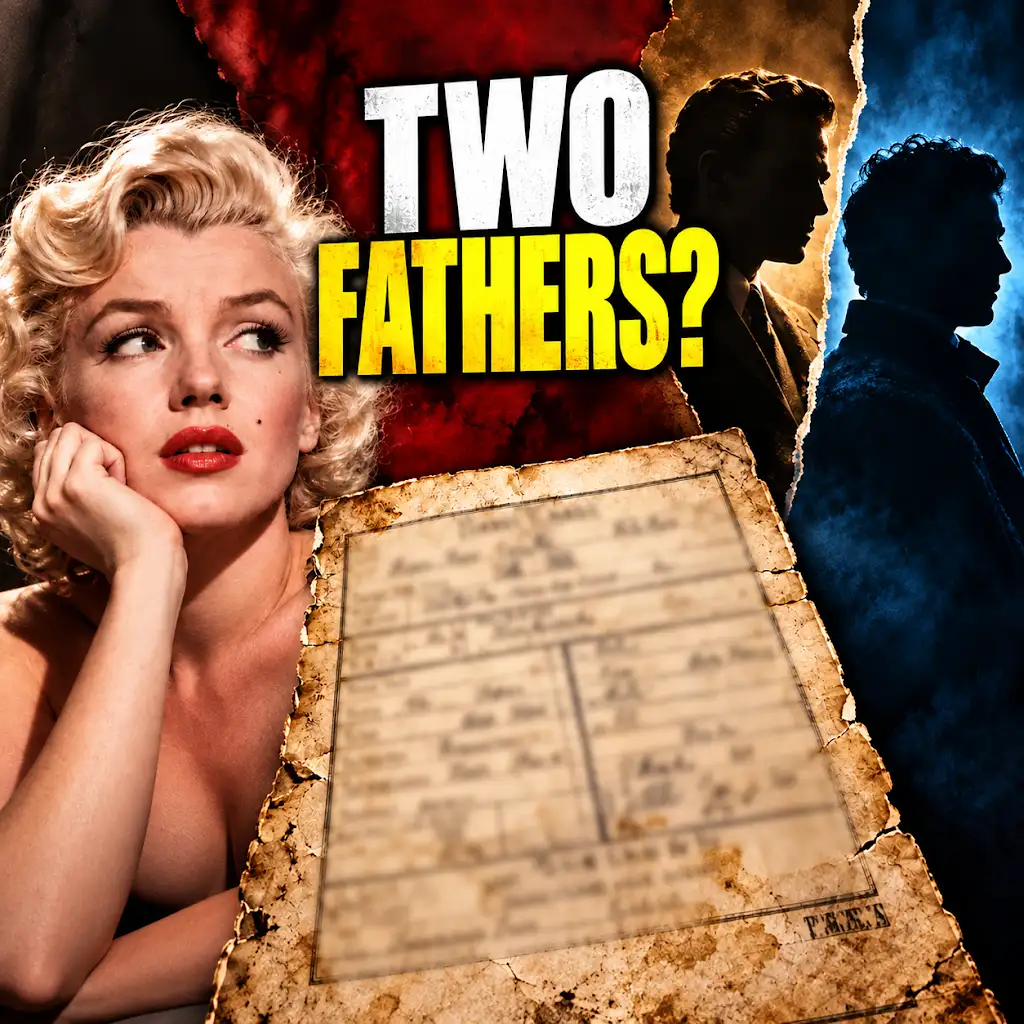
Marilyn Monroe’s Birth Certificate Named One Man. DNA Pointed to Another
FAQs
1. Who was Marilyn Monroe’s biological father?
Marilyn Monroe’s biological father was identified as Charles Stanley Gifford, a man of Irish descent who worked as a film cutter in the film industry.
2. Was Marilyn Monroe aware of who her biological father was?
It is believed that Marilyn Monroe was not aware of the identity of her biological father during her lifetime. She was raised by her mother, Gladys Baker, and later by various foster families.
3. How was Charles Stanley Gifford confirmed as Marilyn Monroe’s biological father?
Genetic testing conducted in 2018 on Marilyn Monroe’s hair samples and Gifford’s living relatives confirmed a direct paternal line match, providing strong evidence that Gifford was indeed her biological father.
4. What impact did the revelation of Marilyn Monroe’s biological father have on her legacy?
The confirmation of Charles Stanley Gifford as Marilyn Monroe’s biological father added a new dimension to her life story and legacy. It shed light on her complex family history and provided a deeper understanding of the challenges she faced growing up.
5. Are there any known connections between Marilyn Monroe and her biological father, Charles Stanley Gifford?
There are no known connections or interactions between Marilyn Monroe and her biological father, Charles Stanley Gifford. It appears that they were estranged throughout Marilyn’s life, with her mother being the primary parental figure in her upbringing.