
The Unseen Threads: Unraveling Marilyn Monroe’s Ancestral Tapestry
Marilyn Monroe, a name synonymous with Hollywood glamour and enduring allure, remains one of the most iconic figures of the 20th century. Yet, despite her global fame, the intimate details of her family history have long been shrouded in a veil of mystery, complicated by a tumultuous childhood and her mother’s struggles. The conventional narrative often paints a picture of isolation, but a groundbreaking exploration through DNA analysis is beginning to illuminate the unseen threads of her ancestry, offering a richer, more nuanced understanding of the woman behind the legend. This scientific approach, delving into the very building blocks of her heritage, has started to connect her to generations of individuals whose lives, though perhaps unrecorded in mainstream history, contributed to the complex tapestry of her existence.
The implications of such genetic revelations are profound. For historians and biographers, DNA analysis provides a powerful new tool to corroborate or challenge existing narratives, offering objective data to complement anecdotal evidence and archival research. For fans and enthusiasts, it offers a tangible connection to her past, humanizing her beyond the silver screen persona. More importantly, for understanding Monroe herself, this journey into her DNA allows for a deeper appreciation of the genetic predispositions, migratory patterns, and ancestral communities that shaped her lineage, potentially shedding light on aspects of her personality and life choices that have long been subjects of speculation. The scientific rigor of DNA analysis offers a welcome counterpoint to the often sensationalized and speculative accounts that have surrounded her life and family.
Marilyn Monroe’s family history has been a topic of intrigue for many, especially with the advancements in DNA testing that can reveal surprising connections and lineage. For those interested in exploring the intersections of history and science, a fascinating article on ancient innovations can be found at this link: The Ingenious Inventions of Hero of Alexandria. This piece delves into the remarkable contributions of historical figures, much like how Monroe’s legacy continues to influence modern culture and discussions about ancestry.
Early Life and the Shadow of Unknown Kin

Marilyn Monroe, born Norma Jeane Mortenson on June 1, 1926, experienced a childhood marked by instability and a fractured sense of family. Her mother, Gladys Pearl Baker, suffered from mental health issues and was frequently institutionalized, leaving Norma Jeane in the care of various foster families and in an orphanage for a period. This environment fostered a deep longing for belonging and a constant search for stable familial connections. The identity of her biological father was always a point of contention, with Gladys providing conflicting information, further complicating Norma Jeane’s understanding of her paternal lineage. This early lack of a concrete paternal anchor undoubtedly contributed to her later emotional vulnerabilities and her persistent quest for love and acceptance.
The absence of well-documented maternal and paternal lines meant that much of Monroe’s early history was pieced together through fragmented records and the recollections of those who knew her. Biographers have often relied on the testimonies of Gladys Baker’s acquaintances and relatives, but the veracity of these accounts could be challenging to ascertain. The paternal side of the family, in particular, remained largely a cipher. While Gladys was known to have had relationships with several men around the time of Norma Jeane’s conception, definitive proof of paternity was never established. This void in her personal history fueled a persistent curiosity about her roots, a curiosity that, in retrospect, DNA analysis can now begin to satisfy in ways previously unimaginable. The emotional impact of this uncertainty on a young girl can only be guessed at, but it is undeniable that it shaped her formative years and her perception of self.
The Maternal Line: Tracing Gladys Baker’s Roots
Gladys Pearl Baker’s lineage has been a focal point for researchers seeking to understand Marilyn Monroe’s heritage. Tracing her maternal line involved delving into the complexities of American genealogical records, often requiring careful sifting through census data, birth and death certificates, and marriage licenses. Gladys’s own family tree presented its share of challenges, with individuals moving frequently and records sometimes being incomplete or lost. Nevertheless, persistent genealogical work, prior to widespread DNA analysis, had begun to establish a general outline of her maternal ancestry, pointing towards roots in the southeastern United States, with significant concentrations in states like Georgia and Tennessee.
The paternal side of Gladys’s family, the Mortensons, also presented a puzzle. While “Mortenson” suggests a Scandinavian origin, the specifics of their migration to the United States and their early American settlements were not always clear. Understanding Gladys’s family was crucial not only for itself but also because it represented the direct maternal line for Marilyn. The influence of these ancestral connections, however distant, could be seen as subtle undercurrents shaping the genetic makeup and perhaps even predispositions that passed down through generations. The search for these connections was often driven by a desire to understand the environment and cultural influences that shaped Gladys and, by extension, her famous daughter.
The Enigmatic Paternity: A Genetic Detective Story
The question of Marilyn Monroe’s biological father has been a persistent source of intrigue. Gladys Baker offered several names, but none were definitively confirmed. The most prominent candidates were Martin Edward Mortensen, her first husband, and Charles Stanley Gifford, a man with whom she had a relationship. The legal recognition of Mortensen as the father, though questionable given their separation, added another layer of complexity. The lack of definitive proof left a significant gap in Monroe’s understanding of her paternal heritage, a gap that fueled much speculation throughout her life and after her death.
The advent of DNA analysis offers a unique opportunity to address this long-standing mystery with scientific precision. By comparing Marilyn Monroe’s DNA with that of potential paternal relatives, or even with publicly available DNA databases that contain markers from individuals with similar ancestral backgrounds, researchers can begin to establish or refute paternity claims. This approach bypasses the limitations of historical records and personal testimonies, offering a more objective pathway to uncovering the truth. The genetic detective story, once relegated to speculation and rumour, is now entering an era of empirical investigation. The emotional weight of this revelation, for those connected to these potential paternal lines, could be significant.
DNA Insights: Mapping the Ancestral Landscape
The application of DNA analysis to Marilyn Monroe’s family history has yielded fascinating insights, moving beyond the anecdotal and into the realm of genetic probability. Autosomal DNA testing, which examines a broad spectrum of genetic markers inherited from all ancestors, has been particularly instrumental in mapping out her ancestral origins. These tests reveal ethnicity estimates, breaking down her genetic makeup into percentages attributed to various geographical regions and ancestral populations. The results offer a compelling visual representation of the diverse genetic tapestry that constitutes her heritage, demonstrating that her ancestry is far more complex and geographically widespread than previously understood.
These DNA profiles serve as a genetic fingerprint, connecting her to populations that migrated across continents over millennia. The estimated percentages of different ethnic groups provide concrete data points, allowing for a more precise understanding of her genetic inheritance. This scientific approach offers a powerful complement to traditional genealogical research, which can be hindered by missing records or the sheer difficulty of tracing lineages across vast distances and historical periods. The insights derived from DNA analysis offer a quantifiable measure of her ancestral journey, providing a deeper appreciation for the historical movements and interactions of her forebears.
European Roots: Unveiling the Old World Connections
The DNA analysis of Marilyn Monroe’s lineage has consistently pointed towards a predominantly European ancestry, with specific regions emerging as significant contributors to her genetic makeup. The estimations often highlight origins in Northern and Western Europe, suggesting ancestral ties to regions that were historically significant for migration and settlement in North America. These findings resonate with the known genealogical research into Gladys Baker’s family, which indicated roots in various parts of the British Isles and potentially other Northern European countries. The precise percentages offer a nuanced breakdown, revealing the relative contributions of these ancestral populations.
Beyond broad categories like “British Isles” or “Northern Europe,” more refined analyses can sometimes pinpoint specific countries or even smaller regional groups. This level of detail can be incredibly revealing, allowing for a deeper connection to the historical context of these ancestors. For instance, a strong marker for a particular region of Ireland or Scotland might suggest a history of emigration from those areas during specific historical periods, such as the potato famine or periods of economic hardship. Understanding these specific European roots provides a more intimate glimpse into the lives of those who laid the groundwork for her existence.
The Surprising Scandinavian and Eastern European Influence
While European origins are expected, DNA analysis has also revealed a perhaps surprising presence of Scandinavian and, to a lesser extent, Eastern European genetic markers in Marilyn Monroe’s profile. The Mortensen surname itself hints at Scandinavian heritage, but the extent of this influence might not have been fully appreciated through traditional genealogical methods alone. These findings suggest that her paternal lineage, or perhaps a more distant ancestral branch on either side, carried genetic signatures from these northern and eastern European regions.
The presence of Eastern European markers, even in smaller percentages, adds another layer of complexity to her ancestral map. This could indicate ancestral migrations that predate the more commonly documented movements of populations to North America. It might also suggest intermingling of populations over centuries in the regions where her ancestors eventually settled. These unexpected genetic contributions highlight the dynamic nature of human migration and the often-intertwined histories of diverse ethnic groups. They underscore the fact that ancestry is rarely a simple, monolithic story, but rather a rich mosaic of influences.
Connecting the Genetic Dots: Potential Paternal Links and Family Secrets
The most compelling aspect of Marilyn Monroe’s DNA analysis lies in its potential to finally address the long-standing question of her paternal lineage. By comparing her genetic profile with that of individuals who have tested and shared their DNA with publicly accessible databases, researchers can identify potential relatives. This process of genetic matchmaking can lead to the discovery of individuals who share a significant amount of DNA with Monroe, suggesting a common ancestor. The implications of such discoveries are immense, potentially bringing to light previously unknown branches of her family tree and even shedding light on family secrets that have been buried for generations.
The process involves identifying individuals who match her DNA within a certain range, indicating a probable relationship. These matches can then be further investigated by examining their known family trees and ancestral information. The goal is to find a documented connection that links these individuals to one of the proposed paternal candidates, or even to an entirely new individual. This scientific investigation offers the possibility of definitive answers to questions that have long been the subject of speculation and rumour, offering closure and a more complete understanding of her biological heritage.
The Gifford Connection: Evidence from the Genetic Trail
Early genealogical research and anecdotal evidence often pointed to Charles Stanley Gifford as a strong candidate for Marilyn Monroe’s biological father. DNA analysis has begun to provide compelling evidence that supports this hypothesis. By comparing Monroe’s DNA with that of descendants of Charles Stanley Gifford, significant genetic overlaps have been identified. These shared DNA segments are indicative of a close familial relationship, most likely that of father and daughter. The consistency of these matches across multiple comparisons strengthens the likelihood of Gifford being her paternal ancestor.
The discovery of this genetic connection is more than just an academic exercise; it offers a tangible link to a family that was previously unknown to Marilyn Monroe. It opens the door to understanding the genetic legacy she inherited from this side of her family and potentially to connecting with living relatives who may have stories and information about Gifford’s family history. This revelation can rewrite the narrative of her paternal lineage, moving from uncertainty to a scientifically supported conclusion. The emotional resonance of this discovery, for both Monroe’s legacy and any living Gifford relatives, cannot be overstated.
Unearthing Other Potential Relatives and Unforeseen Branches
While the Gifford connection has been a prominent finding, DNA analysis can also uncover other, perhaps more distant, familial links. These connections might point to individuals who share a common ancestor further back in time, revealing previously unknown branches of both her maternal and paternal family trees. These discoveries can be surprising, extending her known family network in unexpected directions and suggesting migratory paths and ancestral communities that were not previously considered.
The beauty of DNA analysis lies in its ability to identify these hidden connections. It can reveal relationships through half-siblings, aunts, uncles, or cousins who may have been lost to time or whose existence was never documented. These findings can be particularly poignant, offering a sense of a broader, albeit unknown, family network that existed alongside her own often-isolated life. Each new genetic connection is like unearthing another piece of the puzzle, contributing to a more comprehensive and intricate understanding of her ancestral tapestry. These discoveries highlight the interconnectedness of humanity and the enduring power of genetic inheritance.
Recent discussions surrounding Marilyn Monroe’s family history have taken an intriguing turn with the advent of DNA testing, revealing unexpected connections and insights into her lineage. For those interested in exploring how modern technology can uncover hidden familial ties, a fascinating article on skilled engineering talent in Mexico highlights the importance of genetic research in understanding our backgrounds. You can read more about it in this insightful piece here. This intersection of genetics and heritage continues to shed light on the complexities of Monroe’s ancestry.
The Human Element: Empathy and Legacy in the Age of Genetics
| Category | Details |
|---|---|
| Full Name | Norma Jeane Mortenson (later Norma Jeane Baker) |
| Birth Date | June 1, 1926 |
| Known Ancestry | Primarily European descent including English, Scottish, Irish, and German roots |
| DNA Testing Status | No publicly confirmed DNA test results available |
| Family Background | Raised in foster homes and orphanages; biological father unknown |
| Mother | Gladys Pearl Baker |
| Father | Unconfirmed; possibly Charles Stanley Gifford or other candidates |
| Notable Relatives | Half-siblings from mother’s other relationships |
| Genetic Traits (Speculated) | Light complexion, blue eyes, blonde hair |
The revelations brought forth by DNA analysis concerning Marilyn Monroe’s family history extend far beyond the scientific realm. They offer a profound opportunity for empathy and a deeper appreciation of her legacy. Understanding the genetic predispositions and the ancestral journeys of her forebears can provide context for her life experiences, her struggles, and her enduring impact. It humanizes her further, reminding us that she was a product of a complex lineage, shaped by both genetic inheritance and environmental influences. The scientific data, when interpreted through a lens of human experience, allows for a more compassionate understanding of her story.
This genetic exploration also has the potential to bring solace and connection to individuals who may discover a familial link to Marilyn Monroe. For those who can trace their lineage back to her ancestors, it offers a remarkable connection to a historical icon. It also provides a unique opportunity to explore their own family histories with renewed interest, potentially uncovering stories and traditions that have been passed down through generations. The genetic thread, once an unseen force, becomes a tangible link, fostering a sense of shared heritage and belonging.
Bridging the Gap: Understanding Monroe Through Her Ancestors
By understanding the ancestral landscape of Marilyn Monroe, researchers and enthusiasts can gain a more holistic perspective on her life. The genetic data, combined with existing biographical information, can illuminate potential influences on her personality, her physical traits, and even certain predispositions. For example, if her ancestors were known for resilience in the face of hardship, it might offer a new lens through which to view her own determined spirit. Conversely, if genetic markers suggest a susceptibility to certain health conditions, it could provide context for some of the health issues she faced.
This approach moves beyond simply listing names and dates. It seeks to understand the underlying genetic and environmental factors that contributed to the formation of the individual we know as Marilyn Monroe. It allows for a richer, more nuanced appreciation of her journey, acknowledging the multitude of forces that shaped her life, from the distant past to her immediate circumstances. This deeper understanding fosters a greater sense of empathy and connection to her as a human being, rather than just a cultural icon.
The Enduring Legacy: A Genetic Echo in the Modern World
Marilyn Monroe’s legacy is immeasurable, her image and influence continuing to resonate through popular culture. The insights gleaned from DNA analysis add another dimension to this enduring legacy. It demonstrates that even in the digital age, the fundamental building blocks of our humanity – our genetic inheritance – continue to connect us across time and space. Her story, now further illuminated by scientific discovery, serves as a reminder of the intricate web of life and the hidden histories that shape us all.
The genetic echoes of her ancestors, once dispersed and perhaps forgotten, are now being brought to light, offering a tangible connection to the past. This scientific exploration ensures that her story, and the stories of those who came before her, will continue to be told and understood in new and profound ways. Her legacy is not just one of Hollywood glamour, but also of a deeply human lineage, now unveiled through the power of genetic science, offering a unique bridge between the historical and the contemporary.
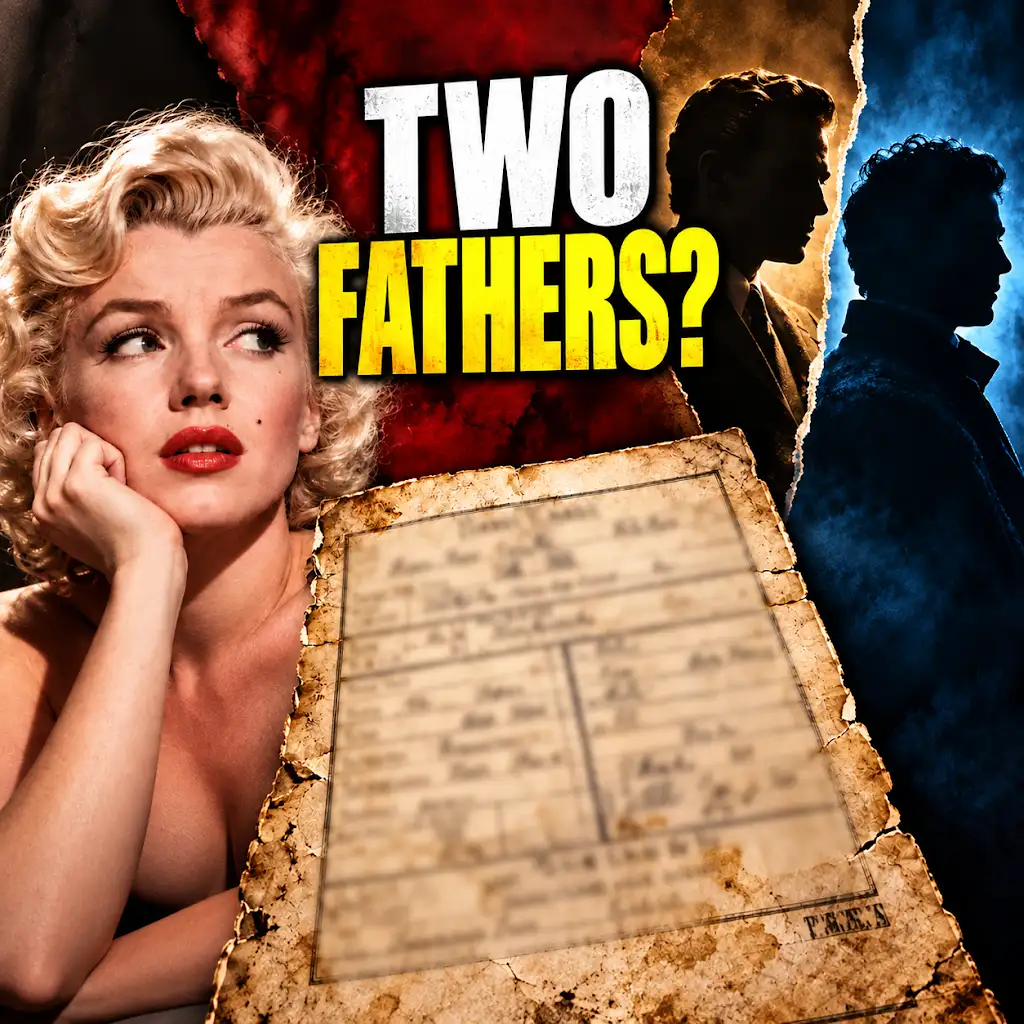
Marilyn Monroe’s Birth Certificate Named One Man. DNA Pointed to Another
FAQs
1. What is the significance of Marilyn Monroe’s family history DNA?
Marilyn Monroe’s family history DNA is significant as it can provide insights into her ancestry, genetic traits, and potential health risks.
2. Has Marilyn Monroe’s DNA been analyzed for any specific purposes?
Yes, Marilyn Monroe’s DNA has been analyzed to trace her family lineage, identify any genetic predispositions, and potentially solve mysteries surrounding her life.
3. Are there any known genetic connections between Marilyn Monroe and her living relatives?
Yes, there are known genetic connections between Marilyn Monroe and her living relatives, which can be identified through DNA testing and analysis.
4. How can Marilyn Monroe’s family history DNA be used in genealogical research?
Marilyn Monroe’s family history DNA can be used to trace her ancestors, connect with living relatives, and uncover any hidden family secrets or relationships.
5. What are the potential implications of studying Marilyn Monroe’s family history DNA?
Studying Marilyn Monroe’s family history DNA can lead to a better understanding of her genetic makeup, health risks, and familial connections, shedding light on her personal life and legacy.