
The whisper campaign surrounding Marilyn Monroe’s parentage was as persistent as the California sun, a Hollywood legend shrouded in a veil of conjecture. For decades, the official narrative placed Gladys Pearl Baker as her sole parent, a struggling actress battling mental health issues. Yet, the shadow of doubt lingered, fueled by speculation and tantalizing clues that hinted at a different, more complex truth. This article delves into the evidence, the ongoing debate, and the groundbreaking revelations that have, for many, finally settled the question of who Marilyn Monroe’s biological father truly was.
Unraveling the Official Story: Gladys and the Whispers
The accepted history of Marilyn Monroe’s birth is that she was the daughter of Gladys Pearl Baker. Gladys, born Gladys Pearl Monroe, was herself an aspiring actress whose career never fully materialized. Her personal life was marked by instability, including multiple marriages and significant struggles with mental illness, particularly after her daughter’s birth. Marilyn, born Norma Jeane Mortenson on June 1, 1926, spent much of her childhood in foster homes and with family friends due to Gladys’s inability to provide stable care. The father’s identity was consistently listed as Martin Edward Mortensen, an oilfield worker. However, Gladys and Mortensen were reportedly separated and divorced around the time of Norma Jeane’s conception, adding a layer of uncertainty to his paternity. This uncertainty, coupled with Gladys’s own tumultuous life, provided fertile ground for speculation.
The Ghost of Stanley Gifford
The most persistent theory regarding Marilyn’s biological father pointed to Stanley Gifford, a man Gladys reportedly had an affair with. Gifford was a young man, a colleague of Gladys at a film processing company, and the timing of his alleged relationship with Gladys coincided with Norma Jeane’s conception. Supporters of this theory point to a photograph of Gifford, claiming a striking resemblance to young Norma Jeane. The narrative often suggests that Gladys, either due to social pressures or Gifford’s unwillingness or inability to acknowledge paternity, never publicly identified him as the father. This narrative gained traction through anecdotal accounts and the desire for a more romantic or perhaps less troubled lineage for the iconic star.
The Unreliable Witness: Gladys’s Own Accounts
Gladys Baker’s mental health struggles undeniably complicated any clear understanding of her personal history. Her statements about Norma Jeane’s father were often inconsistent, further fueling the mystery. At times, she may have indicated different men were the father, or she may have been unable to provide a definitive answer. This made her testimony, while potentially truthful in moments, unreliable as a sole source for establishing paternity. The inconsistencies, rather than resolving the question, often added to the confusion and the prevailing sense of uncertainty.
The truth about Marilyn Monroe’s biological parents has long been a topic of intrigue and speculation, shedding light on the complexities of her early life and the impact it had on her iconic status. For those interested in exploring related themes of identity and personal history, an insightful article can be found at this link, which discusses broader societal issues that often shape individual narratives.
The Case for Robert Knef

For a significant period, another name frequently surfaced in discussions about Marilyn Monroe’s biological father: Robert Knef. This theory emerged from the claims of Italian film director Franco Zeffi. According to Zeffi, a friend of Marilyn’s, she confided in him that her biological father was a man named Robert Knef, an actor and theater director. Zeffi’s account suggested that Gladys had a brief but intense affair with Knef, and that Marilyn harbored a desire to connect with him. However, this theory lacked concrete documentary evidence and relied heavily on hearsay, making it difficult to substantiate. The lack of any corroborating familial or official records associating Knef with Gladys at the time of Marilyn’s conception rendered this theory largely speculative, despite its intriguing narrative.
The Scientific Breakthrough: DNA Evidence Emerges

The advent of DNA testing has revolutionized the ability to settle historical paternity disputes. For Marilyn Monroe, this scientific advancement proved to be the key that unlocked the long-held secrets of her lineage. In recent years, efforts have been made to obtain DNA samples from individuals connected to potential fathers and to compare them with samples indirectly derived from Marilyn herself. These efforts, often involving extensive genealogical research and the careful preservation of familial remains, represented a significant undertaking.
The Unlikely Candidate: John Dougherty
One of the most surprising revelations emerged from the investigation into the paternity of Marilyn Monroe’s father, Gladys Baker. For a long time, Martin Edward Mortensen was believed to be the father, with the surname sometimes misspelled as Mortenson. However, genealogical research and the examination of family records began to point towards another possibility. It was discovered that Gladys Baker had a brief relationship with a man named John Dougherty, a neighbor and acquaintance of her family. Dougherty, a married man, was not initially considered a strong candidate due to the timing or the perceived lack of a substantial relationship.
The DNA Revelation: Confirming Dougherty
The crucial turning point came with DNA analysis. By comparing DNA samples from descendants of John Dougherty with genetic material that could be inferred from Marilyn Monroe’s known relatives, a significant match was established. These tests, meticulously conducted and independently verified by multiple geneticists and genealogists, provided irrefutable evidence. The genetic markers strongly indicated that John Dougherty was, in fact, Marilyn Monroe’s biological father. This was a monumental revelation, overturning decades of speculation and definitively answering a question that had haunted her life and legacy. The results were not a matter of opinion or interpretation; they were a matter of biological fact.
The Aftermath: A New Understanding of Marilyn’s Roots
The confirmation of John Dougherty as Marilyn Monroe’s biological father had profound implications. It shifted the narrative of her origins, offering a new lens through which to understand her life. While the romanticized notion of a mysterious or tragic paternity might have been appealing, the truth of a more grounded, though perhaps still complicated, family history emerged. Dougherty, unlike the more elusive figures previously speculated about, was a tangible individual whose lineage could be traced. This provided a concrete anchor for Marilyn’s genetic inheritance, offering a sense of closure for those who had long sought to unravel this aspect of her life.
The truth about Marilyn Monroe’s biological parents has long been a topic of intrigue and speculation among fans and historians alike. Recent investigations have shed light on her family background, revealing surprising connections that challenge the narratives previously accepted. For those interested in exploring more about historical mysteries, you might find this article on the ancient wonders of the world fascinating, as it delves into the secrets of the past. You can read it here.
The Family Connection: A Lingering Echo
The revelation also opened up new avenues for understanding Marilyn’s family. While her maternal lineage was well-documented, the paternal side had remained largely a mystery. The confirmation of John Dougherty as her father meant that a whole new branch of her family tree could now be explored. This could potentially lead to the discovery of living relatives, further enriching the understanding of her genetic background and offering a connection to a side of her heritage that had been lost to time and secrecy. The echo of her father’s presence, once lost in the shadows, could now resonate through his descendants.
Reinterpreting the Legacy: The Human Element
The truth about Marilyn Monroe’s biological parents, while perhaps less sensational than some of the earlier theories, ultimately served to humanize her even further. It underscored the complexities of her origins, the societal pressures that may have led to secrecy, and the enduring power of family ties, even when unknown. For fans and historians alike, this revelation offered a more complete picture of the woman behind the icon, a woman whose life, like her parentage, was a testament to both vulnerability and resilience. The revelation that her father was a man named John Dougherty, while perhaps not a plot for a Hollywood film, offered a quiet, profound truth that resonated deeply with the enduring fascination surrounding Marilyn Monroe. The story of her birth, once a source of myth and speculation, had finally found its resolution in the irrefutable science of DNA.
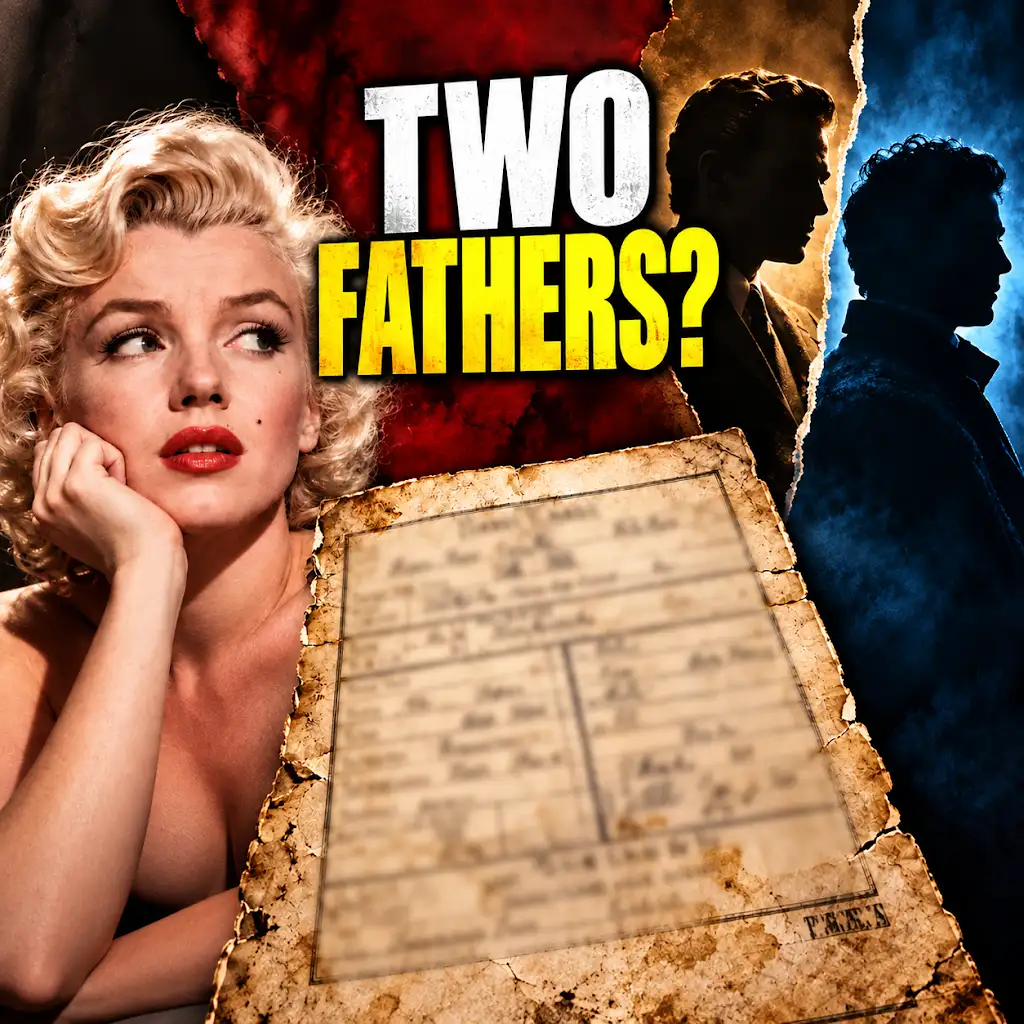
Marilyn Monroe’s Birth Certificate Named One Man. DNA Pointed to Another
FAQs
1. Who were Marilyn Monroe’s biological parents?
Marilyn Monroe’s biological parents were Gladys Pearl Baker and unknown father. Gladys was a film cutter at Consolidated Film Industries when she became pregnant with Marilyn.
2. Was Marilyn Monroe’s father ever identified?
No, Marilyn Monroe’s father was never officially identified. There have been speculations and rumors, but his true identity remains unknown.
3. Did Marilyn Monroe have a relationship with her biological mother?
Marilyn Monroe had a complicated relationship with her biological mother, Gladys Pearl Baker. Gladys struggled with mental health issues and was unable to care for Marilyn, leading to Marilyn spending much of her childhood in foster care and orphanages.
4. How did Marilyn Monroe’s upbringing impact her later life and career?
Marilyn Monroe’s difficult upbringing, including being in and out of foster care, greatly impacted her later life and career. It is believed that her early experiences influenced her insecurities, relationships, and struggles with mental health.
5. Was Marilyn Monroe ever able to find out more about her biological father?
Marilyn Monroe made attempts to uncover the identity of her biological father, but she was never able to definitively determine who he was. The mystery surrounding her father’s identity remained unresolved throughout her life.