
The silent, stoic presence of trees has long captivated human imagination. From ancient forests whispered about in myths to the sturdy timber that builds our homes, trees are fundamental to our existence and understanding of the past. Among the most fascinating secrets held within their woody cores is the ability to accurately date events – not just the age of the tree itself, but the climate and conditions that shaped its growth, and by extension, the history of the environment it inhabited. This incredible science is called dendrochronology, a term derived from the Greek words “dendron” (tree), “chronos” (time), and “logos” (study). In essence, dendrochronology is the scientific method of dating tree rings to the exact year they were formed.
The Anatomy of Time: How Trees Record Their Lives
Trees, like all living organisms, respond to their environment. Their most visible and readily accessible record of this response lies within their trunk. As a tree grows, it adds a new layer of wood each year. This layer, known as a growth ring, is not uniform. Instead, it consists of two distinct parts: earlywood and latewood. Understanding the formation of these parts is crucial to comprehending how trees record time.
The Rhythm of the Seasons: Earlywood and Latewood
The annual growth cycle of a tree is directly tied to the changing seasons, particularly in temperate climates. During the spring and early summer, when conditions are favorable with ample sunlight, water, and nutrients, the tree experiences rapid growth. This rapid growth results in the formation of what is called earlywood, or springwood. The cells in the earlywood are generally larger, thinner-walled, and have wider vessels. This allows for efficient transport of water and nutrients from the roots to the leaves, fueling vigorous photosynthesis. Visually, earlywood appears lighter in color.
As the growing season progresses into late summer and autumn, conditions become less favorable. Water may be scarcer, temperatures begin to drop, and the rate of photosynthesis slows. During this period, the tree produces latewood, or summerwood. The cells in the latewood are smaller, thicker-walled, and more numerous. This dense wood provides structural support and is less efficient at water transport. The darker, denser appearance of latewood contrasts with the lighter earlywood, creating the distinct bands that we recognize as tree rings. The boundary between the latewood of one year and the earlywood of the next is sharply defined, marking the transition from one year’s growth to the next.
The Annual Circle: One Ring, One Year
The combination of the lighter earlywood and the darker latewood forms a complete annual growth ring. Therefore, a single tree ring, encompassing both the springwood and summerwood, represents one year of the tree’s life. Counting these rings from the bark inwards to the pith (the very center of the tree) provides a direct count of the tree’s age. However, dendrochronology goes far beyond simply counting rings to determine a tree’s age. It involves analyzing the width and characteristics of these rings, as these variations tell a story about the environmental conditions the tree experienced during each year of its growth.
Dendrochronology, the study of tree rings to date events and environmental changes, offers fascinating insights into our planet’s history. For those interested in exploring how historical timelines can be constructed through natural phenomena, a related article can be found here: Uncovering Tamriel’s Mysteries. This article delves into the rich history and mythology of the Elder Scrolls universe, showcasing how understanding timelines can enhance our appreciation of both real and fictional worlds.
Reading the Rings: Climate Clues in Wood
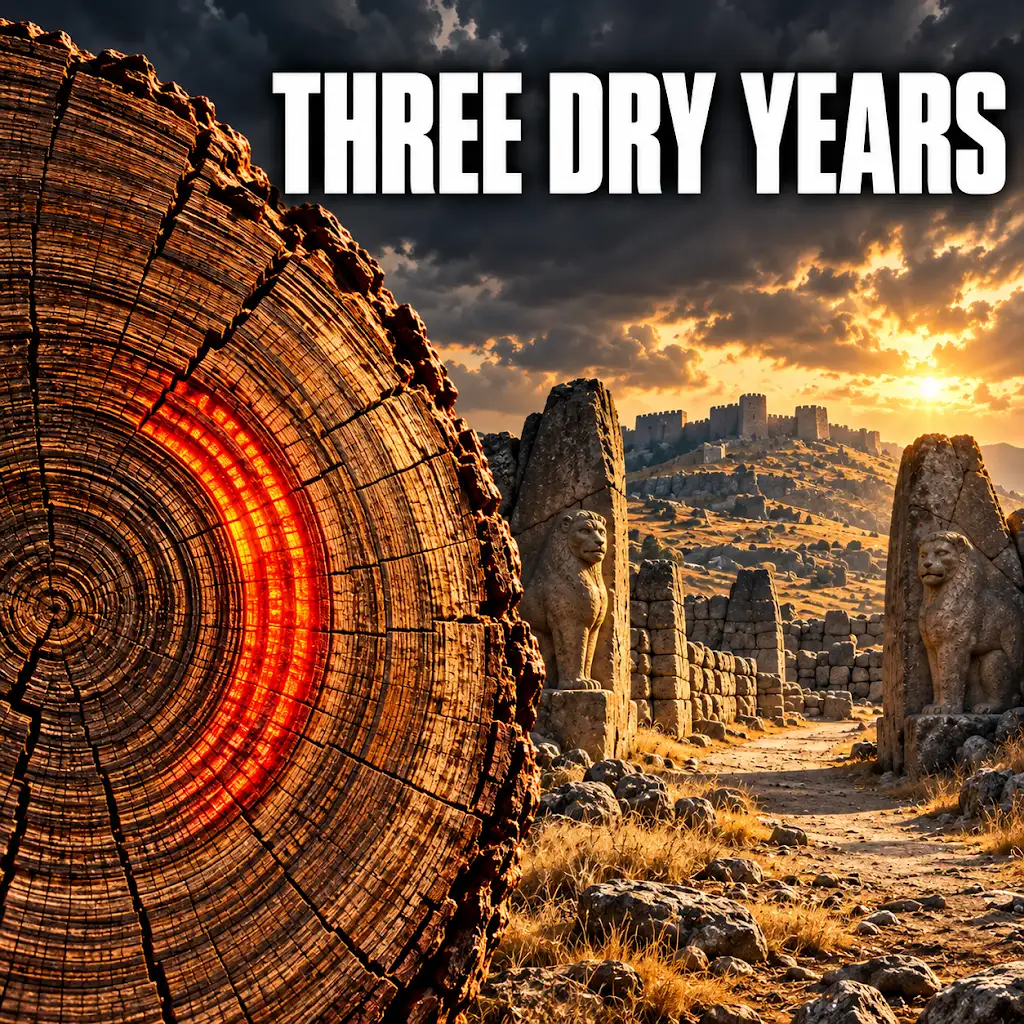
The width of a tree ring is not solely determined by the passage of time; it is a direct reflection of the environmental conditions during that particular year. When conditions are favorable for growth – abundant rainfall, adequate sunlight, and mild temperatures – the tree can produce a wider ring. Conversely, if the tree faces challenging conditions, such as drought, extreme cold, insect infestation, or disease, its growth will be stunted, resulting in a narrower ring. This relationship between ring width and environmental factors is the cornerstone of dendrochronology.
The Influence of Water: Drought and Abundance
Water availability is arguably the most significant factor influencing tree ring width in many regions. In arid or semi-arid environments, a dry year will lead to a narrow ring, while a wet year will produce a wide one. By examining a series of tree rings from a particular tree or a collection of trees from the same area, dendrochronologists can reconstruct past precipitation patterns. A sequence of narrow rings can indicate a prolonged period of drought, while a series of wide rings can signify a period of abundant rainfall. This historical climate data can be invaluable for understanding long-term climate trends, predicting future water resources, and even studying past societal responses to climate variability.
Temperature’s Touch: A Subtle Indicator
While water is often the primary driver, temperature also plays a role, especially in regions where it is a limiting factor for growth. In colder climates, warmer growing seasons can lead to wider rings, as plants can photosynthesize for longer periods and at higher rates. Conversely, unusually cold summers can result in narrower rings. The impact of temperature can be more subtle than that of water, and its interpretation often requires careful consideration of the specific species and geographical location. For instance, in tropical regions, where rainfall is often more consistent, temperature variations might become a more dominant factor in ring width.
Other Environmental Whispers: Pests, Fires, and Soil
Beyond water and temperature, trees can also record other significant environmental events. Insect outbreaks, for example, can defoliate trees, severely impacting their ability to photosynthesize and leading to narrow rings for several years following the infestation. Forest fires, especially those that scorch the bark but do not kill the tree, can leave distinct scars and alter growth patterns, leaving a unique mark in the ring record. Soil conditions, such as nutrient availability or the presence of toxic elements, can also influence growth rates and be indirectly reflected in ring widths. Even volcanic eruptions, by darkening the skies and reducing sunlight, can lead to a noticeable narrowing of tree rings for a year or two.
The Art of Cross-dating: Synchronizing Time

Simply counting rings on a single tree can give you the age of that tree, but it doesn’t necessarily mean you can reliably date historical wood or precisely synchronize the growth patterns of different trees. This is where the technique of cross-dating becomes indispensable. Cross-dating is the process of matching patterns of wide and narrow rings between different trees, or between a living tree and a piece of historical wood. This allows dendrochronologists to assign a precise calendar year to each ring, even if the wood is from a time before written records.
Finding the Signatures: Unique Growth Patterns
Every tree in a given area experiences broadly similar climatic conditions. Therefore, a drought year will likely result in narrow rings in most trees in that region, while a wet year will produce wide rings. This creates a unique “fingerprint” or signature for each year’s growth. Cross-dating involves comparing the sequence of wide and narrow rings from an unknown sample with the established patterns from living trees or a master chronology (a long, continuous sequence of tree ring data for a specific region). Dendrochronologists look for specific patterns of wide and narrow rings that match across different samples. For example, a sequence of two narrow rings followed by a very wide ring might be a distinctive signature that can be identified in multiple trees.
Building the Chronology: A Historical Timeline
The ultimate goal of cross-dating is to build a continuous chronology, a long, unbroken record of tree growth extending back as far as possible for a particular region. This is achieved by overlapping the ring patterns from living trees with those from older trees, and then extending further back into historical timber found in old buildings, archaeological sites, or even submerged logs. A master chronology for a region might span hundreds or even thousands of years. This provides an invaluable baseline against which to date any wood sample found within that region. If a piece of ancient timber has a ring pattern that matches a specific section of the master chronology, its exact felling date can be determined with remarkable accuracy.
Beyond the Present: Dating Archaeological Finds and Historical Structures
The power of cross-dating is most evident when applied to dating archaeological materials. Imagine finding a wooden beam in an ancient ruin. By cross-dating its rings with a regional master chronology, archaeologists can determine the precise year that beam was felled, and by extension, the approximate construction date of the structure. This has revolutionized our understanding of ancient societies, allowing us to place historical events and cultural developments within a precise chronological framework. Similarly, dating wooden artifacts, tools, or furniture can provide crucial insights into their age and provenance.
Applications of Dendrochronology: More Than Just Old Wood
The insights gained from dendrochronology extend far beyond simply dating old wood. Its ability to reconstruct past environmental conditions makes it a vital tool for a wide range of scientific disciplines, offering a unique window into Earth’s history and human interaction with the environment.
Reconstructing Past Climates: A Natural Archive of Weather
As discussed earlier, tree rings are natural archives of past climate. By analyzing the width and density of rings, and even the isotopic composition of the wood, dendrochronologists can reconstruct historical temperature and precipitation patterns with remarkable detail. This historical climate data is crucial for understanding natural climate variability, testing climate models, and assessing the impact of human-induced climate change over longer timescales than are available from instrumental records. For example, studying narrow rings in a region prone to drought can reveal the frequency and severity of past droughts, informing current water management strategies.
Understanding Ecological Histories: Fires, Pests, and Forests
Dendrochronology also provides invaluable insights into ecological histories. By identifying fire scars within tree rings, researchers can reconstruct the historical fire regimes of forests, including the frequency, intensity, and seasonality of past fires. This information is essential for developing effective forest management and fire suppression strategies. Similarly, the study of narrow rings and the presence of certain chemical markers can reveal the history of insect outbreaks and disease epidemics, helping ecologists understand the dynamics of pest populations and their impact on forest health.
Archaeology and History: Unveiling the Past
The application of dendrochronology in archaeology and history is profound. As mentioned, it provides precise dating for wooden artifacts, structures, and even ancient boats, allowing for the accurate chronological placement of historical events and the study of technological development. By dating timbers in historic buildings, dendrochronology can help confirm or challenge existing historical accounts and architectural analyses. It can also shed light on the sources of timber used in construction, revealing ancient trade routes or resource management practices. For instance, matching timber in a medieval European building to a specific forest region can indicate long-distance timber trade.
Other Diverse Uses: From Volcanology to Forensic Science
The applications of dendrochronology continue to expand. It is used in volcanology to date past volcanic eruptions by analyzing tree ring responses to ashfall or climate disruptions. In forensic science, it can be used to date wooden evidence found at crime scenes, potentially linking suspects to specific locations or timelines. Even in studying the history of diseases, tree ring analysis can sometimes reveal periods of stress that might have made populations more susceptible.
Dendrochronology, the study of tree rings, offers fascinating insights into past climate conditions and environmental changes. By analyzing the growth patterns of trees, scientists can determine the age of the tree and the climate conditions during each year of its life. This method not only helps in understanding historical climate variations but also plays a crucial role in fields such as archaeology and ecology. For a deeper understanding of how scientific methods can influence our perception of historical events, you might find this article on the geopolitical impact of the Artemis Accords interesting. You can read it here: the geopolitical impact of Artemis Accords.
The Future of Tree Ring Science: Advancements and Challenges
| Term | Explanation | Example |
|---|---|---|
| Tree Ring | One layer of growth added to a tree each year. | A tree with 50 rings is approximately 50 years old. |
| Growth Ring Width | Thickness of a tree ring, indicating growth conditions. | Wide rings suggest good rainfall; narrow rings suggest drought. |
| Crossdating | Matching ring patterns from different trees to find exact years. | Used to date wooden artifacts or historical buildings. |
| Increment Borer | Tool used to extract a core sample from a living tree without harming it. | Allows counting rings without cutting down the tree. |
| Calibration | Comparing tree ring data with known climate records to interpret past climates. | Helps reconstruct rainfall patterns over centuries. |
Dendrochronology, while a mature science, is constantly evolving. Ongoing research and technological advancements are pushing the boundaries of what is possible, leading to more detailed and accurate reconstructions of the past. However, challenges remain, particularly in adapting the science to different environments and ensuring the long-term preservation of valuable tree ring data.
Technological Innovations: Beyond the Naked Eye
Modern dendrochronology is increasingly leveraging advanced technologies. High-resolution scanning and digital imaging allow for more precise measurement of ring widths and the identification of subtle features. Stable isotope analysis, which examines the ratios of different isotopes of elements like oxygen and carbon within the wood, can provide additional climatic information, such as past temperature and moisture sources. X-ray fluorescence (XRF) can be used to analyze the elemental composition of tree rings, revealing evidence of soil pollution or volcanic ash. Advanced statistical methods and computational power are also crucial for analyzing large datasets and building more robust chronologies.
Expanding Geographic Reach: Tropical Trees and Polar Regions
While dendrochronology has been most successful in temperate regions with distinct growing seasons, efforts are underway to expand its application to other environments. In tropical regions, where growth rings may not be as clearly defined, researchers are exploring alternative methods of identifying annual growth cycles, such as changes in wood density or chemical markers. Similarly, in polar regions, where growth is slow and heavily influenced by factors like permafrost melt, dendrochronological techniques are being adapted to decipher the subtle signals left in the wood.
Data Preservation and Accessibility: Securing Our Legacy
As chronologies extend further back in time and cover more regions, the preservation and accessibility of this invaluable data become paramount. Establishing robust digital archives and ensuring that data is shared openly among researchers is crucial for future study and for safeguarding this scientific legacy. The sheer volume of data generated by dendrochronological research requires significant storage and management, and ongoing efforts are focused on developing standardized protocols for data collection and archiving.
The Enduring Importance: Understanding Our Place in Time
Despite the challenges, dendrochronology remains an essential tool for understanding Earth’s past, present, and future. Its ability to provide precise dating and detailed environmental reconstructions makes it indispensable for fields ranging from climate science to archaeology. As the climate continues to change and human populations grow, the long-term perspective offered by tree rings will only become more critical for informed decision-making and for understanding our place within the grand tapestry of time. The silent testimony of trees, meticulously recorded in their rings, continues to offer profound insights into the history of our planet and the forces that have shaped it.
Your 401(k) Withdrawal Can Make More of Your Social Security Taxable
FAQs
What is dendrochronology?
Dendrochronology is the scientific method of dating tree rings to determine the age of a tree or wooden object. It can also be used to study past climate conditions and environmental changes.
How does dendrochronology work?
Dendrochronology works by analyzing the patterns of tree rings formed in the trunk of a tree. Each ring represents one year of growth, with the width and characteristics of the rings providing information about the tree’s age and the environmental conditions during each year of growth.
What can dendrochronology tell us?
Dendrochronology can tell us the age of a tree or wooden object, as well as provide information about past climate conditions, such as temperature and precipitation levels. It can also help in dating archaeological artifacts and studying historical events.
Why is dendrochronology important?
Dendrochronology is important because it provides valuable information about past environmental changes, helps in dating historical artifacts and structures, and contributes to our understanding of climate patterns over long periods of time. It is a key tool in various scientific fields, including archaeology, climatology, and ecology.
What are some limitations of dendrochronology?
Some limitations of dendrochronology include the need for well-preserved samples with clearly visible tree rings, the potential for missing or false rings due to environmental factors, and the difficulty in dating older trees or wooden objects with overlapping ring patterns. Additionally, dendrochronology may not be applicable in regions with extreme climate conditions or where trees do not form distinct annual rings.