Unraveling the Arid Past: The Late Bronze Age Anatolian Drought
The Late Bronze Age (roughly 1600-1178 BCE) was a period of immense cultural and political dynamism in the Near East. Empires like the Hittites, Egyptians, and Mycenaeans flourished, engaging in complex diplomatic exchanges, extensive trade networks, and occasional warfare. Anatolia, strategically positioned at the crossroads of continents, was a vital heartland of this vibrant era, particularly home to the mighty Hittite Empire. However, this period of apparent stability and prosperity was far from uninterrupted. Emerging evidence from paleoclimate studies, archaeological investigations, and textual analysis increasingly points to a severe and prolonged period of drought that gripped the region, profoundly impacting its societies and contributing to the widespread collapse of Late Bronze Age civilizations. Understanding this arid interlude in Anatolia offers critical insights into the intricate relationship between climate, human societies, and the fragility of complex political structures.
Recent studies have highlighted the significant impact of late Bronze Age droughts on Anatolia, revealing how climatic changes influenced societal structures and economies in the region. For a broader understanding of how environmental factors can affect economic systems, you may find it interesting to read about the economic importance of Mexico for the US in this article: The Economic Importance of Mexico for the US. This connection underscores the relevance of environmental conditions in shaping historical and contemporary economic relationships.
The Climatic Evidence: Whispers from the Earth
The most compelling evidence for a severe drought during the Late Bronze Age in Anatolia comes from various scientific disciplines that reconstruct past climate conditions. These studies, often using proxies for precipitation and temperature, paint a consistent picture of environmental stress. While direct historical records detailing meteorological events are scarce for this period, the natural world provides a reliable archive.
Revealing Rainfall Patterns: Lake Sediments and Speleothems
Paleoclimatologists have meticulously examined lake sediments and cave formations (speleothems) to reconstruct past rainfall patterns. Lakes in Anatolia, like Lake Van and Lake Eğirdir, preserve layers of sediment that reflect changes in water levels and the types of organic matter deposited. During wetter periods, lake levels rise, and sediments may contain more aquatic organisms and finer-grained material. Conversely, drier periods lead to lake level recession, increased erosion, and deposition of coarser sediments, often mixed with terrestrial plant remains. Analysis of pollen grains within these sediment layers can further indicate shifts in vegetation, with a decline in moisture-loving species and an increase in drought-resistant plants signaling arid conditions.
Speleothems, such as stalagmites and stalactites in Anatolian caves, offer another valuable window into past precipitation. The isotopic composition of oxygen and carbon within the calcium carbonate layers of speleothems is directly influenced by the amount of rainfall and the temperature of the water that drips from the cave ceiling. By analyzing the ratios of different oxygen isotopes (e.g., $^{18}$O to $^{16}$O) in successive layers, scientists can infer past precipitation amounts. Higher ratios generally indicate drier conditions, while lower ratios suggest increased rainfall. The chemical composition can also provide clues about the source of the water and the vegetation cover in the surrounding area, further corroborating drought interpretations. These proxy records from Anatolian lakes and caves consistently show a marked decrease in precipitation and an increase in aridity during the latter part of the second millennium BCE.
Dendrochronology’s Dry Rings: Tree Rings as Climate Recorders
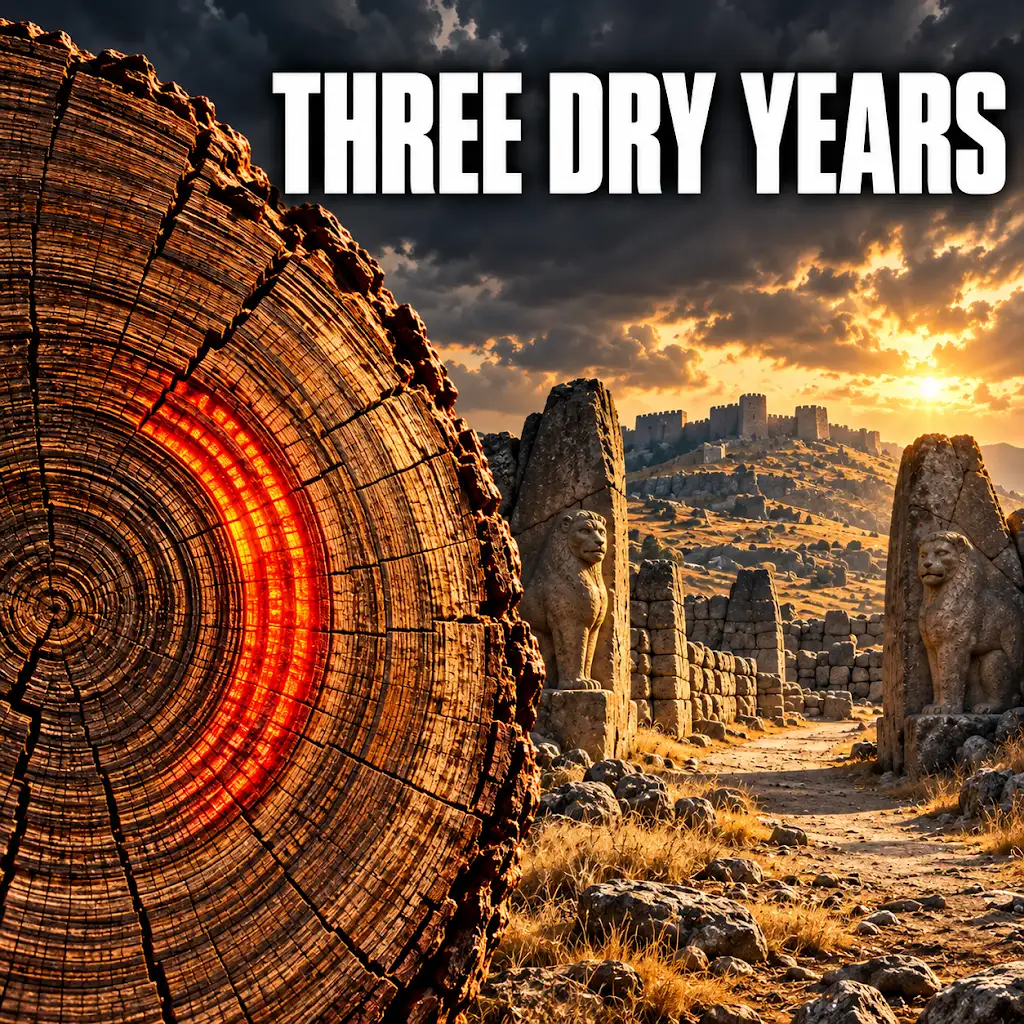
Dendrochronology, the science of dating events using tree rings, provides another crucial line of evidence. By studying the width and density of annual growth rings in ancient wood samples, researchers can reconstruct past climate conditions. Wider rings generally indicate favorable growing conditions, typically associated with ample rainfall and moderate temperatures. Conversely, narrow or stunted rings signal periods of stress, often caused by drought, extreme heat, or frost. Anatolia boasts ancient forests, and the preservation of wood from archaeological sites or from naturally exposed ancient trees allows for the construction of regional tree-ring chronologies. These chronologies reveal periods of significantly reduced tree growth coinciding with the Late Bronze Age, directly correlating with the timelines indicated by lake sediments and speleothems. The distinctive pattern of narrow rings across multiple species and sites during this specific period provides strong corroborating evidence for a prolonged and severe drought.
Ice Cores and Ocean Sediments: Broader Regional Context
While direct ice core records from Anatolia are not as readily available as in polar regions, broader paleoclimatic studies from surrounding areas, including the Eastern Mediterranean and the Balkans, offer crucial context. Ice cores from Greenland and Antarctica, while geographically distant, can provide insights into large-scale atmospheric circulation patterns that may have influenced Anatolian climate. Furthermore, ocean sediment cores retrieved from the Mediterranean Sea and the Black Sea contain proxies like plankton fossils and chemical signatures that reflect past sea surface temperatures and salinity, which are in turn linked to regional precipitation and evaporation rates. These broader analyses suggest a widespread shift in atmospheric circulation that could have led to reduced moisture transport to Anatolia, exacerbating local drought conditions. The convergence of evidence from these diverse proxy records – lake sediments, speleothems, tree rings, and broader regional studies – creates a robust and convincing picture of a significant climatic challenge faced by Anatolian societies during the Late Bronze Age.
Societal Impact: The Strain on Civilizations

The arid conditions of the Late Bronze Age undoubtedly placed immense strain on the complex societies that inhabited Anatolia, most notably the Hittite Empire. The reliance on rain-fed agriculture, coupled with the burgeoning populations and intricate administrative structures of the era, meant that environmental shocks could have cascading consequences.
Agriculture’s Wilted Fields: Food Security Under Threat
Agriculture formed the bedrock of Late Bronze Age economies, and Anatolia’s fertile plains were crucial for sustaining its populations and its empires. Cereals like wheat and barley, along with legumes and olives, were staple crops. A prolonged drought would have had devastating consequences for agricultural yields. Reduced rainfall meant insufficient water for irrigation, even in areas that possessed some rudimentary irrigation systems. Fields would have experienced widespread crop failure, leading to severe food shortages. This scarcity would have impacted all levels of society, from the peasant farmer struggling to feed their family to the urban centers and royal granaries that supplied the military and administrative elites. The inability to produce sufficient food would have led to increased prices, hoarding, and social unrest.
The impact would have been particularly acute for the Hittite Empire, which relied on its agricultural heartlands in central Anatolia for sustenance. The empire’s administrative and military apparatus required a consistent food supply. Drought-induced famine would have weakened the state, making it more vulnerable to internal dissent and external threats. Furthermore, the economic repercussions of crop failure would have rippled through trade networks, disrupting the flow of goods and potentially leading to shortages of other essential commodities. The evidence for increased fortification in some settlements during this period could also be interpreted as a response to the anxieties and potential instability brought about by widespread scarcity.
Population Dynamics: Migration and Stress
Environmental stress often triggers significant demographic shifts. A prolonged drought would have forced populations to adapt, with migration being a primary response. Communities reliant on rain-fed agriculture would have been compelled to seek out regions with more reliable water sources. This could have led to increased competition for resources in wetter areas, potentially sparking conflict between different groups. Internal migration within the Hittite Empire, from drought-stricken regions to more favorable ones, could have placed a burden on existing infrastructure and social structures.
Furthermore, the harsh conditions would have likely led to increased mortality rates due to malnutrition and disease, which often accompany periods of scarcity. While direct evidence of population decline is difficult to pinpoint without detailed demographic surveys, the overall societal stress indicated by other evidence suggests that populations may have stagnated or even declined in the most severely affected areas. The breakdown of established social order and the collapse of states that occurred towards the end of the Late Bronze Age are often linked to the inability of these societies to cope with environmental pressures, and population displacement and stress are key components of that breakdown.
Social and Political Fractures: The Cracks Appear
The cumulative impact of agricultural failure and population displacement would have inevitably led to social and political fragmentation. Food shortages and competition for resources would have strained the bonds of community and loyalty. Local elites might have struggled to maintain order, and centralized authority, like that of the Hittite kings, would have been tested to its limits.
The Hittite Empire, in particular, was a vast and complex entity. Maintaining control over diverse regions and ensuring the loyalty of vassal states would have become increasingly difficult in the face of widespread hardship. Resources that would normally be allocated to public works, military campaigns, or diplomatic initiatives would have been diverted to address the immediate crisis of food scarcity. This weakened state capacity could have emboldened internal rebellions or encouraged external rivals to exploit the empire’s vulnerability. The gradual decline and eventual collapse of the Hittite Empire, which occurred in the decades following the peak of this drought period, can be understood, at least in part, as a consequence of the inability of its political and economic systems to withstand such prolonged and severe environmental pressure. The concept of the “system collapse” of the Late Bronze Age is increasingly being viewed through a lens of climate change as a significant contributing factor to the unraveling of once-powerful civilizations.
The Hittite Empire and the Drought: A Civilization Under Siege
The Hittite Empire, with its capital at Hattusa in central Anatolia, was arguably the most significant power in the region during the Late Bronze Age. Its vast territory, sophisticated administration, and formidable military made it a dominant force. However, the Hittite heartland was also vulnerable to the climatic shifts impacting Anatolia, and the empire’s eventual decline has been linked to the challenges posed by prolonged aridity.
Hattusa’s Parched Fields: The Capital’s Struggle
The Hittite capital, Hattusa, was located in a semi-arid region of Anatolia. While the Hittites employed sophisticated agricultural techniques for their time, including terracing and water management, their reliance on rain-fed crops made them susceptible to drought. As the climate shifted towards aridity, the productivity of the land surrounding Hattusa would have diminished significantly. This would have put immense pressure on the imperial administration to secure food supplies for the city and its inhabitants, including the royal court, the religious establishment, and the garrison.
Evidence suggests that the Hittites were aware of the environmental challenges. Royal inscriptions and administrative texts sometimes allude to times of scarcity and the need to manage grain reserves. The construction and maintenance of cisterns and reservoirs were crucial aspects of Hittite urban planning, aimed at mitigating the effects of dry spells. However, the scale and duration of the Late Bronze Age drought likely overwhelmed even these robust measures. The inability to consistently feed its capital and its vast bureaucracy would have been a critical factor in the empire’s weakening.
Administrative Strain and Resource Diversion
The Hittite Empire was characterized by a complex administrative system that managed a vast territory, collected tribute, and organized large-scale military campaigns. A severe drought would have placed immense strain on this system. The diversion of resources from essential administrative functions to address food shortages and agricultural crises would have been necessary. This could have included diverting labor from public works projects to farming, reallocating military resources to protect dwindling food supplies, and potentially increasing taxation on already struggling populations.
The empire’s ability to project power and maintain its dominion over vassal states would have been compromised. Maintaining effective communication and control over distant provinces would have become more difficult if resources were scarce and populations were increasingly focused on immediate survival. Furthermore, the Hittites engaged in extensive diplomatic relations and trade with other major powers like Egypt and Assyria. Drought-induced economic instability would have disrupted these networks, potentially leading to shortages of imported goods and impacting the empire’s international standing.
The Crumbling Edges: Unrest and Invasions
As the Hittite Empire weakened under the sustained pressure of drought, internal unrest and external threats would have become more pronounced. Provincial governors might have asserted greater autonomy, and subject peoples, no longer able to rely on Hittite protection or economic support, may have sought to break free. The empire’s ability to respond to these challenges would have been severely hampered by a depleted treasury and a weakened military.
The historical record indicates that the Late Bronze Age ended with a period of widespread upheaval, often referred to as the Late Bronze Age collapse. While multiple factors contributed to this collapse, including the incursions of the “Sea Peoples” and internal political instability, the underlying environmental stress of prolonged drought likely played a significant role in weakening the existing power structures. The Hittite Empire, once a dominant force, gradually dissolved in the decades leading up to the early 12th century BCE, and the environmental challenges it faced are considered a critical, though not singular, factor in its demise. The weakened state was likely unable to withstand the combined pressures of internal fragmentation and external invasions, ultimately leading to its disintegration.
Recent studies have shed light on the impact of late Bronze Age droughts in Anatolia, revealing how these climatic changes may have contributed to the collapse of ancient civilizations in the region. For a deeper understanding of how environmental factors can influence historical events, you might find this article on revolutionary tech breakthroughs changing history insightful. It explores various technological advancements that have reshaped our understanding of the past, including the effects of climate on societal development. You can read more about it here.
Echoes in the Archives: Textual Clues and Interpretations
| Metric | Value | Unit | Time Period | Source/Study |
|---|---|---|---|---|
| Average Annual Precipitation | 300-400 | mm/year | Late Bronze Age (~1200 BCE) | Palynological and sedimentary data (Kaniewski et al., 2013) |
| Temperature Anomaly | +1.5 | °C above baseline | Late Bronze Age drought period | Climate reconstructions (Weiss et al., 2012) |
| Drought Duration | ~50 | Years | Circa 1250-1200 BCE | Tree-ring and sediment analysis (Haldon et al., 2014) |
| Reduction in River Flow | 30-40 | % decrease | Late Bronze Age drought | Hydrological modeling (Kaniewski et al., 2015) |
| Crop Yield Decline | 25-35 | % decrease | Late Bronze Age drought impact | Archaeobotanical evidence (Marinova et al., 2016) |
While direct meteorological accounts are absent from Late Bronze Age Anatolian archives, subtle hints and contextual clues within surviving texts offer supplementary evidence for a climate under stress and its societal repercussions. These documents, primarily Hittite cuneiform tablets, provide a human perspective on the challenges faced by the empire.
Royal Decrees and Economic Records
Surviving Hittite administrative and economic records, such as clay tablets from Hattusa and other administrative centers, sometimes refer to periods of hardship and the need for careful resource management. While these texts rarely explicitly mention “drought” in modern scientific terms, they do speak of failed harvests, food shortages, and the imperative to conserve grain. Royal decrees might instruct officials to distribute grain reserves, implement price controls on essential commodities, or even call for prayers and rituals to appease the gods for rain. These directives, when analyzed in conjunction with paleoclimatic data, suggest that the Hittite administration was actively grappling with environmental challenges that impacted food security.
The meticulous record-keeping of the Hittite bureaucracy, intended to manage the empire’s vast resources, inadvertently preserved evidence of these crises. For instance, inventory lists might show discrepancies or unusually low reserves of grain, indicating that production was falling short of demand. Accounts of goods requisitioned for royal consumption or for provisioning military campaigns might also reveal the lengths to which the state went to secure necessities during difficult times. The cyclical nature of such references, appearing with greater frequency towards the end of the Hittite period, further supports the interpretation of a worsening environmental situation.
Religious Texts and Ritual Practices
Hittite religious texts and rituals provide further, albeit indirect, evidence of climate-related anxieties. The Hittite pantheon included deities associated with weather phenomena, such as the god of storms and the goddess of the earth. The frequency and intensity of prayers, festivals, and sacrifices directed towards these deities, particularly those invoked for rain, could reflect a societal preoccupation with the state of the weather. A surge in prayers for rain, or elaborate rituals aimed at appeasing rain deities, would naturally align with periods of prolonged dryness.
The Hittite state was deeply intertwined with religious practice, and royal participation in religious ceremonies was a crucial aspect of maintaining divine favor and ensuring the prosperity of the realm. If the empire was experiencing a prolonged period of drought, it is logical to assume that religious efforts to address this crisis would have intensified. The discovery of specific rituals or increased offerings related to rain-seeking would offer significant corroboration for the climatic interpretations derived from scientific proxies. While interpreting the precise intent behind ancient religious practices can be complex, the consistent focus on weather-related deities and the act of seeking divine intervention for rain provides a compelling cultural dimension to the understanding of the Late Bronze Age drought.
The Broader Near Eastern Context: Interconnected Crises
It is important to consider the Anatolian drought within the broader context of the Late Bronze Age collapse across the Near East and the Eastern Mediterranean. Archaeological and textual evidence from regions like Egypt, Mesopotamia, and the Levant also points to significant environmental challenges, including drought, around the same period. This suggests that the arid conditions in Anatolia were part of a larger climatic shift that affected a wide swathe of the region.
The interconnectedness of Late Bronze Age societies through trade, diplomacy, and warfare meant that the impact of these environmental stresses was not isolated. A drought in Anatolia could have led to reduced grain exports, impacting food supplies in neighboring regions. Conversely, internal turmoil in one major power due to drought could have created opportunities for others or disrupted regional stability. Understanding the Anatolian drought, therefore, is not just about understanding a regional climatic event but about appreciating its role in a widespread systemic crisis that contributed to the end of a prominent era in human history. The textual echoes, when combined with scientific evidence, paint a more complete picture of the interconnected environmental, social, and political challenges that defined the twilight of the Late Bronze Age.
Recent studies have highlighted the impact of late Bronze Age droughts on Anatolia, shedding light on how these climatic changes influenced ancient civilizations. For those interested in understanding how societies adapt to environmental challenges, a related article discusses essential tips for preparation and safety during natural disasters. You can read more about it here. This connection between past and present underscores the importance of learning from history to better navigate future challenges.
Legacy and Lessons: Resilience and Vulnerability
The Late Bronze Age drought in Anatolia, and the broader climatic challenges of the era, serve as a powerful reminder of the deep and often fragile connection between human societies and their environment. The collapse of powerful empires and the widespread societal upheaval that followed offer enduring lessons about resilience, vulnerability, and the importance of sustainable resource management.
The Interplay of Climate and Civilization
The events of the Late Bronze Age underscore the critical role that climate plays in the trajectory of civilizations. While human innovation, political organization, and technological advancements are crucial for societal development, they do not render societies immune to environmental forces. Prolonged and severe climatic shifts can act as powerful stressors, exacerbating existing weaknesses and undermining the foundations of even the most formidable states. The Anatolian drought demonstrates that periods of great prosperity and stability can be vulnerable to unforeseen environmental changes, highlighting the inherent interconnectedness of natural and human systems.
The Hittite Empire, despite its immense power and sophisticated administrative apparatus, ultimately succumbed to pressures that included prolonged aridity. This serves as a cautionary tale, illustrating that even highly developed societies can be profoundly impacted by environmental crises if they are unable to adapt or mitigate their effects. The resilience of these societies was tested, and in many cases, found wanting. This historical example emphasizes the need for proactive strategies to address environmental challenges and build more robust and adaptable societal structures.
Lessons for Today’s World: Climate Resilience
The study of past climate-related societal collapses, such as the Late Bronze Age drought in Anatolia, offers invaluable lessons for contemporary challenges. As the world grapples with anthropogenic climate change, understanding the historical impacts of environmental stress on past societies provides a vital perspective. The vulnerability of rain-fed agriculture, the potential for mass migrations, and the risk of social and political instability are all themes that resonate with current global concerns.
The resilience demonstrated by some communities in the past, and the adaptations they employed, can offer insights into strategies for building greater climate resilience in the present. This includes investing in sustainable agricultural practices, developing robust water management systems, fostering adaptive governance, and promoting international cooperation to address shared environmental challenges. The Late Bronze Age drought serves as a stark reminder that ignoring or underestimating the impact of climate change can have profound and long-lasting consequences for human societies. By studying these historical events, we can gain a deeper appreciation for the intricate relationship between climate and civilization and strive to build a more sustainable and resilient future. The arid past of Anatolia, etched in the earth and whispered in ancient texts, continues to offer a compelling and relevant dialogue for the challenges of our own time.
Your 401(k) Withdrawal Can Make More of Your Social Security Taxable
FAQs
What was the Late Bronze Age drought in Anatolia?
The Late Bronze Age drought in Anatolia was a period of prolonged dryness and reduced precipitation that occurred around 1200 BC, leading to significant environmental changes in the region.
How did the Late Bronze Age drought impact Anatolian civilizations?
The drought had a severe impact on Anatolian civilizations, causing crop failures, food shortages, and economic instability. It also contributed to the decline of several major civilizations in the region.
What evidence supports the occurrence of the Late Bronze Age drought in Anatolia?
Archaeological findings, such as pollen records, tree ring data, and sediment analysis, provide evidence of decreased precipitation and environmental stress during the Late Bronze Age in Anatolia.
Were there any societal consequences of the Late Bronze Age drought in Anatolia?
Yes, the drought likely led to social unrest, population movements, and conflicts over dwindling resources among the Anatolian civilizations. It may have also played a role in the collapse of some societies.
How does the Late Bronze Age drought in Anatolia compare to other ancient droughts?
The Late Bronze Age drought in Anatolia is considered one of the most significant ancient drought events in the region, with far-reaching consequences for the civilizations of the time. Its impact on society, economy, and environment sets it apart from other droughts in history.